





 Portuguese
  English
  Spanish
  2 min of reading
  1 comment


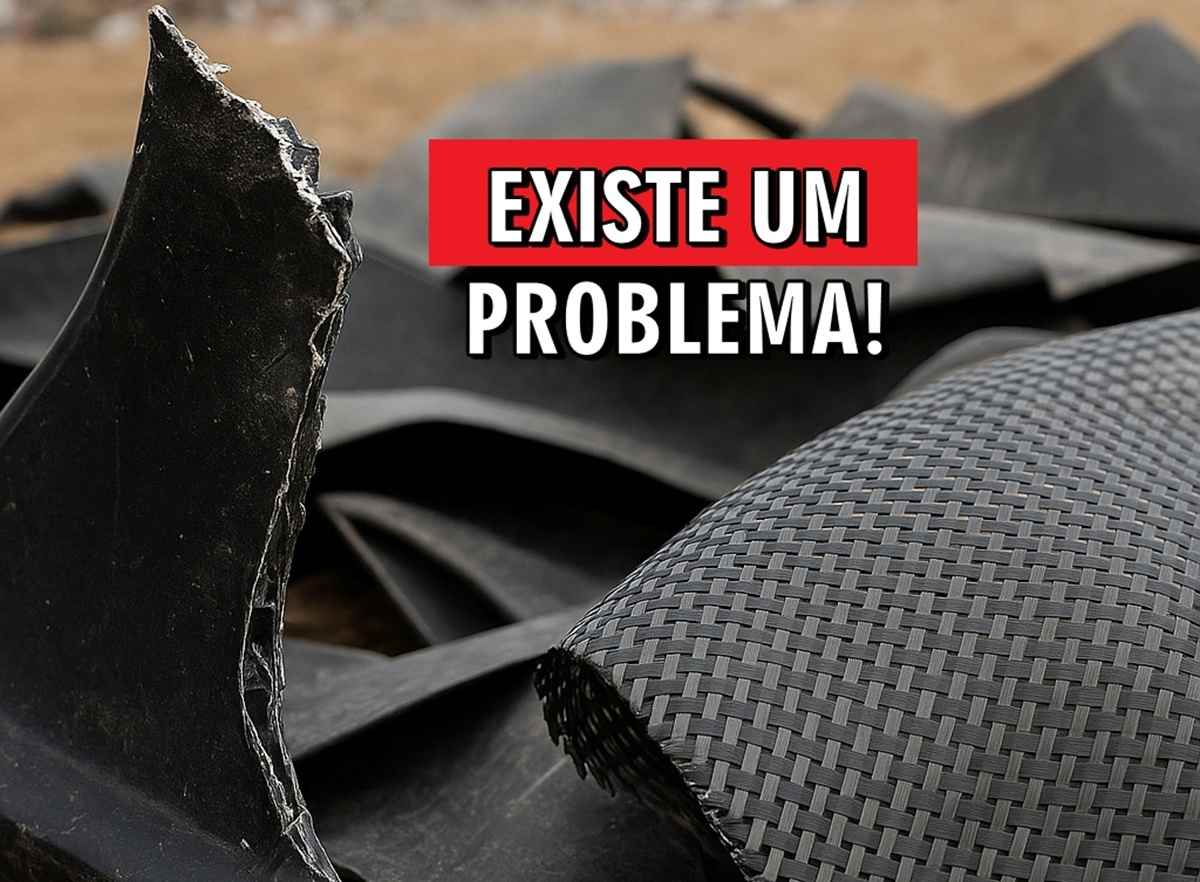


Celebrated for Its Lightness and Strength, Carbon Fiber Dominates High-Performance Engineering and Supercar Design. But Behind the Advantages, There Is an Environmental Problem That Has Yet to Be Solved.
Carbon fiber is seen as one of the most advanced materials in modern engineering. Stronger than steel and lighter than aluminum, it has gained traction in demanding sectors such as motorsport. However, a significant flaw has been ignored for too long.
The Preferred Material of Supercars
For decades, carbon fiber has been the material of choice for high-performance applications.
This is because it is five times stronger than steel and virtually weightless.
-
While the world looks at oil, the war with Iran is already disrupting helium supply from Qatar, affecting car and iPhone chips, threatening AI expansion, and putting pressure on aluminum packaging at the highest value in four years.

-
Global warming will expose a treasure hidden under the ice of Antarctica and may spark an international dispute over gold and valuable minerals.

-
A street vendor from Praia Grande built a robot made of scrap from scooters and washing machines that pulls his popcorn cart on the beach, emits sounds, and interacts with customers, becoming an attraction on the coast of São Paulo.

-
The specifications of the Xiaomi 18 Pro Max have been leaked, and the highlight is a dual 200 MP camera with a new 22-nanometer technology that promises to consume less energy and capture details in shadows and bright areas using LOFIC HDR.


It is the ideal combination for those seeking efficiency and speed, as supercar manufacturers do.
Brands like Koenigsegg and McLaren extensively use this material.
With it, it is possible to mold structures into complex shapes without losing performance.
In addition, carbon fiber does not rust, is resistant to fatigue, and has a long lifespan, exceeding the limits of many traditional metals.
How It Is Made
The production of carbon fiber starts with extremely fine strands, much thinner than a human hair.
These strands are woven together like a fabric, creating a strong mesh. This structure is then combined with a high-strength resin.
After the combination, the piece is heated to extreme temperatures.
The result is a solid, lightweight, and highly durable composite. Because of these properties, carbon fiber has become the dream material in various areas of modern engineering.
The Big Problem
Despite so many advantages, there is a flaw that is rarely discussed: recyclability. Unlike aluminum or steel, which can be melted down and repurposed, carbon fiber presents significant challenges.
The composites are bonded by an extremely strong resin. This type of bond prevents the efficient separation of materials. As a result, it is virtually impossible to recycle them with current technologies.
Buildup in Landfills
With this difficulty in repurposing, the most common destination for discarded carbon fiber is the landfill. Vehicle parts, damaged structures, and production scraps accumulate year after year, with no viable recycling solution.
This limitation raises an important question about the future use of carbon fiber. Although it is advanced and effective, the lack of sustainable solutions could become a growing problem for the industry.
Today, the material that represents advancement may also carry a silent environmental cost, still without a clear answer.
Reference: “Recycling of Carbon Fiber‑Reinforced Composites—Difficulties and Challenges” highlights that carbon fiber-reinforced composites are extremely difficult to recycle.










Fazer mourões de cerca ,alternativa boa.