





 Portuguese
  English
  Spanish
  8 min of reading
  0 comments


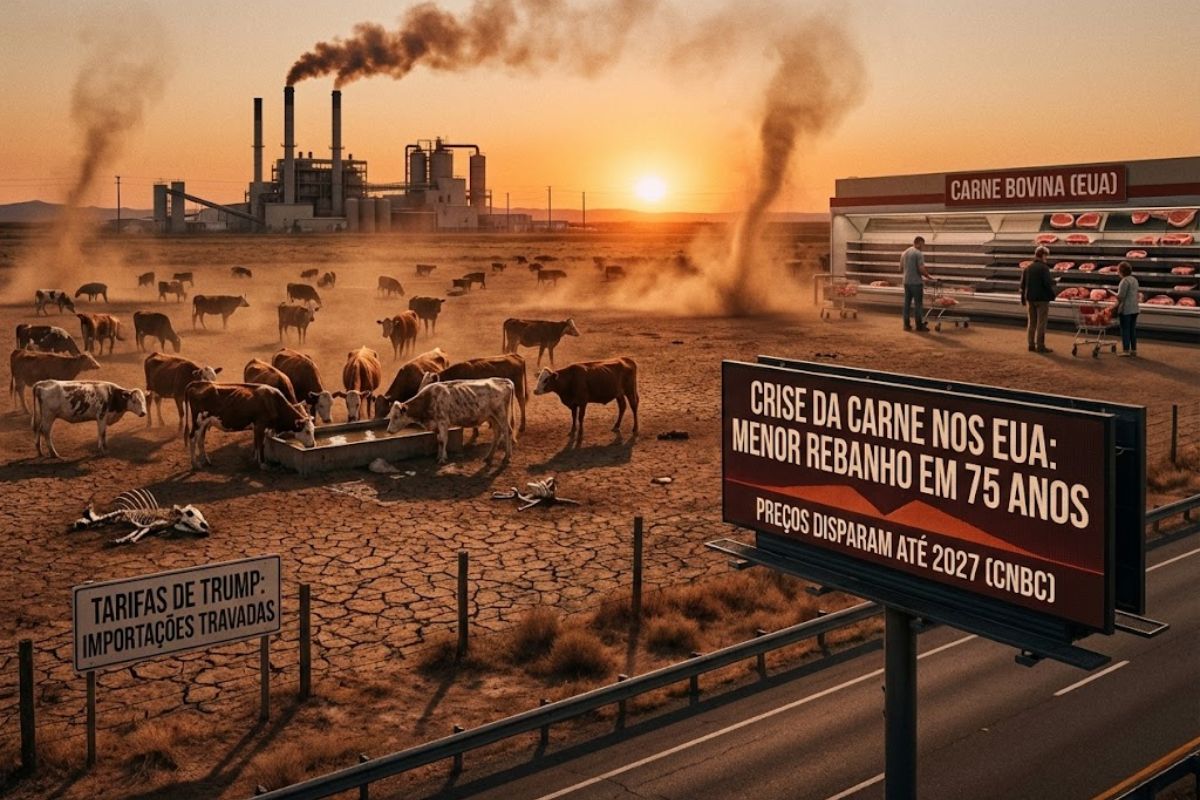
By 2025, Beef Prices in the U.S. Reach Record Highs Due to Extreme Drought, Smallest Herd in 75 Years, Concentrated Packing Industry, Trump’s Tariffs, Stalled Imports, and Resilient Demand, a Scenario That CNBC Suggests Will Only Provide Consistent Relief After 2027, Ultimately for Pressured Consumers, Producers, and Supermarkets
In early 2025, beef in the U.S. hits supermarket shelves with increases nearing 15 percent in a year, while overall food inflation hovers around 3 percent, according to CNBC Originals report. At the same time, national cattle herds are declining to their lowest levels in nearly 75 years, a direct reflection of severe drought in producing states and a surge in production costs that have risen about 50 percent over five years for many ranchers.
This combination of constrained supply and resilient demand for beef in the U.S. pressures the entire supply chain, from cattle producers to packing plants, including companies like Omaha Steaks, reaching the end consumer. CNBC itself highlights that, given the slow cattle cycle and political decisions regarding tariffs and imports, any consistent relief in prices is projected to be clearer only after 2027, even with public programs under discussion to strengthen the sector through 2030.
Record Prices, Narrow Margins, and the Herd at Its Lowest Level in 75 Years
Data presented by CNBC shows that beef prices in the U.S. have risen about 15 percent in a year, a movement much stronger than the average food inflation.
-
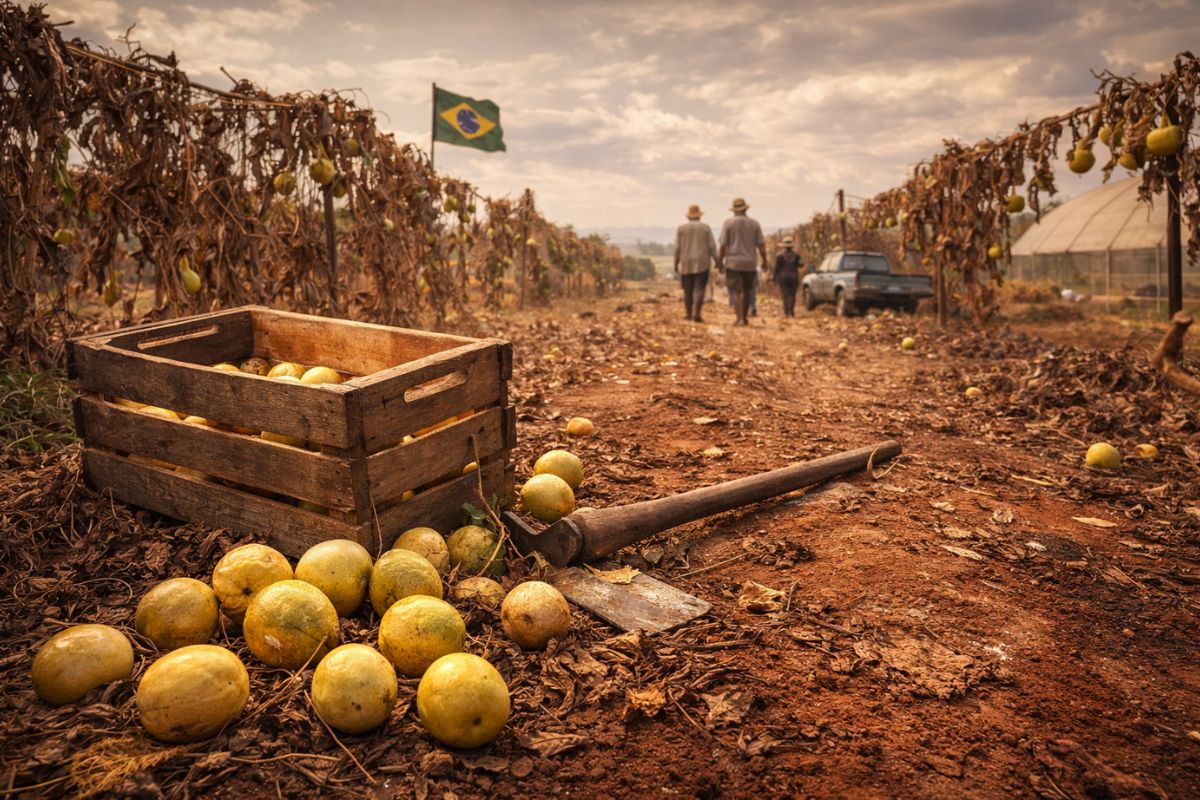
From 130 producers in the year 2000 to just 15 today: the dramatic decline of passion fruit in Araguari shows how the lack of labor in the Brazilian countryside is killing a decades-old agricultural tradition, even with Brazil being the largest producer in the world.
-
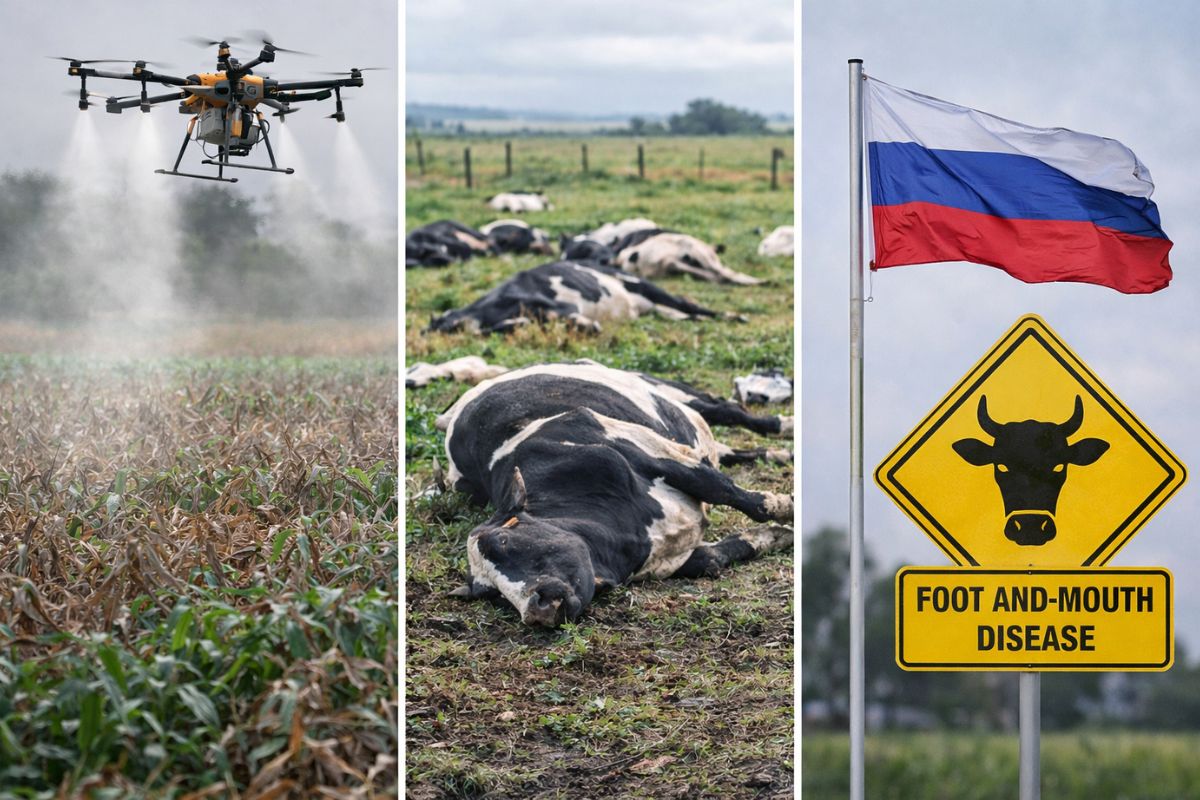
Agricultural drone sprayed poison into the air and destroyed the neighbor’s crops, causing 1 million in damages; 48 cows died from nitrite poisoning in the pasture, and Russia is hiding a possible outbreak of foot-and-mouth disease: the week was brutal for the rural sector.
-
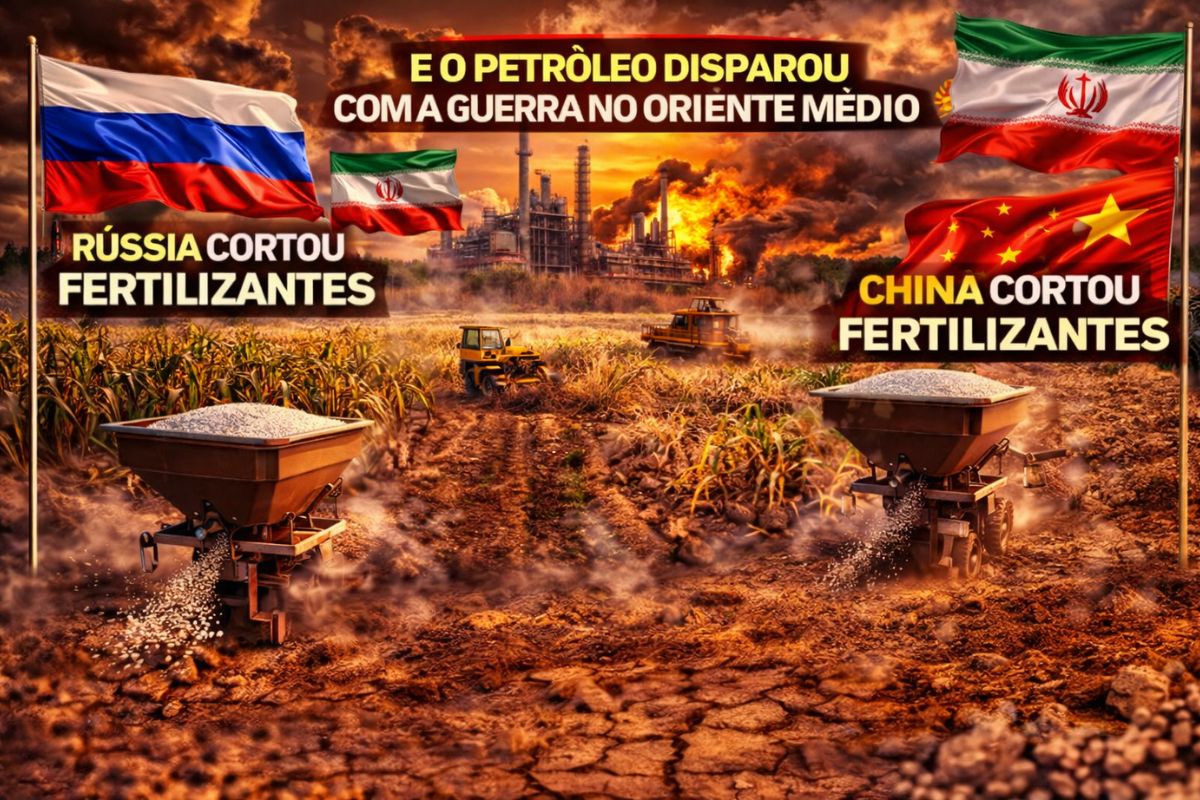
Russia cut fertilizers, China cut fertilizers, and oil prices soared with the war in the Middle East: sugarcane producers in the interior of São Paulo are seeing costs explode from all sides and warn that the effects will take months to be absorbed.
-
It does not come from flowers, is produced only every two years, and more than 90% goes straight to Europe: meet the bracatinga honeydew honey from Santa Catarina, considered one of the rarest in the world and overlooked by Brazil itself.

For the producer, the picture is even harsher: feed, equipment, and labor costs have risen about 50 percent in five years, making the need for supplemental income common to sustain operations.
In practice, only families with land and equipment already paid off over generations can operate without another source of income, according to testimonies collected by the report.
At the same time, the country is experiencing the smallest cattle herd in nearly 75 years, a result of years of drought and forced decisions to sell animals that, under normal conditions, would be kept for breeding.
Nonetheless, beef production is not falling proportionately, as the average weight of animals has been increasing.
Drought, Feed Costs, and the Dilemma of Selling or Retaining Females
CNBC visited the state of Nebraska, one of the main cattle hubs in the United States, to understand how drought alters the economic calculations of beef in the U.S..
At the family-owned Linetic X Ranch, co-owner Lin Tayen Lineman explains that about 30 percent of the herd goes to the food chain, and 70 percent is reserved for breeding, focusing on genetics, choosing “the best mother and the best father” to produce superior animals.
In years of severe drought, however, the lack of green pastures and adequate moisture makes natural feeding insufficient, forcing producers to turn to grain supplements.
Even with some recent drops in grain prices, this extra cost weighs on the balance sheet.
According to experts interviewed by CNBC, the central question for ranchers in 2025 is practically a coin toss: “Do we sell this cattle to the supply system or retain them to rebuild the herd?”.
The short-term logic pushes for selling, but rebuilding the herd is essential for any future price stabilization.
Cattle Cycle, Restricted Supply, and Relief Horizon Only After 2027

The so-called cattle cycle helps explain why beef in the U.S. is unlikely to get cheaper anytime soon.
It refers to the natural fluctuation of the national herd over 8 to 12 years, in response to supply and demand laws.
When cattle prices rise, producers tend to retain more females for breeding, which increases future supply and, at some point, lowers prices.
Subsequently, with lower prices, herds begin to contract again.
In theory, the recent spike in prices should already have incentivized the retention of females, but drought in key producing states has inverted the logic: without pasture and with high feed costs, many sold animals that would have been used for breeding.
The assessment heard by CNBC is that only close to the end of 2027 will herd rebuilding be sufficient to produce a consistent downward price movement for beef in the U.S. Until then, the trend is tight markets and volatility.
Fragmented Structure, Narrow Margins, and High Operational Risk
The beef industry in the U.S. has less vertical integration than the chicken industry, where one company often controls all stages of production.
In the case of pigs and poultry, the total confinement model, based on grain feeding systems, allows for rapid slaughter cycles, often in about six weeks, something impossible to replicate in beef production.
To take a calf to slaughter weight, the cycle takes between 18 and 22 months, making it much more difficult to control all phases.
The reported margins are tight: many producers work with profit expectations of $100 to $200 per head, subject to unpredictable risks like diseases, accidents, or even electrical shocks in the open field.
An isolated event can wipe out an entire season’s profit, reinforcing the financial fragility of the producer even in a high-price environment.
Concentrated Packing Industry, Investigations, and Conspiracy Allegations
At the industrial stage, beef in the U.S. is processed in a highly concentrated market.
According to the report, four major packing companies control about 85 percent of the slaughter in the country.
On November 7, then-president Donald Trump publicly accused these groups of conspiring to raise prices, and the Attorney General announced the opening of an investigation.
CNBC reminds us, however, that these suspicions are not new. Companies like Tyson, Cargill, and JBS had already paid tens of millions of dollars in 2025 to settle 2019 lawsuits that alleged collusion to raise beef prices in the United States.
The companies denied wrongdoing and, according to the broadcaster, did not respond to requests for comment on the new report.
For intermediaries like Omaha Steaks, which purchases beef from packers, the concentration means negotiating more expensive inputs in a market with few sellers.
Omaha Steaks, Quick Freezing, and Retail Pressure
CNBC Originals report showcases the behind-the-scenes of Omaha Steaks, which mainly serves the holiday market.
The company reports that the cost of a box of filet mignon has increased by 25 to 30 percent in just two or three years, even without passing on the full increase to consumers.
The executive interviewed states that sales prices have remained frozen for about three years and four months, but the current pressure has made this strategy increasingly unsustainable.
To protect itself, Omaha Steaks uses quick-freezing tunnels and massive freezers to store beef for up to three years, accumulating millions in products while waiting for the high December demand.
This strategy allows to buy above the current market price and still maintain competitiveness, because quick freezing preserves quality and flavor.
However, the executive himself admits that the market is approaching historic highs, and if costs continue to rise, part of this pressure will have to be passed on to consumers definitively.
Imports, Trump’s Tariffs, and Effects on Ground Beef
Imported beef represents a significant portion of the beef supply in the U.S., especially in the form of ground beef.
In October 2025, in a declared attempt to reduce prices at supermarkets, Trump announced he would quadruple imports with lower tariffs from Argentina.
However, experts interviewed by CNBC caution that most of what comes from abroad is ground beef, which limits the impact on other cuts.
In practice, when the government promises to reduce beef prices in the U.S. through imports, the main effect concentrates on ground beef, which serves as a reference for the entire market.
At the same time, recent trade policy has been marked by ups and downs: in July 2025, Brazil, responsible for about 15 percent of beef imported by the United States, faced a 40 percent tariff, a measure described by Reuters sources as a political punishment linked to a process against the former Brazilian president allied with Trump.
These tariffs were later reversed, but the fluctuation period damaged the prices received by exporters without translating into a consistent drop for the American consumer, according to reports.
Parasite in Mexico, Bans, and the Critical Role of Ground Beef
Another pressure factor on beef in the U.S. came from a sanitary standpoint. In 2024, Mexico accounted for 13 percent of beef imports to the United States.
An outbreak of a parasite known as “screwworm”, which feeds on animal tissue, led American authorities to ban the import of Mexican cattle starting in May, directly affecting the flow of animals used for ground beef production.
Despite these restrictions, total beef imports are expected to grow about 16 percent in 2025, according to projections cited by CNBC.
The central point, however, is that ground beef “sets the tone” for the entire U.S. beef market, influencing the average consumer’s price perception.
When ground beef supply is constrained by tariffs, sanitary bans, or herd shocks, the entire price structure tends to rise, even in premium cuts.
Resilient Demand, Superior Quality, and Post-Pandemic Habit Change
Theoretically, high prices should discourage consumption. In the case of beef in the U.S., the opposite has occurred over the last decade.
The report shows that demand for beef has increased, partly because the average quality of cuts has improved.
A few years ago, only 2 to 3 percent of the beef market was classified as “prime”, the highest USDA level, determined mainly by marbling.
Today, this level is said to have reached 10 to 12 percent, raising the consumption standard.
The coronavirus pandemic reinforced this trend.
With more time at home, consumers began preparing steaks and special cuts in their own kitchens, and according to Omaha Steaks, this habit has remained even after the reopening of restaurants.
The company states that almost 50 percent of its annual revenue is concentrated in the last quarter, with shipping about 90,000 refrigerated boxes per day in December, showing how the holiday season crystallized beef as a desirable product, despite record prices.
Public Policies, Herd Resilience, and the Window Until 2030
The U.S. government is discussing long-term measures to make beef in the U.S. less vulnerable to climate and market shocks.
The USDA proposal mentioned by CNBC includes expansion of pastures, predator control, and disaster prevention, aiming to build a more resilient supply by 2030.
Experts’ assessment is that these initiatives can reinforce supply security in three years or more, but have little immediate impact on current prices.
Meanwhile, producers warn of the risk of repeating the cycle.
Without a long-term vision, there is a chance that the country will face an even more complicated situation in two years, with an insufficient herd to meet demand that does not ease.
The central message of the CNBC report is that the solution for beef in the U.S. involves rebuilding the herd, stabilizing trade rules, and supporting the producer, and not just short-term interventions in retail or one-off import announcements.
Given this scenario of prolonged drought, tight herd, fluctuating tariffs, and strong demand, do you believe that beef in the U.S. will really start to become cheaper after 2027, or will consumers continue to face record prices for much longer?










-

-

-

-

-

-

9 pessoas reagiram a isso.