





 Portuguese
  English
  Spanish
  5 min of reading
  0 comments


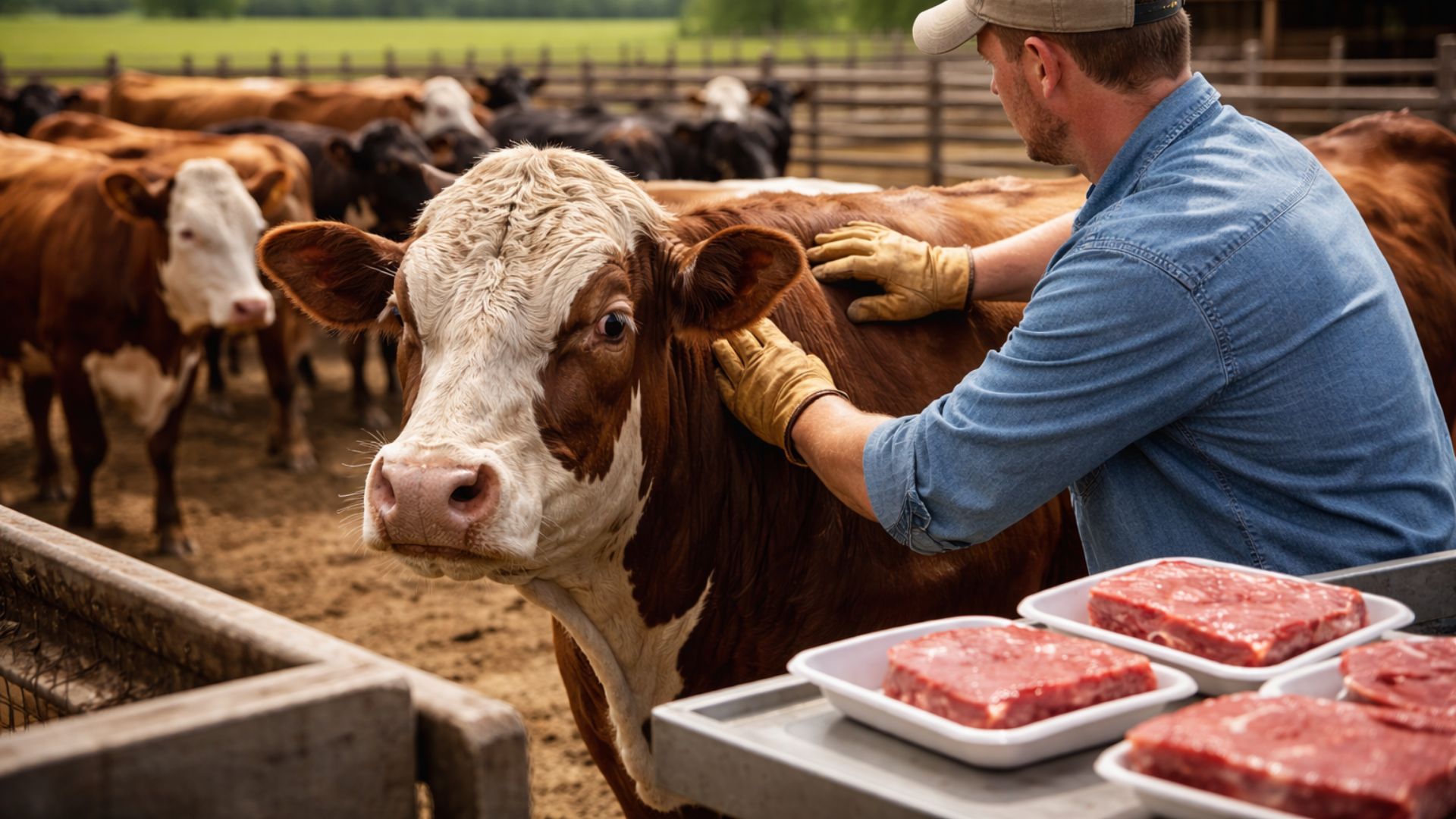
Advance of the New World Screwworm in Mexico Pressures the US Border, Mobilizes $750 Million Plan with Sterile Fly Production in Texas, and Occurs Amid the Smallest US Cattle Herd Since 1951 and Accumulated Increase in Meat Prices.
The United States has accelerated a sanitary and logistical response to try to contain the New World Screwworm that is spreading in Mexico and approaching Texas, at a time of limited cattle supply and already pressured prices in the American retail market.
The package under discussion involves about $750 million and aims to expand the use of sterile flies, a historical strategy for controlling the parasite, with enhanced surveillance at the border and facilities for dispersal and production on US territory.
Plan for $750 Million Foresees Factory for Sterile Flies in Texas
The USDA announced on February 9, 2026, that it has completed a sterile fly dispersal center in Edinburg, South Texas, and is working to open by the end of 2027 a facility dedicated to producing these insects, expanding the capacity currently concentrated in Panama.
-
The sugar-energy sector advances with agricultural technology, but agricultural productivity still raises concerns.

-
The eggshell that almost everyone throws away is made up of about 95% calcium carbonate and can help enrich the soil when crushed, slowly releasing nutrients and being reused in home gardens and vegetable patches.

-
This farm in the United States does not use sunlight, does not use soil, and produces 500 times more food per square meter than traditional agriculture: the secret lies in 42,000 LEDs, hydroponics, and a system that recycles even the heat from the lamps.

-
The water that almost everyone throws away after cooking potatoes carries nutrients released during the preparation and can be reused to help in the development of plants when used correctly at the base of gardens and pots, at no additional cost and without changing the routine.



The technique involves releasing large quantities of sterile males to disrupt the reproduction of the pest and create a sanitary barrier, while field teams intensify traps, inspections, and rapid response to suspicions in herds and domestic animals.
Although the USDA had not recorded detections of the parasite within the United States until the most recent communications on the subject, concerns have increased with the proximity of Mexican outbreaks and the risk of economic impacts on a supply chain already operating with lower margins.
What is the New World Screwworm and How Does the Pest Affect Cattle
The New World Screwworm is caused by larvae of a blowfly that lays eggs in open wounds; when they hatch, the larvae begin consuming live tissue, which can lead to the animal’s death if there is no prompt treatment.
American and Mexican authorities treat the problem as a direct threat to livestock because infestations can spread through handling, transportation, and the presence of wounds in animals, increasing costs for surveillance, medications, labor, and production losses.
Besides cattle, official reports and specialized coverage indicate that other animals may be affected, and the risk to humans is considered rare, but sufficient to justify notification and containment protocols, especially in rural areas with more contact with animals.
Mexico Registers 13,106 Cases Since 2024 and Expands Sanitary Surveillance
Data from the Mexican government compiled until December 31, 2025, indicate 13,106 cases since November 2024, with 671 still active, in an advance that began in Central America and has since been moving north.
The state of Chiapas leads the number of occurrences, followed by Oaxaca, Veracruz, and Yucatán, and authorities have been updating reports as new outbreaks appear, increasing the challenge of keeping production and transit areas of animals under control.
At the end of December, the Mexican Agriculture Department reported a case in a calf in the state of Tamaulipas and then recorded a new episode in a goat in the State of Mexico, a region bordering the capital area, Mexico City.
According to the same communication, the animal was treated and other specimens on site tested negative and received preventive measures, a procedure used to reduce the chance of spreading on properties with animal circulation and the presence of wounds that could attract the flies.
Closed Border Reduces Cattle Supply and Pressures Slaughterhouses

With the advance of the outbreaks, the USDA suspended on May 11, 2025, imports of live cattle, horses, and bison through entry ports on the southern border, citing the rapid progression of the pest in Mexican territory.
Shortly thereafter, on July 9, 2025, the department announced the closure of animal trade through southern ports, tightening the sanitary barrier and reducing a flow used for feeding in confinements and supplying slaughterhouses in the United States.
The restriction has a direct effect on the supply chain because a portion of the cattle entering from Mexico is usually finished in intensive systems before slaughter, and the interruption amplifies competition for domestic animals in a market already marked by scarcity.
Meat Prices Rise as Cattle Herd Reaches Lowest Level Since 1951
The rise in beef and meat prices in the United States precedes the new effort against the screwworm, and data from the Bureau of Labor Statistics show that the average price of ground beef, 100% beef rose about 21.8% between January 2025 and January 2026.
This increase is linked to a combination of factors, such as higher feed and handling costs, the impacts of prolonged droughts on pastures, and a retention cycle of breeding stock that reduces short-term supply, even with sustained demand.
On January 30, 2026, the USDA statistical service reported that the total number of cattle and calves in the country was 86.2 million heads as of January 1, and analyses associated with the report highlight that the inventory is the lowest since 1951.
In the beef herd segment, the number of breeding cows fell to 27.6 million as of January 1, 2026, the lowest level since 1961, a sign that recovery is still slow after years of adverse weather and high costs.
Trade Tariffs Increase Uncertainty in the Beef Market
The price scenario has also been influenced by trade changes, including former President Donald Trump’s decision to impose a 50% tariff on most Brazilian products on July 30, 2025, a measure that affected agribusiness sectors and added uncertainty.
Although the dynamics of imports and substitutes vary by cut and origin, the rise in trade costs tends to reverberate in chains that depend on international flow to balance supply and demand, especially when the domestic herd operates at a low level.
The result is a situation where border sanitary policy, the biology of the parasite, and structural supply constraints converge, making any additional shocks, such as the possible need for new restrictions or the expansion of outbreaks, more sensitive.
With no room for “slack” in the herd, the risk of the screwworm advancing is closely monitored by producers and slaughterhouses, who are already facing higher costs and operational adjustments in a market where meat remains among the most visible items in the budget.
With a billion-dollar plan at stake, a tighter border, and rising numbers on the Mexican side, to what extent will the response with sterile flies be able to preserve supply and avoid a new round of price increases for meat in the United States?









-

-

2 pessoas reagiram a isso.