





 Portuguese
  English
  Spanish
  4 min of reading
  2 comments


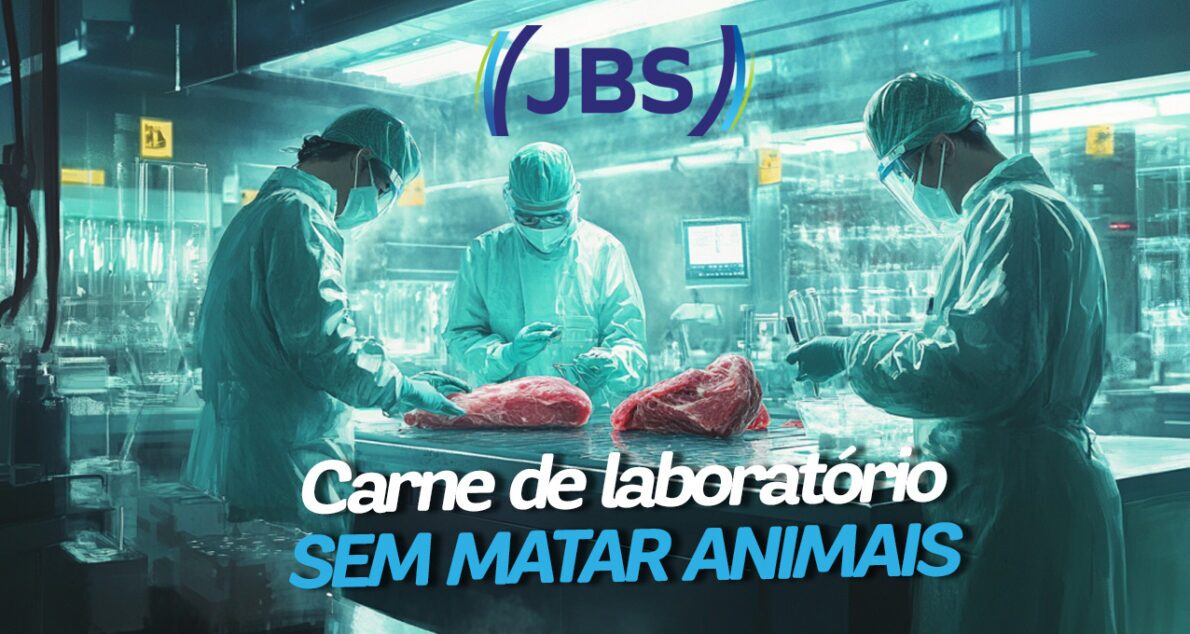

JBS and Government Entity Lead Million-Dollar Research to Develop Cultivated Meat, an Alternative to Traditional Meat That Promises Food Security and Sustainability. The Initiative Involves Startups, AI, and Advanced Science, Positioning Brazil at the Forefront of Food Innovation.
Imagine a future where the meat you consume didn’t require the slaughter of any animals. This scenario, which seemed like science fiction until recently, is becoming increasingly closer to reality.
And Brazil, one of the largest meat producers in the world, does not want to miss out on this revolution. A partnership between a government entity and JBS is investing billions to make this future possible, with implications that could transform the food industry as we know it. But what is behind this bold project?
The Race for the Meat of the Future
In an initiative that draws attention for its magnitude, Embrapii (Brazilian Company for Research and Innovation in Industrial Technology) is leading an innovative project that could change the course of meat production.
-
The government requests the Federal Revenue Service for a new system to automate the income tax declaration, reducing errors, time, and bureaucracy for millions of Brazilians.

-
Pix in installments, international Pix, and contactless payment without internet: the Central Bank revealed the new features coming to the tool that is already used by almost every adult in Brazil.

-
Mercado Livre has just started selling medications with delivery in up to three hours to your door, and this move could completely change the way Brazilians buy medicines on a daily basis.

-
In Dubai, rising tensions from the war in the Middle East are causing super-rich individuals to leave the Gulf and direct their fortunes to a new financial refuge in Asia.


The entity is heavily investing in research seeking alternatives for animal protein. The proposal is simple, yet revolutionary: to produce real meat, with flavor, texture, and nutritional value, without the need to slaughter animals.
According to the website Compre Rural, the total investment in the project is R$ 6.5 million, and it is funded through the Basic Funding Alliance (BFA), which allocates non-reimbursable resources for the co-financing of research and development (R&D) projects.
This research started in late 2023 and has a two-year timeline. Several SENAI Institutes of Innovation are participating in the endeavor, such as the SENAI Institute of Innovation in Embedded Systems (ISI-SE) in Florianópolis (SC), SENAI CIMATEC in Salvador (BA), and the SENAI Institute of Innovation in Biosynthetics and Fibers (ISI B&F) in Rio de Janeiro (RJ).
Additionally, companies like JBS Biotech and Duas Rodas, as well as startups such as BiomeHub and AlgaSul, are also involved.
Challenges and Innovations on the Path to Cultivated Meat
The project is a response to a global demand for sustainable solutions. In 2019, the UN warned about the need for changes in food production and consumption, predicting that the global population would reach around 10 billion people by 2050.
According to the report, to ensure food security and reduce environmental impacts, it is essential to reformulate the food production system.
However, producing meat in a lab is not a simple task. One of the main challenges is to replace fetal bovine serum, used in cell culture, with non-animal origin components that are sustainable and preserve the sensory characteristics of traditional meat.
“The focus of the project is to identify and test sources of alternative ingredients”, said Leonardo Oliveira, Operations Manager at ISI-SE. Throughout the two years of research, the collected material will be analyzed with the help of artificial intelligence (AI) to optimize data and allow for better decision-making.
Investment and Risk: The Role of Embrapii
Embrapii assumes most of the financial risk, investing 90% of the total, while JBS and Duas Rodas contribute the remaining 10%. According to Oliveira, this funding structure is essential in projects with low levels of technological maturity, where large companies tend to be more hesitant to invest.
According to Fernanda Berti, Executive Director of the JBS Biotech Innovation Center, the company has already been investing in the cultivated protein market since 2022.
The goal, she says, is not to compete with traditional meat production methods, but rather to offer a viable alternative. “This technology is a tool that can contribute to food security in the future”, highlights Berti.
Multidisciplinary Collaboration and a Promising Future
The strength of the project also lies in the collaboration between various actors. In addition to research institutions and companies, startups like BiomeHub, specializing in microbiomes, and AlgaSul, focused on biotechnological solutions from algae, also play an important role in the development of the research.
According to Salvelino Nunes, manager of research and advanced technology at Duas Rodas, this exchange of knowledge between different players brings a significant advantage to the project, allowing for the exploration of new possibilities in the field of food innovation.
Karine Lena Meneghetti, technical-scientific manager of the project, explained that one of the greatest assets of the research is the use of omics sciences, which are typically not applied in the food industry.
According to her, studying these sciences enables a more comprehensive analysis of biological media, which could result in robust and innovative technologies for the production of cultivated meat. “By 2030, we hope it will be possible to develop alternative ingredients from plant and microbial sources”, forecasts Meneghetti.
Impacts on the Future of Food
The project, lasting two years, aims to develop data analysis tools using advanced technologies such as genetic sequencing, chemical and cellular analyses, bioinformatics, and artificial intelligence.
This platform will be able to identify potential alternative ingredients for the production of cultivated meat. The expectation is that by the end of the project, these tools can be widely used, enabling a revolution in how meat is produced globally.
Brazil, with its enormous capacity for meat production, could become a protagonist in the cultivated meat revolution, contributing not only to food security but also to environmental preservation. The question remains: to what extent will this new technology impact the traditional meat market?
With the future of proteins being shaped in laboratories and major companies like JBS investing billions in this innovation, are we ready for a new era of food? And you, reader, do you believe that cultivated meat can really replace traditional meat? Share your opinion in the comments.








Admirável Mundo Novo, onde o controle social era 100% e as pessoas eram produzidas em úteros artificiais e eram condicionada por castas. Vai ser triste o destino das futuras gerações
“A Embrapii (Empresa Brasileira de Pesquisa …) estuda criar uma carne artificial (se não é a natural, é artificial) propondo ser uma solução na geração e no fornecimento de um alimento natural rico em nutrientes”.
Veja: Se o Brasil é o maior fornecedor mundial de carne bovina, qual a razão para se criar uma carne artificial estando o país numa condição comercialmente favorável nesse setor ?
Para quem consegue decifrar um “código”, não precisa ser gênio: basta não ser ****.
Essa futura (e bem viável) substituição, num país em que é comercializada centenas de toneladas de carnes de amburguer (super processadas), salsichas, e toda ordem de embutidos que se possa imaginar (que, gradativamente, mata os consumidores), é notória a intenção de “cut the excess of people in the world”. Do you know what I mean ?