





 Portuguese
  English
  Spanish
  4 min of reading
  8 comments


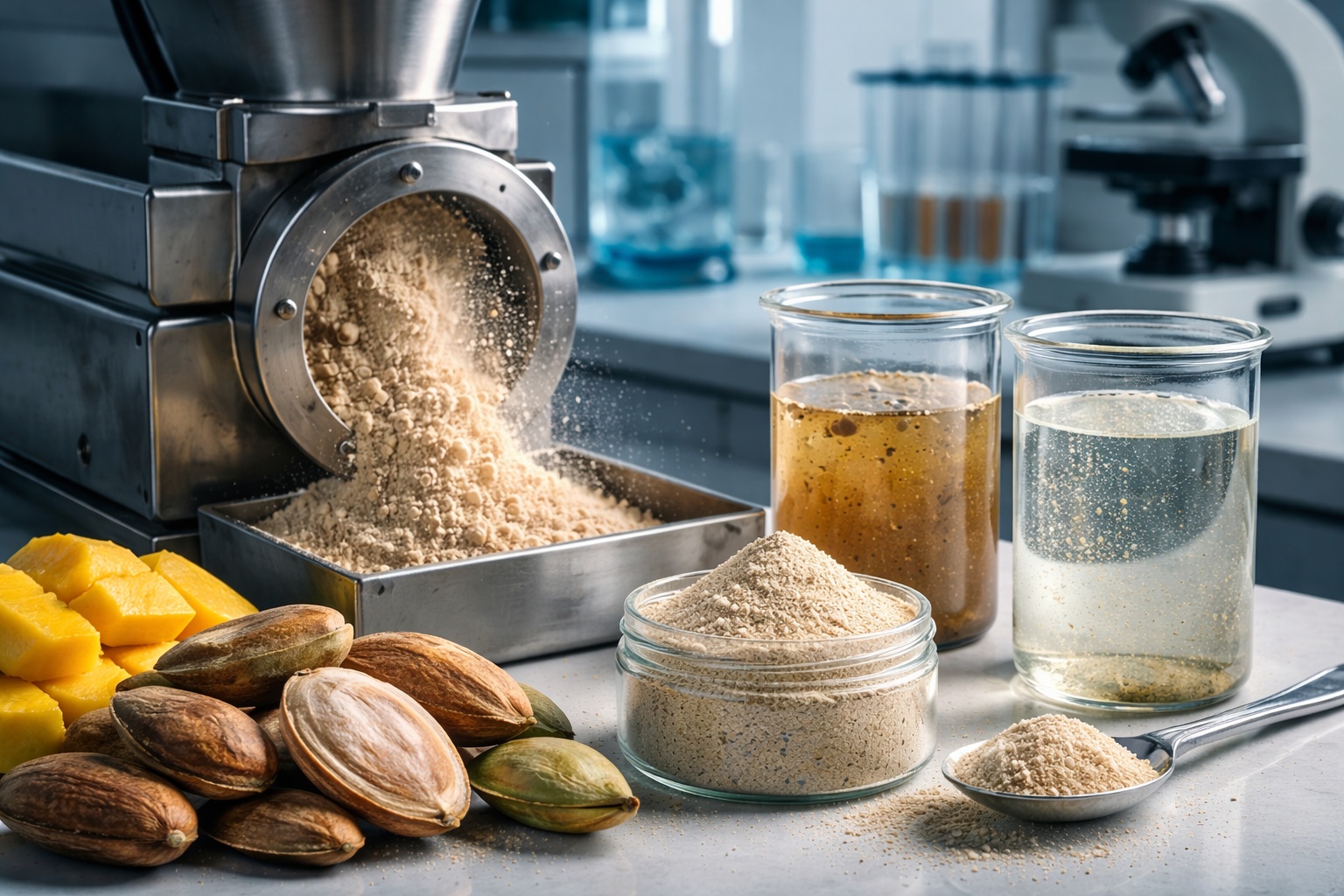


Mango Seed Waste Becomes Adsorbent Powder Capable of Removing Up to 90% of Heavy Metals from Water, Turning Agricultural Waste into Environmental Technology.
A tropical fruit that dominates markets in Latin America, India, and Southeast Asia is giving rise to something few imagined: an environmental treatment material with industrial potential. The mango seed, usually discarded as organic waste, has been transformed into an adsorbent powder capable of removing heavy metals from industrial effluents with over 90% efficiency in lab tests, paving the way for a type of “low-cost chemical engineering” based on agro-industrial waste.
This advancement combines three strategic factors: abundant waste volume, processing with established techniques, and measurable environmental results, something that appeals to sanitation industries, mining companies, tanneries, galvanoplasties, research laboratories, and food producers.
The Fruit That Becomes Waste and the Waste That Becomes Raw Material
Mango is one of the most consumed tropical fruits in the world and drives massive agricultural chains. India, China, Thailand, Mexico, and Brazil are among the largest producers, collectively exceeding 40 million tons per year.
-
French “ghost” submarine lost in World War II reappears after more than 80 years on the seabed near the coast of Spain.

-
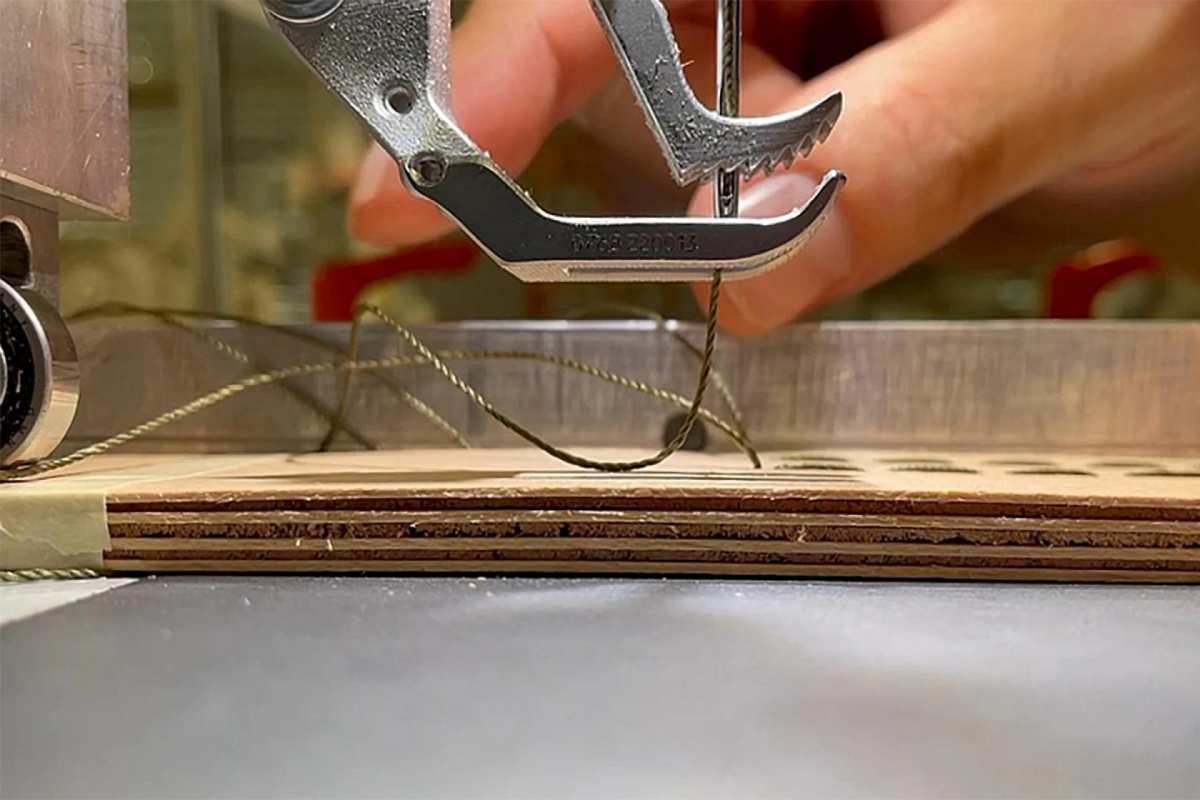
A simple stitch in wood with nylon thread can reduce adhesives, speed up production, and make sheets up to 4 times stronger and 14 times more difficult to break.
-
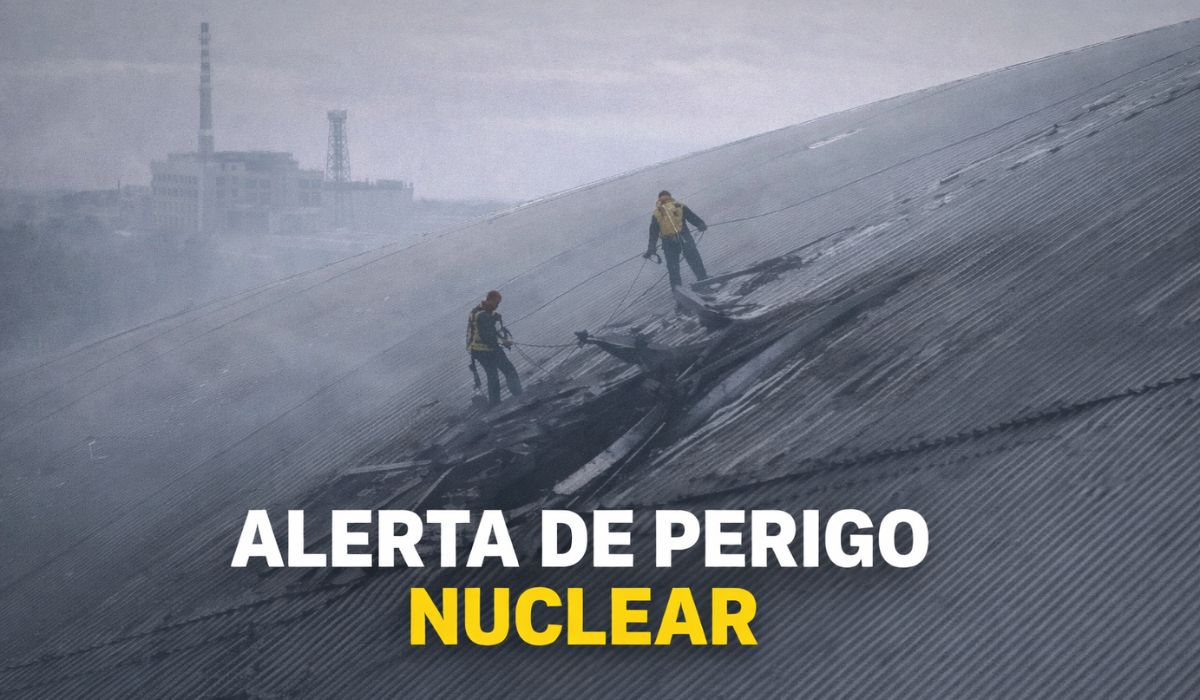
The gigantic steel shell built to contain Chernobyl for a century has been pierced by a drone, exposing a critical system and creating a hole that could cost over 500 million euros to repair.
-
Brazilian Navy reaches a new level by taking over an airport with a 1,600-meter runway used by 1,800 military personnel and autonomous attack drone testing.



However, there is a detail: between 30% and 45% of the fruit’s weight is seed or skin, materials that have no direct food use and quickly become waste during industrial processing — especially in the production of juices, pulps, and concentrates.
This waste has high lignin, cellulose, and hemicellulose content, structures that are not nutritious for humans, but have excellent compatibility with carbonization and chemical activation processes. In other words: physically, the mango seed is already a perfect natural matrix to become adsorbent powder — it just needs to be processed correctly.
How the Transformation of the Seed into Adsorbent Powder Works
The industrial process varies according to the purpose but generally follows four main steps:
Drying
The seed is removed from the fruit, washed, and dried. Drying can be natural (in the sun) or in controlled greenhouses.
Crushing
The dry seed is mechanically broken down and sieved into specific grain sizes.
Pyrrolysis
The biomass goes into furnaces at temperatures between 300 °C and 600 °C with little oxygen, transforming the material into activated carbon.
Activation
The carbon is physically (steam) or chemically (acids or bases) treated to open microscopic pores. These pores are the secret to its performance.
The result is a plant-based activated carbon, with a high surface area, porous microstructure, and surface electrical charge capable of attracting metal ions dissolved in water.
In the end, this powder works as a “microscopic sponge” for industrial contaminants.
Where This Material Works and What It Removes
The tests conducted so far show high efficiency in removing heavy metals such as:
- Lead (Pb²⁺)
- Cadmium (Cd²⁺)
- Nickel (Ni²⁺)
- Copper (Cu²⁺)
- Zinc (Zn²⁺)
- Chromium (Cr⁶⁺) (in some reduction protocols)
The main application scenarios are:
Toxic Industrial Effluents
From galvanoplasties, tanneries, mining companies, and chemical industries.
Washing Waters
In slaughterhouses, agribusiness, port areas, and food processing plants.
Urban Diffuse Pollution
Especially in rainwater that carries metals from rooftops, vehicles, and paints.
Efficiency varies according to pH, ionization, initial concentration, and contact conditions. Even so, controlled tests have already recorded removals above 90% in batch systems, which is significant for a material considered “agricultural waste.”
Why This Type of Solution Draws So Much Attention
There are three central reasons explaining the global popularity of this line of research:
Abundance and Low Cost
Tropical countries produce mountains of mango seeds throughout the year. The initial cost of the raw material is practically zero, because it is waste.
High Performance for Heavy Metals
Plant-based activated carbons can rival mineral carbons in several industrial scenarios.
Circular Chain
Transforming organic waste into a high-value product is the dream of the circular economy — especially in the context of sanitation and ESG.
The Connection with Sanitation and the Future of Water
Heavy metals are one of the most problematic contaminants in effluents, not only because they are toxic but because they do not degrade biologically. In other words:
- they remain in the environment for decades
- they enter the food chain
- they accumulate in living organisms
- they affect soil, water, and human health
Therefore, effective adsorption technologies are rare and valuable. Once a fruit seed can address a problem of this scale, the impact is strategic: developing countries gain real alternatives to what was previously only feasible with expensive technology.
Real Limitations and Challenges (and Why It’s Not Yet in Every Industry)
Despite the high potential, there are obstacles:
- Industrial Scaling (processes are still small)
- Control of Grain Size and Porosity
- Need for Regeneration or Safe Disposal
- Lack of International Standardization
- Low Commercial Diffusion Outside Academia
In other words: the concept is validated, but it’s still traversing the path between laboratory and real economy.
Invisible Technology That Solves Giant Problems
If someone asks “how can a mango seed save a river?”, the answer is not metaphorical — it is technical.
This type of solution is not “exotic”; it is engineering applied to scarcity, allowing countries with less industrial capital to utilize what they have in abundance to solve complex environmental problems.
It is a rare case where:
- Waste Becomes Input
- Pollution Becomes Resource
- Science Becomes Sanitation
- Agriculture Becomes Technology
For many countries, this is not a curiosity; it is a survival strategy.





Yo uso la cáscara de la semilla de mango para hacer juguetes a los niños y desarrollar su creatividad,también uso los cartones de huevos hago juegos de ajedrez ,flores,nacimientos,móviles para bebé,y muchas artesanías más.
Muito interessante, uma ótima solução para limpar a água com material que vai pro lixo
Muy interesante, hay que buscar la utilidad a todo. Se podrá utilizar ese polvo para combinar con cemento como el azerrin