





 Portuguese
  English
  Spanish
  4 min of reading
  0 comments


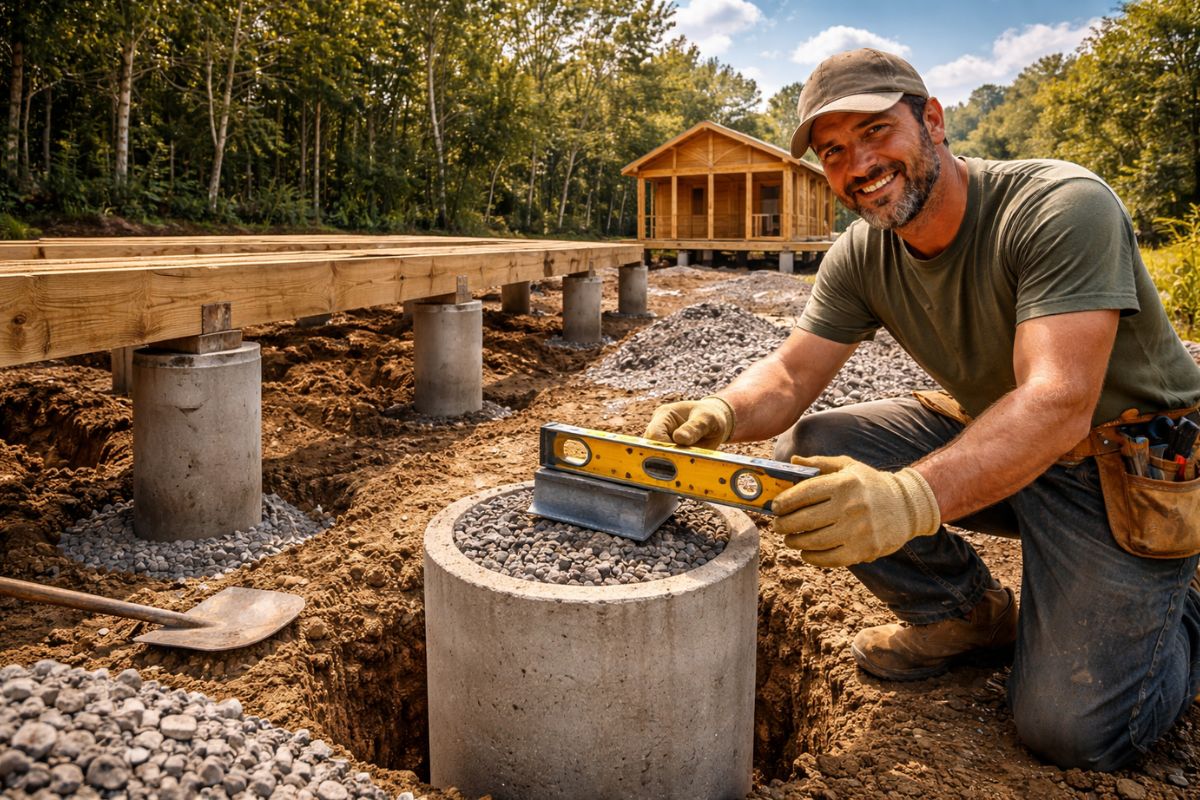
Carpenter Explains A Simple Structure With Concrete Pipes For Wooden House, Using Firm Soil, Compacted Gravel, Careful Leveling, And Concrete Pouring To Create A Pilotis-Type Foundation Efficiently.
A carpenter demonstrated a practical method for making a foundation in a wooden house using concrete pipes as the base for pilotis. The idea is to dig holes about 1 meter deep, prepare the bottom with compacted gravel, center the tube, and then finish with rebar and concrete, forming a quick structure for lightweight constructions.
The carpenter Fabiano makes an important observation before starting: this type of foundation depends heavily on the soil. In the case demonstrated, the soil is sandy and extremely firm, in a cutting area, meaning native soil that has been compacted over time. In weak, wet, or fill soils, it is recommended to seek technical guidance, as it may be necessary to use a ballast system to better distribute the load and increase anchoring.
Carpenter Explains When Foundation With Concrete Pipe Makes Sense
The carpenter makes it clear that the technique is indicated for light structures, such as wooden houses, which will not have the same weight as a heavy masonry construction. The main condition is that the soil allows it because stability comes from the combination of firm soil and a well-prepared base at the bottom of the hole.
-
New CCR concrete paving technology promises roads up to 3x more durable, less maintenance, and cost reduction in Brazil.
-
Made from recycled plastic, plastic wood is gaining space in the construction industry because it does not rot, resists moisture, and reduces maintenance costs over the years.

-
Florianópolis will receive a million-dollar BRT that will begin construction in 2026 with nearly 400 million in funding from the federal government and the Inter-American Development Bank, and the map already shows the routes for the exclusive bus corridors.

-
Without a blueprint, without an engineer, and using scrap from the dump, a father spends 15 years building an 18-room castle for his daughter, featuring tram tracks, 13 fireplaces, and over 700 m², which may now be demolished.

In the example, he works on native soil, with good resistance, which allows him to execute the solution directly.
When the soil is weaker, muddy, too wet, or has characteristics that change throughout the lot, the carpenter reinforces that it is safer to have someone experienced evaluating, like a professional in the field, to avoid settling and future problems.
How The Carpenter Makes The 1-Meter Hole Without Losing Control Of The Axis
To dig the hole, the carpenter uses an auger to speed up the process, starting with a smaller pilot hole and then widening it. He mentions using a thinner auger at first and then a larger one to increase the diameter of the hole while keeping the axis more centered.
During drilling, he comments that the work changes when rocks and variations in soil appear, which requires more effort and patience. The goal is to reach about 1 meter until a firmer layer is found and only then prepare the bottom to receive the concrete pipe.
Compacted Gravel Enters To Stabilize The Bottom And Improve The Settlement
With the hole ready, the carpenter compacts what has fallen to the bottom using what is available, such as a piece of wood that serves as an improvised compactor. The intention is simple: remove looseness and settle the bottom so that the base becomes more even before receiving the gravel.
After that, he adds about two layers of gravel and does light compaction, not to “crush” the gravel but to set the material into the ground and create a more stable support. This detail helps reduce movements and improves the base of the pilotis-type pillar.
Carpenter Centers The Pipe And Packs The Soil Around To Lock The Tube
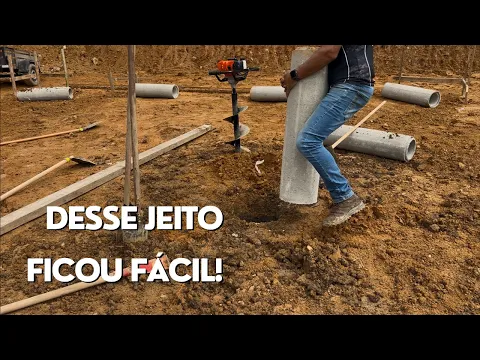

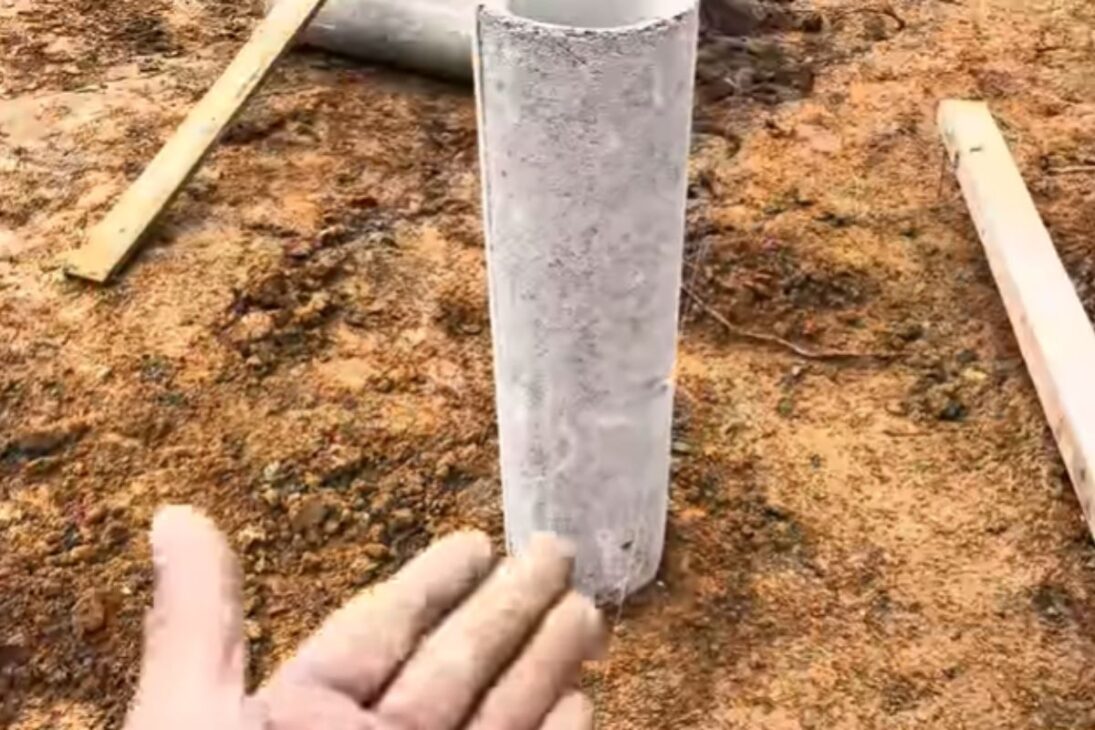
After preparing the bottom, the carpenter positions the concrete pipe and checks the centering. The tube needs to be aligned to receive the rebar and concrete later without creating misalignment between the points.
With the pipe in place, he compacts the surrounding soil, locking the assembly. Here, the care is to avoid lateral looseness and ensure that the tube does not “dance” when the rest of the structure is assembled.
Carpenter Fabiano mentions the dimensions of the pipes used: about 20 cm internal diameter and around 25 to 28 cm external diameter, explaining that this meets a quick foundation project for a wooden house well.
Leveling And Final Cut Ensure All Pillars Are At The Same Height
After installing the pipes, the carpenter explains that the finishing includes rebar and concrete, but he leaves part of the adjustment for the right moment, so as not to interfere with the alignment while he is still digging the other holes.
The strategy is to execute all points first and only then check the level with a laser and cut the pipes to the necessary height, ensuring that the pilotis-type pillars remain uniform.
In the case shown, he mentions that he would make 20 but opted for 12 to leave a larger free span, reinforcing that the distribution can vary according to the project.
Concrete Pouring And Rebar Finalize The Pilotis-Type Foundation
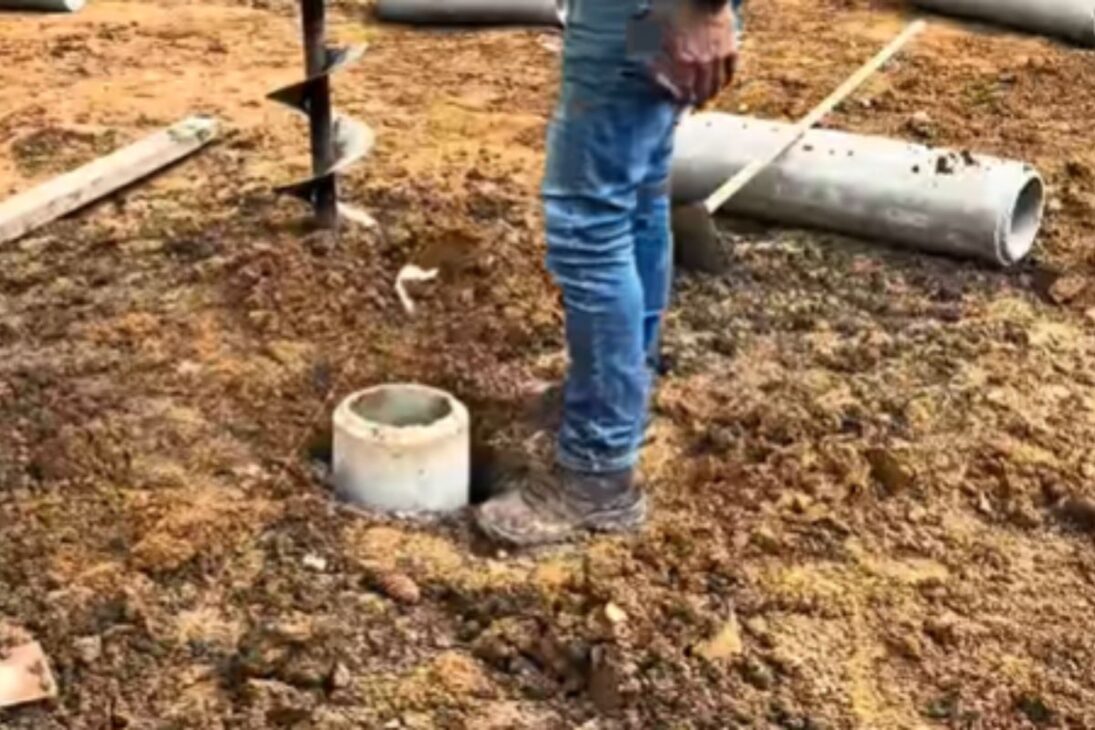
With the tubes positioned, the carpenter indicates the final step: place the rebar and pour concrete to form the definitive pillar. This closure transforms the pipe into a stable mold for the concrete, creating a firm base to support the wooden house.
The logic of the method is to combine well-executed hole, compacted gravel, centered tube, and concrete pouring, resulting in a rapid, efficient foundation designed for situations where the ground allows and the structure is not heavy.
And for your project, would you use this foundation with a carpenter using concrete pipes or would you prefer a more traditional method, even spending more time and money?








-

-

-

-

-

-

85 pessoas reagiram a isso.