





 Portuguese
  English
  Spanish
  5 min of reading
  0 comments


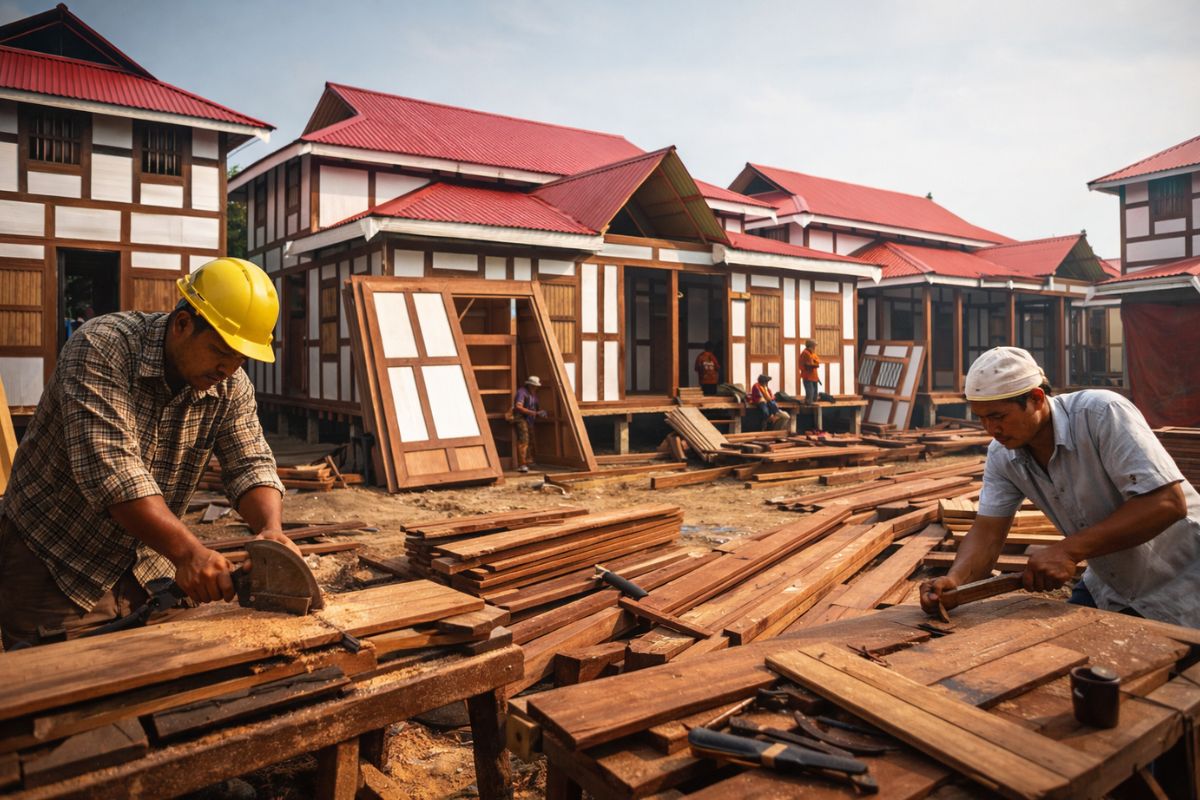
In Southern Bangladesh, Prefabricated Houses Are Consolidating as a Quick and Affordable Solution for Those Living in Areas Vulnerable to Floods and Storms. Built by Experienced Carpenters, These Wooden Structures Can Be Disassembled, Transported, and Reassembled Quickly, Creating a Growing Local Industry and Attracting Families from Across the Country.
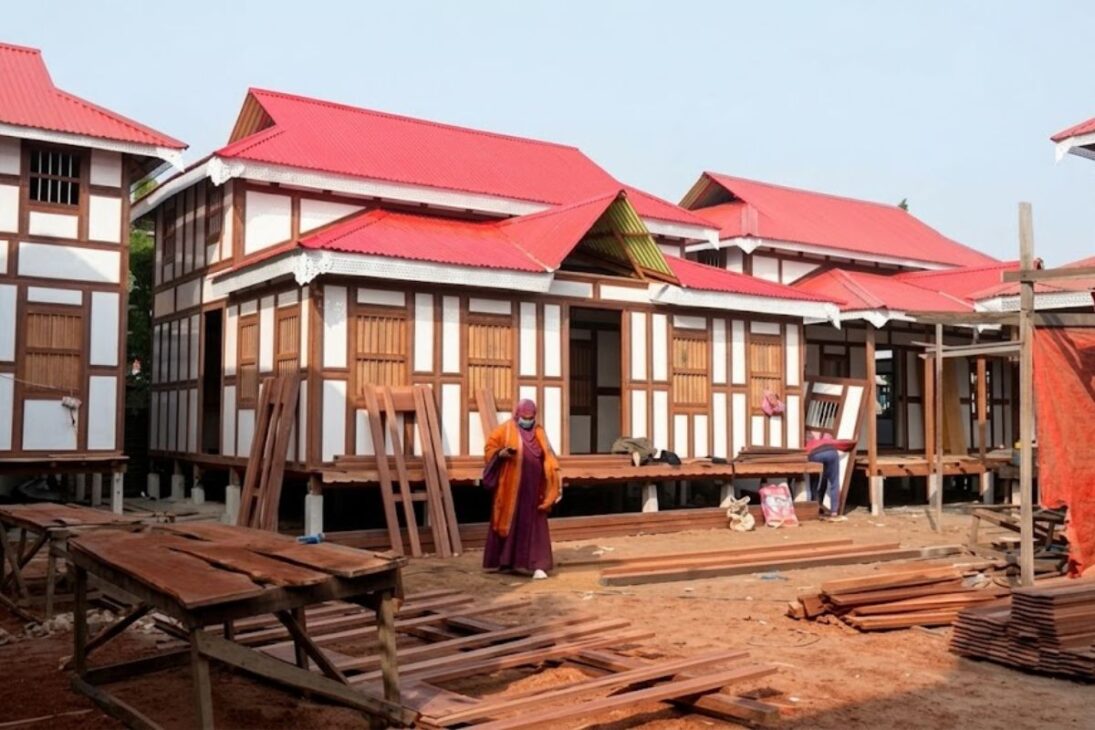
According to the channel DW Español, in Southern Bangladesh, prefabricated houses are becoming an increasingly sought-after alternative for families living in flood and storm-prone areas. Produced by local carpenters, these wooden structures can be disassembled, transported, and reassembled in just one day.
The proposal combines speed, mobility, and lower costs compared to traditional masonry constructions. In a country where extreme weather phenomena are frequent, the ability to move the house to a safer location has transformed the way many families think about housing.
Carpenters Transform Tradition into Functional Prefabricated Houses
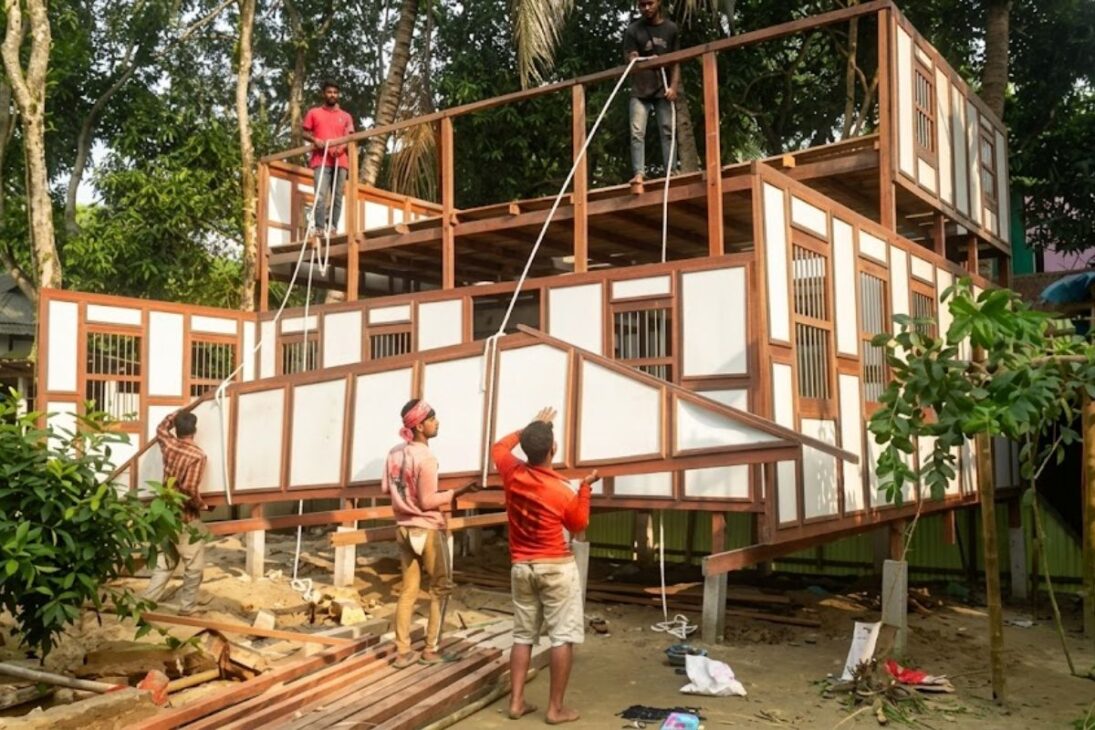
The construction of prefabricated houses in Southern Bangladesh is carried out by carpenters who master traditional woodworking techniques. Many learned the craft as young individuals and have accumulated decades of experience in producing modular structures.
-
Abandoned house for 15 years disappears in the woods, shocks owner with unrecognizable scenery and is reborn in an intense transformation after almost 90 hours of work in just 10 days.
-
In just three hours, a natural stone floor transforms the entrance of the house with an organic effect, immediate drainage, and a sophisticated non-slip finish that doesn’t puddle water, dries quickly, and impresses with the final result.
-
‘Interlocking brick’ made of earth arrives in the construction industry with cost reductions of up to 40% on the project.
-
Espírito Santo will receive the largest engineering project in its history with the duplication of BR 262, which will have 50 viaducts, 28 bridges, and 2-kilometer tunnels cutting through the most challenging mountainous region of the entire state.

A team leader explains that he has been working with this type of construction for over two decades. A small or medium house usually takes between seven and ten days to be built, while larger models may require up to a month of work and teams of four or five artisans.
Despite the manufacturing time, the significant difference emerges in the final stage. The houses are designed so that their pieces fit quickly on the chosen ground. The complete assembly can happen in just one day, allowing the family to occupy the space almost immediately.
Why Prefabricated Houses Are Ideal for Flood-Prone Areas
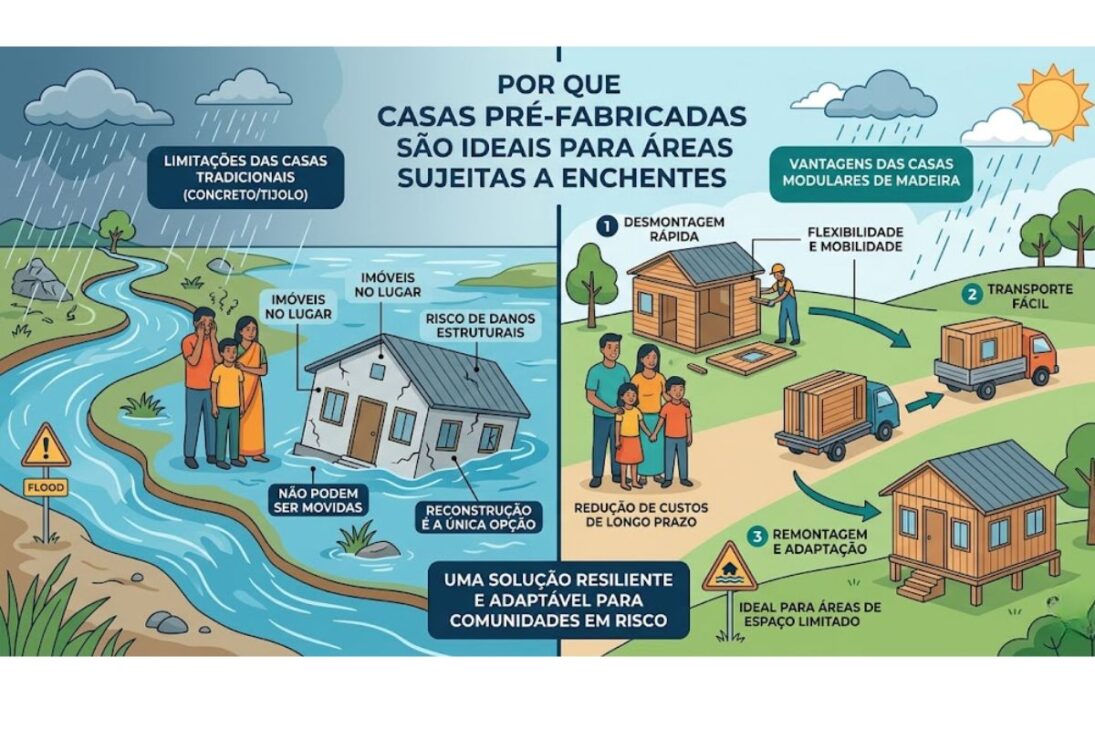
A large part of the demand for prefabricated houses comes from the southern coast of Bangladesh, an area frequently affected by heavy rains, overflowing rivers, and tropical storms.
In this scenario, concrete or brick houses present an important limitation: they cannot be moved. When the area becomes unsafe or the structure suffers damage, the only option is often to rebuild.
The wooden modular houses offer another possibility. They can be disassembled and transferred to another plot of land, allowing families to adapt their housing to environmental or urban changes. In communities where space is often limited and densely occupied, this mobility represents a significant advantage.
Furthermore, if a house becomes old or unsuitable, its parts can be replaced relatively easily. This flexibility reduces costs and extends the lifespan of the construction, critical factors for families on a tight budget.
How Much Do Prefabricated Houses Cost and Why Are They More Affordable
The price of prefabricated houses varies depending on the size, material quality, and finishing level. Simple structures can cost around three thousand euros, while larger and more complete models can reach twenty thousand euros.
Even in the highest price range, these houses are generally cheaper than equivalent masonry constructions. This is because a large part of the structure is prepared in advance at the carpenters’ workshop, reducing time and costs at the installation site.
This model has also spurred the emergence of a small regional industry. Nearly twenty-five distributors are currently active in the market, selling ready-made or custom houses for clients from various regions of the country.
Family-run businesses are leading this growth. In some cases, children have taken over businesses started by their parents and expanded production, introducing new materials and broadening the supply network.
Demand Grows Inside and Outside the Country
The interest in prefabricated houses has increased significantly in recent years. In the past, many people were not even aware of this type of housing, but the dissemination of videos and online content has broadened the sector’s visibility.
Today, clients from different regions of Bangladesh seek manufacturers to acquire modular houses. Demand also comes from Bangladeshis working abroad who wish to build a house for relatives remaining in the country.
In this case, the purchase often occurs online. These buyers value the speed and predictability of construction, as they frequently cannot personally oversee each stage of the work.
Some companies manage to deliver between eight and ten houses per month. After the structure is completed, teams travel to the designated location to carry out the assembly, which typically takes two or three days.
Durable Wood and Details That Preserve Local Tradition
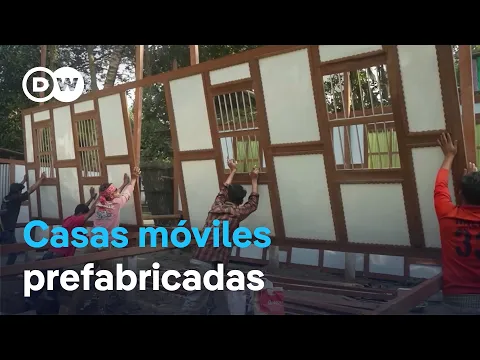

Despite the modernization of the business model, prefabricated houses maintain traditional elements of regional architecture. One highlight is the front terrace, considered an essential part of the house.
This space serves as a gathering area and protection against intense summer heat. There, residents often sit to chat, drink tea, or simply rest, enjoying the shade created by the projected roof.
The durability of the structure also depends on the choice of materials. To ensure resistance, some manufacturers use wood known as “Ironwood,” imported from countries like Nigeria or Malaysia.
This type of wood is valued for its ability to resist rot. In some applications, the warranty can last up to 80 years, which increases buyer confidence and reinforces the reputation of the constructions.
A Simple Solution That Addresses Complex Challenges
The growth of prefabricated houses in Southern Bangladesh reveals how seemingly simple solutions can address complex structural challenges.
In a country marked by intense climatic events and frequent changes in the natural environment, the ability to assemble, disassemble, and transport a house offers a practical means of adaptation.
More than just an architectural trend, this model has become part of a local economy based on specialized carpentry, regional trade, and innovation in building homes.
Do you believe that prefabricated house models like these could also help in vulnerable regions of other countries? Or is traditional construction still the better solution? Share your opinion and join the discussion.









Seja o primeiro a reagir!