





 Portuguese
  English
  Spanish
  4 min of reading
  0 comments


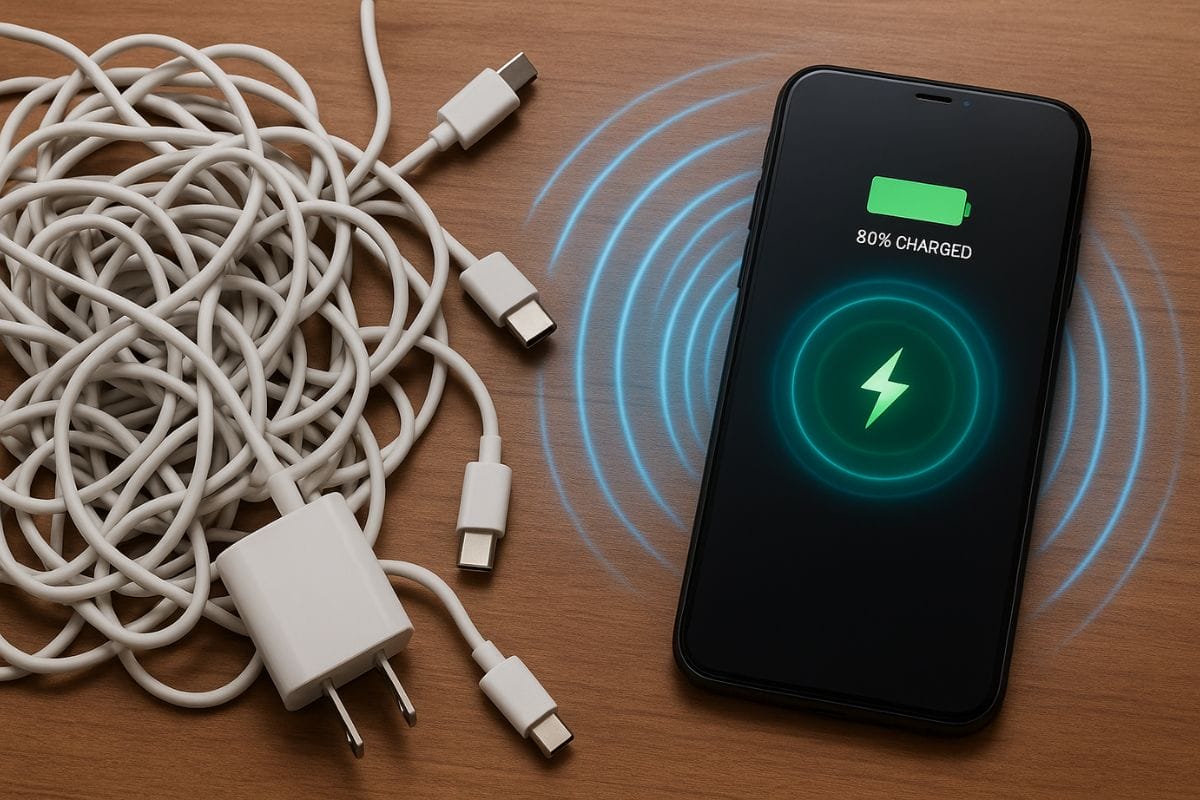
The Dependence on Wires to Keep Our Cell Phone and Other Gadgets Charged May Be Numbered. Explore Emerging Long-Distance Wireless Charging Technologies That Promise to Revolutionize Our Relationship with Energy.
The image of a tangled mess of cables or the search for a compatible charger for the cell phone is familiar. But what if this era of physical connectors is coming to an end? The promise of devices that recharge automatically, simply by being in an energized environment, is no longer science fiction. New Long-Distance Wireless Charging Technologies are emerging, ready to redefine our technological everyday life.
This article delves into the world of long-distance wireless charging technologies, analyzing everything from the current landscape to innovations that may make traditional chargers and cables relics of the past, especially for essential devices like your cell phone.
The Evolution of Cables and Wireless Contact Already Present in Your Cell Phone
The current charging ecosystem is dominated by powerful wired solutions and the growing adoption of contact-based wireless charging. The USB Type-C connector has established itself as the standard for most devices, including the cell phone, offering high data transfer speeds and robust power delivery (up to 240W with USB PD 3.2). Meanwhile, Apple’s Lightning connector is being gradually replaced by USB-C, driven by legislation such as that of the European Union.
-
China has launched the world’s first floating artificial island, a scientific structure designed to face open seas, test equipment weighing hundreds of tons, and reach depths of 10,000 meters.

-
China accelerates global science and may surpass the United States in 2 years with increased public investment, continuous growth, and direct impact on the global technological competition.

-
Scientific studies indicate that drought may be strengthening a much greater silent threat: more resistant superbugs.

-
Man builds functional 5-meter submarine in his garage using gas cylinders, PVC pipes, and a refrigerator motor, and navigates with the vessel on a lake in Colombia.


Technologies like Qualcomm Quick Charge 5 promise over 100W of wired power, recharging 50% of a cell phone‘s battery in five minutes. In the contact-based wireless field, the Qi standard from the Wireless Power Consortium (WPC) has popularized magnetic induction recharging. Its evolution, Qi2, incorporates the Magnetic Power Profile (inspired by Apple’s MagSafe), ensuring perfect alignment and more efficient charging, initially up to 15W. Despite the advancements, these technologies still require contact or immediate proximity.
Energy Through the Air
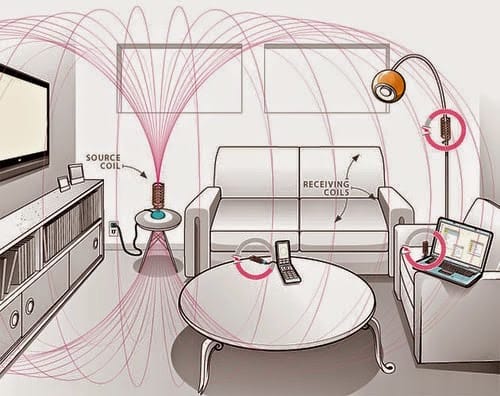
Wireless Power Transfer (WPT) at a distance is key to a truly unplugged future for your cell phone. Unlike near-field technologies like Qi, distant-field technologies use electromagnetic waves (radio, light) to transport energy over meters. Visionary Nikola Tesla dreamed of this in the 19th century. Current main approaches include:
- Radio Frequency (RF): Transmitters emit radio waves, and receivers in the cell phone or other devices convert them back into electricity.
- Infrared (IR): Safe infrared laser beams transmit energy to small receivers.
- Magnetic Resonance: Two coils tuned to the same frequency allow for efficient energy transfer at medium distances, with greater positioning flexibility.
Meet the Pioneering Technologies That Could Power Your Cell Phone and Gadgets in the Future
Various companies and consortia are developing long-distance wireless charging solutions:
In the Radio Frequency (RF) sector, highlights include Energous WattUp, with its PowerBridge transmitters to create Wireless Power Networks; Ossia Cota, whose intelligent system safely directs energy to moving devices like a cell phone, avoiding exposure to people; GuRu Wireless, which explores millimeter waves for greater reach and power, initially focusing on defense and industry; and the AirFuel RF standard from the AirFuel Alliance for low-power devices.
Using Infrared (IR), Wi-Charge AirCord™ employs safe laser beams to deliver several watts over distances greater than 9 meters, requiring a clear line of sight. The attempt to use Ultrasound, such as with uBeam/SonicEnergy, faced significant technical challenges and has not achieved commercial success.
Magnetic Resonance is another promising avenue. WiTricity, originally from MIT, is currently focused on charging electric vehicles but has already shown potential for consumer electronics, such as a cell phone. The AirFuel Alliance also promotes the AirFuel Resonant standard, allowing multiple devices to charge simultaneously on a surface.
Other Revolutions of Ubiquitous Energy
The elimination of physical charging ports on the cell phone is a direct consequence of long-distance WPT. Devices could become completely sealed, more resistant to water and dust, and with minimalist designs. With constant ambient energy, the reliance on large batteries would diminish, allowing for a cell phone that is lighter or has room for new components.
The user experience would be transformed, eliminating “battery anxiety.” A cell phone would recharge seamlessly when entering energized environments. For the Internet of Things (IoT) and wearables, continuous wireless energy is revolutionary. There is also potential environmental gain through the reduction of electronic waste (discarded chargers and cables), as long as the energy efficiency of WPT systems is high.
When Will Your Cell Phone Be Completely Free of Cables?


Despite the potential, the journey to a fully unplugged cell phone faces challenges. The efficiency of distance energy transfer is still, in many cases, lower than that of wired charging. The safety regarding human exposure to electromagnetic fields (EMF) is a primary concern, although companies are working to operate within safe limits and with technologies that avoid direct exposure.
Interoperability between different technologies and manufacturers is crucial; consortia like the WPC and AirFuel Alliance strive for this standardization. The costs of research, development, manufacturing, and infrastructure installation for transmitters are also significant. Finally, regulatory barriers related to the use of the radiofrequency spectrum and safety approvals need to be navigated.
The transition to a world where the cell phone and other devices do away with cables will be gradual. Experts predict a robust growth in the market for wireless charging, but widespread adoption of long-distance technologies by end consumers will take longer, likely being preceded by industrial, medical, and defense sectors. Enabling technologies like Artificial Intelligence and metamaterials could accelerate the process. Although the “death” of cables for your cell phone is not immediate, the direction is clear: the future will be increasingly unplugged.








Seja o primeiro a reagir!