





 Portuguese
  English
  Spanish
  4 min of reading
  10 comments


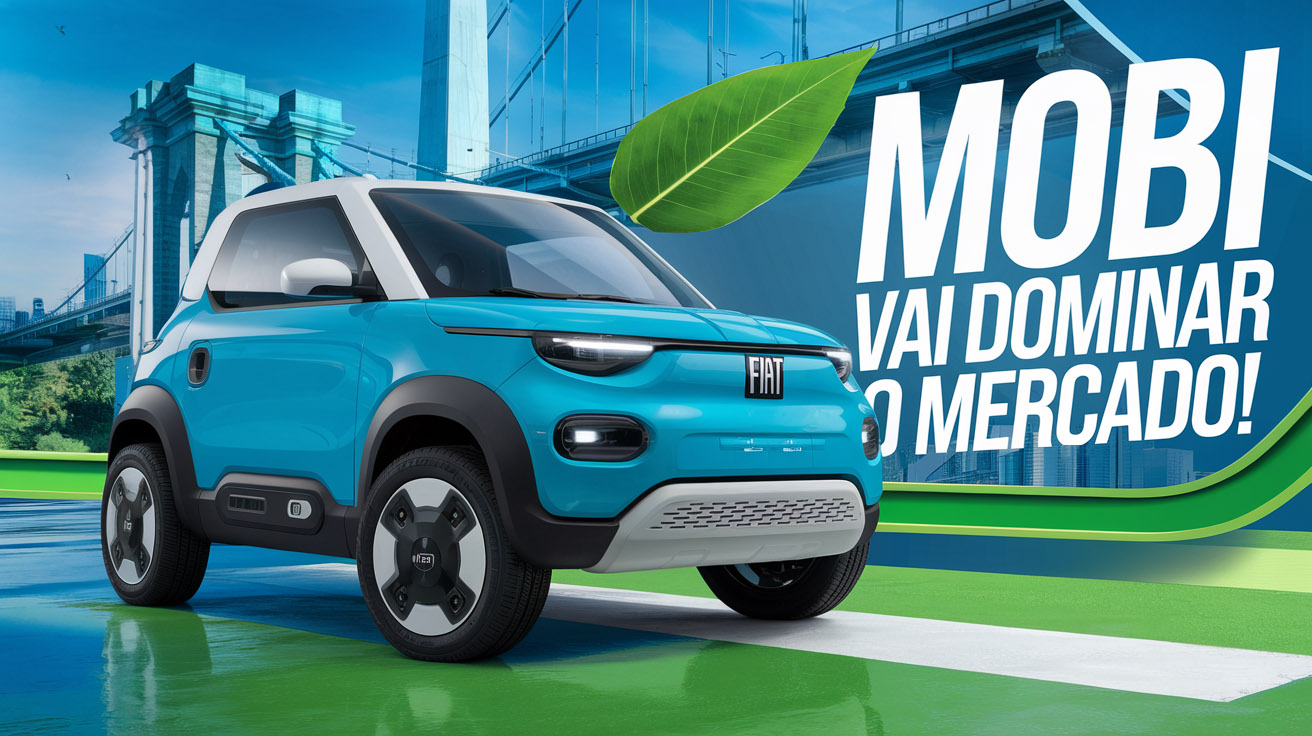


Fiat Launches Mobi 2025 with the 1.0 Firefly Three-Cylinder Engine, Replacing the Old Fire to Meet Proconve L8 Requirements. The Like and Trekking Versions Are Available for R$ 76,990 and R$ 79,990, Respectively, Representing an Increase of R$ 2,000. With This, the Mobi Ceases to Be the Cheapest Car in Brazil, a Position Now Held by the Renault Kwid.
In a move that promises to shake up the national automotive market, Fiat introduces the Mobi 2025 with significant changes that go beyond a simple lineup update.
The updates not only impact the vehicle’s performance but also directly reflect on the Brazilian consumer’s wallet.
The main change is under the hood: the traditional 1.0 Fire engine, present in Fiat models for decades, is replaced by the modern 1.0 Firefly three-cylinder engine.
-
The car stored for 38 years: when opening the barn door, what appears is breathtaking and looks like a scene from a movie!

-
Fiat works miracles in the Brazilian market, lowers the price of its 0 km hatch to R$ 69,990, reestablishes the model as the cheapest car in the country, and reignites the battle against Kwid and C3.
-
Chevette with cooking gas: How the gas cylinder ends up being used in cars clandestinely and why this makeshift solution can result in leaks, explosions, damaged engines, and seized vehicles.

-
Fiat launches the new 2027 Toro hybrid with 48V, 176 hp, an electric motor of 15.5 hp, a 0.85 kWh battery, up to 7% fuel savings, 8% fewer emissions, and possible exemption from IPVA.

This change meets the requirements of the Vehicle Emission Control Program (Proconve) L8, in effect since January 2025, which imposes stricter emission limits, bringing them closer to European standards.

New Engine, More Efficiency
The 1.0 Firefly engine returns to the Mobi after being offered between 2016 and 2020 in the Drive version.
With up to 75 hp of power and 10.7 kgfm of torque, it provides better performance and energy efficiency compared to its predecessor.
In addition, the model now features electric power steering, replacing the hydraulic system, which improves drivability and reduces fuel consumption.
This Mobi update comes with a clear focus on efficiency and sustainability.
The Firefly engine is known for its reliability and low maintenance costs, characteristics that well meet the target audience of the Mobi.
Furthermore, with the replacement of the Fire engine, Fiat reaffirms its commitment to reducing emissions and adopting more modern and cleaner technologies.

Updated Versions and Prices
The Mobi 2025 is available in two versions:
- Like 1.0: R$ 76.990
- Trekking: R$ 79.990
Both versions have seen an increase of R$ 2,000 compared to the previous lineup.
The Like version, previously sold for R$ 74.990, and the Trekking, which used to cost R$ 77.990, are now more expensive, reflecting the technological updates and environmental compliance implemented.
Standard Equipment
The Like version includes electric power steering, manual air conditioning, onboard computer, 14-inch steel wheels, height-adjustable steering wheel, electric locks, and front electric windows.
The Trekking adds a 7-inch multimedia center, height-adjustable driver’s seat, roof longitudinal bars, and a multifunction steering wheel.
As an option, the Style package (R$ 2,300) offers darkened 14-inch alloy wheels and external mirrors with tilt-down.
Additionally, the Mobi Trekking features a distinct visual, including decorative stickers, slightly raised suspension, and black moldings on the fenders, reinforcing its appeal for those seeking a compact model with a more robust personality.
Impact on the Market
With the price adjustment, the Mobi ceases to be the cheapest car in Brazil, a position now occupied by the Renault Kwid.
This change may influence competitiveness in the subcompact segment, leading consumers to reassess their purchasing options.
The Kwid, which remains Renault’s entry-level car, now assumes a strategic advantage, especially for price-sensitive consumers.
Still, the Mobi 2025 continues to be an attractive option for those seeking a compact, economical, and reliable urban vehicle.
The arrival of the Firefly engine enhances the model’s appeal among those who value technology and efficiency, even if it entails a slightly higher initial cost.

Complying with Environmental Standards
The replacement of the Fire engine with the Firefly is not just a technological update but a necessity imposed by new environmental regulations.
Proconve L8 requires significant reductions in pollutant emissions, aligning Brazilian vehicles with international standards and promoting cleaner air in cities.
According to industry experts, these changes represent a milestone for the national automotive industry, which will need to adapt quickly to new requirements.
Popular models like the Mobi play a crucial role in this context, as they are widely used in urban areas, where emission reductions have a greater impact.
Comparison with Competitors
Besides the Renault Kwid, other entry-level models also need to adjust to the new environmental standards, which could result in similar price increases.
However, Fiat is betting on the strength of its brand and its extensive dealership network to keep the Mobi competitive.
Another factor that may influence consumer decisions is cost-effectiveness.
Although the initial price of the Mobi has risen, the fuel savings provided by the Firefly engine may offset the investment over time, especially for those who use the car daily.
Conclusion
The arrival of the Fiat Mobi 2025 with the 1.0 Firefly engine marks the end of an era for the Italian automaker in Brazil.
The changes reflect the pursuit of more efficient and less polluting vehicles, meeting legal requirements and consumer expectations for modern and economical cars.
Although the price increase may deter some buyers, the Mobi 2025 offers an attractive package, with updated technologies and better performance.
The lingering question is: will consumers be willing to pay more for a car that meets new environmental standards or prefer more affordable options, even if less efficient? This question will be decisive for the model’s future in the market.








80 mil numa carroça… é bem melhor um semi novo
Meu sonho para 2025
Os dois carros são muito bons para a cidade, mas deixam a desejar nos finais de semana ou na ida ao supermercado… Ainda prefiro um carro maior de segunda mão…