





 Portuguese
  English
  Spanish
  7 min of reading
  0 comments


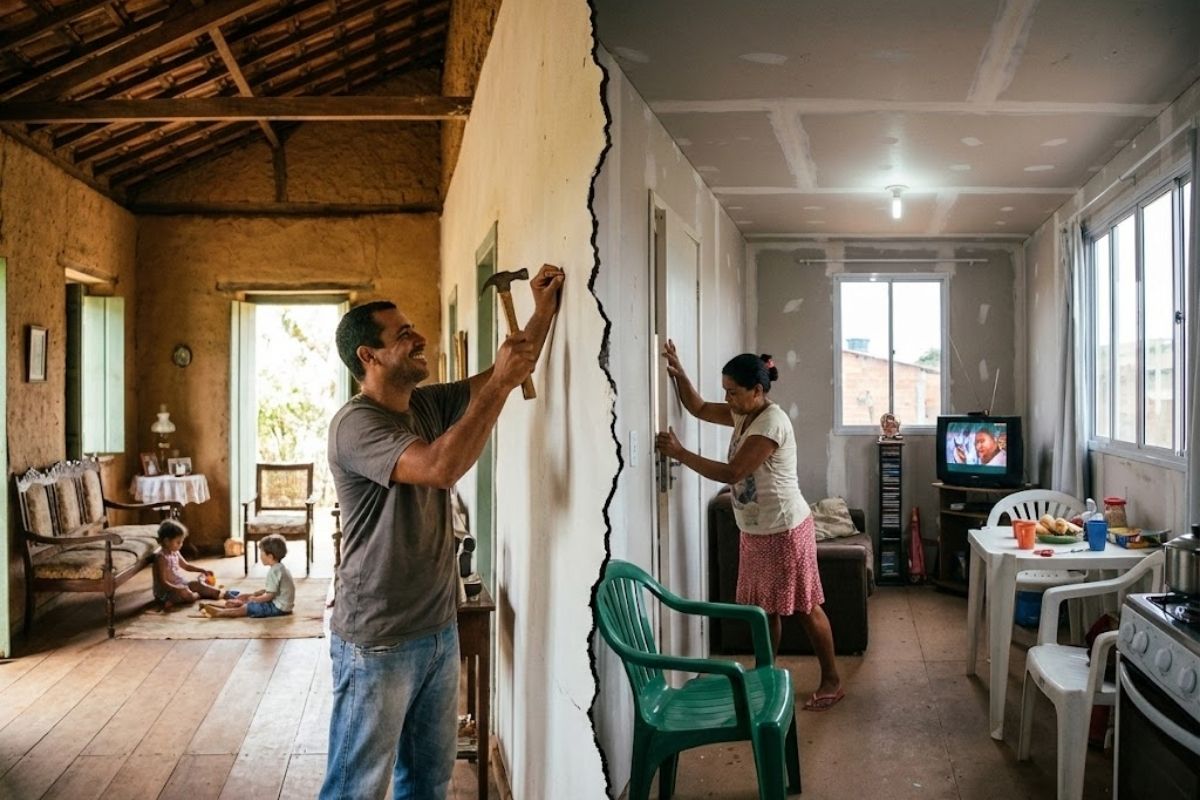
Between What Lasted Decades and What Is Switched in Few Years, the Old House Became a Reference of Space, Silence and Dense Materials. The Modern House Is Born Compact, with Thin Walls, Light Furniture and Ceiling Height Within the Minimum of the Code, While Cost and Haste Shape Details.
The comparison between old house and modern house has become a thermometer of frustration in Brazil: the construction industry gained technology and speed, but part of the public feels that durability has fallen by the wayside. Industrialization accelerated processes to produce faster, lower costs and maximize units, with materials replaced by lighter, thinner and lower quality versions, according to reports.
In this scenario, the old house emerges as a synonym for “can take a beating” and the modern house as a product that needs to fit the budget. The report itself points to the machinery behind this: smaller lots, properties designed to be sold at scale, walls at the limit of what the building code allows, and a verticalization that competes for centimeters to “gain an extra floor” without exceeding the height limit.
Industrialization of Construction and the Logic of Lower Costs
The report bluntly places the central point: the construction industry has industrialized to produce faster, reduce costs, and increase the number of units.
-
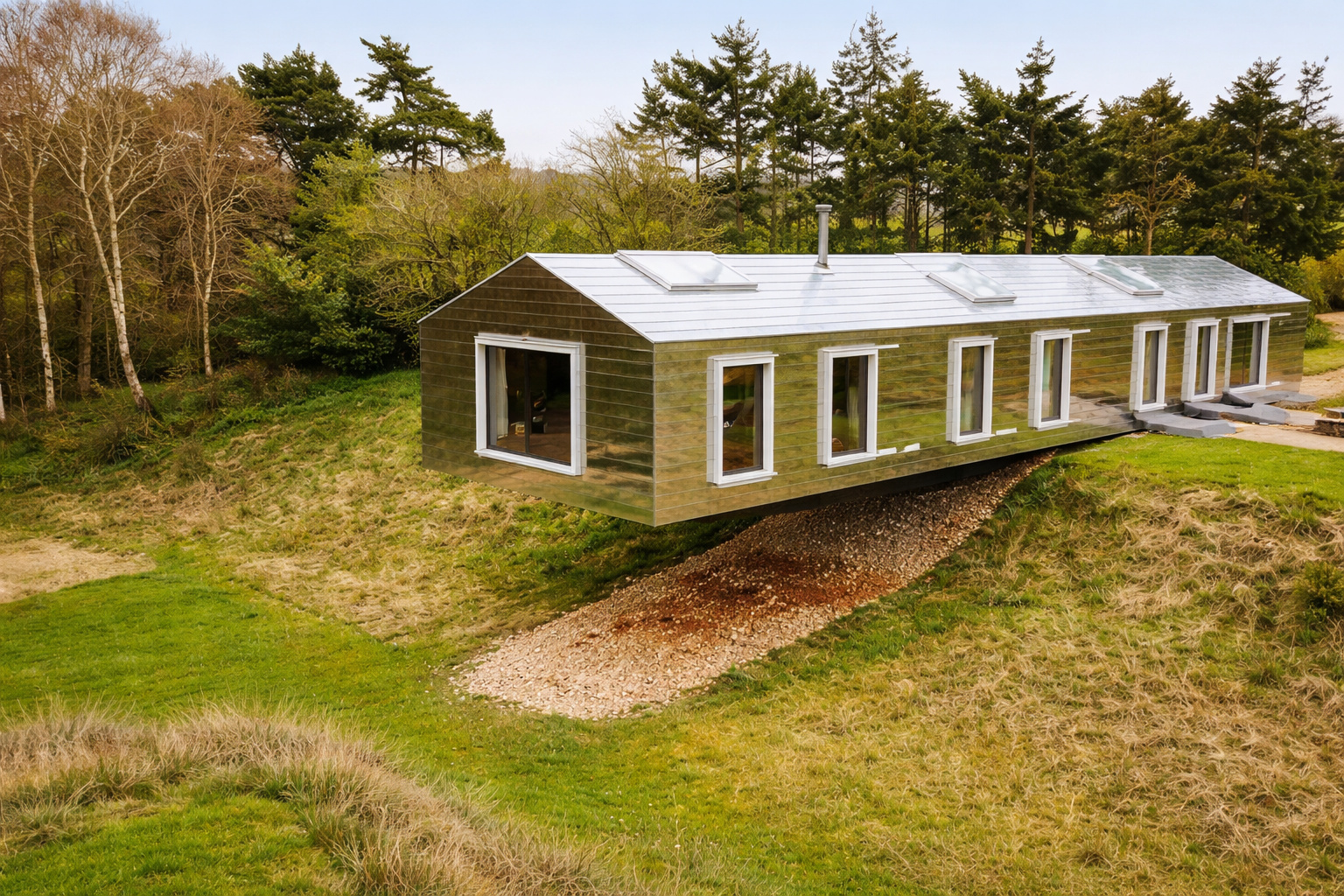
With 30 meters in length, a house in England appears to float in the air and surprises engineers and architects around the world due to its visual effect and construction method suspended over sloped terrain.
-
Called El Inmortal, the building that survived earthquakes in Ecuador seems to balance, defies the laws of physics, and impresses with its bold construction structure.

-
A gigantic dam project in the Himalayas could solve one crisis but silently create another for millions of people.

-
Nikola Tesla said that intelligent people tend to have fewer friends, and now science partially confirms this: a study with over 15,000 people showed that for the more intelligent, socializing too much can even reduce life satisfaction.


This brought gains in access, but also visible side effects in daily life, especially when the property is treated “more as a product than as a home.”
In practice, the modern house is designed to make the most of the land, using the minimum required by local rules.
Thinner walls, cramped spaces, and even a bathroom without a window when the code allows.
It is within this package that the old house, with dense materials and more robust solutions, becomes a benchmark for comparison.
Space and Comfort: Smaller Lots, Studio, Apartment and Loft
The first shock between old house and modern house is one of scale.
The report describes a clear trend: houses and apartments getting smaller, with smaller lots and less yard, while the demand for compact formats like studio, apartment, and loft grows.
The explanation combines three factors from the material itself: lots that used to be larger and cheaper, families with different needs, and the use of property as an investment, where builders try to “squeeze everything” to get more units.
In this logic, comfort ceases to be an automatic priority and becomes an optional item, depending on how much the buyer can afford.
Food Pantry: The Room That Disappeared When Space Ran Out


The second highlighted item is the food pantry, described as something common in old houses, sometimes as a built-in cabinet and, in other cases, as a separate room with door and shelves.
In the modern house, the report shows improvisation becoming the rule: food is stored “wherever it fits,” in smaller cabinets, corners, sides of refrigerators, or vertical solutions.
The loss of space appears as the direct cause of the loss of this functionality, which was once included in the project from the beginning.
Ceiling Height: From the Comfort of 3 Meters to the Minimum of the Code
The report treats the ceiling height as a comfort divider.
It states that current properties seem shorter and points out that many meet the minimum allowed.
It provides a concrete example: in Campos, the minimum cited is 2.60 m, while in other cities, references of 2.50 m and 2.40 m appear.
There is also a technical cut: for bathrooms and kitchens, the report itself recommends a lower ceiling height for cost and usage, citing 2.30 m to 2.40 m in the bathroom and 2.40 m to 2.60 m in the kitchen, while for social areas, the mentioned comfort reference is around 3 m.
The argument is physical and straightforward: warm air rises, cool air stays below, which improves thermal sensation.
Furniture: Solid Wood, MDF, Pine and the Swap of Robustness for Scale
The comparison becomes more concrete when the topic is furniture.
The report describes solid wood as an old standard, with examples of dense and durable woods like ipe, peroba, and jacaranda, associated with greater resistance, including against moisture and termites, and a lifespan of decades.
On the other hand, the modern house is associated with the dominant use of MDF, MDP, as well as materials like plywood and particleboard, highlighting cheaper lines considered more fragile.
There are evolutions, mentioning MDF Ultra as a more moisture-resistant option, but maintaining the central idea: scale and cost have pushed the market towards lighter and, in part, less durable materials.
Walls: Thickness, Privacy and the Noise That Crosses the House
The fifth item reinforces the main sensory complaint of the report: the loss of acoustic privacy.
The old house is described with thicker walls, often made of solid blocks of greater density, which helped with sound insulation and, depending on the façade, even thermal insulation.
In the modern house, thinner and hollow blocks come into play, and in many cases, drywall, which by itself is hollow and depends on insulating material to work well.
The report mentions rock wool and glass wool as examples of this necessary filling.
The point is not to demonize technology, but to record the consequence when the construction skips steps: lighter walls without insulation become a free passage for noise.
Hardware: Hinges and Slides That Cannot Take the Strain
The sixth item shifts from the “big” to the “small” that breaks.
The report compares old hardware, described as thicker and heavier steel, with cheaper current options, sometimes with plastic internal components, which can jam, bend, and fail in a short time.
There is also an interesting detail preserved in the report: old systems that even used wood with wax or paraffin to facilitate sliding.
The criticism is directed at the purchasing pattern: when consumers choose only based on the lowest price, the fragility becomes apparent quickly.
Windows: Wood, Aluminum, PVC and the Difference Between Sealing and Basic Version
In the seventh item, the report makes an important caveat: there are efficient modern windows, including aluminum and PVC models with good sealing, as well as acoustic versions.
The problem, according to the text, is that a large part of the market uses simpler standardized models, or even only tempered glass solutions, that do not deliver the same comfort.
The old house comes into play here with wooden windows and the memory of larger openings, with a transom at the top, which helped control light and ventilation, in addition to providing visual finish.
The message is that efficiency exists, but it does not always fit within the budget that dominates the modern house.
Floors: Floorboards and Parquet vs. Laminated and Vinyl
The eighth item reinforces the idea of permanence.
The report describes old wooden floors, like floorboards, parquet, as durable, comfortable, and value-adding elements, with maintenance possible through sanding and new varnish.
The comparison goes to materials that mimic wood, like laminated flooring and vinyl flooring.
The report points out a practical difference in laminated flooring: water can swell and compromise the floor.
At the same time, it admits that there are contemporary advantages, but maintains the underlying thesis: the old house carried “noble” materials that today often become luxury.
Doors: Solid Wood vs. Hollow-Core Doors
In the ninth item, the report returns to the acoustic and impact theme.
The old house appears with solid wood doors, heavier and thicker, which improve privacy and are more resistant to blows.
The modern house, on the other hand, is associated with hollow doors, with an internal structure in honeycomb, lighter for transportation and cost, but described as more fragile and less efficient in insulation.
There are better doors available today, including acoustic ones, but it emphasizes that they tend to cost more.
Faucets: Brass and the Thinner Body with Light Internal Parts
The tenth item concludes with the finish that many people only notice when it starts to fail.
The report describes old faucets with metals in solid brass, heavier and resistant to pressure and corrosion, maintaining functionality even with aesthetic wear.
In current production, the presence of thinner bodies, lighter alloys, and internal mechanisms that may include plastic, especially in components like cartridges and connections, reduces costs but increases the chance of wear, poor sealing, and breakage over time.
What This Comparison Reveals About Old House and Modern House
The final portrait of the report is straightforward: the old house symbolizes robustness, space, dense materials, and silence; the modern house symbolizes compactness, standardization, and cost- and scale-driven decisions.
It is not a fight between “old good” and “new bad,” but rather a dispute of priorities: comfort and durability versus speed and budget.
In Brazil, the material itself ties this conclusion to the daily life of those who buy or rent: when the property is designed to maximize units and reduce cost, walls, ceiling height, hardware, doors, windows, and metals become points of savings.
And savings, in real use, tends to appear as noise, fragility, and premature maintenance.
If you are choosing between old house and modern house, take these points to your property visit and calmly compare what is structure, what is finish, and what is merely “minimum allowed.”
And if it’s possible to plan, treat the house as a home, not just as a product.
What item bothers you the most in the modern house today: thin walls, low ceiling height, noise from the neighbor, or fragile furniture and doors?








-

-

3 pessoas reagiram a isso.