





 Portuguese
  English
  Spanish
  4 min of reading
  0 comments


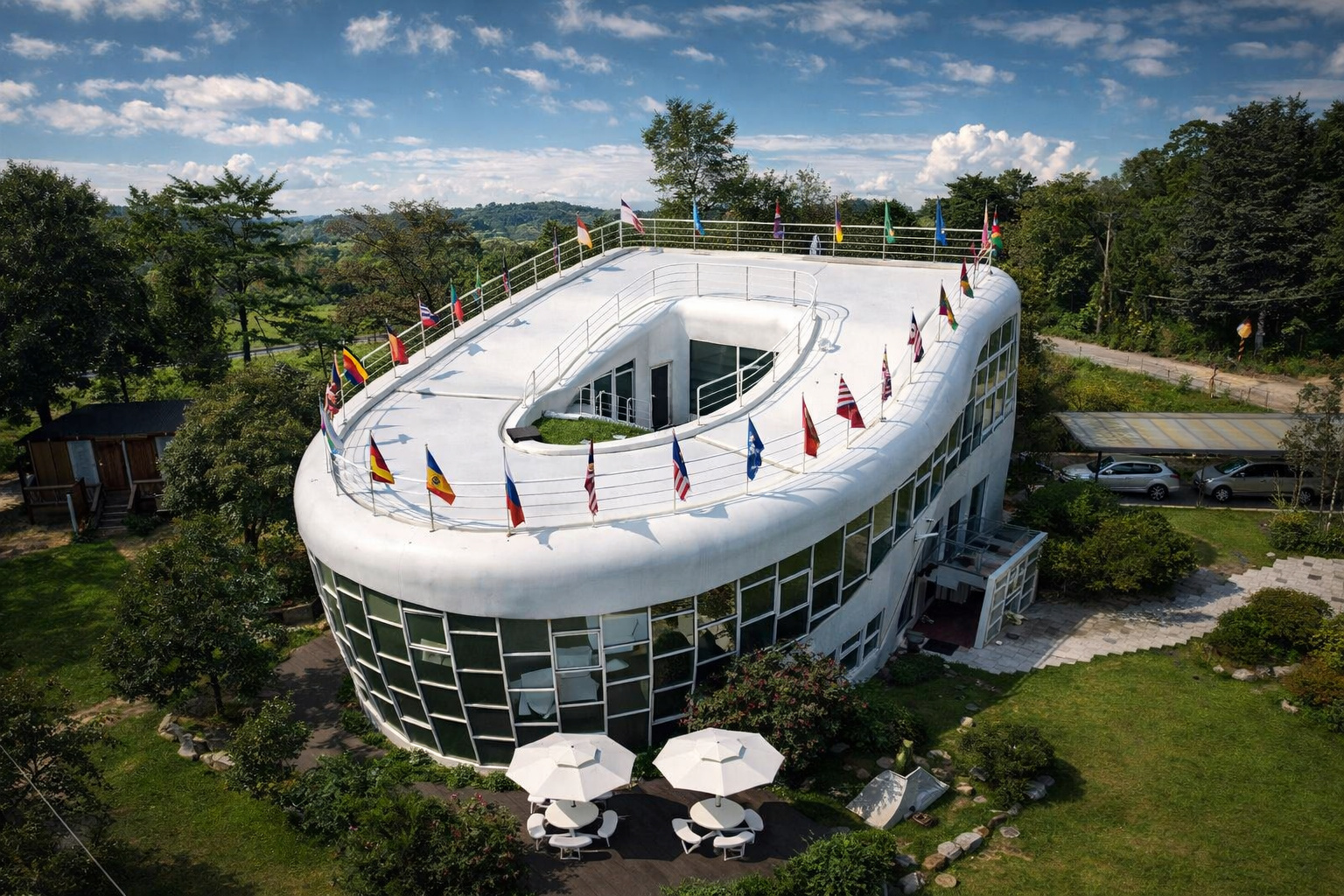
Designed by Activist Sim Jae Duck in Suwon, South Korea, about 40 km from Seoul, the Haewoojae house surprises with its monumental giant toilet shape and today functions as a museum dedicated to raising awareness about sanitation
A house in the shape of a giant toilet. It sounds like a joke or an architectural provocation, but the construction actually exists and has become one of the most curious structures ever built with a clear social message.
Located in Suwon, South Korea, about 40 kilometers from Seoul, the building called Haewoojae was born from an audacious idea of activist and former city mayor Sim Jae Duck.
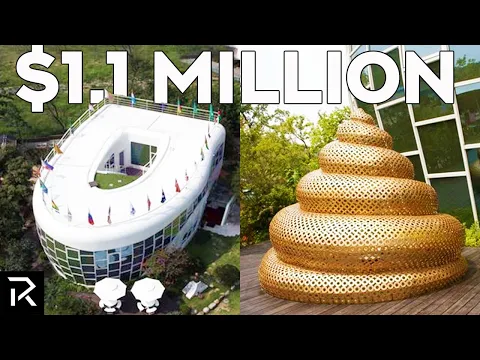

The work blends symbolic architecture, sanitation activism, and technological curiosity. The result is a building that catches attention from afar and at the same time raises a serious discussion about infrastructure and public health.
-
Italian researchers have detected what appears to be a second Sphinx buried under the sands of Egypt, and satellite scans reveal a gigantic underground megastructure hidden beneath the Giza Plateau for over 3,000 years.

-
There are 4,223 drums and 1,343 metal boxes concreted with 50-centimeter walls that store the radioactive waste from Cesium-137 in the worst radiological accident in Brazil, just 23 kilometers from Goiânia, with environmental monitoring every three months.
-
Giant Roman treasure found at the bottom of Lake Neuchâtel in Switzerland reveals an advanced trade system, circulation of goods, and armed escort in the Roman Empire about two thousand years ago.

-
He buried 1,200 old tires in the walls to build his own self-sufficient house in the mountains with glass bottles, rainwater, and an integrated greenhouse.

The most curious thing is that the property did not remain merely in the realm of conceptual art. It was designed as a functional two-story house and has currently transformed into an interactive museum about sanitation and hygiene.
The Architectural Project in the Shape of a Toilet That Transformed a Common House into a Global Symbol of Sanitation Awareness
When Sim Jae Duck presented the project, many thought it was an eccentricity without purpose. However, the idea had a very clear goal.
The activist dedicated a good part of his career to advocating for improvements in global sanitation. For him, architecture could serve as a communication tool.
The solution found was to build a residence whose shape would be impossible to ignore. The structure replicates the shape of a giant toilet, something that immediately sparks curiosity and provokes reflection.
The very word Haewoojae carries this meaning. The Korean term can be translated as a place where worries are left behind, in a symbolic reference to the everyday act associated with the bathroom.
This concept transformed the house into a cultural landmark and also into an unusual tourist attraction.
Unconventional Engineering Draws Attention for Its Monumental Structure and Symbolic Design Visible from Above
Even with its curious appearance, the house was not improvised. The project required detailed architectural planning to transform a symbolic idea into a real building.
The residence has two floors and features a curved design that replicates the characteristic shape of a toilet seen from above.
A detail that reinforces the project’s proposal is the opening in the ceiling that resembles the seat of the object that inspired the work. The visual effect creates a unique and instantly recognizable identity.
Architecture experts frequently cite the project as an example of conceptual design applied to real construction, where form and social message go hand in hand.
The work also draws attention for completely deviating from traditional residential patterns, which explains why it quickly gained international notoriety.
The Transformation of the Residence into an Interactive Museum Shows How the Topic of Sanitation Gained Space on the Global Agenda
Over the years, the house ceased to be just a curious dwelling.
The space has converted into a museum dedicated to the history of sanitation and public hygiene, receiving visitors interested in both the architecture and the social message behind the work.
Interactive exhibitions present the evolution of sanitary solutions throughout history, as well as address modern challenges related to urban infrastructure.
According to experts, initiatives of this kind help to transform a frequently ignored topic into a public agenda.
The strategy demonstrates how an apparently eccentric architectural project can generate important discussions about public health, urbanization, and sanitary engineering.
Why a House in the Shape of a Giant Bathroom Continues to Spark Global Curiosity Among Tourists, Engineers, and Architects
The impact of Haewoojae goes beyond its unusual appearance.
Projects that mix art, architecture, and activism often generate great interest precisely because they break expectations. In this case, the contrast between visual humor and serious message creates a powerful effect.
The building has become an example of how urban design can be used to communicate complex ideas immediately.
While many awareness campaigns go unnoticed, a construction that mimics an everyday object on a monumental scale is hard to ignore.
This explains why the house continues to be mentioned in reports, architecture studies, and lists of the most curious buildings in the world.
The Haewoojae shows that even a considered embarrassing topic can gain space when presented with creativity and boldness.
In the end, the house in the shape of a toilet has turned out to be much more than an architectural curiosity. It represents a real experiment of how design, engineering, and social message can combine to provoke debate and spark global interest.
Would you live in a house with this curious shape or would you visit the museum just to understand the idea behind the construction? Share your opinion in the comments.










Seja o primeiro a reagir!