





 Portuguese
  English
  Spanish
  3 min of reading
  0 comments


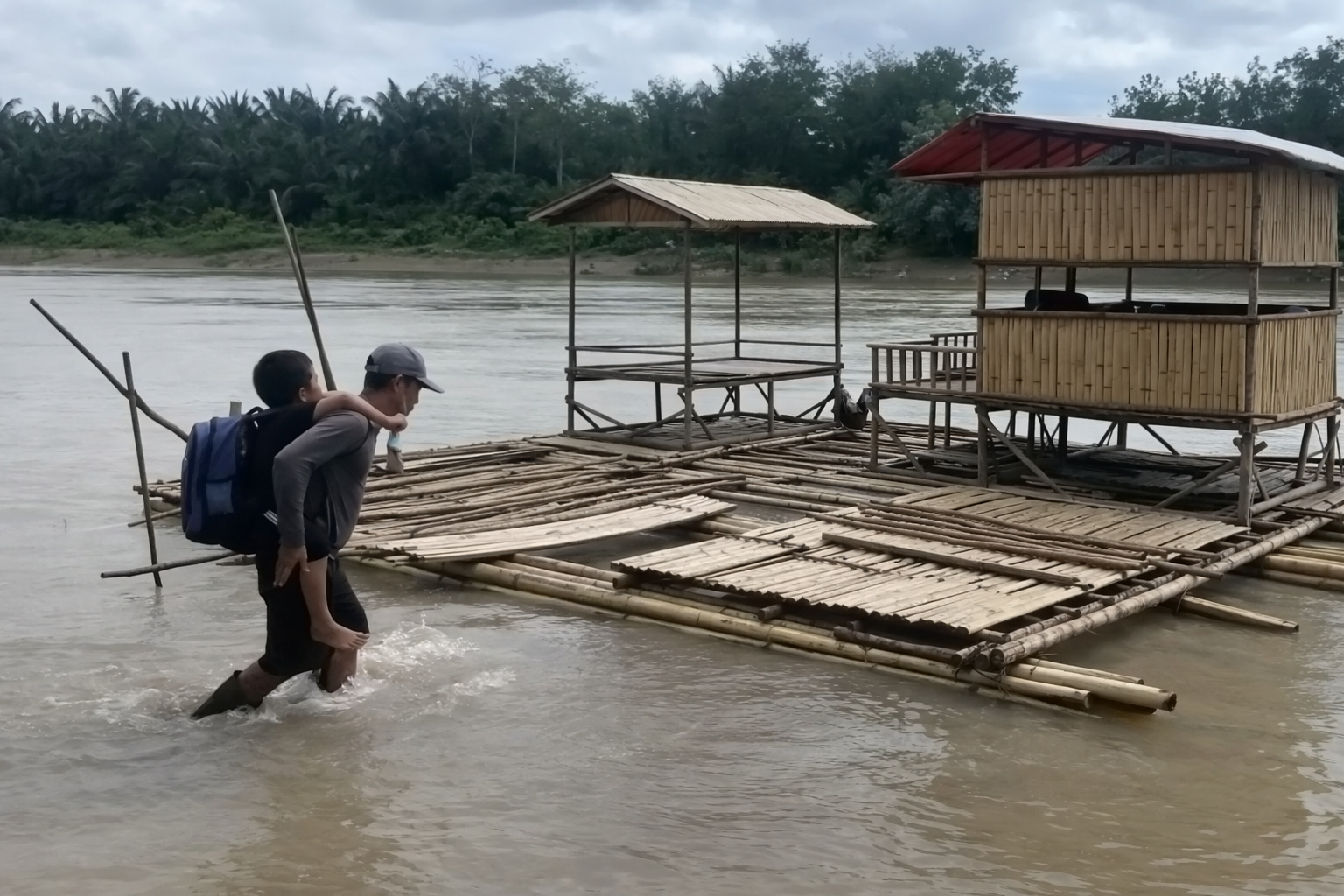
Handcrafted Construction Over Water Revives Asian Tradition And Shows How Bamboo Can Be Sustainable, Resilient, And Surprisingly Versatile
In the midst of nature, away from concrete and the noise of cities, a man decided to turn a simple dream into reality. Instead of hiring engineers or using heavy machinery, he chose to work solely with his own hands. The result? A floating bamboo house built over water, using traditional techniques and pure creativity.
The information was shared through a video published on YouTube, where the complete process of the handcrafted construction drew attention for its simplicity and efficiency. Furthermore, the project highlights something essential: bamboo, a material used for centuries in the tropics of Asia, remains one of the smartest solutions when it comes to sustainable construction.
From the first cut to the final buoyancy test, each step reveals practical knowledge, cultural tradition, and adaptation to the natural environment. Therefore, it is not just an improvised raft, but a true floating house built on a solid foundation.
-
China has deployed more than 1,400 fishing boats in formation, creating a barrier of 320 kilometers at sea, and the whole world wants to know if this is fishing, a military exercise, or a message of war.

-
Spain surprises the world by erecting 62 artificial dunes, mixing sand with natural remains of posidonia, and causing the structure to lose only 1.4% of its volume in 1 year.

-
With 16 Bulava missiles, improvements in acoustic stealth, and a design focused on silent patrols, Russia’s nuclear submarine was born to ensure Moscow’s invisible retaliation and has become one of the pillars of its maritime strength.

-
‘Populous’ city in Rio among the worst in Brazil in national ranking and exposes silent development crisis.

Why Bamboo Is Perfect For Building Floating Houses?
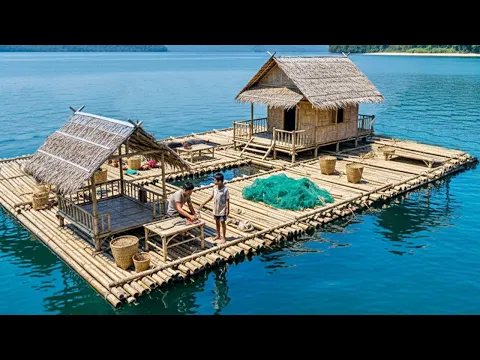

First and foremost, the first step to building a house over water is choosing the right material. In this case, bamboo naturally stands out. With its rapid growth and impressive structural strength, it is widely used in traditional floating constructions.
Some species of bamboo can grow up to 90 centimeters per day, making it one of the fastest developing building materials in the world. Consequently, this makes it an eco-friendly and renewable alternative, ideal for sustainable projects.
Additionally, bamboo has excellent buoyancy. Unlike rigid materials, it possesses natural flexibility. For this reason, structures made of bamboo better withstand waves and water movement. If inflexible materials were used, the structure could crack or break quickly.
During construction, the man carefully cuts each piece, positions the trunks side by side, and creates a sturdy base. Soon after, he tests the stability and uses the river’s own current to move the raft to the desired location.
This moment marks the transformation of the simple platform into a functional structure. Gradually, the floating house begins to take shape. What was once just a collection of trunks becomes a space capable of accommodating people to sit, cook, and even sleep.
From Floating Platform to Adventure Base in Nature
Historically, riverside communities have lived in houses made from bamboo rafts similar to this. Therefore, the project is not only creative but also a modern continuation of an ancient tradition.
As construction progresses, the raft stops being just an experimental project. It transforms into an adventure base over the water. Additional structures are installed on top, creating a functional and cozy environment.
Moreover, camping on a floating house provides a reconnection with the natural environment. Studies indicate that spending a night in nature can reduce stress by up to 30%, which reinforces the positive impact of outdoor experiences.
During the process, the builder also sets up a simple trap to catch fish. He stretches a net between two bamboos and positions it downstream, taking advantage of the natural flow of water. Thus, the floating house not only offers shelter but also autonomy.
The floating structure glides smoothly with the waves. This is precisely why the choice of bamboo was essential. Its flexibility allows it to absorb impacts without compromising the integrity of the construction.
More than just a simple raft, this floating house represents freedom, creativity, and a connection to nature. While many seek complex technological solutions, this project proves that tradition and simplicity can still be surprising.
And what is most impressive is that this man already has even bolder projects in the midst of nature. His YouTube channel, mentioned in the description of the original video, features various handcrafted constructions that show how it is possible to create functional structures solely with practical knowledge and natural materials.
Would you have the courage to spend a night in a floating house made solely of bamboo in the midst of nature?







-

-

3 pessoas reagiram a isso.