





 Portuguese
  English
  Spanish
  4 min of reading
  0 comments


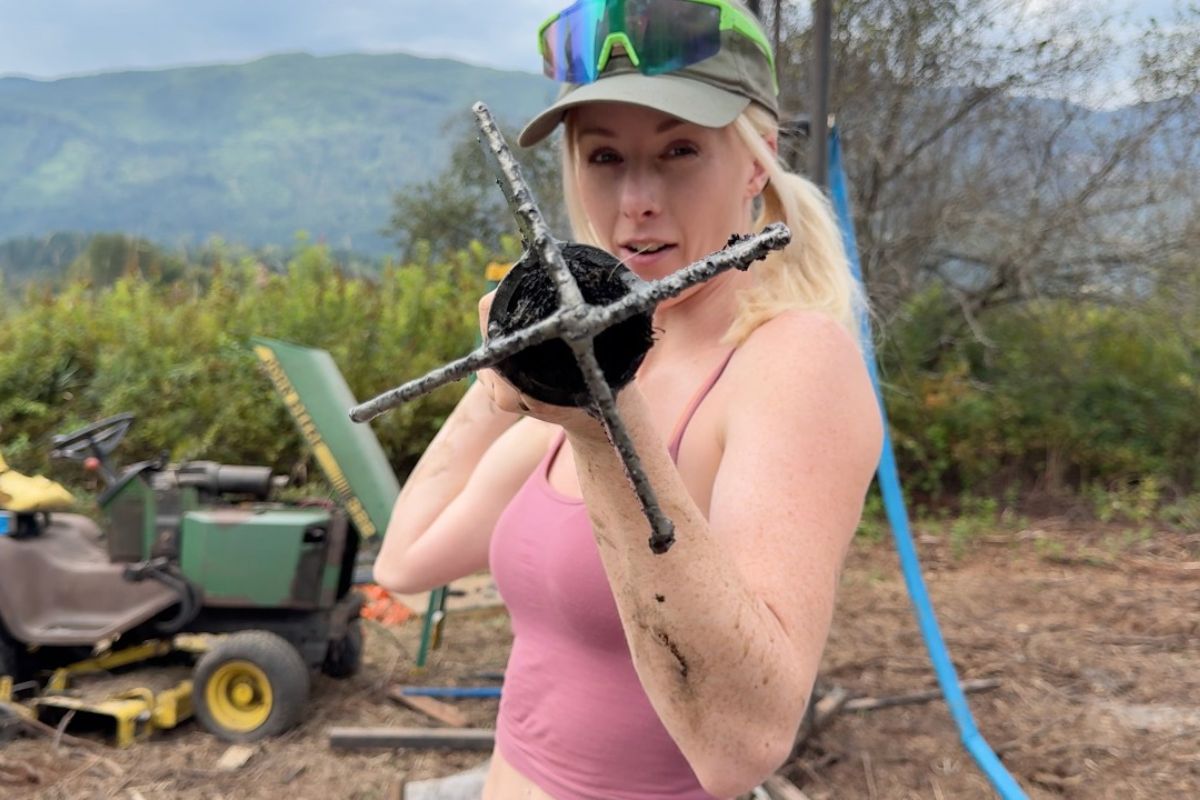
In An Isolated Lot, Improvisation Became Method: The Drilling Rig Worked With Mud, 2-Inch Pump, And Winch, While Threaded Pipes Were Added And Removed To The Rhythm Of The Bore, With Leaks, Clogs, And Too Much Mud. The Goal Was Simple: Deliver A Functional 15-Meter Well Before Summer.
In the heart of an off-grid area, a couple decided to accelerate access to water and ended up transforming a home project into a field engineering test: delivering a 15-meter well with a rotary mud drilling rig, without technical training and under time pressure.
The operation combined winch, threaded pipes, and fluid recirculation but also exposed bottlenecks that tend to remain invisible until the equipment comes under load: sealing, debris filtration, pressure loss, and logistics to keep the mud stable for hours.
Isolated Land, Urgency, And The Choice Of The Drilling Rig

The decision to use a drilling rig arose less from ambition and more from constraint: the water needed to arrive quickly, the budget was limited, and hiring specialized services didn’t fit the bill.
-
Friends have been building a small “town” for 30 years to grow old together, with compact houses, a common area, nature surrounding it, and a collective life project designed for friendship, coexistence, and simplicity.

-
This small town in Germany created its own currency 24 years ago, today it circulates millions per year, is accepted in over 300 stores, and the German government allowed all of this to happen under one condition.

-
Curitiba is shrinking and is expected to lose 97,000 residents by 2050, while inland cities in Paraná such as Sarandi, Araucária, and Toledo are experiencing accelerated growth that is changing the entire state’s map.

-
Tourists were poisoned on Everest in a million-dollar fraud scheme involving helicopters that diverted over $19 million and shocked international authorities.


In this scenario, the 15-meter well became an objective target, with a focus on reaching a saturated zone and then stabilizing the bore.
The off-grid environment imposed a different work standard.
Every failure cost time, displacement, and materials, and this shows when the drilling rig relies on a continuous cycle of mud to transport the excavated material and keep the bore open.
The Mechanical Set And The Role Of The Winch

The winch came in as a piece of safety and productivity.
It allowed raising and lowering the drilling set and, mainly, managing the weight of the sections as the threaded pipes increased the length of the column.
Even without a lathe or complete workshop, the system’s logic was modular.
The drilling rig needed to accept quick changes of section, and the winch acted as an “extra hand” to reduce human effort in critical moments when the mud makes everything slippery and alignment becomes an issue.
Mud, Pressure, And The Battle Against Leaks
Rotary drilling with mud depends on a balance that is simple to explain yet difficult to maintain.
Water mixed with the additive creates a more viscous fluid that descends through the column, carries particles, and returns to the surface, keeping the bore clean.
When the mud becomes “too thin,” the solids do not rise, and the system loses performance.
The operation showed how weak sealing turns into a multiplier of problems.
Leaks at the joints and pressure losses forced a reduction in pumping force, which directly affects the capacity to remove sediments.
In a 15-meter well, this detail becomes a real blockage: the bottom accumulates material, the column “floats” in debris, and the drilling rig begins to work against itself.
Filters, Organic Debris, And Column Clogging

The use of improvised filtration in suction leaves a recurring lesson.
Light debris can cross the barrier, circulate with the mud, and settle in the column, closing the passage and reducing flow.
When this happens, the drilling rig still rotates, but the transport of solids collapses, and advancement stops evolving.
The practical consequence is the most time-consuming stage: pulling the column, clearing the obstruction, and reintroducing it, repeating the cycle.
The winch reduces effort but does not eliminate the operational impact.
And the more threaded pipes in use, the higher the chance of losing rhythm just when the 15-meter well is close to the goal.
Costs, Material Choices, And Most Common Errors
The total cost of the set was concentrated in infrastructure items: pump, hoses, connections, steel, threads, and welding consumables.
The account also makes a technical point clear: the cheap can become expensive when the “weak” part is in the pressure bottleneck.
Among the most common errors, three stand out: undersizing filtration, accepting temporary sealing at critical points, and planning recirculation trenches that are too small for the returning mud.
In terms of risk, working with heavy equipment, mud, and energy requires attention, and the prudent recommendation is to treat the operation as a high-risk activity, with professional support when possible.
The Result Of The 15-Meter Well And What Is Replicable
The central objective was achieved: the 15-meter well came to life and reached a depth that allowed for assessing minimum flow and initiating the lining and sediment protection stage.
The victory was not “drilling,” but process control: maintaining mud, pressure, and bore cleanliness simultaneously.
What proves to be replicable is the reasoning: modularity in the drilling rig, consistent use of the winch, discipline with threaded pipes, and total priority for filtration and sealing.
What is not easily replicated is the context of the underground, which can change radically with each terrain and turn the same method into either success or frustration.
In the end, the story is not about “doing it alone,” but about how a 15-meter well exposes the invisible parts of water: logistics, small failures that turn into big ones, and technical decisions under pressure.
If you have ever experienced water shortages or seen a project stall over a detail, you can recognize yourself here.
What was the biggest technical challenge you have faced in an off-grid project, and what would you have changed if you had a winch, a drilling rig, and threaded pipes at your disposal?










Seja o primeiro a reagir!