





 Portuguese
  English
  Spanish
  7 min of reading
  0 comments


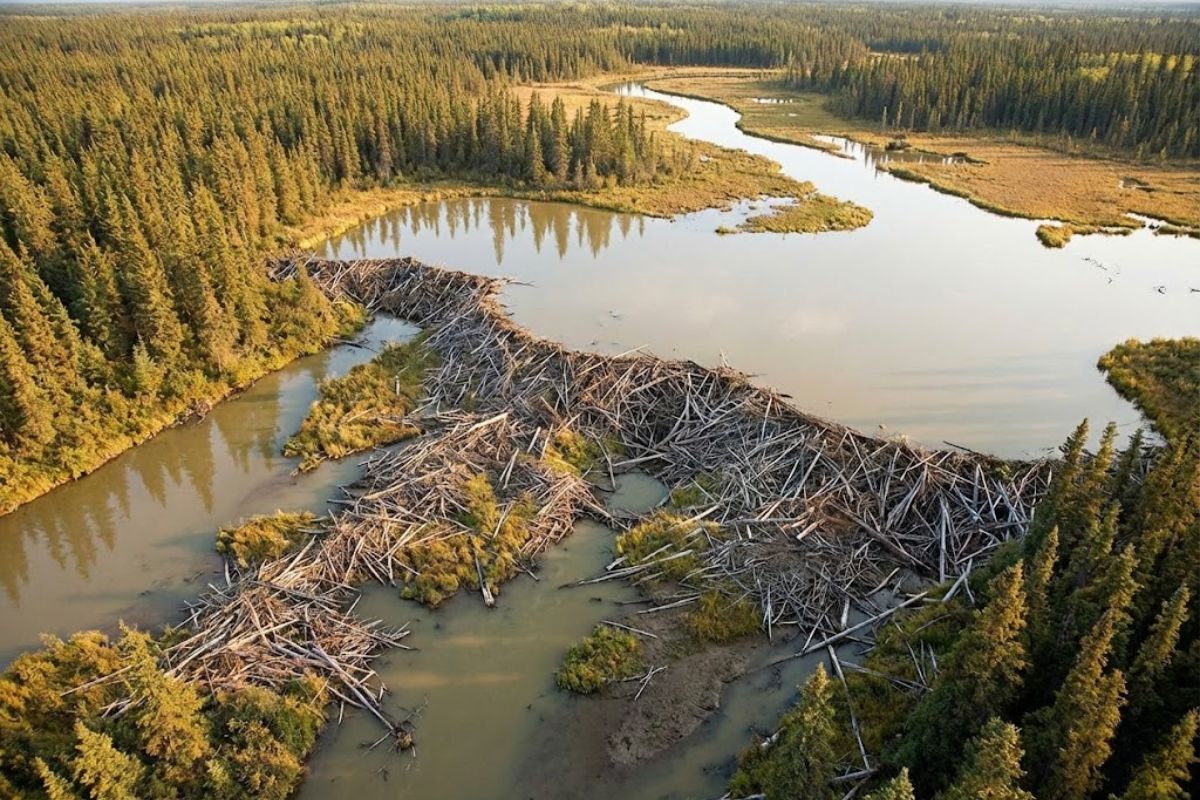
Discovery in 2007 in Wood Buffalo National Park, in northern Alberta, the beaver dam measures 850 meters and continues to grow. It creates a huge lake, alters the flow of water, increases vegetation, and caught the attention of NASA for demonstrating resilience to droughts and extreme climate wildfires.
Beavers have transformed a remote area of northern Canada into a living laboratory of natural engineering: a dam with relatively low walls but with a length so out of the ordinary that it has been compared to famous human constructions. The shock is not the height, it’s the scale. When researchers were analyzing satellite images, they noticed that there was a gigantic, continuous dyke in a wetland area, large enough to be identified from space.
The structure is not a static “monument.” It remains active, maintained and enlarged by generations, with new sections being reinforced over time. This detail changes everything: instead of a one-time event, the dam became a continuous process of landscape remodeling, creating wetlands that retain water, stabilize banks, support vegetation, and give the environment a rare capacity to withstand extremes.
Where Is the Largest Beaver Dam and Why Has It Become a Unique Case

The largest natural dam built by beavers is located in Wood Buffalo National Park, a remote and wild area in the north of Alberta province, Canada.
-
China has launched the world’s first floating artificial island, a scientific structure designed to face open seas, test equipment weighing hundreds of tons, and reach depths of 10,000 meters.

-
China accelerates global science and may surpass the United States in 2 years with increased public investment, continuous growth, and direct impact on the global technological competition.

-
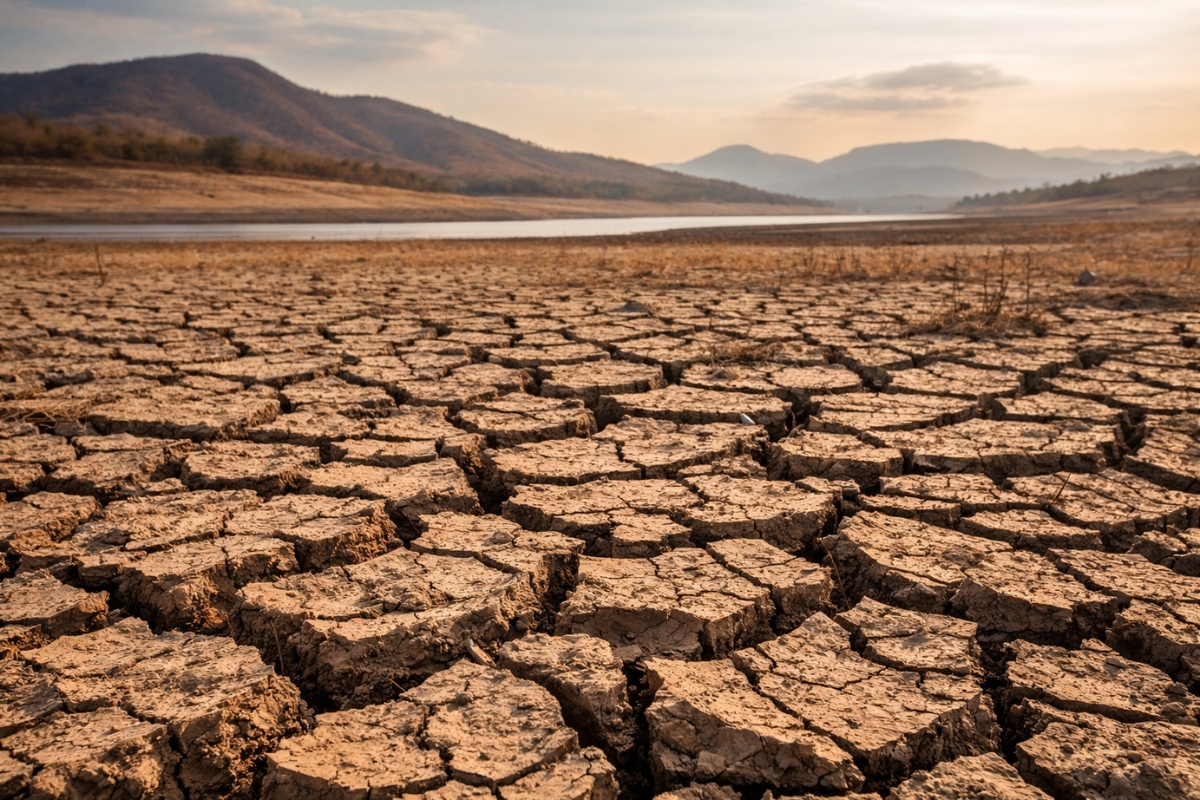
Scientific studies indicate that drought may be strengthening a much greater silent threat: more resistant superbugs.
-
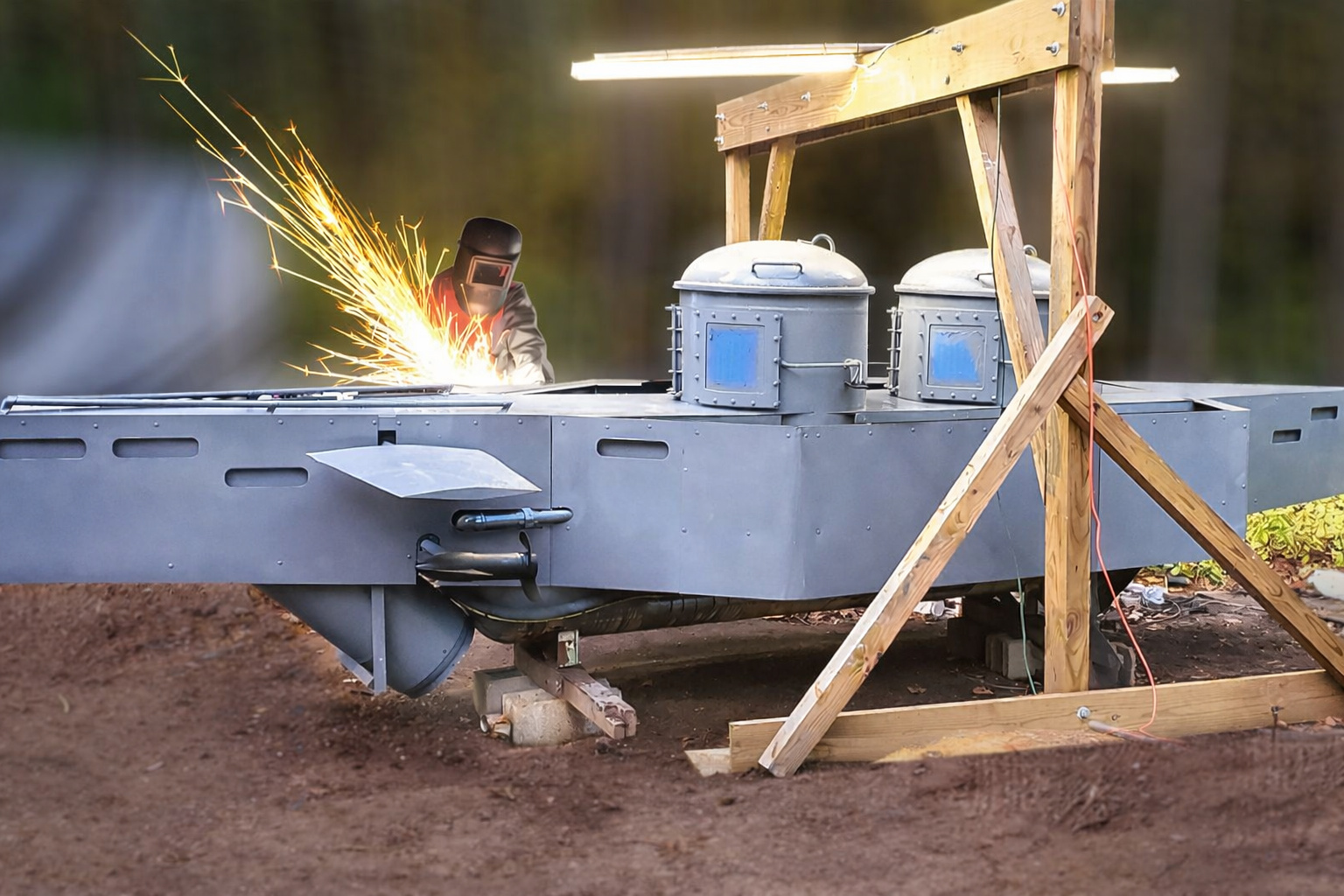
Man builds functional 5-meter submarine in his garage using gas cylinders, PVC pipes, and a refrigerator motor, and navigates with the vessel on a lake in Colombia.

What caught attention from the start was the size: 850 meters in length, far above what is considered common for this type of construction.
The general reference for beaver dams in Canada usually falls well below this, with only a minimal fraction reaching dimensions above 500 meters.
The location also makes direct observation difficult. Being a wetland area, even when there was a low altitude flyover, it was not easy to see fine details.
Even so, the “ancient” appearance was evident: in new dams, freshly cut logs appear; in this one, there was vegetation and a greener color, as if the dyke had already been incorporated into the ecosystem.
Another characteristic that makes the case even more impressive is the cumulative effect.
There is evidence that construction began decades ago, with several generations participating in and enlarging the dyke.
Furthermore, beavers are reportedly constructing two other dykes nearby, on either side of the main dam, with the expectation that over time the structures will connect and form an even larger set, close to 1 km in length.
Dam Visible from Space: How It Was Found and Why It Matters

The discovery in 2007 occurred during the analysis of satellite images.
This, in itself, is already a sign of the size: if a structure built by rodents appears clearly in orbital images, it is not “just another dam.”
It became a signature on the map.
This type of find changed how scientists think about environmental monitoring.
Instead of relying solely on field visits, it started to make sense to search for these natural works directly from above, looking for patterns of impounded water, patches of greener vegetation, and changes in the design of the watercourse.
The logic is simple: if the dam alters the landscape, it leaves a detectable trace.
Interest grew to the point that NASA got involved years later, in partnership with researchers, to measure and track how beavers transform environments.
The cited research began in Idaho, USA, a place with many beavers and a very particular history of reintroduction and cohabitation with these animals.
How Beavers Build Dams and Why They Choose Certain Locations

Beavers do not build just anywhere on the map.
They tend to seek a medium-sized stream, in a more wooded area, that is neither too steep nor too deep.
The trigger is practical: the sound and flow of running water guide the work point, as the goal is to slow the water down and spread it out.
The technique mixes vegetation, twigs, and mud to create a levee along the bank.
Logs and branches become structural “pieces,” placed on the mud bed and anchored with heavier materials.
The result is not a complete blockage: the water does not stop, it slows down and finds paths through the branches, just enough to form a stable flooded area.
And it is exactly here that the dam changes the game.
By impounding and spreading water, it saturates the soil, creates a wetland, and opens up space for a chain transformation: vegetation reacts, ambient humidity increases, and the stream begins to operate at a different rhythm.
The “Aquatic Kingdom” of Beavers: Lake, Den, and Safety for the Family

The immediate goal of beavers is not to “beautify” the landscape. It is survival.
A deeper watercourse favors beavers because they are much more efficient in water than on land.
Deeper water means faster movement, easier escape, and more protection from predators.
The dam, in practice, is like the workplace.
The home is the den, built behind the dam. The entrances are underwater, precisely to protect the pups.
Inside, the structure tends to be organized into spaces: a point for drying and an area for resting and feeding. Even the “roof” serves a purpose, maintained in a way that allows air circulation.
Additionally, beavers create channels that connect bodies of water, expanding the interface between water and land, a region where biodiversity tends to explode.
Where there was a narrow course before, there is now a mosaic of water, banks, and flooded areas. And this opens up space for effects that go beyond the beaver family.
Why This Dam Has Become a Symbol of Resilience Against Droughts, Wildfires, and Extremes
The giant dam in Canada has become a reference due to a rare combination: scale, longevity, and impact. By storing water and keeping the soil moist, wetlands tend to act as natural buffers.
In periods of heavy rain, the water does not all come down at once; in dry periods, the environment does not collapse as quickly. This is the kind of fine-tuning that changes the fate of an entire valley.
In Idaho, satellite analyses associated with areas with many beavers showed a striking pattern: regions influenced by dams became more lush and green than neighboring areas.
There are records that, in 2018, during large-scale wildfires, these beaver-rich areas showed resilience, as if the extra moisture had created a natural barrier, slowing the spread of fire.
It has also been noted that the presence of beavers increased plant diversity by about one-third in certain contexts.
This makes sense within the logic of wetlands: when water spreads and remains, the environment stops favoring a single extreme condition and begins to offer different microhabitats, where more species can establish themselves.
There is also an important effect: swamps and flooded areas can act as carbon sinks.
And, even without going into numbers beyond those mentioned, the reasoning is straightforward: more water in the soil, more organic matter accumulated, more ecological stability.
From Nearly Extinct to “Climate Heroes”: The Turning Point in Beavers’ History
The trajectory of beavers in North America is starkly contrasted.
There was a time when they came close to extinction due to hunting related to the fur trade and castoreum, until they remained in a few places.
In Idaho, moreover, they came into conflict with settlers, which led to an unlikely measure for the time: in 1948, the state’s Fish and Game Department decided to relocate beavers to remote areas instead of killing them.
The episode became famous for the method: 76 beavers were placed in wooden boxes and parachuted into the Chamberlain Basin.
The operation had a safe landing for practically all.
And the most interesting point is that, at the time, no one imagined the size of the future impact: decades later, satellite images allowed the ecological mark of relocated beavers to be seen, as if the intervention had inadvertently planted a natural wetland factory.
Today, the logic has reversed: relocations happen not to “get rid” of the animal, but to preserve the species and, along with it, the environmental benefits their works provoke.
What This Giant Dam Reveals About Natural Engineering and the Future of Landscapes
The 850-meter dam in Wood Buffalo is not just a curiosity for video or satellite.
It has become an example of how small repeated actions, generation after generation, can build something that rivals human landmarks in scale and influence.
It is not a beaver; it is an entire lineage working towards the same goal.
And the central point is the domino effect: by slowing down the water, beavers alter the design of the environment. By altering the environment, wetlands emerge.
As wetlands emerge, the system retains more water, sustains more life, and responds better to extremes like drought and fire. In other words, the dam is not “a dyke.”
It is a resilience mechanism embedded in the landscape.
If a family of beavers can transform an entire valley into a living reservoir, and still leave this mark visible from space, the question that many people have begun to ask as they see this case gain scale is: are beavers merely building for themselves, or are they inadvertently reconstructing entire ecosystems in the face of unstable climate?
And for you: if nature can create “infrastructure” of this level without machines, what else is lacking to take this type of solution more seriously in areas affected by droughts and wildfires?








-

6 pessoas reagiram a isso.