





 Portuguese
  English
  Spanish
  3 min of reading
  0 comments


While The World Depends On Lithium, Giants Like CATL And BYD Invest Billions In Sodium Batteries, A Cheaper, More Abundant, And Sustainable Technology That Threatens To Turn The Energy Game Around.
For years, lithium has been the absolute star of the electric revolution, but its reign may be numbered. At the heart of the industry, a billion-dollar bet on sodium batteries is gaining traction and promises to reshape the global energy map. Led by the largest manufacturers in the world, the movement seeks a simpler, cheaper, and more abundant alternative, using an element that we have in abundance: salt.
This strategic shift is not just a technological innovation; it is a response to high costs, the complexity of extraction, and the geopolitical tensions associated with lithium. Companies like the Chinese CATL, which dominates nearly 40% of the global market, are already producing and selling the new batteries. The question is no longer whether sodium batteries are viable, but how quickly they can capture the market.
The Bet Of The Chinese Giants
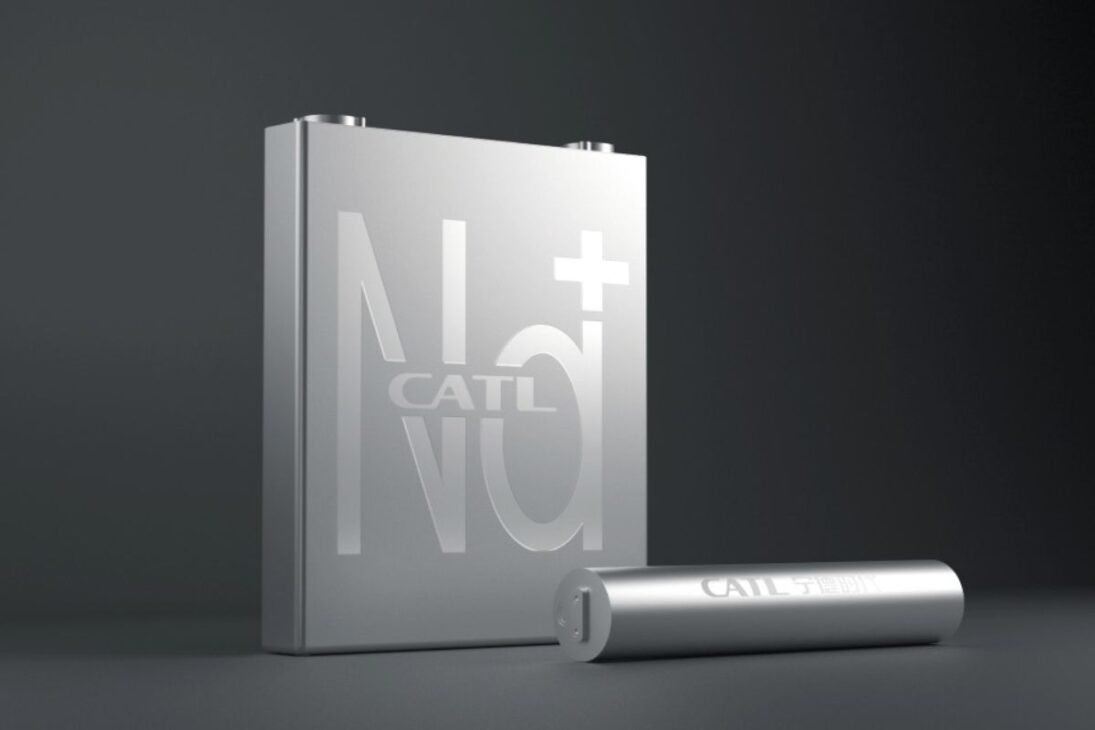
While many focused on futuristic technologies still distant from reality, such as solid-state batteries, CATL took a pragmatic approach. The company has already launched its second generation of sodium batteries, achieving an energy density of over 200 Wh/kg. Although still inferior to the best lithium batteries, the advancement is enormous and the production cost is drastically lower.
-
Motorola launched the Signature with a gold seal from DxOMark, tying with the iPhone 17 Pro in camera performance, Snapdragon 8 Gen 5 that surpassed 3 million in benchmarks, and a zoom that impresses even at night.

-
Satellites reveal beneath the Sahara a giant river buried for thousands of kilometers: study shows that the largest hot desert on the planet was once traversed by a river system comparable to the largest on Earth.

-
Scientists have captured something never seen in space: newly born stars are creating gigantic rings of light a thousand times larger than the distance between the Earth and the Sun, and this changes everything we knew about stellar birth.

-
Geologists find traces of a continent that disappeared 155 million years ago after separating from Australia and reveal that it did not sink, but broke into fragments scattered across Southeast Asia.

Following the same path, its main rival, BYD, announced the construction of a gigafactory with a capacity of 30 GWh annually, dedicated exclusively to sodium batteries. The goal is clear:
- Democratize energy storage with a cheaper option.
- Ensure supply, as sodium is abundant in the oceans.
- Increase safety and durability, as sodium better withstands extreme temperature variations.
The Western Reaction And Innovation In Labs
The race for sodium is not limited to China. In the United States, companies like Natron Energy, backed by government subsidies, are developing sodium batteries focused on another huge market: stationary storage for data centers and power grids. Natron’s technology promises a lifespan of up to 50,000 cycles and a charge and discharge speed ten times faster than lithium.
Meanwhile, innovation is advancing in laboratories. Researchers at MIT have developed a new type of sodium battery using a fully organic cathode (TAQ), made from simple elements such as carbon and oxygen. If produced on a large scale, this technology could rival lithium performance at a third of the cost, eliminating dependence on rare and controversial metals like cobalt.
The Challenge: Sodium Still Needs To Prove Its Worth
Despite the enormous potential, the path for sodium batteries is not without obstacles. The main technical challenge remains the lower energy density. Sodium batteries are, for now, larger and heavier than lithium ones to deliver the same energy, which is a disadvantage for applications such as high-range electric cars and smartphones.
Furthermore, the economic landscape has changed. In the last two years, the price of lithium has plummeted by more than 80%, weakening the argument that sodium would be an economically inevitable alternative. Global infrastructure is also fully shaped for lithium, and transitioning to a new material requires time and massive investments.
Hope Or Illusion?


Sodium batteries represent one of the most promising revolutions in the energy sector. They offer a cheaper, safer, and geopolitically stable solution. However, the battle against established technology and the economic interests of lithium will be intense. The future will likely be hybrid, with each technology occupying the space where its characteristics are most advantageous: lithium in applications requiring maximum energy density and sodium in stationary storage and entry-level vehicles.
Do you believe that sodium batteries will be able to surpass lithium or will we live in a world with both technologies? Share your opinion in the comments!








Seja o primeiro a reagir!