





 Portuguese
  English
  Spanish
  4 min of reading
  0 comments


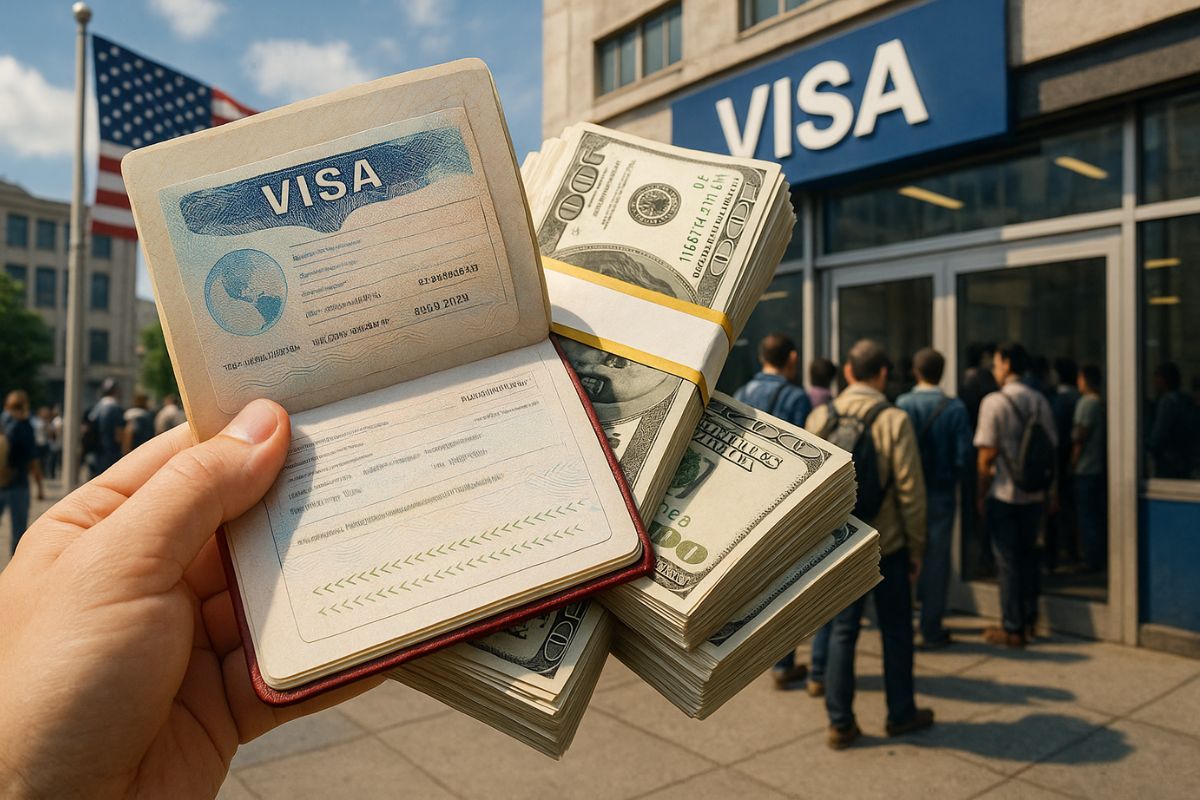
New Measure by the U.S. Government Requires Bail for High-Risk Foreigners’ Visas. Pilot Project Already Has Defined Targets, and Brazil Is Temporarily Exempt
The U.S. government will require a bail of up to US$ 15,000 (about R$ 82,000) to grant work and tourist visas to citizens of certain countries. This measure is part of a pilot project to reduce illegal stays in the country and comes into effect in August 2025. Initially, only Zambia and Malawi were included in the list, but the program may be expanded to other nations; Brazil, for now, is out.
According to the U.S. Department of State, the measure affects applicants for B-1 and B-2 visas, used for business trips, tourism, or medical treatment.
The amount will be refunded only if the visitor leaves the country within the validity period of the visa. Although still limited, the project rekindles the debate on selectivity, security, and economic barriers imposed on global mobility.
-
Mothers and daughters come together, create an ‘express’ beauty salon and turn the idea into a network with 21 units, revenue of R$ 16.7 million and 12,000 subscribers.

-
End of the 6×1 schedule: how the reduction of hours can affect service companies, industry, and agribusiness.

-
Brazil Ignores Trump’s threats to BRICS, Buys 42 tons of gold and reduces the Dollar’s share by 6.45% in international reserves.

-
Havan buys historic football land in Blumenau for a million-dollar amount protected by a confidentiality clause and is already planning to change even the layout of streets to build a megastore in half-timbered style costing 80 million reais.


Why Was the New Bail Requirement for Visas Created?
The pilot project for bail requirement is based on the executive order 14,159 from former President Donald Trump, called “Protecting the American People Against Invasion.” The government’s justification is to contain high rates of overstay, when travelers exceed their legal stay, and to strengthen immigration controls.
According to the Department of State, the initiative applies to countries with “high rates of illegal stay” and failures in consular verification processes. The required amounts may vary between US$ 5,000, US$ 10,000, and US$ 15,000, depending on the consular risk assessment.
The program is expected to last 12 months, with the possibility of being expanded or adjusted based on the results.
Is Brazil at Risk of Being Added to the List?
So far, Brazil is not among the countries required to pay bail to obtain a U.S. visa. However, the history of the proposal, which circulated in 2020 with a list of 24 affected countries, indicates that the measure can be adjusted at any time. The Department of State warned that the list can be updated with a 15-day notice, which requires attention from travelers and tourism companies.
In addition to Zambia and Malawi, other countries that were previously targeted by the proposal include Afghanistan, Iran, Sudan, Guinea-Bissau, Libya, Syria, Eritrea, and Angola, many of which have political instability or weak consular systems.
Brazil, although having high visa issuance rates, maintains active collaboration with American authorities and has low levels of illegal stay relative to travel volume, which may justify its exclusion at this time.
What Are the Practical Impacts of the Measure?
For the affected countries, the bail requirement may represent an insurmountable financial barrier for workers, tourists, or students. Even if the amount is refunded, the initial cost is high and may severely restrict the international mobility of citizens from developing countries.
The impact may also be symbolic and diplomatic. By imposing unilateral financial restrictions, the U.S. reinforces a foreign policy that is more selective, focused on immigration control and national security, but which may be seen as discriminatory by the international community.
What Is the “Gold Card” and How Does It Relate to This?
Parallel to the bail requirement for basic visas, the U.S. launched this year the “Gold Card”, aimed at high net worth immigrants. The document requires a minimum investment of US$ 5 million (about R$ 30 million) and allows for an accelerated path to U.S. citizenship, offering greater benefits than a traditional Green Card.
The proposal, also sponsored by Trump, aims to replace the EB-5 program, which grants residency to foreigners who create jobs or invest in businesses in the U.S. According to the Department of Commerce, the “Gold Card” seeks to attract foreign capital and cover part of the U.S. budget deficit.
While the bail aims to hinder access for foreigners from “problematic” countries, the “Gold Card” opens doors for millionaire investors, widening the inequality in migration treatment based on economic power.
International Reactions and Risks to the Image of the U.S.
Similar measures have been criticized in Europe. The European Commission recommended the suspension of “Golden Visa” programs due to concerns over money laundering, capital flight, and security risks. Countries such as the United Kingdom, Portugal, and Spain have already ended or limited such initiatives.
In the U.S., critics argue that the combination of the “Gold Card” and bail reinforces an exclusionary and potentially discriminatory migration system, while supporters argue that they are pragmatic policies in response to rising irregular migration.
Do you think it’s fair to charge a bail of US$ 15,000 to grant visas? Is the measure effective or unfair? And should the “Gold Card” really facilitate citizenship for millionaires? Leave your opinion in the comments; we want to hear your thoughts on this new phase of U.S. immigration policy.









Seja o primeiro a reagir!