





 English
  Francês
  Alemão
  Italiano
  Japonês
  Norueguês
  Portuguese
  Spanish
  5 min of reading


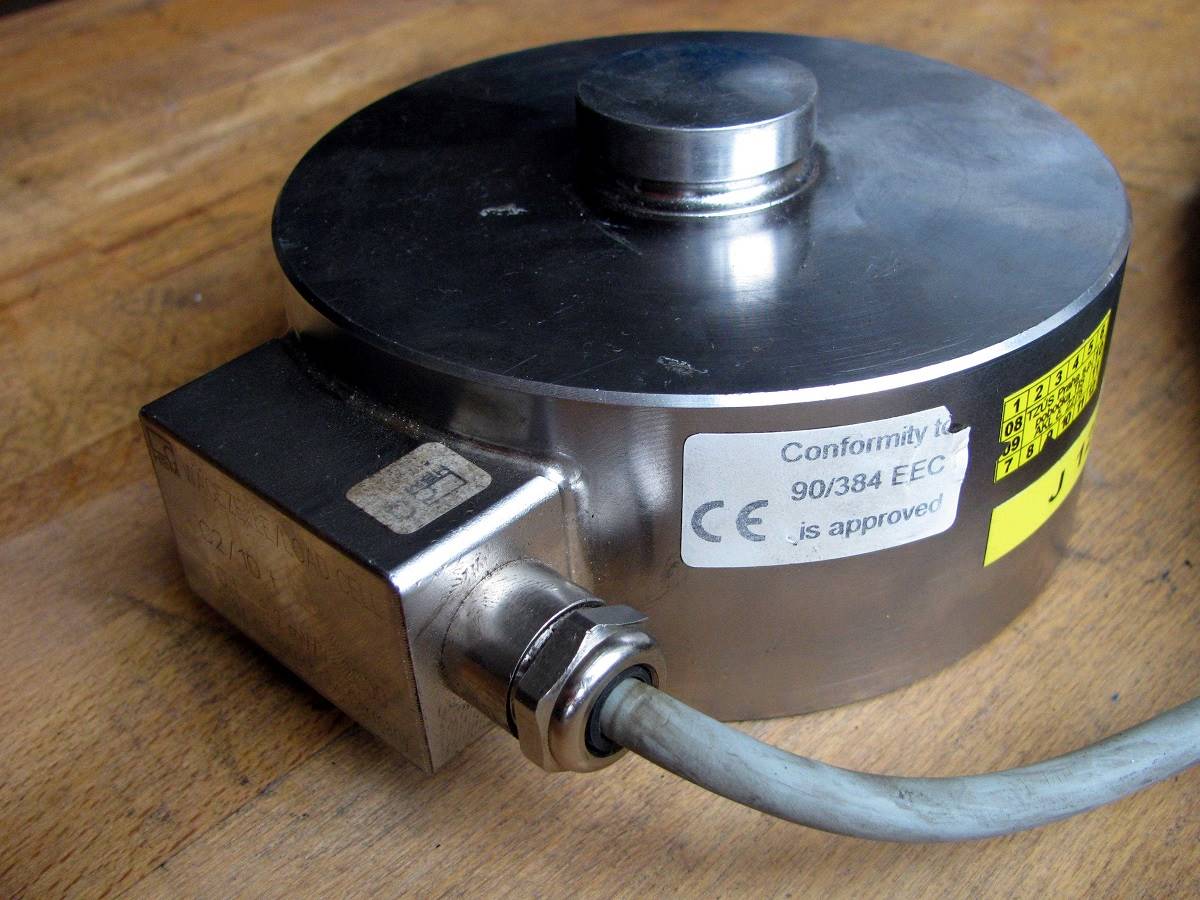
For companies, especially in the industrial sector, the phrase “weight is money” has never made more sense. For this reason, utilizing the load cell is essential and a priority for many organizations to achieve good control over resources as well as financial control.
Read Also
- Maritime agency starts selection process for temporary contract in Salvador, Rio de Janeiro and more for the position of Nautical Officer
- To meet contracts in the oil and energy industry, there are job openings at SUBTEC
- ANEEL postpones 5 planned energy auctions for 2020
Furthermore, measuring resources, raw materials, and products is so essential that, if done correctly, it can also provide greater profitability in their use.
This means you can produce more at a lower cost! Therefore, in this post, we will explain why the load cell is a material of utmost importance, but often goes unnoticed when it comes to weight measurement.
-
Historic bankruptcy of Centauro shocks the market, and the century-old company puts more than 500,000 products, machines, and complete infrastructure up for online auction.

-
Abandoned house for 15 years disappears in the woods, shocks owner with unrecognizable scenery and is reborn in an intense transformation after almost 90 hours of work in just 10 days.

-
In just three hours, a natural stone floor transforms the entrance of the house with an organic effect, immediate drainage, and a sophisticated non-slip finish that doesn’t puddle water, dries quickly, and impresses with the final result.
-
‘Interlocking brick’ made of earth arrives in the construction industry with cost reductions of up to 40% on the project.


Want to understand more about all this? Then follow our content and also stay informed about all related topics!
What Is a Load Cell?
First of all, it is important to detail what a load cell is. This material is used to measure the weight of a certain object (mass).
Typically, the load cell is most commonly used as an essential material for manufacturing a car or a scale. In other words, we find the load cell in various places, and they are there to measure weight accurately.
However, they are not immediately recognized, as they remain hidden among the mechanisms of a device.
In addition, the load cell is made up of strain gauges, which are made of steel or aluminum. Because of this, the material becomes quite flexible while also being resilient.
After all, depending on the amount of weight placed on a scale, it is essential that the material is durable and does not damage over time.
The load cell is not only essential for individuals, but companies also turn to this material.
Especially industries, such as those producing lightning rods, for example, need the use of measuring scales to obtain better control over resources.
Construction companies also require the load cell, as they use various resources to execute a construction project.
What Are the Most Common Types of Load Cells?
The load cell comes in various types, as they are also used for different purposes, not just in the construction of scales (we will detail more throughout the post).
Below, see the main types of load cells used by individuals and businesses:
- Single Point Load Cell: A load cell is positioned through a platform with a certain weight on top.
- Tension Load Cell: This refers to a suspended weight provided by one or more cells.
- Compression Load Cell: Here it resembles the single point model; however, instead of one cell, multiple load cells are positioned and are loaded with a proportional weight on top.
- Beam Load Cell: Similar to the compression load cell, in the beam load cell, multiple cells are also positioned, but they are placed under a steel structure and loaded with weight on top.
Each of these types of load cells has a different purpose. Some are more subtle, while others are built to handle more weighing.
Some load cells can also be designed differently or even have some customized properties.
So if you work with wooden pergolas with decking or with construction, for example, be sure to check which is the ideal load cell model you need for more precise measurement of your products. This way, your company can also achieve the best results!
Additionally, don’t forget to clean and maintain the resources that have load cells. This way, they will last longer, and you won’t have to invest again in a weighing resource.
Does Temperature Influence the Functionality of the Load Cell?
A common question for those working with weighing measurement resources is whether temperature can influence the weight or functionality of the load cell.
The answer is yes, temperature can influence weighing, but not directly on the cell itself or the weighing resource.
After all, if it’s very hot or very cold, for example, a material to be weighed can expand or even contract.
This means that, although load cells measure the correct weight regardless of weather conditions, if the measured product is not at an appropriate temperature, the weighing result may diverge!
For this reason, it is very important that, to obtain the best results, you always maintain an appropriate climate temperature, preferably at room temperature.
In addition, it is also important to emphasize that the load cell has the same weighing functionality, regardless of the location we are situated in.
In other words, whether we are in Brazil or Japan, the measurement of a resource must yield the same result, without exceptions.
Does the Load Cell Have Other Applications Besides Scales?
Finally, there is also much doubt about the use of the load cell for various purposes.
[adrotate group=”32″]
As mentioned above, industries, construction companies, and individuals use the load cell to carry out their activities. However, it also serves other purposes.
An example is the bottling and canning system through weighing. That is, to manufacture candies or snack foods, load cells are used to ensure each package has the same weight and the outcome is uniform across all products.
It is also used in the development of swimwear and other types of high-performance clothing.
Thus, many companies also use it to weigh trucks, trains, and airplanes, for example.
What do you think about the application of load cells? Did you manage to understand better their concept and essence? Let us know! We want to hear your opinion.
This article was written by Rafaela Ricardo, Content Creator at Soluções Industriais.










Seja o primeiro a reagir!