





 Portuguese
  English
  Spanish
  4 min of reading
  0 comments


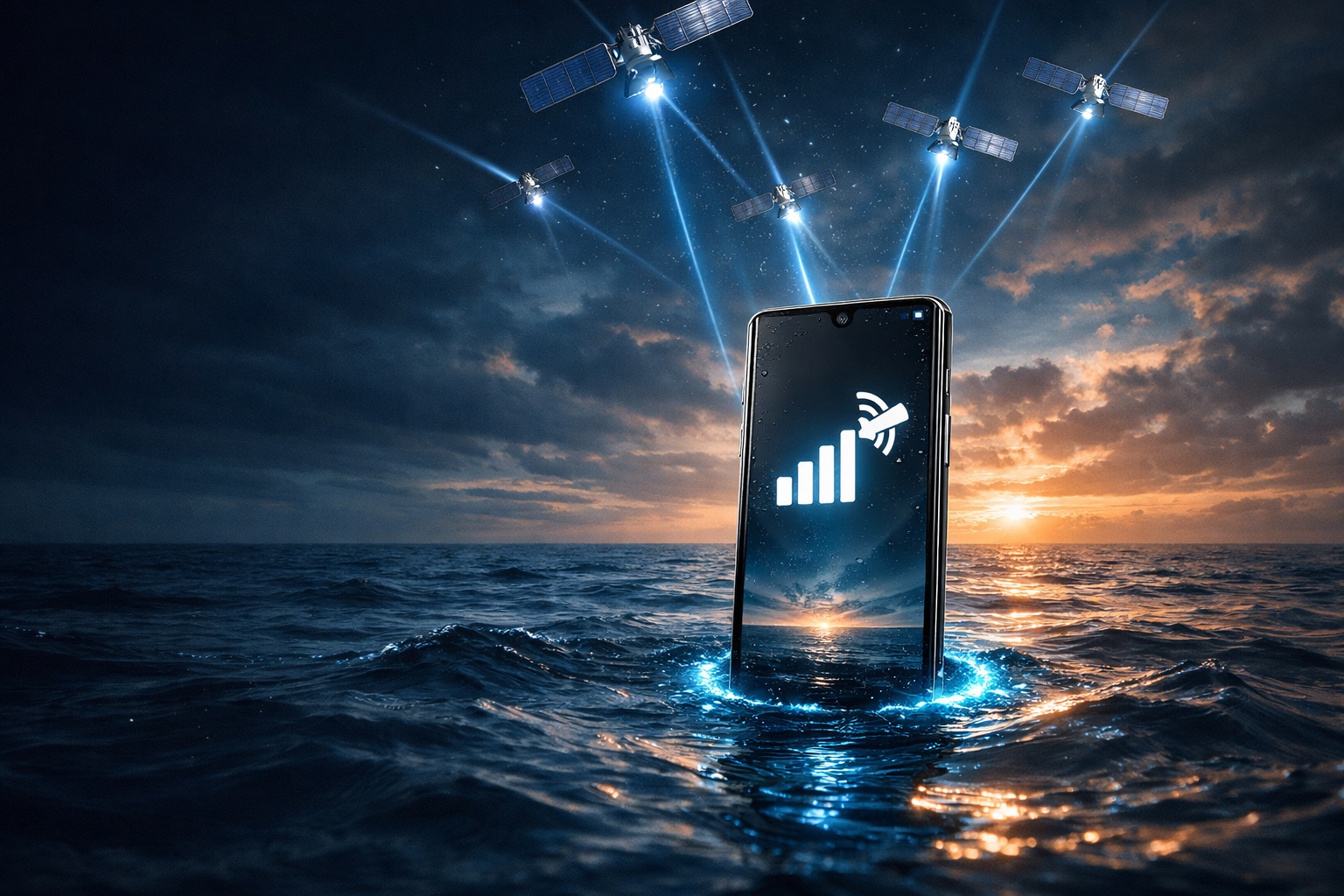
Samsung Expands Satellite Connectivity With Starlink for Galaxy Phones, Enabling Communication and Messaging Even Where There Is No Mobile or Wi-Fi Coverage, Including Remote Areas.
Samsung has announced the global expansion of satellite connectivity for Galaxy smartphones, in partnership with international carriers and supported by the Starlink satellite network operated by SpaceX. The new feature represents a significant advance in mobile satellite communication, as it allows the phone to maintain some level of connectivity even in locations without coverage from cell towers or traditional Wi-Fi — such as deserts, mountainous areas, isolated rural regions, and remote parts of the ocean.
In practice, this represents an additional layer of coverage that comes into play when terrestrial infrastructure ceases to function.
Global Expansion of Satellite Connectivity in Galaxy Smartphones
Historically, satellite communication was limited to specialized devices, such as dedicated satellite phones, military equipment, or emergency systems with bulky external antennas.
-
Motorola launched the Signature with a gold seal from DxOMark, tying with the iPhone 17 Pro in camera performance, Snapdragon 8 Gen 5 that surpassed 3 million in benchmarks, and a zoom that impresses even at night.

-
Satellites reveal beneath the Sahara a giant river buried for thousands of kilometers: study shows that the largest hot desert on the planet was once traversed by a river system comparable to the largest on Earth.

-
Scientists have captured something never seen in space: newly born stars are creating gigantic rings of light a thousand times larger than the distance between the Earth and the Sun, and this changes everything we knew about stellar birth.

-
Geologists find traces of a continent that disappeared 155 million years ago after separating from Australia and reveal that it did not sink, but broke into fragments scattered across Southeast Asia.



Now, Samsung has integrated Low Earth Orbit (LEO) satellite technology directly into compatible Galaxy smartphones, eliminating the need for an external satellite dish.
The implementation began in 2025 with select models from the following lines:
- Galaxy S (starting with the S21 series)
- Galaxy A in compatible specific versions
This integration marks Samsung’s definitive entry into the global race for satellite-phone connectivity.
Partnerships With Carriers: How Satellite Connectivity Works in Galaxy
To enable direct communication with satellites, Samsung has forged strategic agreements with major global carriers.
United States
- T-Mobile — partnership with support for the Starlink network
- Verizon — eSOS service and satellite messaging
- AT&T — negotiations underway
Europe
- Virgin Media O2 — satellite connectivity in the UK with support from Starlink
- Expansion planned for other European markets
Japan
- KDDI — satellite messaging and earthquake and tsunami alerts
Satellite connectivity works in conjunction with traditional mobile networks. The system is activated automatically when there is no signal from cellular towers or available Wi-Fi.
This hybrid model allows the user not to manually configure the network switch.
What Satellite Connectivity Allows in Galaxy Phones
In the initial phase, the Direct to Cell technology in Galaxy smartphones allows:
- Sending text messages in areas without mobile coverage
- Emergency eSOS services via satellite
- Real-time location sharing
- Basic communication in critical situations
With the expansion of Starlink infrastructure and the evolution of LEO satellites, new functionalities are expected to be gradually incorporated, including:
- Voice calls via satellite
- Limited data transmission
- Basic internet in remote areas
The trend is for satellite-cellular communication to move beyond just emergency use and to become part of the everyday life of users in regions with limited infrastructure.
How Direct to Cell Technology Works Without An External Antenna
Satellite connectivity in Galaxy smartphones uses low-orbit satellites that function as “cell towers in space.”
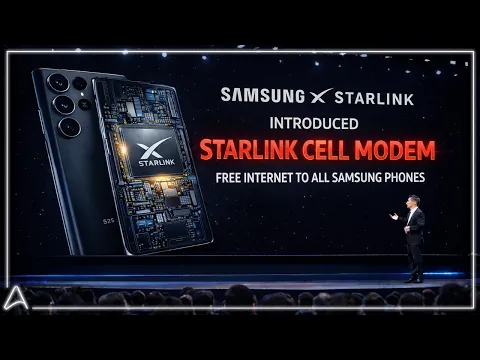
Unlike older satellite systems that required dedicated external antennas, the Direct to Cell technology allows the smartphone to connect directly to the satellite using its own internal antenna adapted for this communication.
These satellites operate hundreds of kilometers from Earth and feature bidirectional communication capabilities with compatible devices.
The goal is to complement — and not replace — terrestrial coverage.
Why Satellite Connectivity Is A Strategic Advance For Mobile Users
The expansion of satellite connectivity represents a leap in mobile communication resilience. Situations where the technology can be decisive include:
- Cruises and vessels at sea
- Trails and expeditions in remote areas
- Desert regions or low-infrastructure areas
- Areas affected by natural disasters
- Landline network failures during emergencies
In disaster scenarios, when cell towers are damaged, satellite communication can maintain minimal contact channels.
For governments and carriers, this also represents an increase in national security and crisis response capacity.
Availability Of Galaxy Satellite Internet In Brazil
So far, there is no official confirmation of when satellite connectivity functionality will be available in Brazil.
Implementation depends on:
- Regulatory approval from Anatel
- Agreements with national carriers
- Integration with Starlink infrastructure in the country
Brazil already has Starlink coverage for fixed internet via satellite dish, but the direct integration with Galaxy smartphones still depends on regulatory steps.
The Future Of Global Mobile Connectivity
As satellite constellations like Starlink continue to expand, the expectation is that satellite communication on phones will become increasingly common.
This advancement could transform:
- Coverage in rural areas
- Digital inclusion in isolated regions
- Communication in emergency situations
- Basic internet access on a global scale

The integration between mobile carriers and space networks inaugurates a new phase of telecommunications: the convergence between terrestrial infrastructure and orbital infrastructure.
By integrating satellite-cellular connectivity into Galaxy devices, Samsung positions itself as a leader in this new technological cycle.








-

-

-

-

27 pessoas reagiram a isso.