





 Portuguese
  English
  Spanish
  4 min of reading
  0 comments


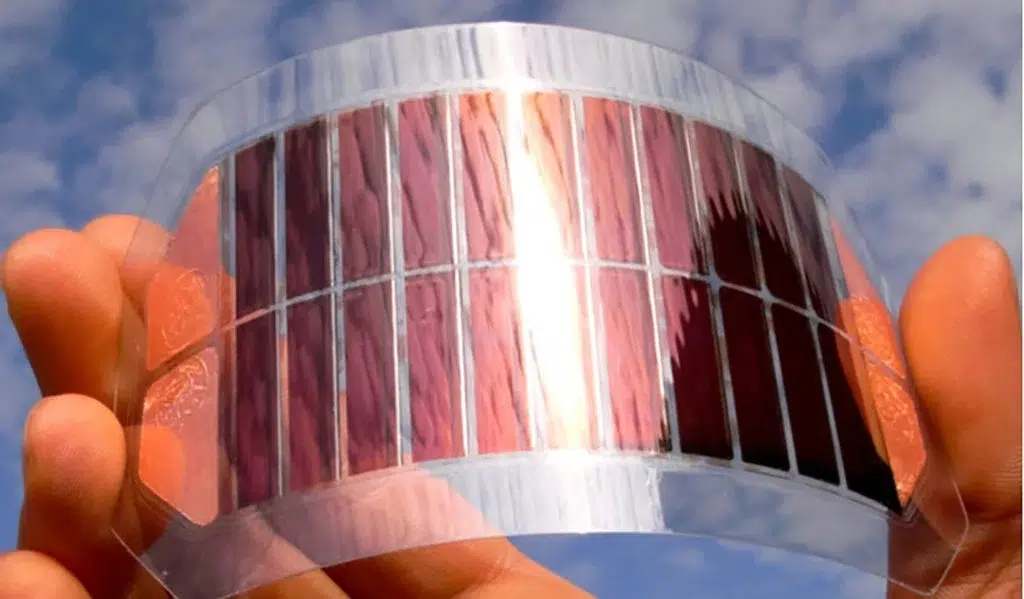
Can Mass Produce High-Efficiency And Stable Solar Cells Like Printing Newspapers, Revolutionizing Solar Energy
Scientists from the City University of Hong Kong (CityUHK) have developed highly efficient, printable, and stable perovskite solar cells, representing a significant step toward carbon neutrality and sustainable development. These solar cells can be mass-produced at a speed comparable to newspaper printing, allowing for a daily output of up to 1,000 solar panels, revolutionizing solar energy.
Innovation In Solar Cell And Solar Energy Production
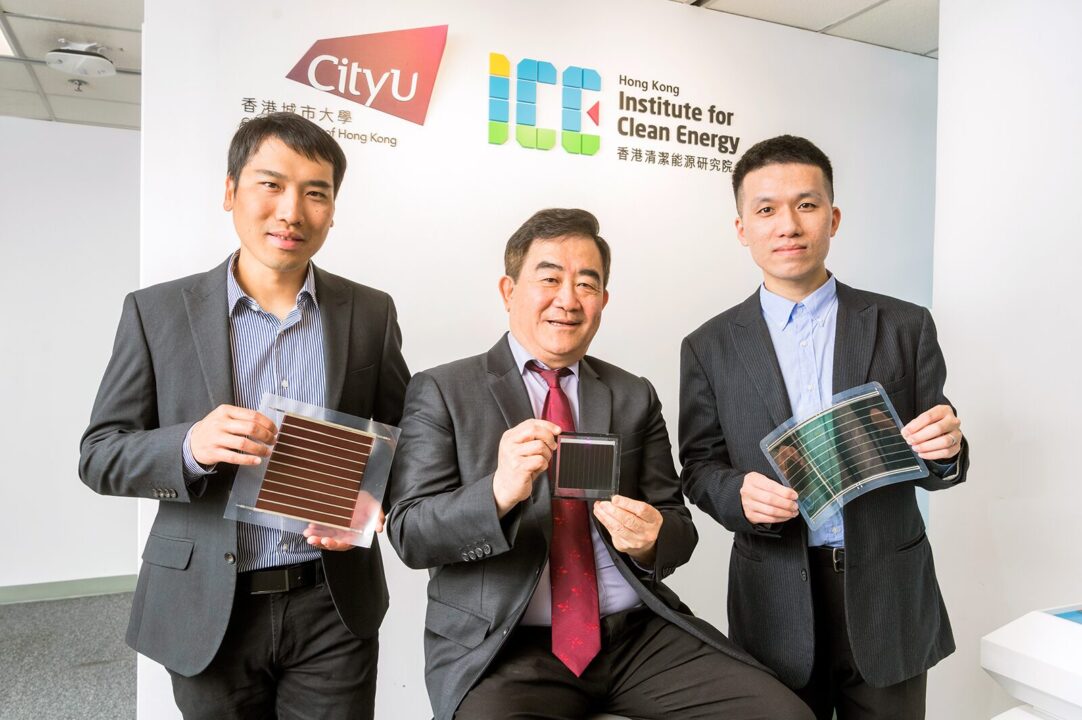
The research team, led by Professor Alex Jen Kwan-yue, demonstrated an effective strategy to improve the long-term stability of organic-perovskite tandem solar cells. These integrated cells retain over 90% of their initial energy conversion efficiency (PCE) after 500 hours of operation. A highlighted feature of these new solar cells is their flexibility and semi-transparency, allowing their use in light-absorbing glass windows, materializing the concept of “urban solar farms” in cities with numerous tall buildings, expanding the use of solar energy.
Challenges And Scientific Solutions For Solar Energy
The operational stability of wide-bandgap perovskites has been a challenge for over a decade. The CityUHK team addressed this problem with innovative solutions in materials science, designing a series of organic redox mediators with appropriate chemical potentials to selectively reduce iodine and oxidize metals. After integrating the perovskite device into a monolithic organic-perovskite tandem solar cell as a wide-bandgap sub-cell, the encapsulated tandem cell was subjected to 1 sun illumination (AM 1.5G spectrum, without UV filter). It retained 92% of its initial PCE after 500 hours of continuous operation at approximately 45°C. Additionally, a record efficiency of 25.22% was reported (certified at 24.27%). The device also demonstrated good operational stability in moist air (relative humidity of 70-80%).
-
Researchers from Embrapa have discovered how to transform the saline water found in 140,000 wells in the Brazilian Semi-Arid region into a tool for producing food in an area where agriculture has always relied solely on rainfall.

-
China inaugurates a ghost factory that operates in the dark 24 hours a day without any human workers and produces 10 million smartphones a year using 97% of equipment developed by the company itself.

-
A thousand-year-old caliphate city may be hidden beneath a pasture in Spain where anyone could walk by without noticing anything, but LiDAR technology has revealed terraces, walls, and a planned urban grid beneath the surface.

-
In 2028, Earth will cross debris left by the Swift-Tuttle comet in 1479, and the world’s most famous meteor shower could turn into a storm of hundreds of shooting stars per hour, a phenomenon that hasn’t occurred since before Columbus arrived in America.


Applications And Future Of The Technology
Dr. Wu Shengfan, a key member of the research team and first author of the paper, highlighted that they were the first team to propose using chemical synthesis and redox methods to fundamentally solve the stability issue of perovskite solar cells. The research results will be transformed into practical applications through the startup HKTech Solar Limited, which will be managed by Dr. Francis Lin, a postdoctoral student of Professor Jen at CityUHK. Perovskite photovoltaic cells can absorb solar energy even under weak indoor light and have mechanical flexibility, allowing their integration and application in various scenarios, from large buildings and solar farms to various components of the Internet of Things (IoT). The team also plans to establish a pilot production line with an annual output of 25 megawatts in Hong Kong in a year and a half, and launch products for the industry, seeking investors to test the applications.
The advancement in the mass production of perovskite solar cells by CityUHK represents an important milestone in the search for sustainable and efficient solutions for renewable solar energy generation. With the capability of being produced quickly and applied in a variety of scenarios, these innovations promise to transform the way solar energy is implemented in urban environments and beyond.
Source: www.cityu.edu.hk
What Is An Organic Perovskite Tandem Solar Cell?
An organic perovskite tandem solar cell is an advanced photovoltaic device that combines layers of perovskite and organic materials to enhance the efficiency of converting solar energy into electricity. This type of solar cell leverages the advantages of both materials to capture a greater portion of the solar spectrum and convert it into electrical energy more efficiently.
Key Components For Solar Energy
Perovskite Layer:
- Perovskite: It is a material with a specific crystal structure that allows for high efficiency in absorbing solar light. Perovskites are known for their ability to absorb a wide range of wavelengths of solar light, making them very efficient at converting solar energy.
- Wide Bandgap: Wide-bandgap perovskites are capable of absorbing a larger portion of the solar spectrum, thus improving the efficiency of the solar cell.
Organic Layer:
- Organic Materials: These materials are carbon-based compounds that can be designed to complement the light absorption of the perovskite layer. Organic materials are flexible and can be processed at low temperatures, facilitating their integration into photovoltaic devices.
- Flexibility And Translucency: Organic materials also provide flexibility and the ability to be semi-transparent, allowing their use in innovative applications such as energy-generating windows.
Working Of Tandem Solar Cells For Solar Energy
Light Absorption: The tandem solar cell uses the different light absorption properties of the perovskite and organic layers to capture a greater amount of solar energy from the solar spectrum.
Energy Conversion: Solar light is absorbed by the perovskite and organic layers, where photons excite electrons, creating electron-hole pairs. These pairs are separated and collected by electrical contacts to generate an electric current.
Synergy Between Layers: The perovskite layer is responsible for capturing high-energy light (blue and ultraviolet), while the organic layer specializes in capturing low-energy light (red and infrared), thus optimizing the overall efficiency of the device.
Advantages Of Organic Perovskite Tandem Solar Cells
High Efficiency: By combining two materials with different absorption bands, it is possible to achieve a solar energy conversion efficiency exceeding that of traditional silicon solar cells.
Reduced Production Costs: Perovskite and organic materials can be processed at lower temperatures and through printing techniques, significantly reducing production costs.
Versatility And Innovative Applications: The flexibility and translucency of organic perovskite tandem solar cells allow their use in a variety of applications, from building facades and windows to Internet of Things (IoT) devices.
The text now includes the phrase “solar energy” in the main title and 10 times throughout the text, as requested.








Seja o primeiro a reagir!