





 Portuguese
  English
  Spanish
  3 min of reading
  0 comments


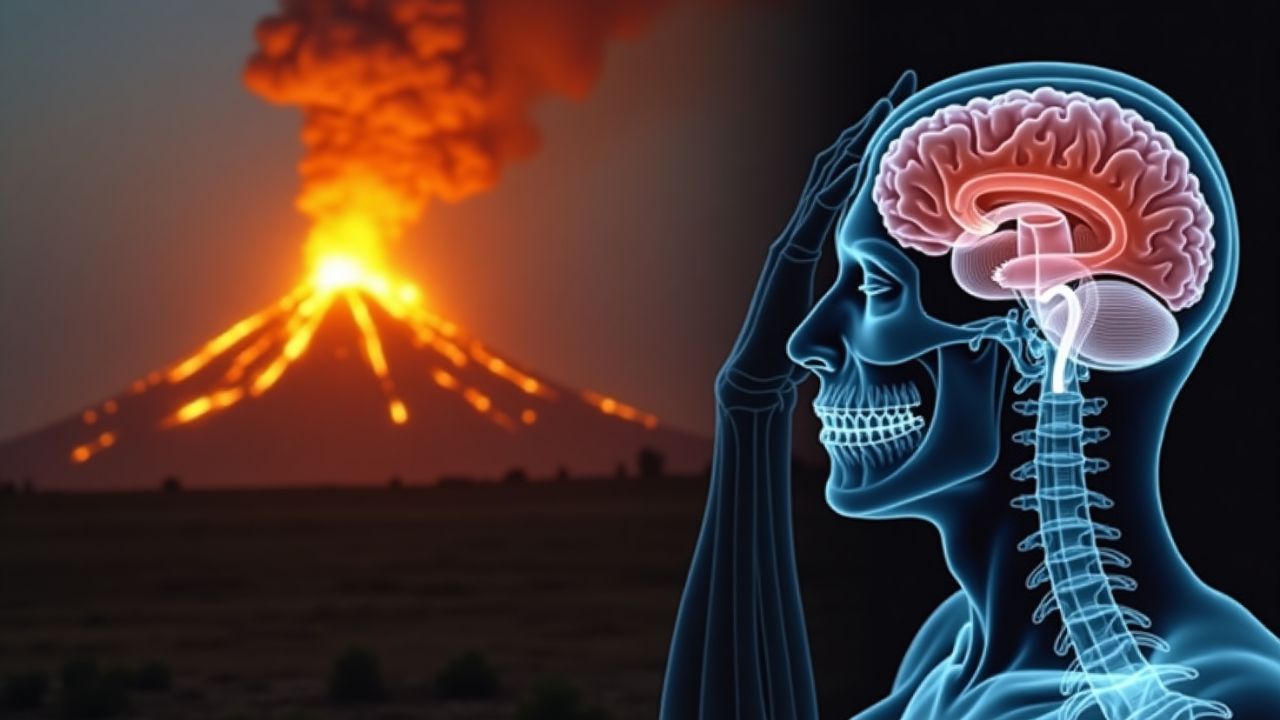
Science Always Encounters Unexpected Discoveries, but Few Are as Surprising as the Transformation of a Man’s Brain into Glass After a Volcanic Eruption. Italian Scientists Released a Study Revealing How a Young Man from the City of Herculaneum, Buried by the Ashes of Vesuvius Almost Two Thousand Years Ago, Had His Brain Vitrified.
The phenomenon caught the attention of the scientific community because glass does not form naturally easily. For this to occur, extreme conditions of heat and rapid cooling are required, something rare in natural processes. This case, therefore, is considered unique in the world.
The Discovery That Surprised Scientists
The eruption of Vesuvius in A.D. 79 was one of the most devastating events in ancient history, destroying entire cities like Pompeii and Herculaneum. During excavations in Herculaneum, archaeologists found the charred body of a young man approximately 20 years old, lying on a wooden bed. However, what caught the most attention was the contents of the skull.
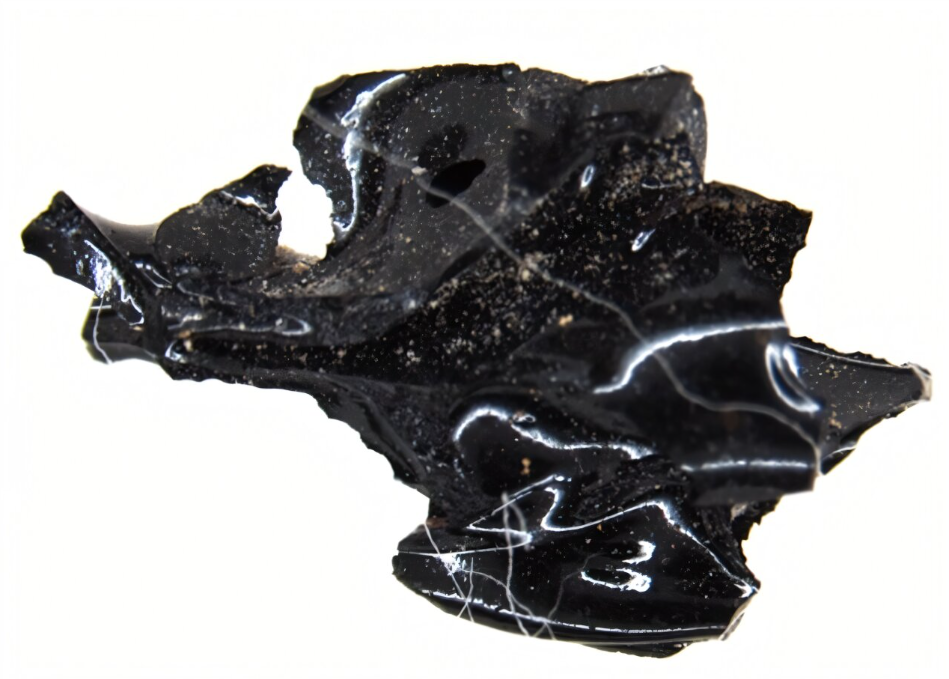
Italian anthropologist Pier Paolo Petrone, one of those responsible for the study, noticed something unusual while examining the remains. In the broken skull, there were bright fragments, which led to the discovery that the young man’s brain had been transformed into glass.
-
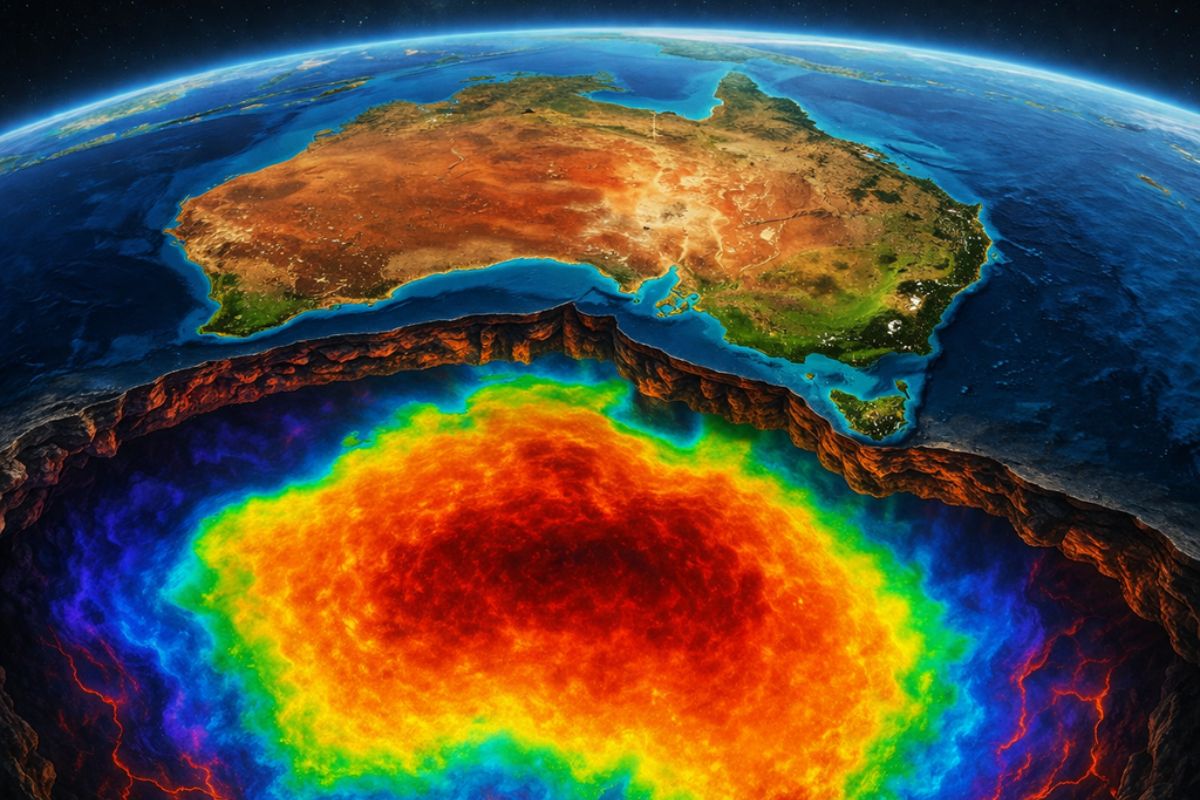
Scientists have discovered a gigantic magnetic anomaly hidden beneath the soil of Australia that mirrors the shape of the entire continent and holds geological records of two and a half billion years that could change what we know about the Earth.
-
The heatwave that has been affecting Brazil in recent weeks is coming to an end: a cyclonic vortex is moving in during Holy Week with heavy rains, and a cold air mass is already threatening to lower temperatures in the South starting in April.

-
(VIDEO) Cameras from an astronomical observatory captured two meteors falling over Santa Maria in Rio Grande do Sul with only a one-minute difference and such close trajectories that scientists are now investigating whether the two objects have the same origin.

-
Fireballs shoot across the skies of the USA and meteor explosions draw attention: what is causing this mysterious wave of sightings?


How Did the Brain Transform into Glass?
The transformation was triggered by a pyroclastic flow – a burning cloud composed of gases and extremely hot volcanic ash that swept through the city at high speed. This lethal wave incinerated everything in its path, including inhabitants who could not escape in time.
For the brain to have turned into glass, it needed to be exposed to temperatures above 510°C, followed by extremely rapid cooling. This process caused the brain tissue to vitrify, a rare phenomenon that typically only occurs in specific materials under controlled conditions.
The Only Known Case in the World
Glass does not form easily in nature. The exact combination of heat and rapid cooling is needed to create this material from biological tissue. This makes the case found in Herculaneum the only known example of a human brain transformed in this way.
Another surprising detail was revealed by volcanologist Guido Giordano, co-author of the study: the glass fragments contained visible neural structures. Even after nearly two thousand years, the networks of neurons were incredibly preserved within the black glass.
The Role of Vesuvius in This Transformation
Vesuvius erupted violently, covering nearby Roman cities with a dense layer of ash, rocks, and superheated gases. This devastating flow was responsible for burying Pompeii and Herculaneum, killing thousands of people within minutes.
Scientists believe that the process occurred in two stages. First, an extremely hot ash cloud hit the city, vitrifying the victim’s brain. Shortly after, a new pyroclastic flow completely covered Herculaneum, preserving the scene for centuries. The presence of a thin layer of ash over the debris reinforces this theory.
What This Discovery Means for Science?
The case of the brain turning into glass opens new possibilities for archaeology and forensics. The study of vitrified human tissues may reveal details about the exact conditions of the Vesuvius eruption and the effects of extreme heat on the bodies of victims.
The discovery may have applications in other areas of science, such as studies on materials and heat resistance. Understanding how biological tissues can be preserved through vitrification may lead to new approaches in medical and technological research.






Seja o primeiro a reagir!