





 Portuguese
  English
  Spanish
 4 min of reading
  0 comments


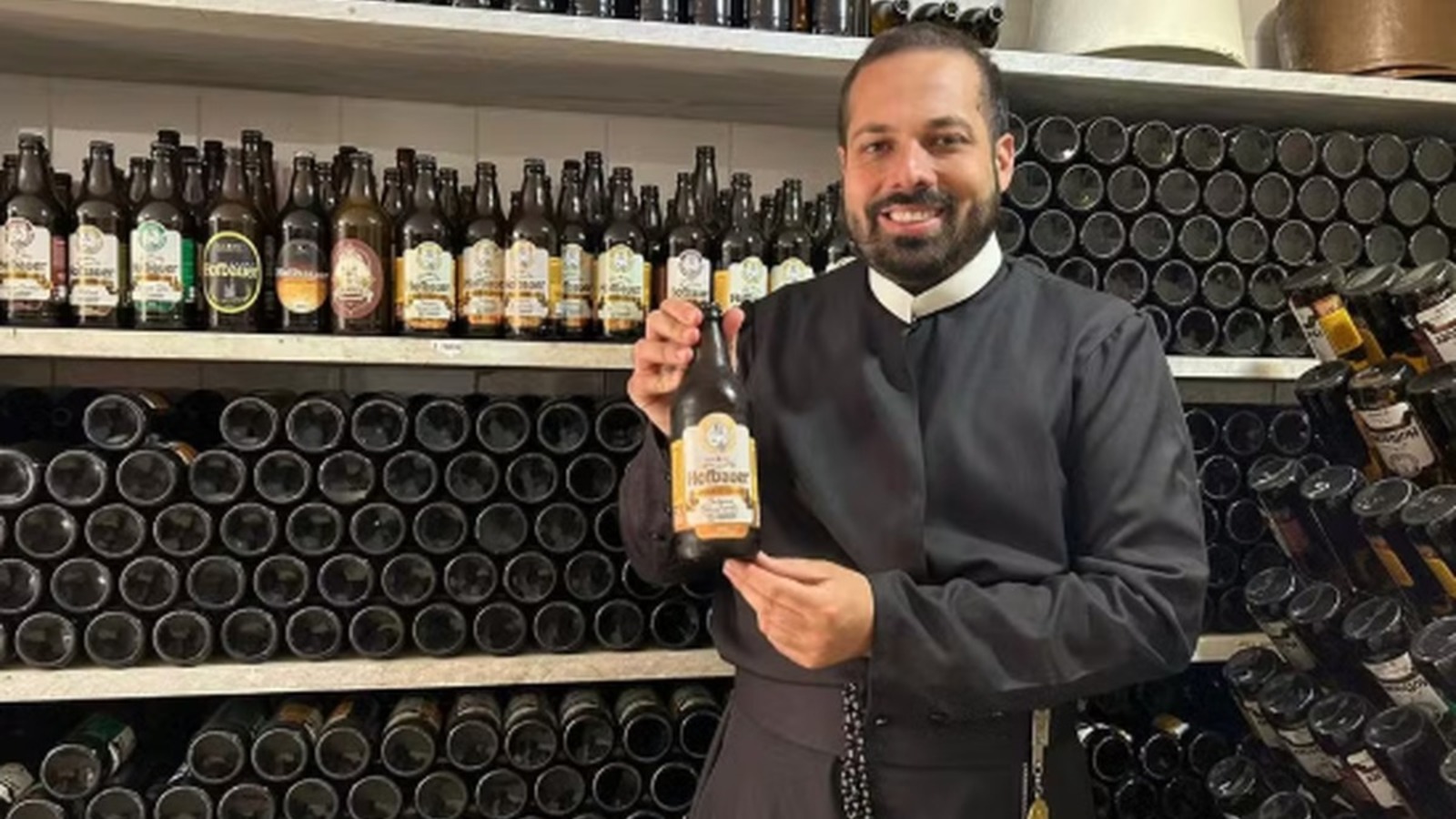
In Juiz de Fora (MG), Redeemer monks have been producing artisanal beer since 1894. The Hofbauer Brewery, located in the basement of the Church of Glory, combines devotion, history, and European culture in each bottle produced
In the basement of the Church of Our Lady of Glory, in Juiz de Fora (MG), there is a craft brewery run by religious. Named Hofbauer, it is one of the few convents producing beer still active in Brazil and keeps alive a European tradition that merges faith and fermentation.
Century-Old Tradition of Devotion and Flavor
The brewery’s history began in 1894 when the Dutch missionaries Father Mathias Tulkens and Father Francisco Lohmeyer decided to establish a small factory.
The idea was to combine religious devotion with the brewing culture that was already part of the daily routine in European convents.
-
A fine of R$ 115 thousand places Goodyear at the center of an environmental case in Americana after oil and grease appeared in a stream and the company was required to act quickly.

-
A fine of R$ 115 thousand puts Goodyear at the center of an environmental case in Americana after oil and grease appeared in a stream and the company was forced to act quickly.

-
Lack of workers and an aging population: Japan bets on AI robots in factories, logistics, and infrastructure to keep the economy and essential services active.

-
Natville puts R$ 700 million on the table for new factories in the Northeast, generating jobs and boosting the local economy.
In the beginning, production took place in simple kettles, but in 1907, machines imported from the Netherlands arrived that, surprisingly, are still in operation.
“Here, every detail matters. It’s not just beer; it’s history that you drink,” says Brother Taylor Bertoli, master brewer and the current person responsible for production.
In the Catholic Church, “brother” is the term used for religious who are not priests. They live in community and follow vows of poverty, chastity, and obedience.
Faith and Beer: A Possible Combination
Many wonder if religious can drink. The answer is yes. Alcohol consumption has never been prohibited by the Church.
In past centuries, beer was considered food and was part of the daily meals of the monks. Producing and sharing the drink was also a means of spiritual sustenance and gratitude.
Therefore, the production of Hofbauer keeps this heritage alive. Besides being a craft, it represents a link between monastic past and the communal present of the Church of Glory.
Homage to Saint Clement Hofbauer
The name of the brewery is a tribute to Saint Clement Maria Hofbauer, an Austrian priest from the 18th century. Before this, the place was known simply as “Beer from the Glory Convent.”
The saint became famous for renewing religious life in Vienna, arguing that convents should be self-sufficient.
Canonized in 1909, he became the patron saint of the city and one of the most respected names of the Congregation of the Most Holy Redeemer.
“We offer beers that captivate not only with flavor but with cultural heritage. It is a source of pride to keep this artisanal tradition alive,” highlights Brother Taylor.
Artisanal Beer Production That Crosses Generations
The production of Hofbauer has been preserved over generations but had to be interrupted at times due to a lack of religious with technical knowledge.
In 2009, Father Flávio Leonardo Santos Campos restored the old machines and resumed the artisanal manufacturing process. Later, Father Jonas Pacheco Machado took over the continuity.
Since 2024, Brother Taylor Bertoli has been coordinating the work, with the support of four collaborators and specialized technical oversight.
Each batch produces about 350 liters, four times a year. The complete process takes 40 days, respecting the natural time of fermentation and maturation.
Seven Styles and One Purpose
Currently, Hofbauer produces seven types of artisanal beer: Pilsen, Belgian Blond Ale, Belgian Pale Ale, Belgian Dubbel, Wassbier, Session IPA, and Russian Imperial Stout. Each bottle costs starting from R$ 25.
Sales began timidly, but according to Taylor, public interest grew rapidly. “In the past two years, we gained ground, and this year we participated for the first time in festivals and contests in Juiz de Fora,” he says.
All revenue generated is directed to social projects supported by the Church.
Hofbauer: From Mystery to Tourist Attraction
For a long time, the basement of the Church of Glory remained shrouded in mystery. In 2024, the space was opened to the public, revealing to visitors a tradition that blends history, religion, and brewing culture.
“We opened to show the importance of this heritage to Juiz de Fora,” states the master brewer.
The initiative caught the attention of the municipal Tourism Department, which began to include Hofbauer in the “Walking Through History” program. The tour offers free visits to historic points in the city.
Today, the basement of the Church is one of the most sought-after destinations by visitors, who leave enchanted by the aroma of malt, the old Dutch machines, and the spirit of fraternity that surrounds each bottle produced by the religious.
With information from TNH1.









-

-

-

-

-

-

23 pessoas reagiram a isso.