





 Portuguese
  English
  Spanish
  5 min of reading
  0 comments



Volkswagen Announces New Generation Of Amarok With Promise Of Total Break From Current Project, Even Borrowing Platform From Chinese Pickup. The Billion-Dollar Investment Aims To Create A Model 100% Adapted To The Taste And Requirements Of The South American Consumer.
The new generation of the Volkswagen Amarok, which will be produced in Argentina starting in 2027, promises to be a pickup fully adapted to the South American reality, despite using the same platform from the Chinese giant Saic.
The German automaker recently announced a robust investment of US$ 580 million (about R$ 3.3 billion) to make the project feasible, and emphasized that the model will not be a simple adaptation of the Maxus Terralord 9, a vehicle of Chinese origin that will serve as a structural base for the new Amarok.
According to Volkswagen’s president in Latin America, Alexander Seitz, more than half of the project will be localized, with the aim of precisely meeting the demands of local consumers, especially Brazilians.
-
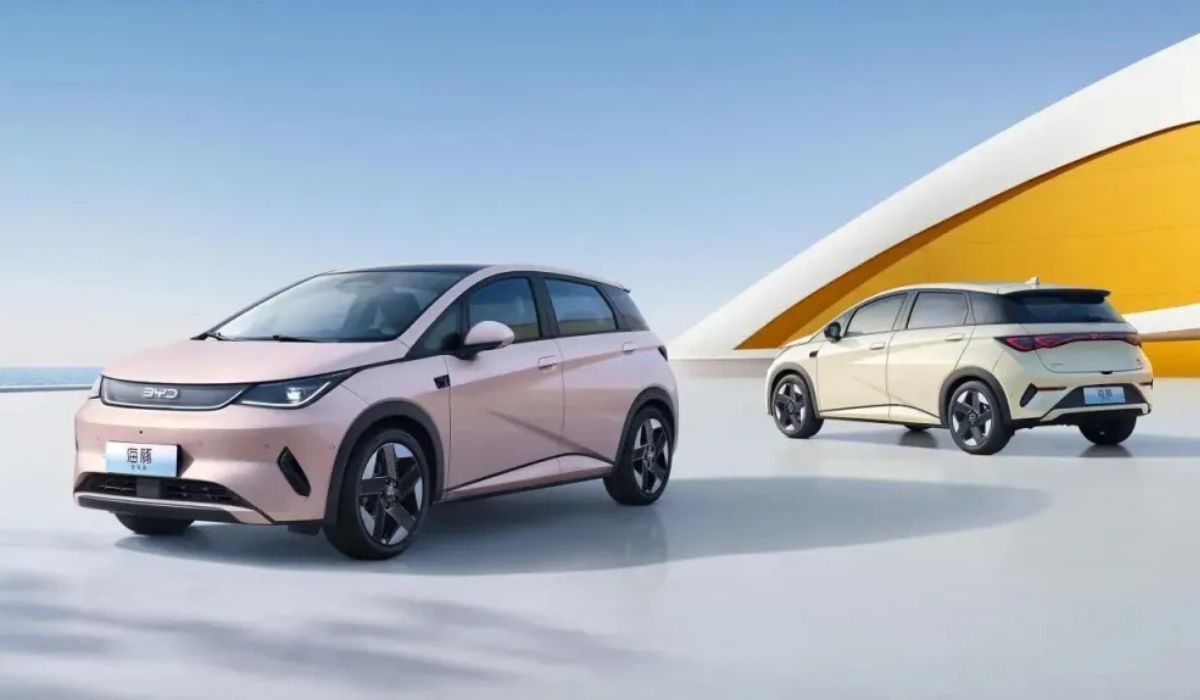
With a new look, more power, more technology, a larger size, and the farewell to a controversial item, the BYD Dolphin 2027 is getting ready to arrive in Brazil in 2026, stronger and more competitive than ever.
-
Maria Branyas Morera lived to be 117 years old, eating three yogurts a day without developing cancer or dementia, and when scientists analyzed her DNA, they found a secret that no one expected: her biological clocks indicated an age two decades younger than her actual age.

-
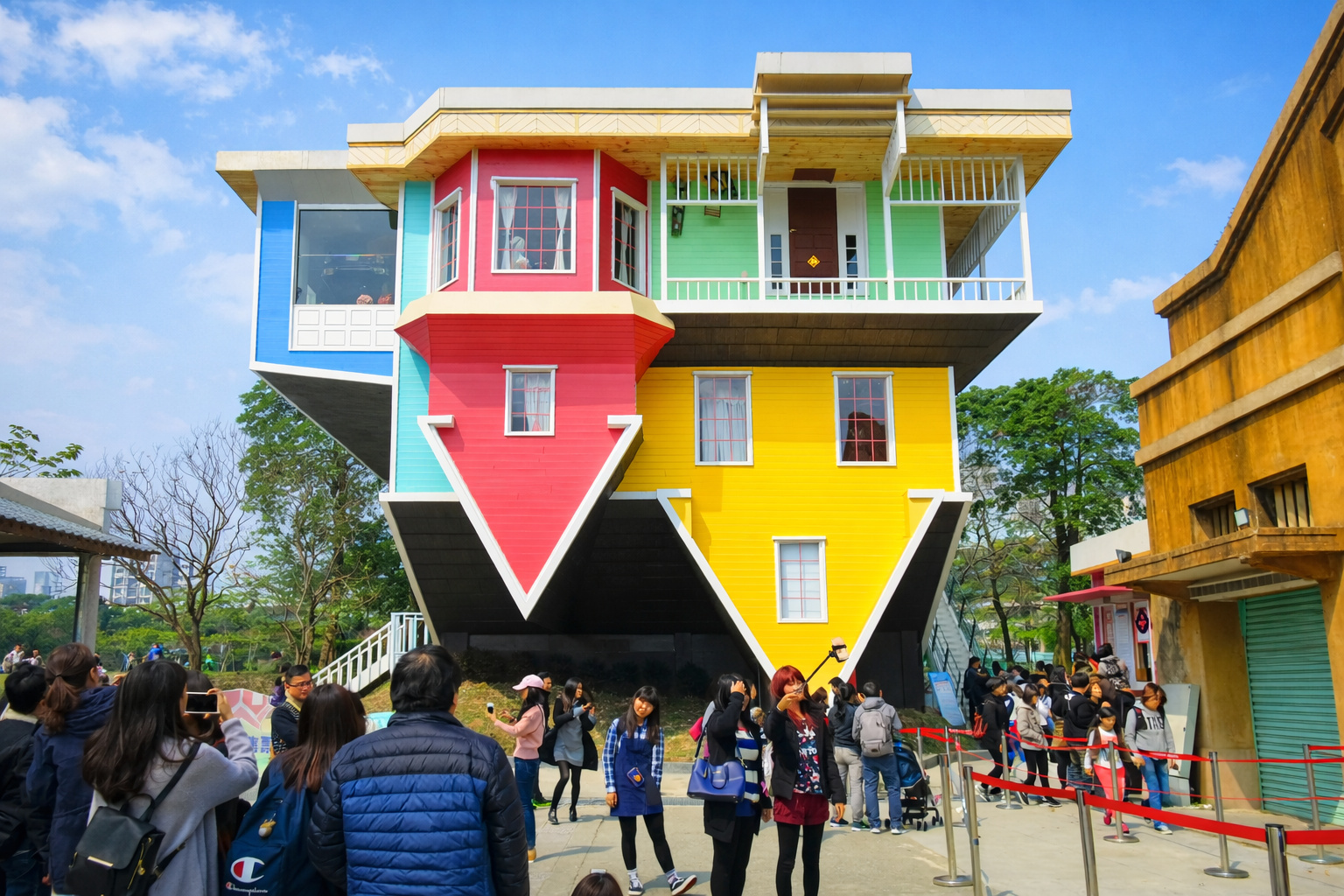
Upside Down House transforms abandoned warehouses from the 1970s, blending art with concrete and steel engineering, becoming a phenomenon in South Korea and impressing with a surreal experience that attracts tourists from around the world.
-
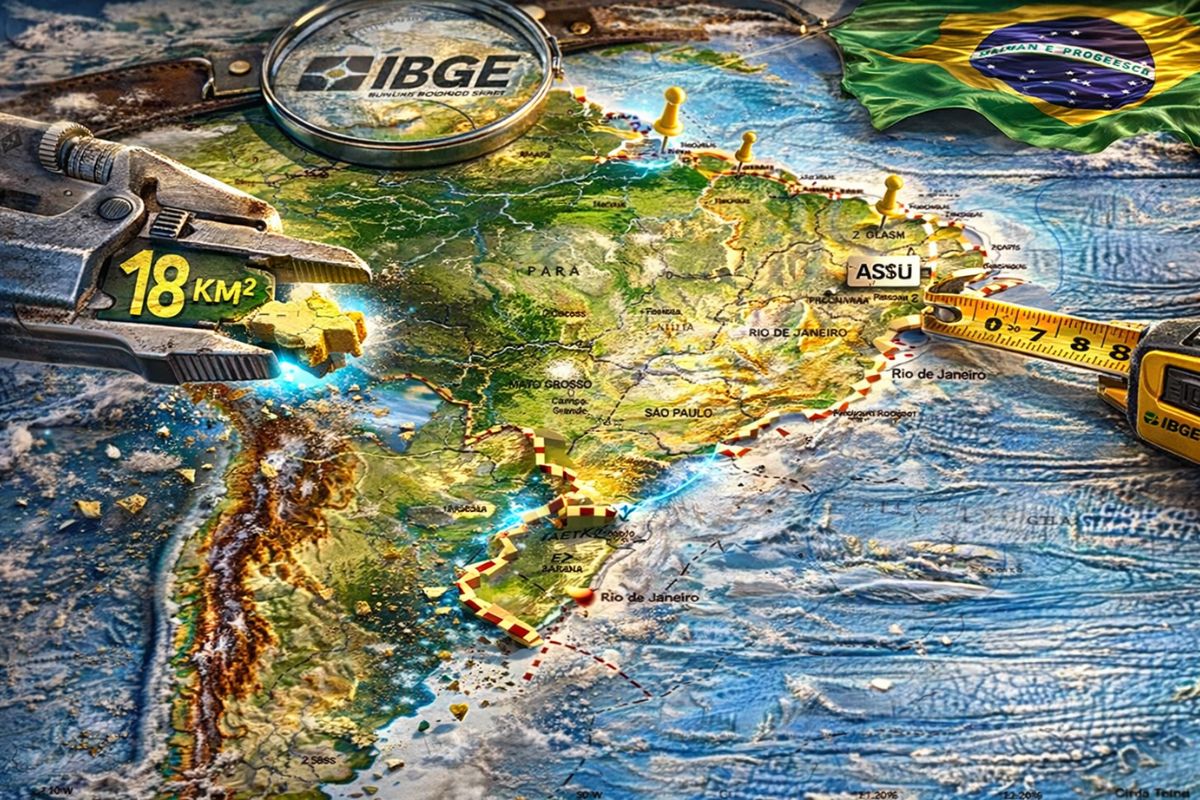
Brazil became 18 square kilometers smaller in the new official update from IBGE, which redrew the boundaries of 784 municipalities in 13 states and even changed the names of cities that you might know, such as Açu, which is now called Assú.
Billion-Dollar Investment Focused On South American Consumers
During a press conference held after the investment announcement event, Seitz stressed that the decision to inject hundreds of millions of dollars into the project is not only aimed at changing the badge on a Chinese pickup.
He pointed out that if it were to do something superficial, the investment amount would be significantly lower.
“Do you think we would make such a high investment if it weren’t to have an entirely new product?
If it were just to change the logo on the steering wheel, the grille, the shock absorbers, and the headlights, it would cost 30 million [dollars],” compared the executive.
“We are investing 580 million. This shows the level of adaptation and localization of the project”, he stated.
Despite being built on the same structure as the Maxus Terralord 9, a robust model exceeding 5.50 meters in length (larger than the current Amarok at 5.35 meters), the South American version will have deep changes in its external design, interior, and electronic systems.

Pickup Customized For Brazilian Taste
The new Amarok will be designed and adjusted by engineers and designers from Latin America, with special attention to the profile of the Brazilian consumer, known for their demands regarding performance, comfort, and technology.
In addition to visual changes, the pickup will also feature adaptations in software such as the driver assistance system (Adas) and a multimedia center that meets local standards.
“The Chinese still don’t know South American consumer preferences very well. We will adapt a lot. The local consumer does not accept any product in the medium pickup segment. So we will give them what they demand”, explained Seitz.
Changes In Engine: Farewell To The V6 Engine?
One of the biggest transformations expected is under the hood.
The new Amarok may leave behind the renowned 3.0 turbo-diesel V6 engine from Audi, which produces 258 horsepower and is widely praised for its performance.
This replacement is partly due to the need to meet the requirements of Proconve L8, Brazil’s vehicle emissions control program.
As a result, the possibility of the Amarok receiving a new engine increases, which should maintain diesel efficiency but focus on sustainability and adaptation to environmental laws.
Seitz indicated that Volkswagen is working in partnership with Saic to develop a new mechanical set compatible with Brazilian diesel, which is more impure than the European version, requiring more robust engine calibration.
“We know this topic [the engine] is important for Brazilian consumers. And we want [the new Amarok] to be a reference in power, technology, and safety. That’s why we were very clear in negotiations with our partner [Saic]: ‘Do you have a powertrain that meets what we need? No? Then let’s develop a new one’,” he stated.

Diesel Is Still A Priority, But Hybrid Version Is On The Radar
Although the V6 engine will soon be out of production, Volkswagen does not intend to abandon diesel.
The new Amarok may receive a new turbo-diesel engine, which will not be exactly the same used by the Maxus Terralord 9, equipped with a 2.5 four-cylinder and 223 hp, but rather a deeply adapted variation.
In addition, hybrid versions are being analyzed by the automaker’s engineering team, especially those that combine the strength of the combustion engine with the efficiency of electric motors.
According to Seitz, while a diesel hybrid system is being evaluated, there is an understanding that the flex hybrid option may make more sense in the Brazilian agricultural context, where many consumers have easy access to ethanol and invest in solar energy.
“Since the [engine] electric already generates a lot of power, [having a diesel hybrid] loses some sense.
At the same time, agricultural consumers are increasingly storing ethanol on their farms, in addition to installing solar panels.
I’m not saying that the Amarok will follow this path, but does it make more sense [to have a flex hybrid than a diesel hybrid]?” reflected the president.
Amarok Will Have Multi-Drive Platform And Bets On Versatility
The new Amarok will be built on a multi-drive platform, allowing the adoption of different types of engines in the future, including purely electric, hybrid, or just combustion options, making the model more competitive in a transforming market.
This flexibility is seen as an important asset for Volkswagen, which seeks to reposition the Amarok among the leaders in the medium pickup segment in Brazil and South America, facing strong competitors like Toyota Hilux, Ford Ranger, and Chevrolet S10.
In addition to the new design, updated engine, and built-in technologies, the automaker also intends to significantly improve the safety and connectivity of the model, following global automotive industry trends.

Volkswagen Factory In Argentina As A Strategic Hub
The production of the new Amarok will take place at the General Pacheco unit in Argentina, where Volkswagen already manufactures the current generation of the pickup.
The announced investment will also allow for the modernization of the industrial plant, making it more efficient, technological, and aligned with the brand’s sustainability goals.
Furthermore, the Argentine factory will continue to be a strategic export center for several countries in Latin America, including Brazil, the main consumer market for the Amarok.
And what do you think of Volkswagen’s new proposal for the Amarok? Is the bet on a localized project enough to face the increasingly intense competition among medium pickups in Brazil? Comment below and join the discussion!







Seja o primeiro a reagir!