





 Português
  Inglês
  Espanhol
  3 min de leitura
  0 comentários


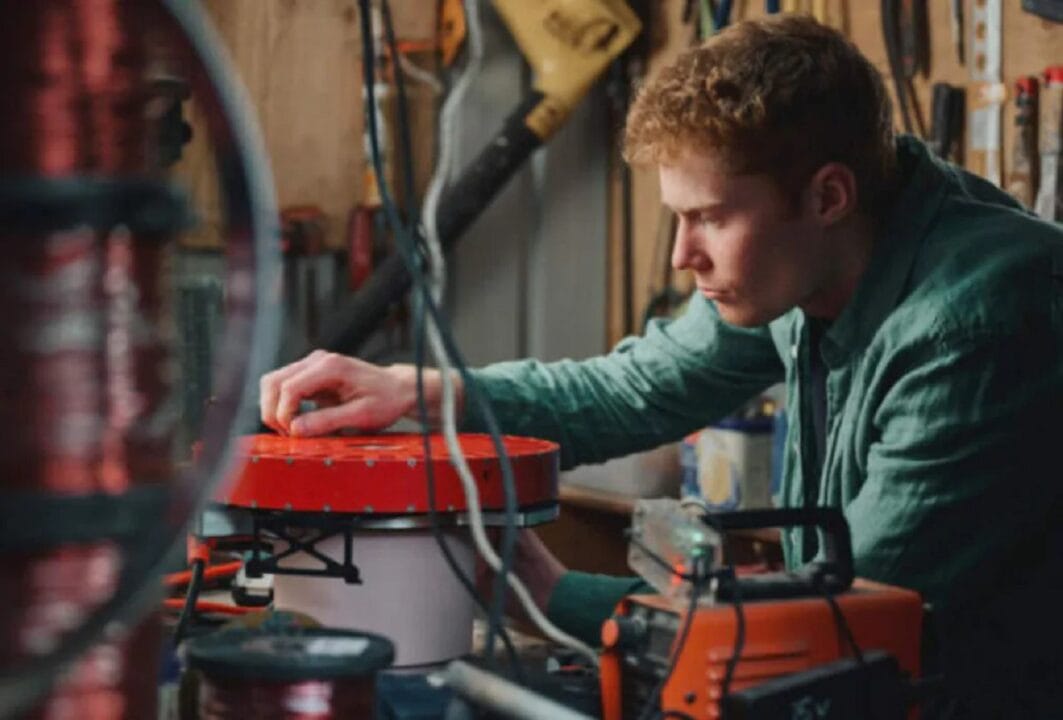
Australian Student Innovates With Affordable Conversion Kit, Quickly Transforming Gasoline Cars Into Hybrids For Only R$ 15.9 Thousand.
Alexander Burton, a 21-year-old Australian who has been interested in engineering and sustainability since a young age, was awarded for bringing together his passions. The student received the famous James Dyson Award for a unique proposal: the REVR, a conversion kit that transforms gasoline cars into hybrids in an economical and quick way.
Conversion Kit That Transforms Any Gasoline Model Into a Hybrid Car Delivers Up to 150 Km of Range
The motivation for developing the conversion kit came from Burton’s concern about emissions from gasoline cars and the awareness that electric cars still have prices that are unaffordable for many people. Owning a well-preserved 20-year-old Toyota Corolla, Alexander decided to find a way to make his own car more sustainable.


The inventor states he is worried about climate change and its individual impact. He wanted to help by buying an electric car, however, they are very expensive and have considerable emissions impacts due to their manufacturing.
-
OMODA & JAECOO grows in Europe in 2026 with an integrated strategy of sales, innovation, local production, and technological advancement in the United Kingdom, Italy, and Spain.
-
OMODA & JAECOO expands after-sales service in Brazil with competitive maintenance, a 7-year warranty, and high availability of parts for technological SUVs.
-
OMODA & JAECOO appoints Alessandra Souza as executive marketing director in Brazil and accelerates brand expansion with a focus on innovation, networking, and hybrid portfolio.

-
Jaecoo 7 with super hybrid SHS system exceeds 1,200 km of combined range with a 1.5 turbo engine, high-density battery, and intelligent energy management.

Burton claims that his 20-year-old car is perfectly functional, except for the gasoline engine. Transforming a car that has already been manufactured retains the carbon invested in automobiles and does not require a new carbon debt for a new car.
The result is an easy-to-install hybrid car conversion kit that allows any gasoline vehicle to reduce its emissions and save fuel. With the REVR, cars could enjoy up to 150 km of electric range, significantly reducing their emissions.
Understand How the Conversion Kit Works in Gasoline Cars
The disc brake system and the wheel, which are coupled to the motor rotor, have the ability to rotate freely. The axles, hydraulic brake system, and gasoline engine continue to operate as before. The flat stator of the axial flow motor retains torque at the mounting points on the chassis through the wheel hub.
As described by the inventor, this drive system offers the advantages of direct drive, resulting in lightness and high efficiency. Its installation can be completed in a few minutes, without the need for specialized intervention. Alexander details that the hybrid car conversion kit includes all essential components to transform a light vehicle into a hybrid electric, covering air conditioning, heating, steering and brake assistance, batteries, and controllers.
However, the innovative aspect lies in the rotors. The axial flow motor technology is already known, but the innovation manifests in the design and structure of the REVR motor. This motor is distinguished by being a flat axial flow motor with a vast internal space, allowing it to be installed directly between the vehicle wheel and the disc brake. Since both the disc brake and the wheel are mounted on the motor rotor and can rotate freely, the vehicle’s original axles and systems, including the hydraulic brake and the internal combustion engine (ICE), remain operational.
Advantages of the REVR Conversion Kit
Simply put, the conversion kit for gasoline cars guarantees the advantages of a hybrid engine: using electricity for daily trips, reducing emissions with fuel, and using gasoline on trips where there are no charging points.
Alexander did not detail how the accelerator pedal works and needs to understand the operation of the steering, brake, and temperature components.
Additionally, he hopes to finish the prototype, perform the necessary tests, and make the kit available by the third quarter of 2024. However, the initial price, given the complexity of the product, would be R$ 26.9 thousand; however, over time and with demand growth, it would drop to R$ 15.9 thousand.








Seja o primeiro a reagir!