






 Portuguese
  Spanish
  3 min of reading


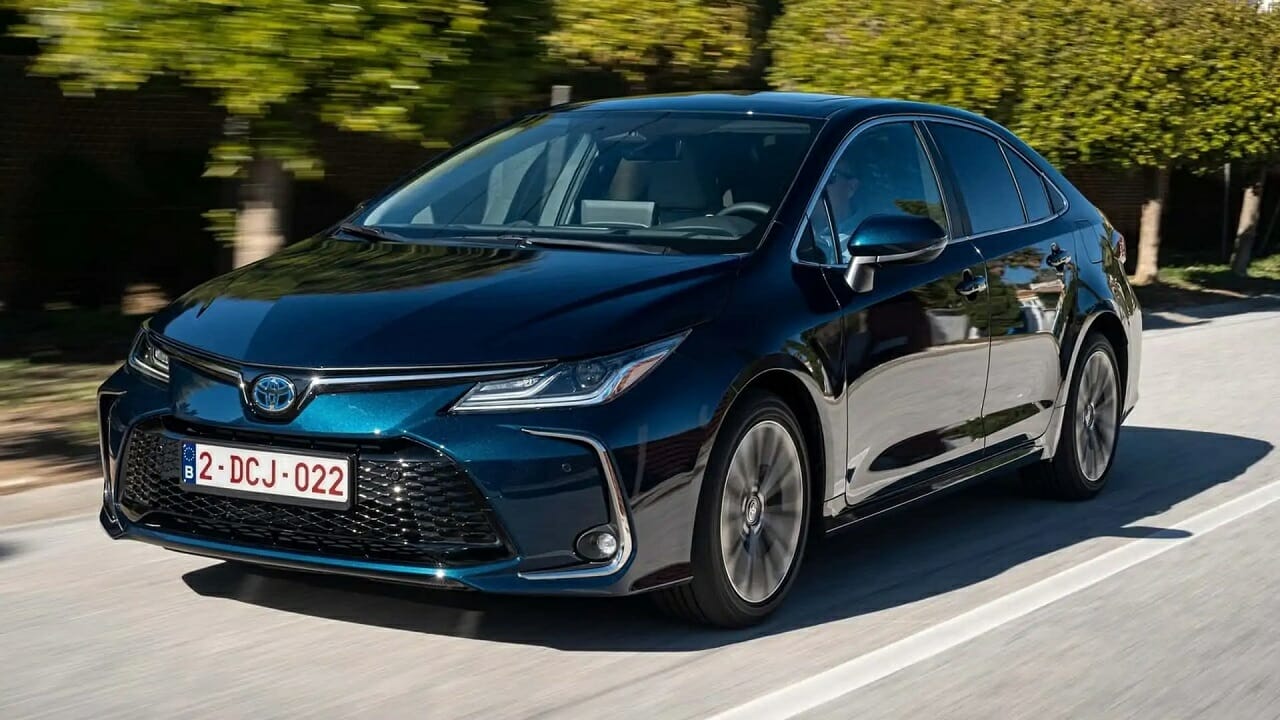
The 2024 Toyota Corolla Will Arrive In The Market Costing R$ 148.990 And With An Amazing Fuel Economy. The New Corolla Delivers Up To 175 Horsepower.
The 2024 Toyota Corolla is already in stores, with its list prices announced, ranging from R$ 150 thousand to R$ 200 thousand, according to confirmation from the manufacturer itself. It was also reported the fuel consumption of the new Corolla in the Brazilian Vehicle Labeling Program (PBEV) from Inmetro, and the surprise is that the midsize sedan is more fuel-efficient in both engine configurations, even without an update to power and torque.
Fuel Consumption Of The 2024 Toyota Corolla
The new Corolla will continue equipped with the 2.0 Dynamic Force naturally aspirated flex engine in the entry-level versions, and with the 1.8 hybrid flex in the top-of-the-line versions. The consumption of the model improved by between 2% and 10% depending on the configuration and cycle, reaching a peak of 18.5 km/l in the Hybrid configuration with gasoline in urban cycle.
In the case of the 2.0 flex engine, the Toyota Corolla 2024 saw its consumption improve from 8.3 to 8.6 km/l in the city with ethanol, and from 11.9 to 12.3 km/l with gasoline.
-
Uber Faces Shareholder Scrutiny as Board Accused of Ignoring Safety, Compliance, and Harassment Warnings Amid Over 3,500 U.S. Lawsuits

-
Ferrari’s First Electric Car Divides Fans, Priced at $630,000, Amid Concerns Over Limited Editions; Brand Clarifies It’s Not Just for Future Perks
-
BYD Dolphin Mini: The Electric Car That Defies Depreciation, Losing Only 3.58% in a Year and Becoming the Best-Selling Retail Model Under $22,000

-
Electric Car JAC E-JS4 Loses $19,000 in Value in One Year, Leading Record Depreciation of Used Cars in Brazil Due to Expensive Battery and New Models




The gains were, respectively, 3.61% and 2.52%. On the highway, the numbers improved from 9.8 to 10.7 km/l with vegetable fuel (9.18%) and from 14.2 to 14.9 km/l with petroleum-derived fuel (4.92%). In the hybrid configuration, the evolution in consumption is even more pronounced in urban cycle, where hybrid and electric motors perform better.
In this case, the numbers jumped from 11.8 to 12.8 km/l with ethanol (8.47%) and from 17.9 to 18.5 km/l with gasoline (3.35%). In the highway cycle, the improvement was from 10.5 to 11.1 km/l (5.71%) and from 15.4 to 15.7 km/l (1.95%) respectively.
New Corolla Delivers Up To 175 Horsepower
To achieve these impressive numbers, Toyota made changes to the calibration of the 2.0 Dynamic Force engine of the new 2024 Corolla. As a result, its power was reduced by 2 hp with both fuels, going from 169 hp to 167 hp with gasoline and from 177 hp to 175 hp with ethanol. The torque dropped by 0.1 kgfm, from 21.4 kgfm to 21.3 kgfm with any fuel.
The changes came in the internal calibrations of fuel supply, exhaust, and intake, along with the implementation of the On-Board Refueling Vapor Recovery (ORVR) system. This engine works in conjunction with a CVT automatic transmission that simulates 10 gear ratios and has a mechanical gear for starts. It is available in GLi, Altis, XEi, and GR-Sport versions.
Hybrid Flex Version Of The 2024 Toyota Corolla Is Not Left Behind
The hybrid flex versions, used by the Altis and Altis Premium Pack variants, use two combined engines that have the same power and torque figures: a 1.8 Atkinson cycle combustion engine that delivers 98 horsepower with gasoline and 101 horsepower with ethanol, producing 14.5 kgfm of torque, and an electric motor with 72 horsepower and 16.6 kgfm. The combined power is 122 horsepower.
In this case, it comes equipped with a transverse automatic transmission that emulates a CVT. In the second case, the answer for the improvement in consumption lies in the change of tires to wider sets and low rolling resistance composition.
All these updates aim to comply with Proconve L8, which comes into effect in 2025. In fact, pollutant emissions have also decreased: from 103 to 100 g/km in the 2.0 variant and from 77 to 75 g/km in the hybrid flex.





-

1 person reacted to this.