





 Portuguese
  English
  Spanish
  3 min of reading
  0 comments



After crossing the point closest to the Sun, comet 3I/Atlas begins to recede and enters a unique observation window. Scientists say the object carries clues about other stellar systems and can be seen in the coming weeks with powerful telescopes.
The 3I/Atlas comet is only the third confirmed interstellar object by modern astronomy and one of the fastest ever observed. During perihelion, the point of maximum solar approach, it was hidden behind the Sun, making direct observations impossible. Now, with the change in position, 3I/Atlas is visible again to space probes and will soon be observable from Earth.
The trajectory of the 3I/Atlas comet is hyperbolic, meaning it will not return to our Solar System. This route confirms its extragalactic origin and turns each captured image into a unique record. The scientific community considers the event a rare opportunity to study the composition of bodies coming from other stars and to test new interplanetary tracking techniques.
An Interstellar Visitor at High Speed
The 3I/Atlas comet travels at over 210,000 km/h, a speed sufficient to escape the Sun’s gravitational influence and head back to deep space.
-
At 77, the king of one of the most famous and powerful crowns on the planet is said to be under pressure to leave the throne, while behind the scenes there are already talks of a new coronation that could cost R$ 260 million.

-
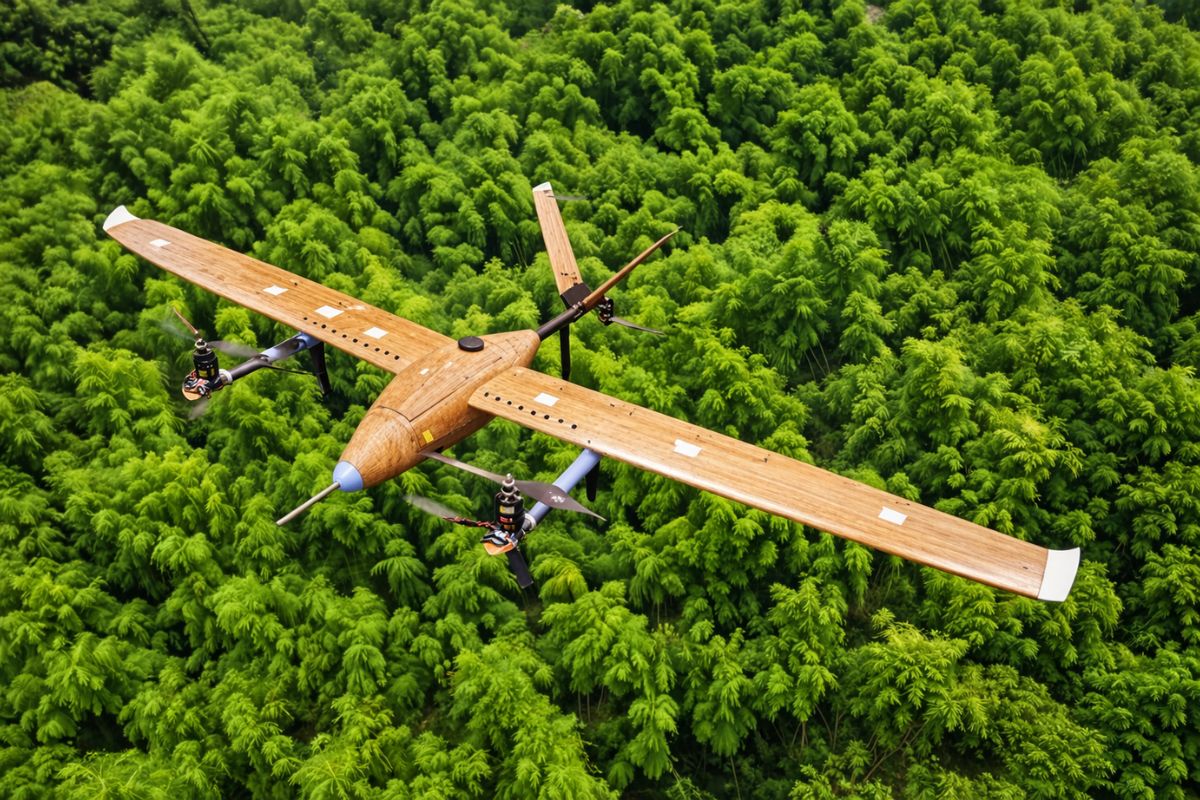
Chinese researchers have created bamboo drones that fly with the same precision as conventional models and have released the flight control software for free to the entire world in a technology that could revolutionize sustainable aviation.
-
Russia reveals that it is already conducting 95% of all its business with China without using a single dollar; dedollarization has ceased to be a promise and has become a reality in record time, and the West watches helplessly.

-
While Brazilians work more than 44 hours a week, Norwegians leave the office at 3 PM and are now testing a four-day workweek with full pay and no loss of productivity.


This acceleration brings the object closer to regions of the inner Solar System, even crossing the route of the Europa Clipper probe from NASA that is heading to Jupiter.
The comet’s passage through the debris of its own tail will be closely monitored, as particles from this cloud may contain elements formed outside the chemical environment of our Sun.
Each analyzed fragment helps decipher how different planetary systems evolve, making 3I/Atlas a cosmic laboratory in motion.
When and How to Observe Comet 3I/Atlas from Earth
For the public, the best visibility period should occur between the end of November and the beginning of December, especially in the southern and eastern hemispheres.
The celestial body can be located just after sunrise, to the east, between the constellations of Virgo and Leo.
However, the brightness of the 3I/Atlas comet is low, with a magnitude of around 12, making it invisible to the naked eye.
High-power telescopes and binoculars will be essential for identifying it.
In areas with little light pollution, amateur observatories and universities are already planning collective monitoring campaigns.
The Scientific Importance of 3I/Atlas
The phenomenon has sparked interest in agencies worldwide.
The International Asteroid Warning Network (IAWN) included the 3I/Atlas comet in its global exercise program, used to test algorithms and planetary defense protocols.
For NASA and partner institutions, the mission is twofold: understand the physics of these bodies and improve the ability to track visitors from interstellar space.
Each observation contributes to mapping potential threats and enriching knowledge about the formation of stellar systems.
The New Chapter of Interstellar Astronomy
Since ‘Oumuamua and 2I/Borisov, the detection of the 3I/Atlas comet consolidates a new era in astronomy.
Now, the study of interstellar objects is no longer an exception but a permanent research front.
These discoveries expand the understanding of galactic dynamics and bring scientists closer to answers about the origin of elements that compose planets and even forms of life.
The challenge is to maintain the technical capacity for observation and modeling, as 3I/Atlas will continue its trajectory into deep space with no forecast of return.
Each piece of data captured in the coming weeks will be an irreplaceable record.
Are you planning to follow the passage of comet 3I/Atlas? What kind of discovery do you believe it may reveal about other stellar systems?








-

-

-

-

11 pessoas reagiram a isso.