





 English
  Francês
  Alemão
  Italiano
  Japonês
  Norueguês
  Portuguese
  Spanish
  6 min of reading


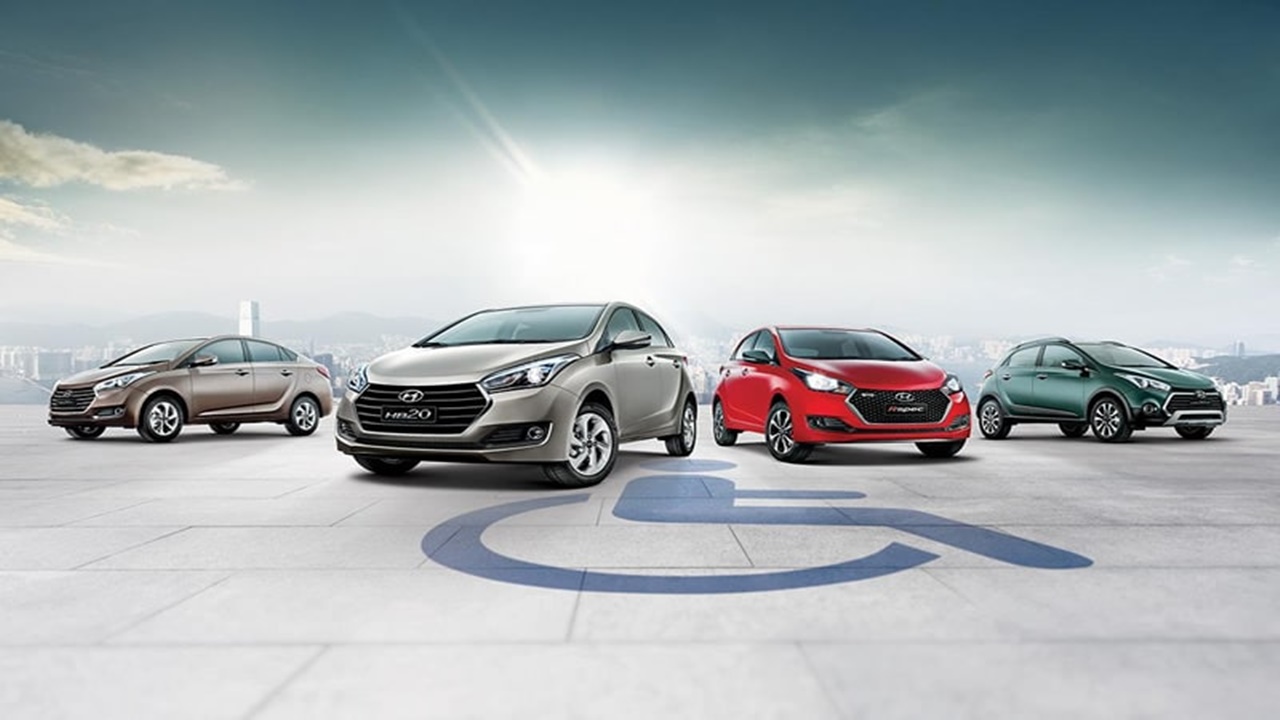
A New Limit of R$140 Thousand for the Purchase of PCD Cars Has Been Approved by the Chamber of Deputies, and Multinationals Chevrolet, Honda, Volkswagen, Fiat, Toyota, Nissan, and Peugeot Are Competing for the Best in the Category
A new limit of R$140 thousand for the purchase of PCD cars (People with Disabilities) has been approved by the Chamber of Deputies, and now it just needs to be validated by the Senate. The new limit changes the perspective of those looking for a model of this type, considering that the old price limit of R$70 thousand left consumers with no options in the market. Check below the best cars in the category from Chevrolet, Honda, Volkswagen, Fiat, Toyota, Nissan, and Peugeot to buy within the new price limit.
Read Also
- Registrations for 3 Petrobras tenders, in partnership with Sebrae and PUC-Rio, start TODAY (06/16), the largest ever opened in the oil, gas, and energy sector
- WEG opened registrations yesterday (06/14) for the free professional qualification course in paint and varnish manufacturing
- After Bosch and Volkswagen, Nissan bets on the ethanol cell for fueling electric car engines and closes a partnership with the Institute of Energetic and Nuclear Research, affiliated with USP, to develop bioethanol in Brazil
- Yazaki multinational calls for many positions for 2000 job vacancies at its new factory for producing electrical harnesses for assembling Jeep and Fiat cars in PE
Despite the new limit of R$140 thousand, don’t expect top-of-the-line versions, since the cheapest range of cars should be between R$90 to R$100 thousand. While it was previously difficult to find even an automatic hatch in that price range, manufacturers are expected to offer slightly better-equipped models, which will increase vehicle prices.
Cars like the Toyota Corolla Cross or the renewed Jeep Compass may enter the launches, which range between R$140 thousand and R$150 thousand. Other cars have not made the list due to planned facelifts, such as the Yaris and the Hyundai HB20, which are not included due to poor performance in the Latin NCAP crash test.
-
‘Interlocking brick’ made of earth arrives in the construction industry with cost reductions of up to 40% on the project.

-
Espírito Santo will receive the largest engineering project in its history with the duplication of BR 262, which will have 50 viaducts, 28 bridges, and 2-kilometer tunnels cutting through the most challenging mountainous region of the entire state.
-
A project of nearly 9 million reais already has the first kilometer paved in Santa Catarina and promises to completely transform the access between Jaraguá do Sul and Rio dos Cedros in an area where tourism is growing at a rapid pace.

-
A couple builds a system to bring water from the spring to their land, climbs a hill with materials on their backs, and creates a simple, cheap, and sustainable solution to ensure their own water supply.


Check Below the 10 Best Options for Brand New Cars for PCD with Values Between R$90 Thousand and R$140 Thousand from Multinationals Chevrolet, Honda, Volkswagen, Fiat, Toyota, Nissan, and Peugeot
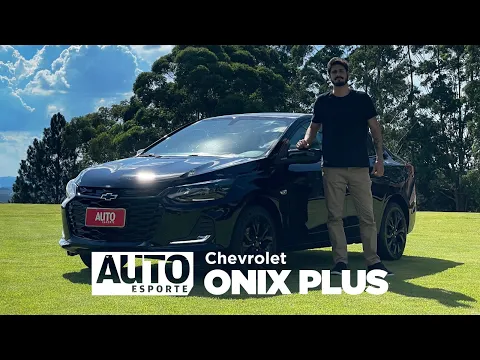
Chevrolet Onix Plus: According to Autoesporte, the compact sedan may be a better option than the Onix when it comes to luggage space. It has 476 liters, compared to 275 liters of the hatchback. The Onix Plus has a good combination of engine and transmission, in addition to achieving an average of 11.3 km/l with ethanol. The electric steering is sufficiently smooth and finding a good driving position is easy. It includes the Premier, which combines Wi-Fi, blind-spot sensor, and automatic parking assist in one package. But be prepared, as the car’s price is R$95,590.

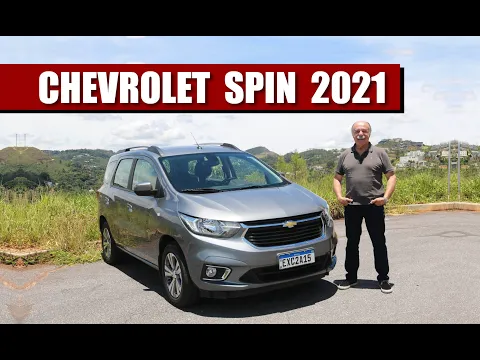
Chevrolet Spin: The Chevrolet Spin is outdated in terms of platform, advanced safety features, and engine. However, the van has its advantages for the PCD audience. Among them, it can easily accommodate wheelchairs and other aids, not to mention its ability to carry seven people, making it a standout in its price range for the Premier version (R$104,890). The car also has air conditioning, multimedia center, and rearview camera, along with newly added stability and traction controls. Its average consumption of 9 km/l with ethanol is reasonable. The access is somewhat reminiscent of an SUV, explained by the elevated driver’s seat. The steering is smoother than that of VW models.
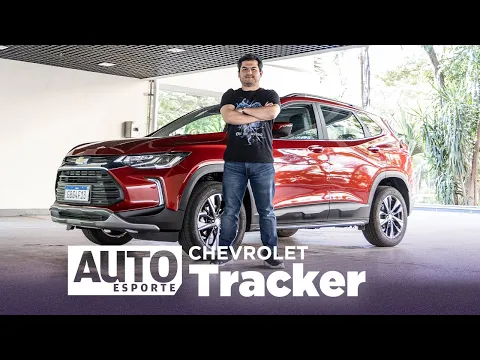
Chevrolet Tracker: With much higher prices, the Premier 1.2 turbo is priced at R$133,290, which does not decrease much for the 1.0 (R$124,590). It achieves an average of 9.7 km/l with ethanol. The interior space is slightly larger than that of the hatch, and it has relatively light steering. The standard features are similar to those offered by Onix and Onix Plus Premier.
Fiat Toro: Even though it is a small-medium pickup, the new Toro will still require a bit more effort to climb, which may be a problem for those with mobility issues. This Fiat model fits within the R$140 thousand limit (R$131,890), with the option of the Conforto Plus package (R$7,000), which includes automatic braking, lane departure assist, front parking sensors, automatic high beam switch, leather-trimmed seats, and wireless phone charger. The Fiat pickup achieves an average of 8.7 km/l with ethanol. The issue with this type of vehicle arises when maneuvering. It has a turning diameter of 12.2 meters, meaning you will have to work hard on a daily basis.

Honda Fit: Indicating the Fit on the eve of the new City hatchback’s arrival is contradictory in other situations, but it is justifiable due to the versatility of the hatch/monovolume. The model has an internal practicality that will not be replicated by its successor. The rear seats have seats that can be folded up, creating a space comparable to the best trunks. Access is facilitated by the well-opening doors. The 1.5 (116 hp) takes it to 100 km/h in a respectable 10.9 seconds and impresses with an average consumption of 11.2 km/l. The best choice is the EXL version (R$99,500). Only this one comes with six airbags as standard and LED headlights, in addition to digital air conditioning and a multimedia center. The steering is perhaps the most assisted on this list, being super light at low speeds.

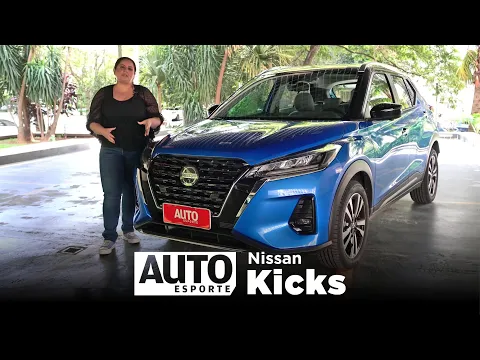
Nissan Kicks: The facelifted utility bets on a larger grille, sharp LED headlights, and a slightly revised rear. The SUV is one of the cheapest in the segment. The well-calibrated steering aids in daily use, with an average consumption of 9 km/l of ethanol. Autoesporte indicates the Exclusive Pack Tech (R$125,790), which has a high price for a naturally aspirated compact utility, but compensates for its package with collision alerts, lane change assist, blind spot sensor, automatic braking, and cross-traffic detection. Additionally, the interior space and trunk are decent (432 l).
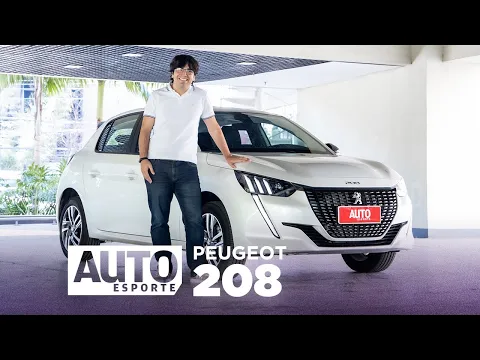
Peugeot 208: Price: that is the problem with the 208, but this is changing: the Griffe version is listed on the website for R$89,990, down from R$98,890 previously. However, there is a catch: the price is for 2021 models. There is only one interesting option that is charged separately: front parking sensor and one-touch windows for all (R$1,240), which does not ruin the value. Excellent consumption: 11.5 km/l average with ethanol. The interior space and rear access are not the best, just as the trunk (265 l) isn’t. However, if you can overlook these details, it could be the solution for those seeking above-average safety. The active safety pack includes lane-keeping assist, automatic braking, fatigue detection, high-beam assist, light and rain sensors, and 180-degree parking camera (could be 360 degrees), in addition to digital air conditioning, multimedia center, 3D panel, and LED headlights.
Toyota Corolla: Gone are the days when the Corolla GLi was a solid choice in the PCD segment. The low price limit quickly removed Toyota from the game. While the basic version is the one with the best chance of turning into a configuration for this market, the Corolla XEi would be a better choice. Priced at R$132,290, this option does not have the active safety package available in the Altis Premium (R$154,890), but it does have digital air conditioning, leather upholstery, 8-inch multimedia center, 17-inch wheels, and keyless entry and start, along with seven airbags. Its average consumption is 9.4 km/l.

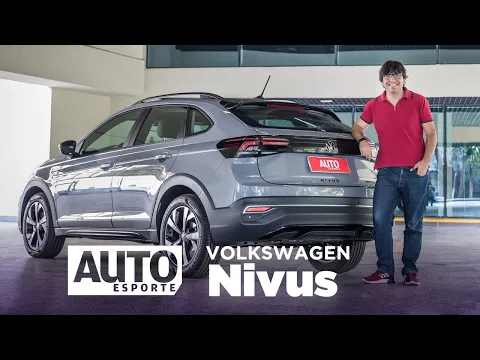
Volkswagen Nivus: The Nivus has a good setup. The SUV derived from the Polo has an average consumption of 8.5 km/l. The Highline version (R$112,950) offers more than the Nivus Comfortline (R$98,550), including digital air conditioning, LCD panel, keyless entry and start, leather seats, as well as adaptive cruise control and automatic emergency braking. The steering follows the usual slightly stiff scheme from Volkswagen.
Volkswagen Virtus: Although the Virtus from Volkswagen lacks some safety features found in rivals, such as automatic braking and blind-spot detection, the Virtus still has impressive qualities and achieves a commendable 10.6 km/l average with ethanol. It is best to focus on the Highline version (R$109,740), since the Comfortline (R$96 thousand) reaches R$103,050 when equipped with the optional package. The extras come standard in the top-of-the-line model, which includes LCD panel, digital air conditioning, front parking sensors, and leather seats. Unlike the Nivus, there are no curtain airbags.

Attention! The cars above were indicated by Autoesporte, and according to the site, prices in São Paulo may be higher.









Seja o primeiro a reagir!