





 Portuguese
  English
  Spanish
  4 min of reading
  0 comments


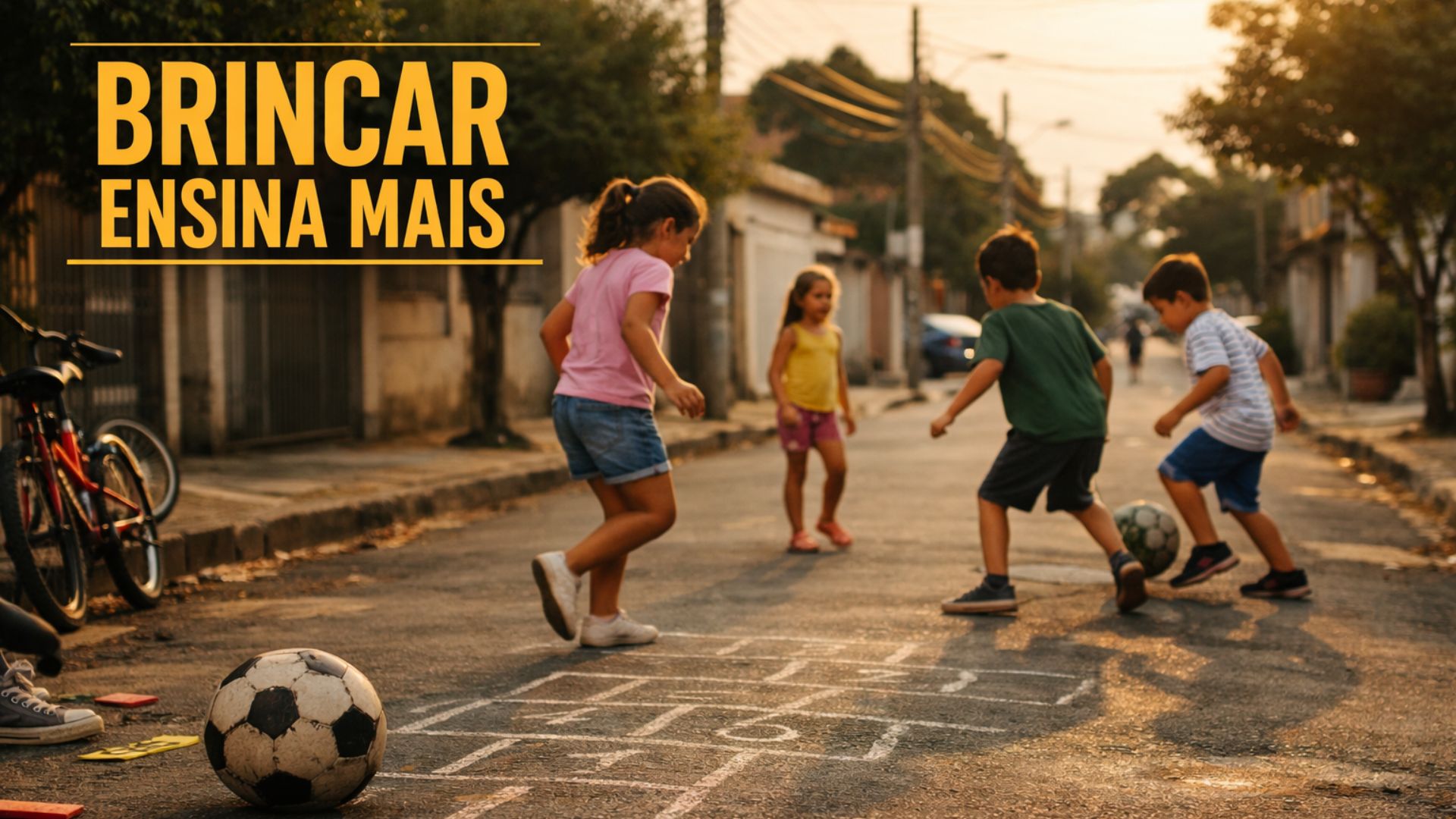
Simple childhood experiences reveal how unstructured play contributes to emotional, social, and cognitive development, with impact on how children learn to deal with frustrations, conflicts, and relationships throughout life.
Developmental psychology and pediatrics treat free play as a relevant experience for childhood development, because in it, the child negotiates rules, tests limits, faces setbacks, and learns to reorganize in interaction with others, without constantly depending on an adult’s guidance.
In this context, skills such as self-control, autonomy, empathy, social adaptation, and frustration tolerance appear in practical ways, even if not always with these names.
While playing, the child waits their turn, loses, discusses, adjusts agreements, and needs to find solutions when the game does not go as imagined.
-
Brazil’s neighbor presents a super military aircraft with a digital glass cockpit, +6G/-3G aerobatics, a replacement for a model over 40 years old, testing in 2027, and production expected in 2030 with 100% national technology.

-
The 3rd best city in Brazil is located in the interior of São Paulo and impresses by reaching 12th place among 5,570 cities in the IPS 2025, with highlights in 57 indicators and a strong university hub.

-
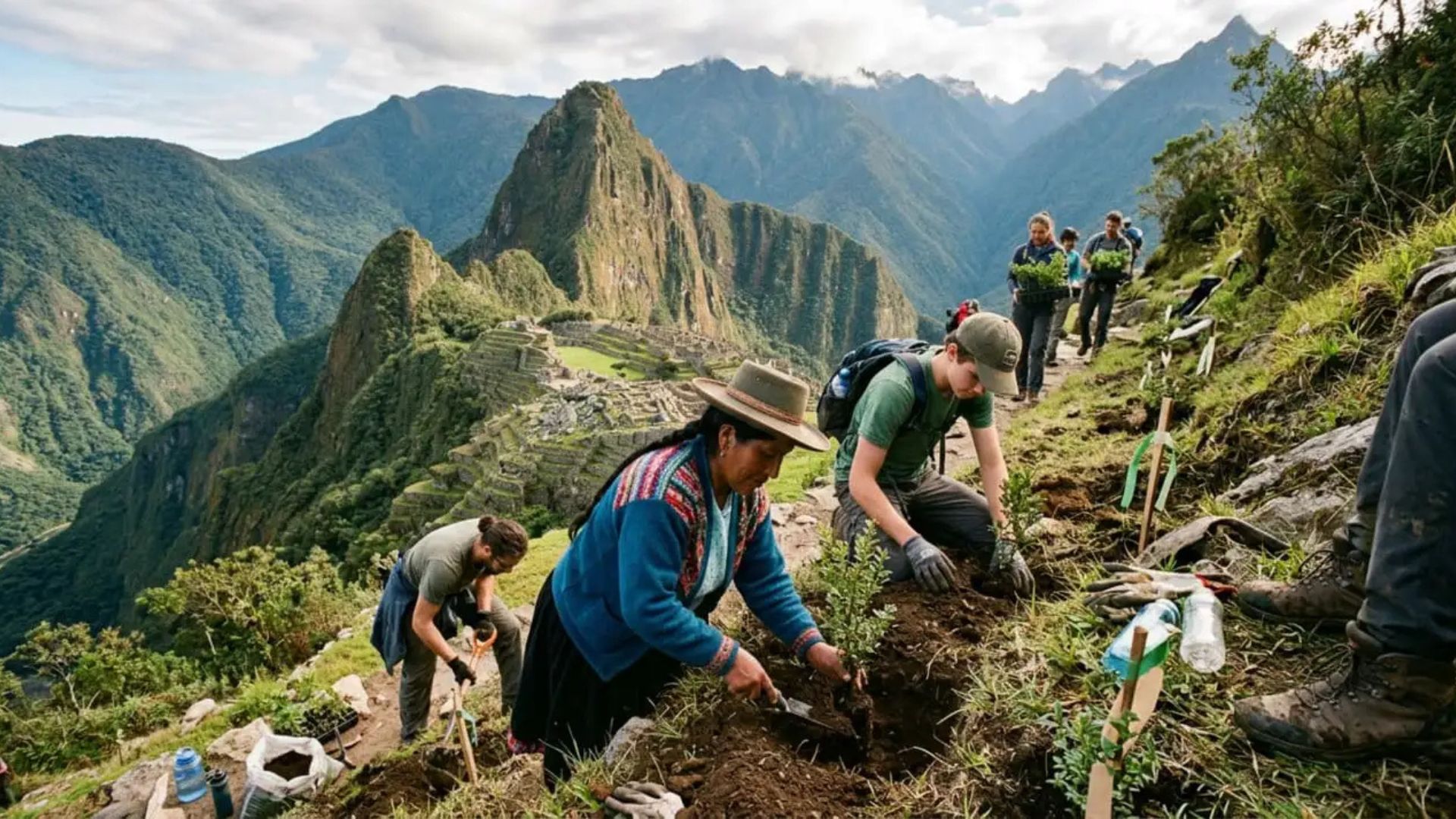
Peru is determined to break the rules of the game by planting 1 million trees in Machu Picchu to curb erosion, restore Andean ecosystems, and protect one of the planet’s most fragile heritage sites.
-
In Brazil, there is a historic city where the sea intentionally floods the streets to wash the pavement, and this unique scenery helped the place become a UNESCO World Heritage Site with over 65 islands and about 90 beaches.

What psychology explains about emotional resilience
Experts distinguish this process from any idea of emotional rigidity.
In psychology, resilience does not mean absence of suffering, nor indifference to mistakes, but the ability to navigate tension, change, or disappointment with some degree of elaboration, recovery, and flexibility in the face of what has happened.
Spontaneous play thus functions as a social and emotional training environment.
Without a fixed script, the child observes the group, interprets signals, measures consequences, and alters their own behavior to continue participating, which mobilizes competencies related to social interaction and impulse control.
How free play strengthens self-control and social interaction
When a game ends in defeat, for example, the immediate reaction may include irritation, complaints, or crying.
Still, returning to the activity after this discomfort shows an important exercise in emotional regulation, because the child feels the impact of frustration and gradually learns to continue despite it.
This type of experience helps explain why play is treated as part of healthy development, and not just a simple pastime.
Play is essential for the social, emotional, cognitive, and physical well-being of childhood and adolescence.
There is also a component of psychic expression that often goes unnoticed in daily routines.
Studies indicate that play favors the externalization of fears, anxieties, aggressiveness, and conflicts, in addition to expanding social contacts and allowing the child to reformulate strategies without the direct pressure of punishment.
Autonomy, creativity, and social adaptation in childhood
On another front, sociocultural literature on child development highlights that play allows the child to actively construct their own experience of relating to the world.
By deciding to enter, exit, yield, or insist, they exercise responsibility over their own actions and expand their autonomy.
The importance of this journey also appears in research on executive functions, a set of capabilities related to focus, planning, strategy change, and self-regulation.
These skills are fundamental throughout life and can be strengthened by repeated interactions and practices.
In everyday language, this helps to understand why certain common scenes of childhood have formative weight.
Waiting for a turn in hopscotch, negotiating an improvised foul in street soccer, or accepting a rule agreed upon by the group are simple situations, but loaded with relational learning.
Why spontaneous play remains at the center of the debate
The gain does not depend on play always being calm, harmonious, or perfectly supervised.
Part of the value of free play lies precisely in the presence of manageable small tensions, because they expose the child to limits, divergences, and repairs on a scale compatible with their stage of development.
This does not mean advocating for abandonment of care or romanticizing any street experience.
Healthy child development is associated with security, responsive care, learning opportunities, and space to play and explore, always in protective contexts appropriate for their age.
Even so, the advancement of more closed routines and the shortening of spontaneous peer interaction time have brought the topic back to the center of debate.
Play strengthens social and emotional competencies and can contribute to children’s mental well-being.
In this discussion, the main point is not to idealize a previous generation, but to recognize that childhood needs real margins to experiment.
When everything is ready, resolved, and mediated, there are fewer occasions to test frustration, repair conflicts, and build internal trust in ordinary situations.
The formulation that free play develops five specific emotional skills summarizes, in a journalistic way, a broader set of findings.
The consulted sources support the relationship of play with competencies such as empathy, self-control, autonomy, conflict resolution, and social adaptation, but do not establish a single and closed list.
It also requires caution to assume that those who experienced this type of play necessarily reach adulthood with greater mental balance.
The consulted literature supports the relevance of play for socio-emotional development; however, this outcome depends on many other factors, such as bonds, environment, protection, and living conditions.
Still, the consensus among institutions and reviewed studies is clear in stating that play does not occupy a peripheral role in childhood.
Far from being just a distraction, it integrates processes through which the child learns to feel, interpret others, reorganize their own behavior, and participate in collective life.






Seja o primeiro a reagir!