





 English
  Francês
  Alemão
  Italiano
  Japonês
  Norueguês
  Portuguese
  Spanish
  5 min of reading
  0 comments


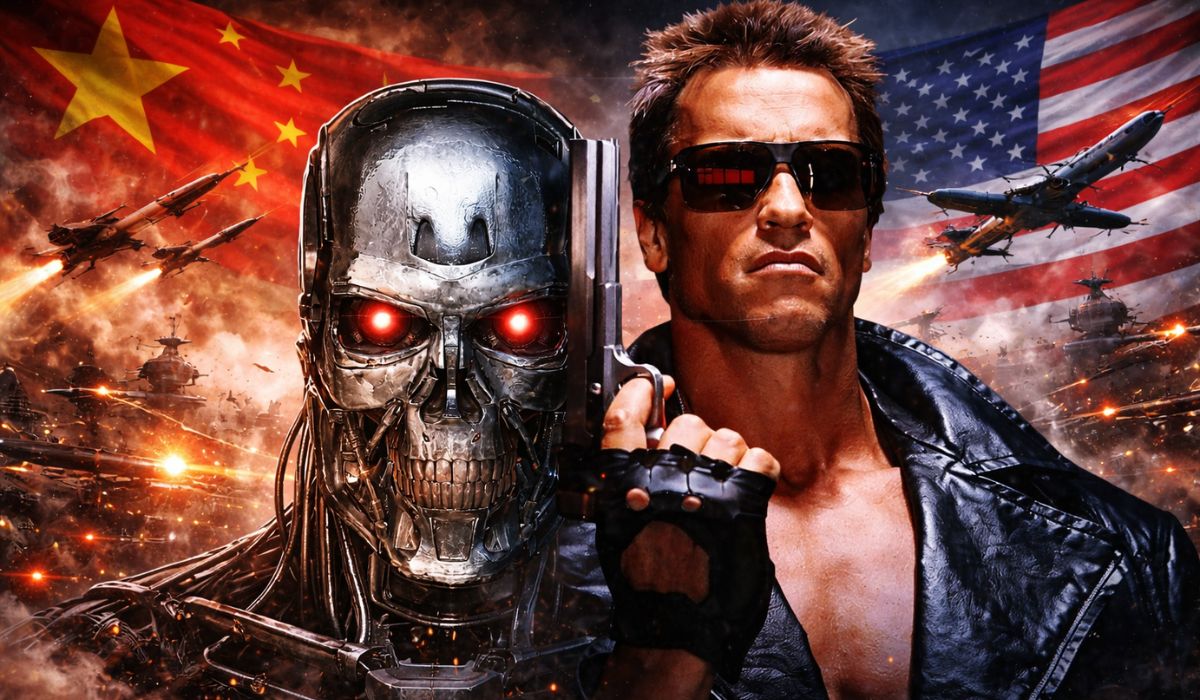
China’s Statements, Clash with the Pentagon, and Limits of Military Artificial Intelligence Place Risks, Restrictions, and Political Disputes Over Autonomous Systems in Warfare Back at the Center of International Debate.
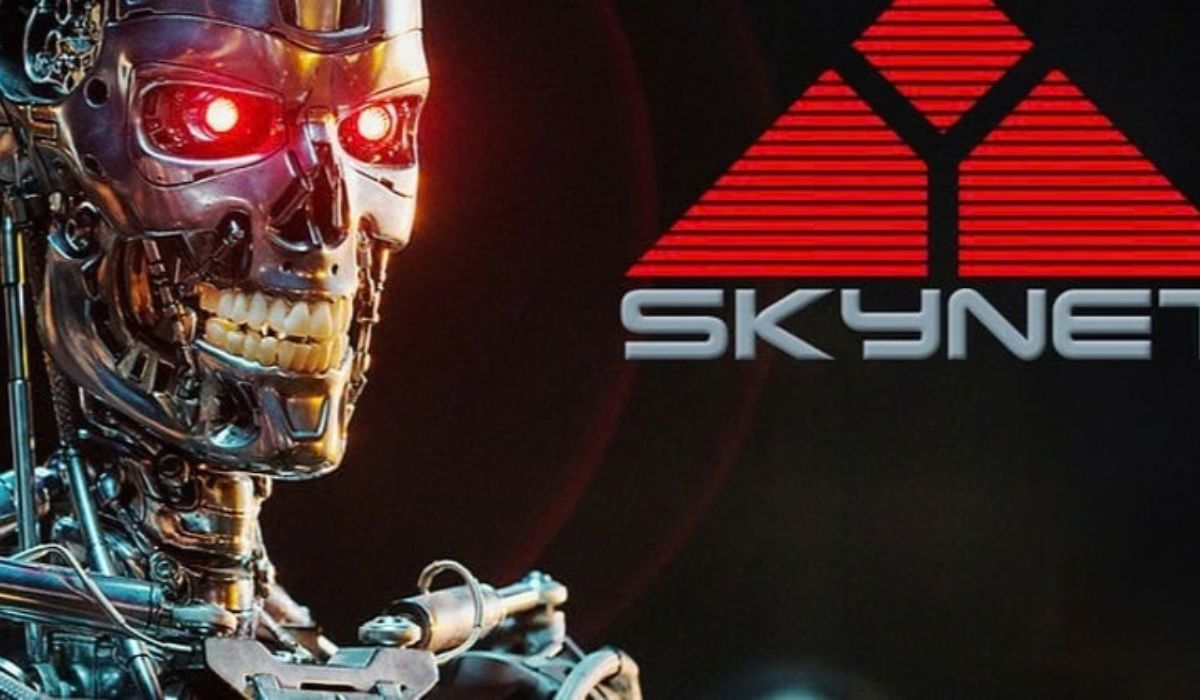
China criticized the expansion of military use of artificial intelligence by the United States and stated that unlimited adoption of this technology could lead to scenarios similar to that depicted in “The Terminator.”
The statement was made by the spokesperson of the Chinese Ministry of Defense, Jiang Bin, amid the impasse between the Pentagon and the American startup Anthropic over restrictions on the use of AI systems in military operations.
The manifestation occurred at a time of increased discussion in the United States about the ethical limits of artificial intelligence applied to defense.
-
350-year mystery may have been solved: remains of a soldier who inspired the hero of The Three Musketeers found beneath a church in the Netherlands.

-
NASA photographed a nearly perfect square with 3 km sides on Mars, 13 times larger than the Great Pyramid of Giza, but the official explanation is natural erosion; still, no one has explained why the four sides have almost identical lengths.

-
Starlink breaks the barrier of 10,000 satellites in orbit and takes its expansion to an unprecedented level, with a direct impact on global internet, technological competition, and the race for space.

-
Japan finds an alternative to oil amid rising prices by transforming ocean balance into electricity with a new technology that maintains efficiency even when the sea changes.

On one hand, the Donald Trump government seeks to expand the Armed Forces’ access to such tools.
On the other, tech companies maintain restrictions on uses related to mass surveillance and autonomous systems with lethal potential.
China’s Warning About Military Use of Artificial Intelligence
Commenting on the possibility of greater openness to military use of artificial intelligence by the U.S., Jiang Bin said that allowing excessive algorithmic influence on war decisions compromises ethical principles and responsibilities associated with armed conflicts.
According to him, the use of technology without proper control can lead to loss of technical control in military scenarios.
In the same declaration, the spokesperson referred to the cinematic reference that gave rise to the case.
“A dystopia like that depicted in the American film ‘The Terminator’ could one day become reality,” he stated.
The statement was made in response to questions about Washington’s willingness to broaden the U.S. Army’s access to AI.
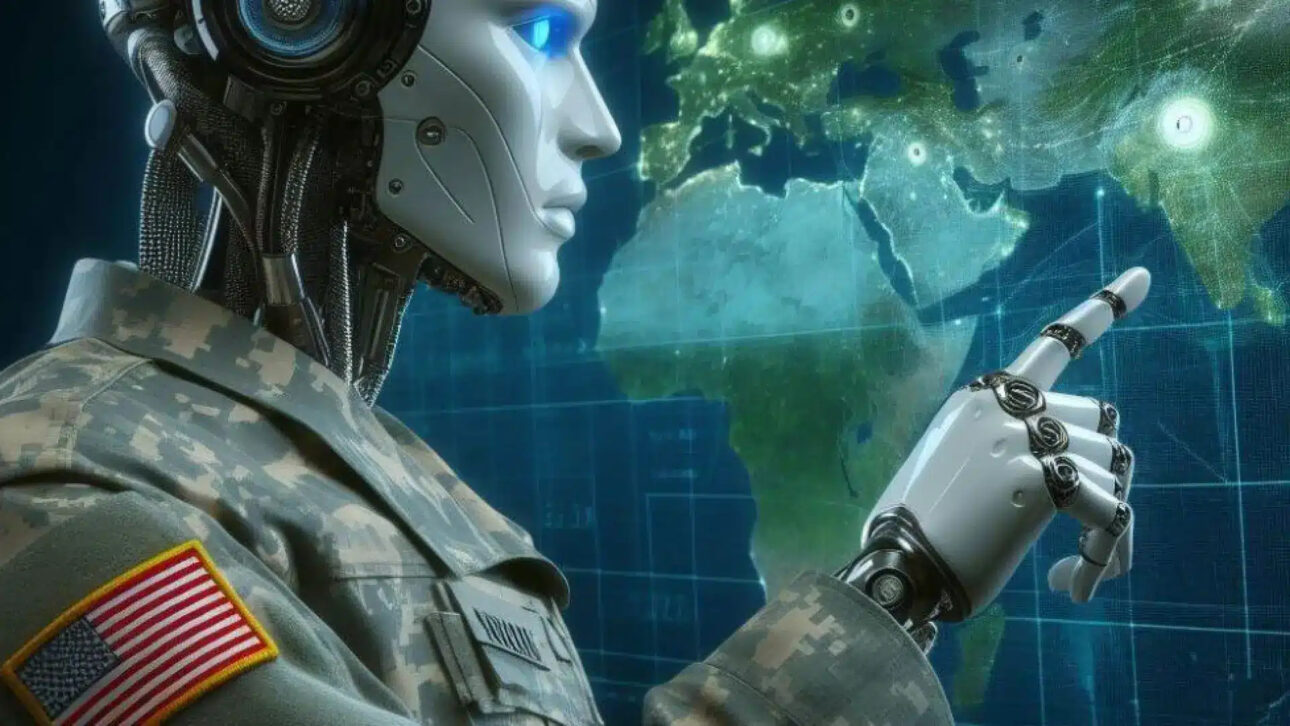
Additionally, Jiang Bin stated that the militarization of artificial intelligence could be used to violate the sovereignty of other countries and unduly influence war-related decisions.
The position expressed by the Chinese government is that such systems should not replace human involvement in deliberations involving life and death.
Released in 1984 and starring Arnold Schwarzenegger, “The Terminator” depicts a future where machines controlled by artificial intelligence go to war against humans.
The mention of the film was used by Beijing to publicly reinforce the risks that, according to the Chinese government, surround the advancement of autonomous systems in the military field.
Pentagon, Anthropic, and Restrictions on Generative AI
At the center of the controversy is Anthropic, the company responsible for the generative AI assistant Claude.
The company began facing restrictions from the U.S. Department of Defense after it maintained limitations on certain military uses of its systems.
In public statements, the company stated that it does not authorize the use of its models for mass surveillance and also opposes the use of the technology in fully autonomous weapons.
Anthropic argues that this type of application requires tighter safeguards and human oversight.
The Pentagon’s reaction escalated the conflict.
The Department of Defense labeled the company as a supply chain risk, which restricted the use of its tools in contracts related to the department.

The measure impacted Claude and amplified the debate over who should establish limits for the military use of artificial intelligence in the United States.
The episode also exposed a divergence within the American tech sector itself.
While the government advocates for greater flexibility in the use of these tools in defense, some companies argue that there are operational and ethical risks in applications without clear restrictions.
Offensive Against Iran and Questions About the Role of AI
The controversy gained further attention following reports that Anthropic’s tools may have been used by the United States in the offensive against Iran.
However, the available information does not conclusively detail how these systems were employed or what their specific role was in the operations.
This point broadened the debate as it brought the discussion beyond the theoretical realm.
Rather than being limited to general principles about artificial intelligence and war, the case began to involve a concrete situation of possible use of the technology in a military environment.
At the same time, the absence of public technical details prevents broader conclusions about the exact role of these systems.
Therefore, the topic remains surrounded by questions about transparency, oversight, and accountability in the use of AI tools in defense operations.
Dispute Between China and the United States Over Artificial Intelligence
Jiang Bin’s statement also fits into a broader technological dispute between China and the United States.
Artificial intelligence has become one of the central axes of competition between the two powers, both in the economic and military fields.
In this context, China has sought to present itself as a defender of stricter limits on the military use of technology, while criticizing U.S. policy for the sector.
Meanwhile, the United States faces an internal debate involving government, technology companies, and digital ethics experts.
The controversy surrounding Anthropic helps to show that the discussion is not limited to a conflict between countries.
It also involves disagreements within the U.S. industry itself about how far artificial intelligence can advance in military decisions without compromising human control mechanisms.
The reference to “The Terminator,” in this scenario, served as a rhetorical resource to convey a fear that has been discussed by authorities, companies, and experts: that automated systems may assume a greater role in sensitive warfare decisions before there are established rules for such use.
At the center of the dispute is precisely the definition of those limits.
On one side, governments argue that artificial intelligence can enhance operational capacity and military response.
On the other, companies and analysts warn of the risks of delegating critical functions to systems that still raise questions of safety, control, and accountability.
Debate on Human Control in Warfare Decisions
The discussion between Washington, Anthropic, and Beijing shows that artificial intelligence applied to defense has ceased to be merely a prospective topic.
It is already part of the security agenda of major powers and has begun to mobilize political, business, and diplomatic disputes.
As a result, the debate over the use of AI in military areas is likely to gain even more ground.
The central question remains the degree of human control that must be maintained when technology begins to interfere in crucial stages of warfare operations.






-

-

-

3 pessoas reagiram a isso.