





 Portuguese
  English
  Spanish
  4 min of reading
  0 comments


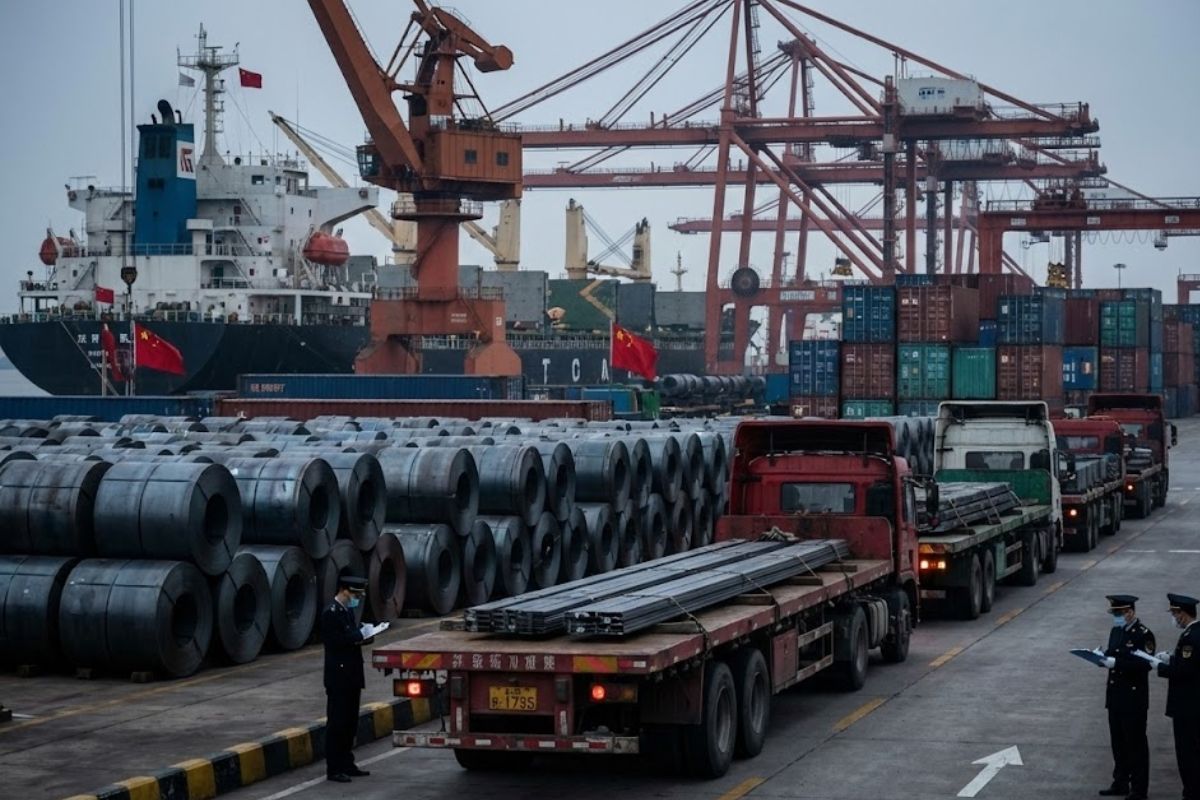
China Informed That the Ministry of Commerce Will Require Licenses to Export Steel and Steel Items Starting January 1, 2026. The List Includes About 300 Products Used by Sectors Such as Automobiles, Construction, and Consumer Goods Amid Record Shipments in the Global Market.
The China reported that it will implement a comprehensive licensing system for steel exports, requiring exporters to seek permission for shipments of a range of steel products starting January 1, 2026, according to a statement from the Ministry of Commerce.
The announcement didn’t provide an official justification for the new regulations but comes at the end of a record year for China’s steel exports, in a context of increasing trade tensions and rising protectionism, with new tariffs and anti-dumping measures in various markets.
What China Announced
The Ministry of Commerce of China announced that it will require formal licenses for steel and steel products exports.
-
Brazilian city bets on the business environment to generate jobs and attract investments in the energy sector — secretary reveals strategy at Macaé Energy 2026.

-
50 viaducts, 4 tunnels, 28 bridges, and 40 kilometers of bike paths: BR-262 in Espírito Santo will receive 8.6 billion reais for the largest engineering project in the state’s history, inspired by the Immigrant Highway in São Paulo.

-
Brazil produces too much clean energy and doesn’t know what to do with it: over 20% of solar and wind capacity was wasted in 2025 while investors flee and 509 renewable generation projects were abandoned in the last year.

-
Piauí will produce a new fuel that replaces diesel without needing to change anything in the truck’s engine and reduces pollutant gas emissions by half: truck drivers from all over the Northeast are already celebrating the news that will arrive later this decade.


In practice, exporters will need to obtain prior approval to ship items covered by the regime.
Although licenses for steel export in China are not new, the disclosed plan indicates a significant expansion of what will be covered, increasing the level of administrative control over shipments.
What Changes Starting January 1, 2026
Starting January 1, 2026, exporters from China will need to request permission to send a range of steel products before completing shipments.
The regime, as described, will serve as a mandatory step to authorize exports.
The statement did not detail the reason for the change nor set targets for volume reductions but made it clear there will be a formal approval process with the Ministry of Commerce.
The List of About 300 Steel Products
The ministry included a list of about 300 specific products that will require documentation and licensing.
According to the list provided, items used in various sectors, such as automobile manufacturing, construction, and consumer goods are included.
This broad scope reinforces the idea that China intends to cover not only traditional products but also steel lines that circulate across different industrial chains.
Why the Measure Gains Weight in a Record Year
The decision comes at the end of a year in which China’s steel exports are heading for a record.
In the first 11 months of 2025, accumulated volumes exceeded 100 million tons, according to the most recent trade data cited in the material.
This advance occurs in a broader context: China has shown a growing dependence on exports as the domestic economy slows down, with the annual trade surplus exceeding US$ 1 trillion for the first time, according to the text.
What Analysts Say About the Real Objective
According to Tomas Gutierrez, an analyst at Kallanish Commodities, the expanded regime seems to aim to curb the widespread value-added tax evasion on exports, a practice that has helped Chinese suppliers remain competitive in external markets.
He further noted that the impact may be stronger in short-term sentiment than in an actual reduction in exports, suggesting that China may be promoting an administrative adjustment with more immediately noticeable effects on market perception.
Exports Resist Barriers and Change Course
The text indicates that, in 2025, there was an expectation of a decline in exports due to increasing protectionism and anti-dumping tariffs.
Still, China’s steel exports defied these projections, partly because excess capacity brought cheap steel to the market and because exporters managed to shift to new markets and products that were not affected by restrictions.
This helps explain why China’s internal measures regarding documentation and licenses gain relevance precisely when shipments remain high.
Difference From Dual-Use Export Controls
The measures for steel are described as separate from the “dual-use export controls” that China imposed on rare earths and other critical metals, which require substantial evidence regarding the final destination.
In the case of steel, there will still be a requirement for formal approval and the delivery of documentation, but within a distinct administrative framework from the model applied to materials considered sensitive.
What Documents Will Be Required
Even with separate rules from the dual-use regime, steel exporters from China will need to obtain formal approval from the Ministry of Commerce, presenting sales contracts and quality certificates for the covered shipments.
These requirements indicate that the new licensing aims to increase document traceability and enhance oversight over export operations.
What Still Remains Unanswered
The announcement did not explain the reasons for the new regulations nor detail how the operational process, analysis timelines, and possible impacts on volumes will be.
Do you think China is trying to genuinely reduce steel exports or just reinforce control and oversight over operations?









-

-

-

4 pessoas reagiram a isso.