





 Portuguese
  English
  Spanish
  4 min of reading
  3 comments


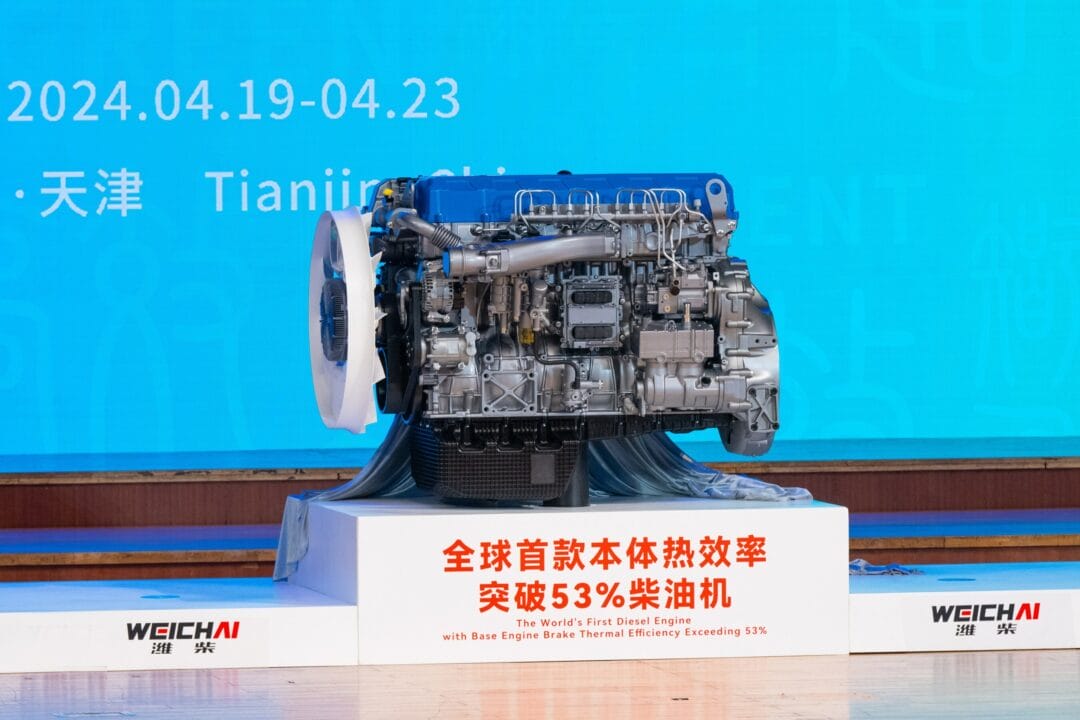


From China to the World: The Most Efficient Diesel Engine! Weichai Presents Thermal Efficiency of 53.09%, Leading in Technology
Since the invention of the internal combustion diesel engine 127 years ago, engineers and scientists have been striving to improve its thermal efficiency.
Weichai Power, from China, has set a new thermal efficiency record in diesel engines, reaching 53%. This advancement, which overcomes technical challenges and drives sustainability, reflects a continuous and collaborative effort in the internal combustion industry. Discover more about this significant achievement and its implications for the future.


Weichai Power: The Most Efficient Diesel Engine in the World
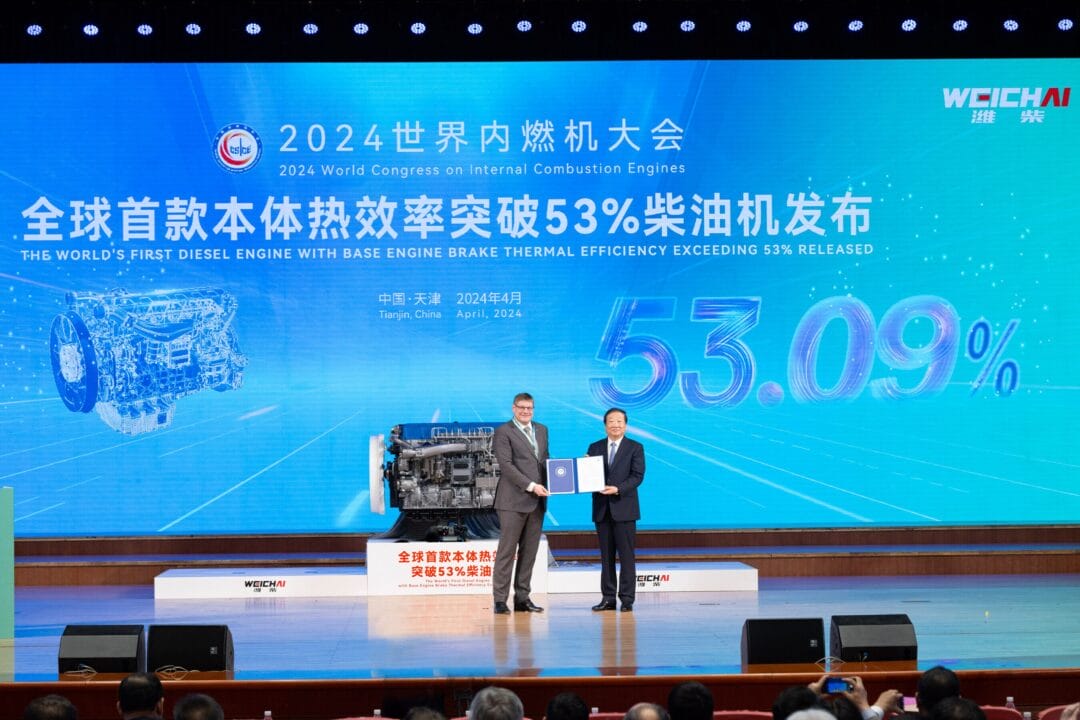
At a recent event in Tianjin, China, during the 2024 World Internal Combustion Engine Congress, the Chinese company Weichai Power made history by unveiling the first diesel engine with a thermal efficiency of 53.09%. This achievement not only represents a technological advancement but also a significant step toward sustainability in the use of fossil fuels.
-
After decades of failed attempts, Brazil is once again looking to space with an orbital rocket measuring 12 meters, weighing 12 tons, costing R$ 189 million, and scheduled for launch in 2026, in a new race to finally achieve autonomous access to orbit.

-
The Earth will plunge into a few minutes of darkness in broad daylight in August 2026, when a total solar eclipse transforms the sky into one of the most impressive astronomical phenomena in recent years.

-
The car stored for 38 years: when opening the barn door, what appears is breathtaking and looks like a scene from a movie!

-
Fiat works miracles in the Brazilian market, lowers the price of its 0 km hatch to R$ 69,990, reestablishes the model as the cheapest car in the country, and reignites the battle against Kwid and C3.


Development and International Recognition
This milestone was recognized by international organizations such as TÜV SÜD and the China Automotive Technology and Research Center, which confirmed this world record in thermal efficiency, a key economic indicator in diesel engines. Since its invention 127 years ago, the continuous improvement of diesel engine thermal efficiency has been a constant challenge, reflecting technological advancement and the industrial strength of nations.
Continuous Innovation and Collaboration
Since 2015, Weichai Power has developed a research team in high thermal efficiency engines, composed of hundreds of PhDs and thousands of engineers. This team collaborated with national and international experts, industry partners, and universities to push the boundaries of technological innovation. On September 16, 2020, the company achieved a milestone by launching a diesel engine with a thermal efficiency of 50.23%. This number increased to 51.09% on January 8, 2022, and more recently, on November 20, 2022, thermal efficiency reached 52.28%, consolidating Weichai Power’s leading position in the global internal combustion engine industry.
The research team continued to refine four critical systems: combustion, air intake, fuel supply, and friction reduction. Through incremental improvements, Weichai Power surpassed the 53% thermal efficiency barrier for the first time globally. During this period, the team secured 176 invention patents and 68 utility model patents.
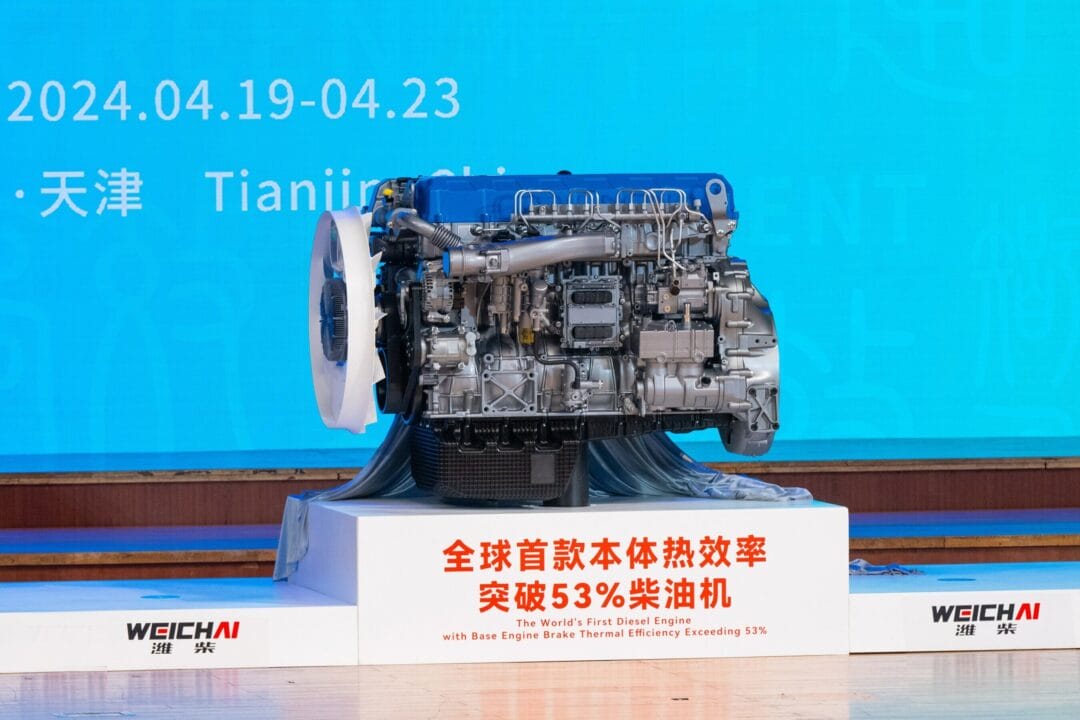
The increase in thermal efficiency not only improves fuel performance but also significantly contributes to reducing carbon emissions. These improvements can result in an annual savings of approximately 31 million tons of fuel and a reduction of about 97 million tons in carbon emissions.
What Does This Record Efficiency Really Mean in Practical Terms?
For drivers and owners of heavy and agricultural vehicles, the improved thermal efficiency translates into significant fuel savings. Weichai Power claims that this engine can reduce fuel consumption by 14%, which, in a truck or tractor that travels 250,000 kilometers per year, results in savings of up to 12,000 liters of fuel annually.
In economic terms, with an average diesel price of 5.50 reais per liter, this would represent savings of 66,000 reais per year. The development of this engine was the result of meticulous and dedicated work, with nearly 200 patents registered in the project.
Source: prnewswire.com
How a Diesel Engine Works
Imagine that a diesel engine is like a large pump of air and fire that helps move cars and trucks. Here’s a step-by-step explanation:
Air Intake: First, the engine captures air from the outside and brings it into a chamber called a cylinder. In a diesel engine, only air enters, without mixing with gasoline beforehand as in other engines;
Air Compression: Once the air is inside the cylinder, a piston (which is like a large pusher) rises and compresses that air, meaning it squeezes it very tight. By compressing the air, it gets very hot, so much so that it could almost cook an egg;
Fuel Injection and Combustion: At this moment, when the air is very hot and compressed, a bit of diesel fuel is injected. Since the air is hot, the fuel ignites automatically, without the need for sparks like in other engines. This explosion created pushes the piston down;
Energy Generation: The downward movement of the piston is what actually produces the energy that makes the wheels of the car or truck turn, thus moving the vehicle;
Gas Expulsion: Finally, after the explosion, the formed gases have to exit to make room for more fresh air and start the cycle again. The piston rises again, pushing the gases out and preparing to capture more air and begin the process once more.
It’s like the engine is breathing: it inhales air, uses it to create an explosion with the fuel, and then exhales the gases. And all of this happens very quickly, often multiple times per second, so the car or truck can move smoothly. It’s impressive how a series of small explosions can accomplish something as big as moving a vehicle!









A gente se empolga com a evolução da tecnologia chinesa.
eles tem centenas de doutores e cientistas a disposição a preço de **** e afins de trabalhar sério isso trás progresso sempre
Um Exemplo desse tipo explosão, submarino titan.