





 Portuguese
  English
  Spanish
  5 min of reading
  0 comments


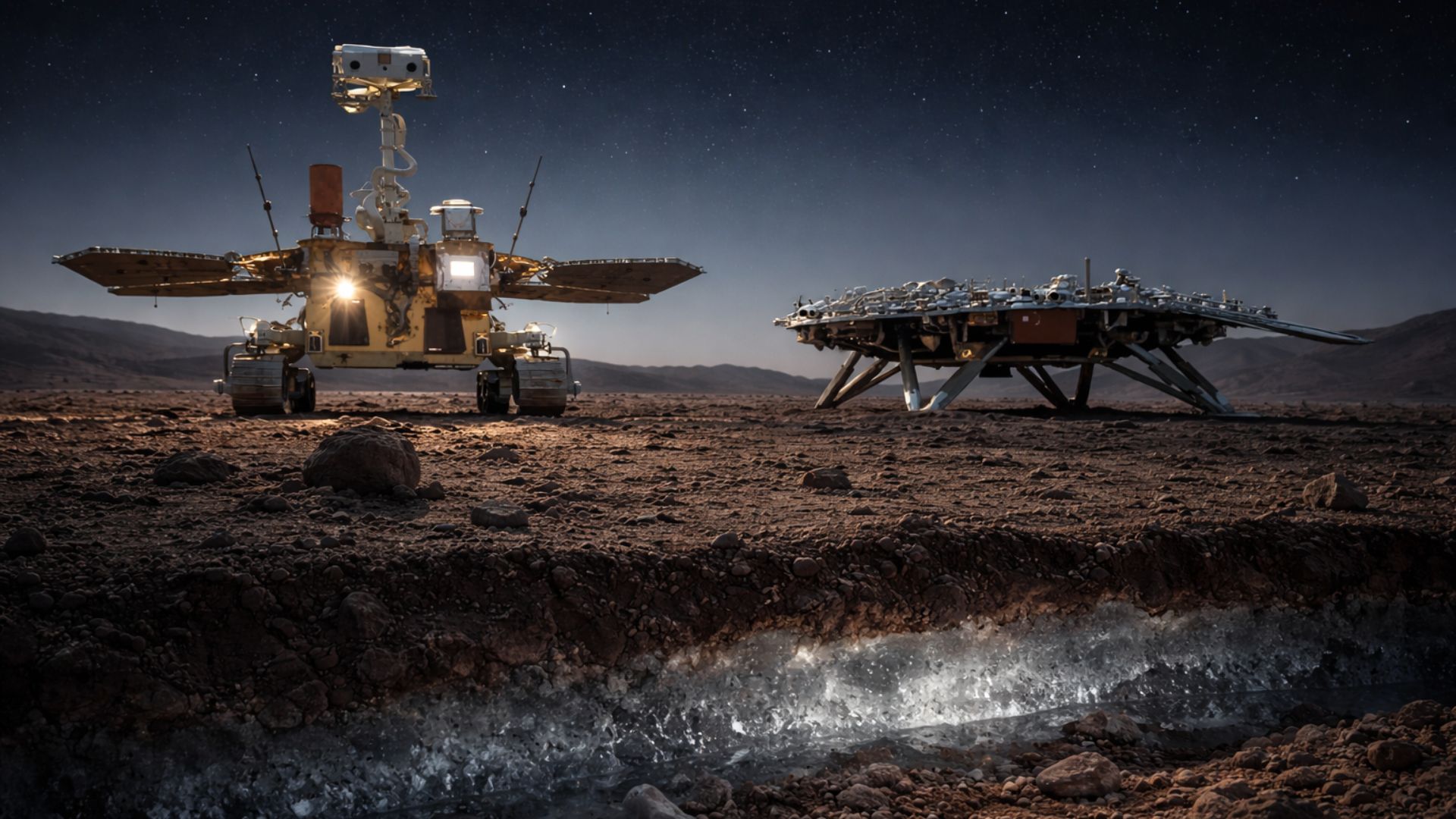
Chinese Space Mission Reveals New Clue About Preserved Water Below The Martian Surface And Reinforces Scientific Interest In An Area That May Hold Evidence Of Ancient Seas On The Red Planet, Expanding The Debate On Mars’ Climatic History And The Potential For Future Exploration.
China announced the identification of a layer of buried ice in the Martian subsurface based on data collected by the Zhurong rover of the Tianwen-1 mission, which landed on the planet in May 2021.
According to the China National Space Administration (CNSA), the material was located in the Utopia Planitia, in the northern Martian hemisphere, at a depth of about 15 meters, with an estimated thickness of approximately 7 meters.
The area is considered by researchers to be one of the most promising regions to investigate the ancient presence of water on Mars.
-
It seems to have come out of a science fiction movie: A Brazilian city where it rains almost every day, recording over 4,000 mm per year, driven by climatic factors — a direct result of its strategic location in the Amazon.

-
The water crisis that could change everything this year has already begun; it’s not just about the climate, it affects technology, raises product prices, and can halt entire companies without warning.

-
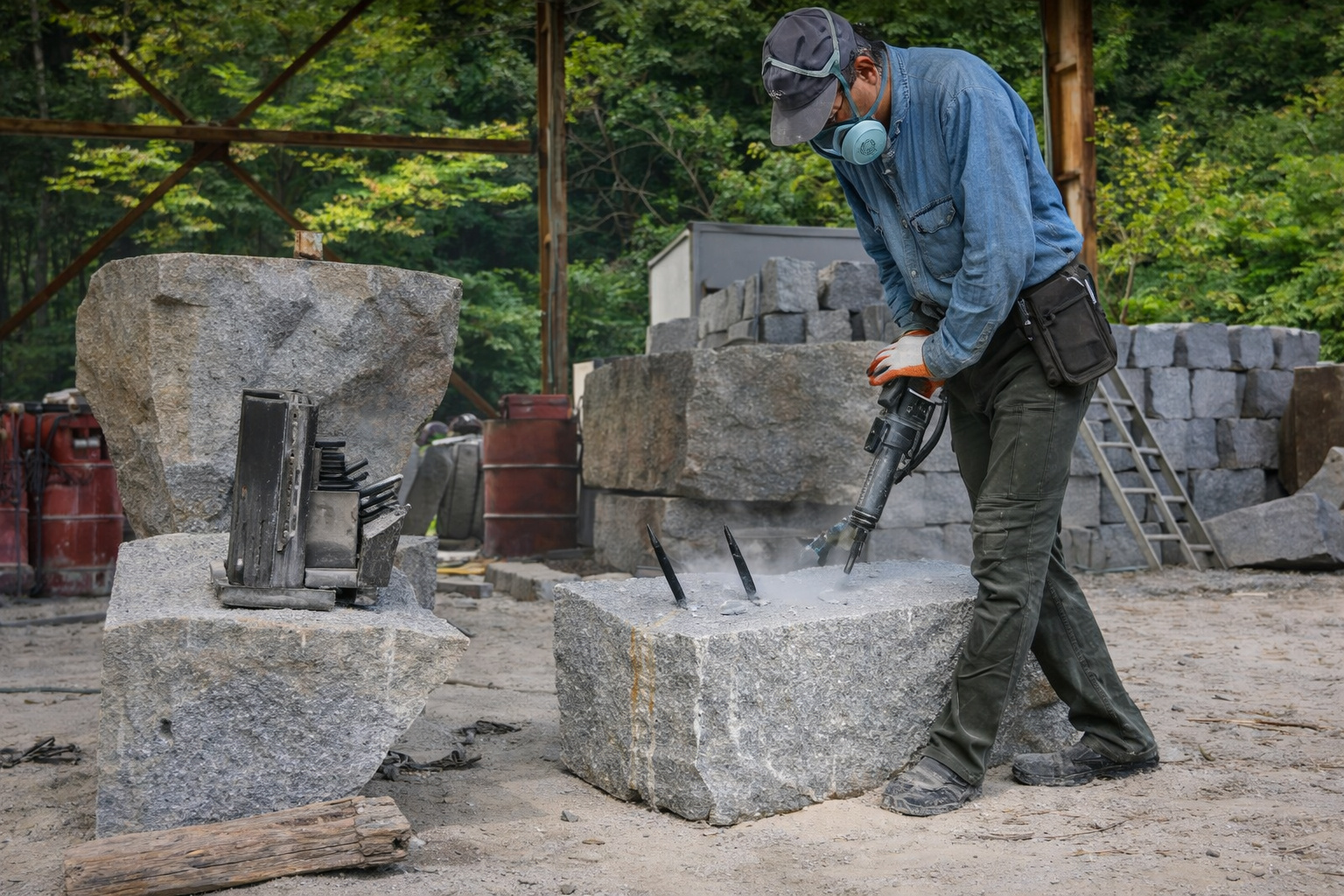
A Japanese mason transforms raw granite into small cups and handcrafted utensils, collects giant stones, cuts with precision, and impresses with detailed manufacturing and finishing.
-
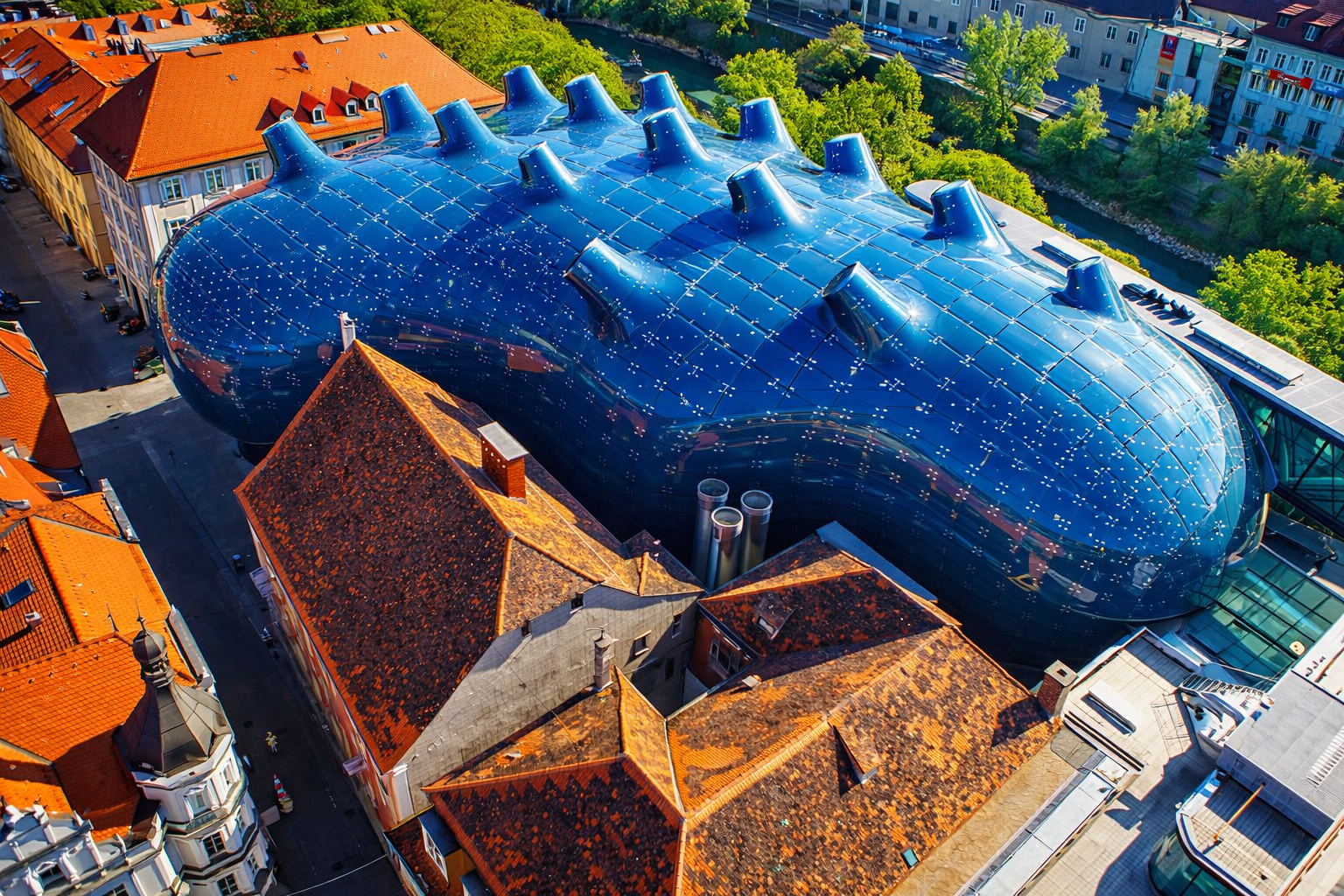
With 1,066 acrylic panels, the building known as the friendly alien is supported by a steel skeleton, has a façade that functions as a giant screen, and impresses the world without any internal columns.
According to the description released by the Chinese agency and the summary of the scientific study, the layer was interpreted as “dirty ice”, a mixture of water ice, Martian soil, and rock fragments.
The researchers state that this type of deposit helps to reconstruct the planet’s climatic history and amplifies scientific interest in the region explored by the Chinese rover.
What The Zhurong Rover Detected Below The Martian Surface
The detection was made using ground-penetrating radar, an instrument onboard the Zhurong to map buried structures below the surface.
The equipment allowed probing the terrain of Utopia Planitia and identifying a subsurface interface consistent with a layer rich in ice at mid-latitudes, where this type of occurrence is still the subject of scientific investigation.
The authors of the study tested different scenarios to explain the signal recorded by the radar.
Among the evaluated possibilities, the model that best fit the data was that of a deposit composed of ice mixed with stones and Martian regolith.

The interpretation reinforces the hypothesis that part of the planet’s past water may have remained preserved below the surface, even in areas that today appear arid and dominated by dust.
The Chinese space agency also reported that this layer may be undergoing slow degradation.
According to the explanation provided, the irregular thickness of the deposit may reflect this progressive wear, while cracks and other channels in the soil could facilitate the migration of water vapor toward the upper layers.
This process, according to the discovery’s own description, could have the potential to alter the composition of the material observed at the surface.
Why Utopia Planitia Sparks Scientific Interest
The region where Zhurong operated was not chosen by chance.
Utopia Planitia has been featured in scientific studies for years regarding the possibility that Mars harbored large volumes of water in the past, including seas or even an ocean in the northern plains of the planet.
Previous work had already pointed out that the location contains geological features consistent with processes related to the presence of water or ice.
In November 2024, researchers reported new evidence of an ancient shoreline on Mars based on observations from Zhurong, the Tianwen-1 orbiter, and data from other missions.
On that occasion, the study suggested that a flood may have reached Utopia Planitia about 3.68 billion years ago, while the ocean associated with that event may have disappeared approximately 3.42 billion years ago.
Months later, in February 2025, another study based on the rover’s radar identified subsurface formations interpreted as deposits of ancient beaches between 10 and 35 meters deep.
The researchers noted that these structures have tilt and organization similar to those of terrestrial beaches formed by the prolonged action of waves and tides, which reinforced the idea of a lasting Martian ocean in the region.

In this context, the new identification of shallow ice below the surface fits into a sequence of scientific results produced in the same region.
Rather than being just a landing site, the plain has come to concentrate complementary evidence on the environmental evolution of Mars, gathering signs of ancient aquatic activity on the surface and potential remnants preserved in the subsurface.
What Subsurface Ice Reveals About Mars’ Past
The presence of buried ice at mid-latitudes is significant because, for a long time, the largest known reservoirs of Martian water have primarily been associated with polar regions.
The Zhurong find suggests that part of this water may also have remained preserved in less extreme areas, protected by layers of soil and sediments deposited over billions of years.
Although the study does not address current liquid water near the surface, it broadens the picture of where to search for traces of the planet’s hydrological past.
For the scientific community, this type of subsurface record is valuable because it tends to undergo less erosion than marks exposed at the surface, which are constantly altered by winds, dust, and impacts over geological time.
In addition to its scientific value, the subject also sparks practical interest for future space missions.
The summary of the article highlights that a shallow layer with ice at low to mid-latitudes could represent a potential resource for future human exploration, although this possibility remains in the realm of technical discussions.
Scientific Publication Expands Impact Of Tianwen-1 Mission
The results were published in the scientific journal Earth and Planetary Science Letters, one of the international publications dedicated to planetary sciences.
The study, identified by the title in English Evidence of Shallow Subsurface Ice at Tianwen-1 Landing Site, presents the interpretation of the radar signals obtained by the Chinese rover.
The research adds to a series of studies produced from the data collected by the Chinese mission on Mars since the landing of Zhurong.
The rover operated on the Martian surface from May 2021 to May 2022, traveling about 1.9 kilometers in the Utopia Planitia region.
Even after the vehicle’s activities ended, the data sent continues to allow new analyses regarding the subsurface structure, the geological history of the region, and Mars’ relationship with water.
The new discovery extends a collection of scientific evidence built around the same area.
With signs of ancient shorelines, deposits comparable to buried beaches, and now a layer consistent with “dirty ice” below the surface, Utopia Planitia solidifies as one of the most investigated regions in the search to understand when, where, and for how long water played a central role on Mars.





-

-

-

-

-

8 pessoas reagiram a isso.