





 Portuguese
  English
  Spanish
  5 min of reading
  0 comments


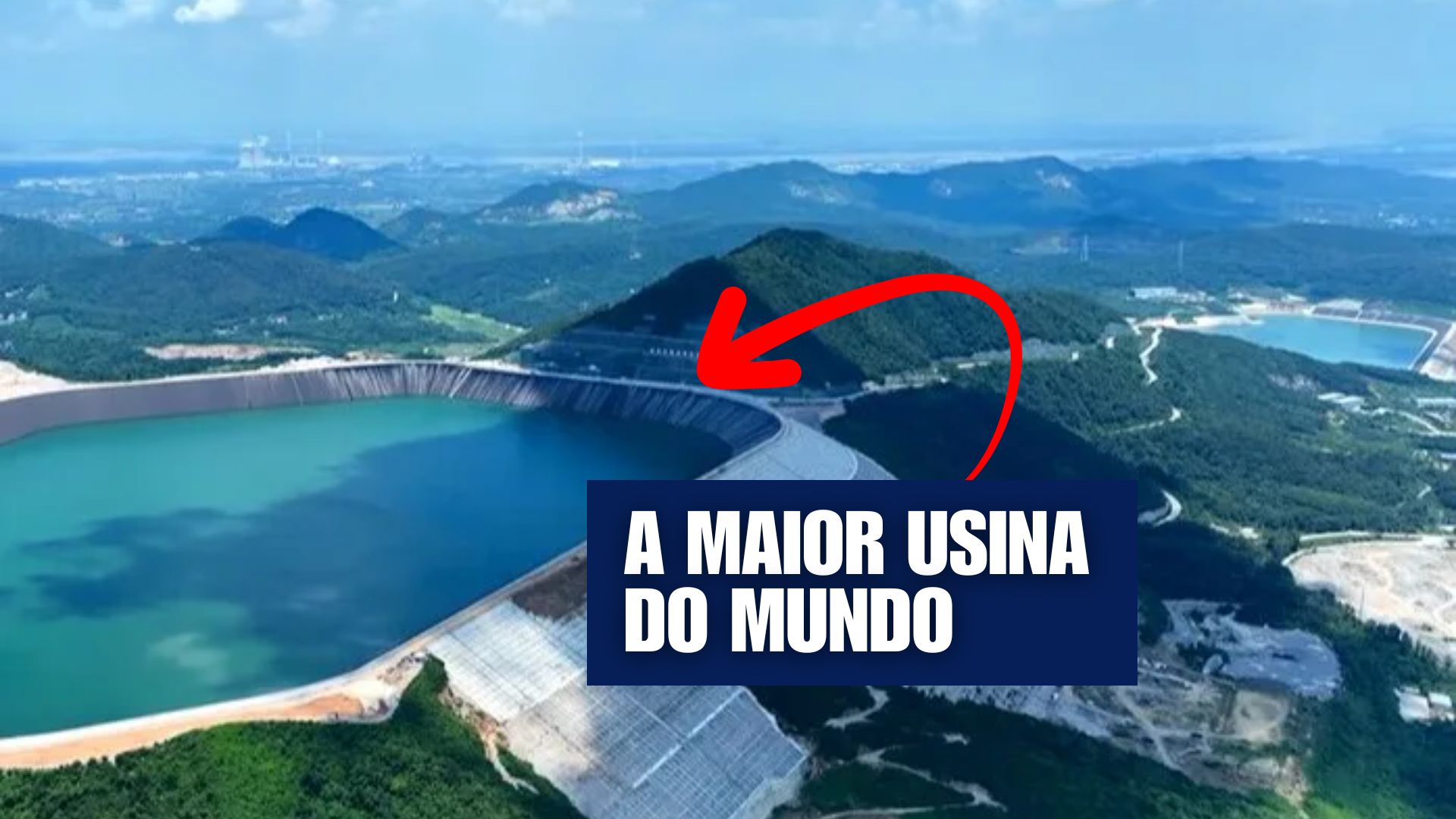
Recently Activated Chinese Power Plant Redefines Engineering Limits by Combining Mass Storage, Record Dam, and Deep Underground Operation.
China has put into operation the Zhenjiang/Jurong Pumped Storage Power Plant in Jiangsu province, now considered the tallest pumped storage dam in the world.
With a height of approximately 182.3 meters, an upper reservoir of 17.07 million m³, and an installed capacity of around 1.35 GW, the project operates as a large-scale “battery” to stabilize the electric grid in the Yangtze River delta region.
Record Height and Energy Expansion in Jiangsu
Located in Jurong County, Jiangsu, the power plant was designed to serve one of the highest electricity consumption areas in China, marked by a strong industrial and urban concentration.
Construction began in 2017 and was completed in about eight years, within the standard of the country’s accelerated large-scale infrastructure projects.
-
From sertanejo star to international investor: Ana Castela invests millions in a mansion in the USA, creates a themed accommodation in Orlando, and shows that the “boiadeira” also wants to grow away from the stage.

-
The 10 most stunning motorhomes in the world: a $3 million trailer with a rooftop nightclub and garage for a Ferrari, “palaces on wheels” with Italian marble, private cinema, and five-star hotel luxury for billionaires.

-
Trump wanted to spend $400 million on the White House, but the courts prohibited the million-dollar construction.

-
How the Egyptians erected giant structures like pyramids, temples, and obelisks without modern technology, cranes, or engines still amazes the world and reveals the power of engineering based on ramps, levers, ropes, and colossal organization.


The upper reservoir dam reaches 182.3 meters, a height equivalent to a building of approximately 60 stories.

The structure was built in the Lunshan valley, forming an artificial reservoir with a capacity of 17.07 million cubic meters of water, a volume comparable to thousands of Olympic-sized swimming pools.
Official sources indicate that the project set several engineering records for reversible power plants, including that of the tallest dam ever built for this type of system.
Although the power plant is often associated with the Yangtze River, the project is located in the delta of the river, connected to the electric system serving the region, where major hydroelectric plants like the Three Gorges Dam are already situated.
In this context, Zhenjiang/Jurong is not so much distinguished by the volume of continuous generation but by its strategic function of storage and rapid load regulation.
Underground Powerhouse and Hybrid Turbines
The generation complex is not limited to the dam.
The main powerhouse was built in an underground cavern, about 800 meters deep, approximately 250 meters long, 60 meters high, and 25 meters wide, making it one of the most complex subterranean installations ever implemented in pumped storage plants in the country.
Inside this space, six reversible units are installed, which operate both as pumps and as generating turbines, each with 225 MW of power.
Together, they reach an installed capacity of about 1.35 GW, placing the power plant among the largest hydropower storage projects in the world in the pumping segment.

Technical reports indicate that the project has set a series of records in engineering, including innovations in large equipment, valve systems, and waterproofing solutions for the dam and underground galleries.
These technologies are cited as a reference for other reversible power plant projects in flat areas with high load demand.
Operation as Hydraulic Battery for 360 Thousand Homes
The Zhenjiang/Jurong plant operates as a reversible hydropower plant:
During off-peak hours, it uses excess electricity from the grid to pump water from the lower reservoir to the upper reservoir.
During peak times, it releases this water back, passing it through the turbines and generating energy again.
According to data from the operator, the system is designed to consume about 1.8 billion kWh per year in the pumping process.
And generate approximately 1.35 billion kWh annually during the discharge phase.
This difference corresponds to losses in conversion and storage, around 25%, a rate consistent with large reversible plants.
The annual energy generated is estimated to be sufficient to supply around 360 thousand homes, reinforcing the plant’s role as a “lungs” of clean energy for eastern China.
In addition to ensuring supply security during critical times, the project helps accommodate the increasing participation of variable renewable sources, such as wind and solar.
Chinese authorities also highlight the environmental benefit.
The full operation is expected to avoid the consumption of around 140 thousand tons of coal per year.
And reduce approximately 349 thousand tons of CO₂ emissions annually.
Engineering Adapted for Flat Areas and Grid Stability
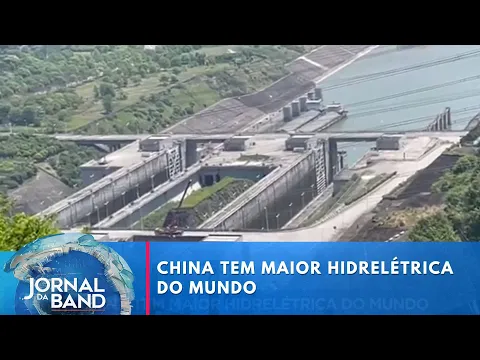

The project is also cited as a demonstration that it is possible to implement large pumped storage systems in relatively flat topography areas, provided that suitable artificial gradients are created.
Jiangsu is predominantly a flat territory, which traditionally complicates the installation of this type of plant.
To make Zhenjiang/Jurong feasible, engineers used the excavated material from the work itself to shape the dam and create the necessary height difference, concentrating the hydraulic gradient that allows the system’s operation with falls of less than 200 meters in the Lunshan valley.
The plant was connected to the system operated by State Grid in Jiangsu province, a region that has been experiencing successive increases in maximum load.
According to recent data, electricity consumption in the province has reached record levels this season, putting pressure on generation and transmission infrastructure.
The plant comes into operation precisely to expand the safety margin at the end and increase flexibility in dispatch management.
In the context of grid operation, Wang Chenhui, director of the Development Department of State Grid Zhenjiang Power Supply Company, summarizes the role of the project, stating: “In full operation, it will provide approximately 2.7 million kilowatts of bidirectional energy regulation capacity, relieving pressure on the electric grid during peak demand periods.”
This assessment aligns with official statements that point to the plant as a rapid adjustment resource for the regional electric system.
Zhenjiang/Jurong in the Hydroelectric Mosaic of the Yangtze
The Yangtze River region already hosts megastructures such as the Three Gorges Dam, considered the largest hydropower plant in the world by installed capacity.
The new Zhenjiang/Jurong plant does not achieve the same level of continuous generation, but takes on a complementary role by acting as strategic storage to smooth out variations in supply and demand in an increasingly renewable-dependent system.
Energy experts view the project as a real-scale laboratory for expanding reversible plants in other areas of high-load and less favorable terrain.
By demonstrating that it is feasible to build a dam of about 190 meters in height in flatlands and operate the set with a high volumetric flow and a lower fall than traditional plants, Zhenjiang/Jurong can serve as a model for future projects in territories with similar characteristics.
With the combination of record height, mass storage, powerhouse depth, and reversible operation, the plant solidifies its status as a global landmark in hydropower engineering.







-

Uma pessoa reagiu a isso.