





 Portuguese
  English
  Spanish
  3 min of reading
  0 comments


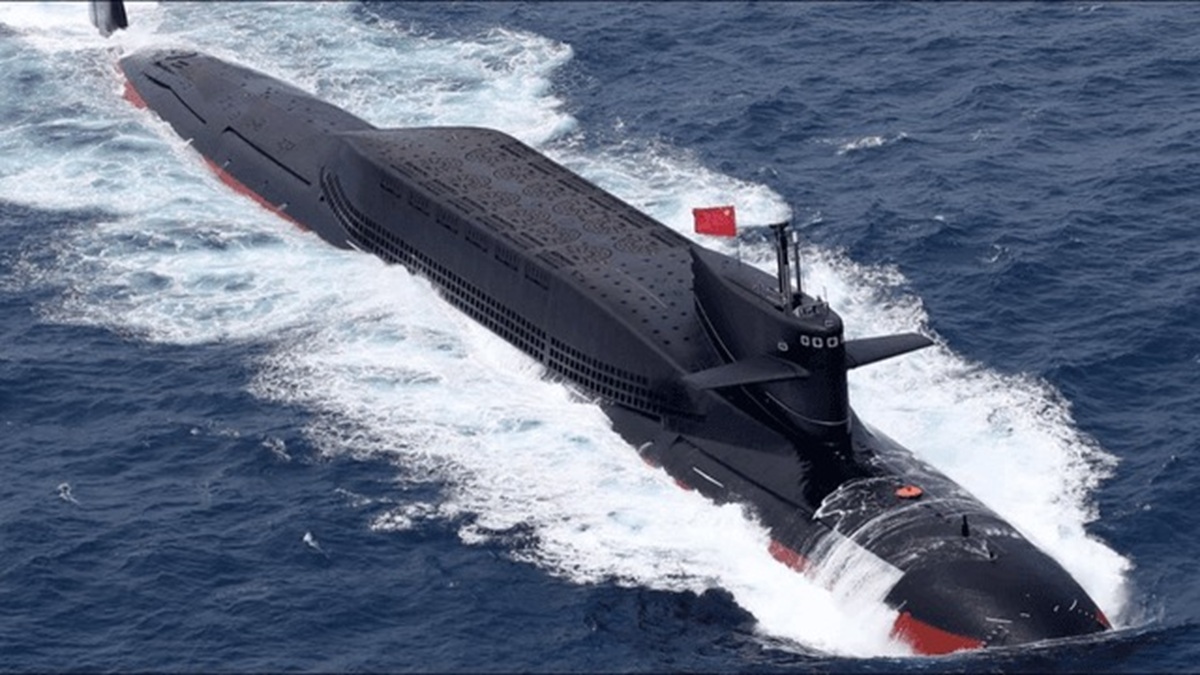
Presented At Military Parade In Beijing, The New Chinese Unmanned Submarines Promise To Alter The Global Naval Balance With Stealth And Smart Coordination.
The latest unmanned submarine systems developed by China have been described as highly disruptive and intelligent in a new military journal article.
Unveiled during the September 3 parade in Beijing, which marked the 80th anniversary of the victory over Japan, the submarines stand out for their zero-radius maneuverability, allowing them to operate precisely in complex maritime conditions.
According to the publication, they operate below 90 decibels, which reduces the likelihood of detection by enemy sonar.
-
Motorola launched the Signature with a gold seal from DxOMark, tying with the iPhone 17 Pro in camera performance, Snapdragon 8 Gen 5 that surpassed 3 million in benchmarks, and a zoom that impresses even at night.

-
Satellites reveal beneath the Sahara a giant river buried for thousands of kilometers: study shows that the largest hot desert on the planet was once traversed by a river system comparable to the largest on Earth.

-
Scientists have captured something never seen in space: newly born stars are creating gigantic rings of light a thousand times larger than the distance between the Earth and the Sun, and this changes everything we knew about stellar birth.

-
Geologists find traces of a continent that disappeared 155 million years ago after separating from Australia and reveal that it did not sink, but broke into fragments scattered across Southeast Asia.

Furthermore, they can be combined with submarine-launched missiles, smart mines, or even “mother-child” unmanned vehicles, forming a multi-layered attack network.
The parade also showcased China’s expanding arsenal, which includes intercontinental ballistic missiles, drones, and carrier-based aircraft.
Unmanned Submarines For Blockades And Saturation Attacks
An article from Ordnance Industry Science Technology highlighted that the People’s Liberation Army Navy (PLA Navy) presented unmanned submarines, autonomous surface vessels, and remotely controlled mine-launching systems designed to operate in a coordinated manner.
The report suggests that these platforms can be secretly used to block strategic maritime routes, autonomously identify targets, and conduct saturation attacks.
The report notes that the equipment should have long durability and, in the future, integrate with underwater charging stations — although Beijing has not yet disclosed concrete plans for this infrastructure.
Meanwhile, Russian media has already reported similar advancements in its navy.
According to the South China Morning Post, the new Chinese systems feature advanced intelligence capabilities, able to perform three-dimensional coordination with surface vessels and aerial drones through artificial intelligence.
The surface ships can employ autonomous decision-making to identify targets and assess threats, enhancing their efficiency in complex maritime environments.
Naval Drones And The New Rules Of Maritime Conflicts
The same report points out that swarms of these unmanned vessels have the potential to redefine maritime confrontation, becoming a decisive factor in future disputes over sea control.
In addition to strengthening China’s sovereignty claims, the systems add new complexity to global maritime security.
Among the most notable innovations is the unmanned mine-laying system AJX002, described as capable of cutting enemy supply lines with asymmetric tactics and functioning as a defensive stronghold at sea.
The AJX002 measures between 18 and 20 meters in length, uses jet propulsion, and bears similarities to the Russian nuclear torpedo Poseidon — although its nuclear status remains uncertain.
China aims to build a blue-water navy by 2035, with the capability to operate up to six aircraft carriers. These advancements are seen as strategic in potential conflicts in the Taiwan Strait, supporting amphibious operations and complicating U.S. interventions.
Analysts note that the weapon systems presented during the September military parade reflect Beijing’s increasing focus on protecting its territorial claims and projecting power in the region.
The development of these technologies reinforces China’s effort to modernize its naval forces and consolidate its position as a dominant power in 21st-century maritime security.








-

2 pessoas reagiram a isso.