





 Portuguese
  English
  Spanish
  4 min of reading
  0 comments


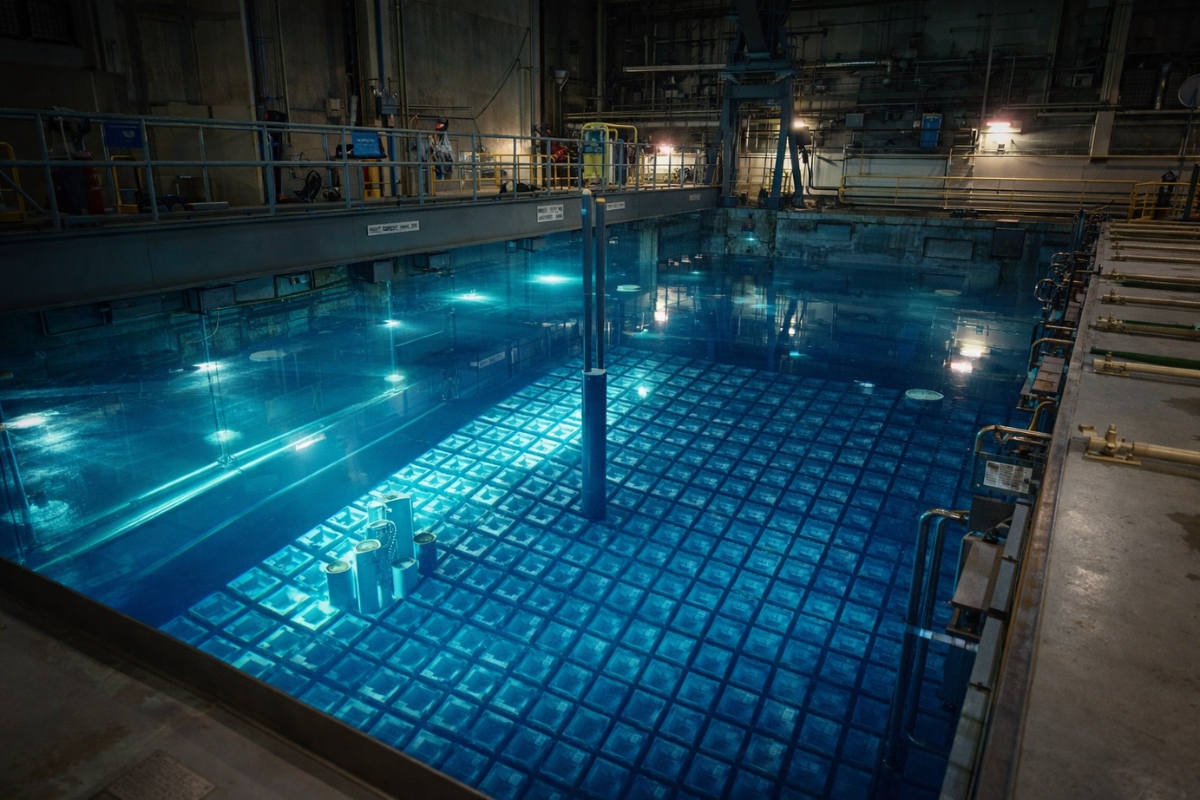
China Advances With Subcritical Reactor in Huizhou to Use Nuclear Waste, Increase Uranium Efficiency, and Reduce the Hazard Duration of the Material
China aims to operate, in 2027, the first commercial prototype of a new type of reactor capable of using nuclear waste to generate energy. The project will be installed in Huizhou, in Guangdong Province, in the southeast of the country.
If it works as planned, the system could burn uranium much more efficiently than conventional reactors. The proposal also targets one of the most sensitive points of nuclear energy: drastically reducing the time that waste remains hazardous.
This movement aligns with China’s strategy to strengthen its energy independence and advance toward carbon neutrality. In practice, the country is trying to transform a long-term liability into a useful component within its own generation system.
-
3,500-year-old tear discovered reveals a textile technique much more advanced than previously thought in the Bronze Age.

-
One of the largest manufacturers of military ammunition in the world is Brazilian and has just signed an agreement with the Navy to develop national ammunition for the frigates built in Santa Catarina that will protect the Blue Amazon.

-
Scientists are baffled by hundreds of perfect circles that have emerged on the seabed in Scotland, formed by living seagrass meadows, and no one can explain whether it is nature self-organizing or something completely unknown to science.

-
The energy consumption that goes unnoticed in millions of Brazilian homes does not come from the refrigerator or the air conditioner; it occurs even when everything seems to be turned off and can represent up to 12% of the electricity bill according to the International Energy Agency.


Huizhou Joins the Map of a Larger Energy Dispute
The reactor that will be installed in Huizhou belongs to the category of Accelerator Driven Systems. In this model, the core operates in a subcritical state, which means it cannot sustain a chain reaction by itself.
To operate, it relies on an external flow of neutrons produced by a particle accelerator. This changes the safety logic of the operation, because if the beam is interrupted, the reaction stops immediately.
This technical detail carries strategic weight. Instead of simply increasing electricity production, China seeks to demonstrate mastery over a technology that promises more operational control and a new way to deal with radioactive waste.
How the System Transforms Waste Into Fuel
In the Chinese design, a high-current proton beam comes from superconducting linear accelerators and hits a liquid target made of lead and bismuth at 0.8 times the speed of light. This collision induces a process called spallation, releasing a large amount of neutrons.
These neutrons serve two functions at the same time. They maintain fission in the reactor core and hit actinides, which are among the most dangerous and long-lived elements present in nuclear waste.
The system also manages to convert Uranium 238 into Plutonium 239, which is a fissile fuel. Thus, material viewed as waste in traditional models becomes an energy resource within the nuclear cycle itself.
The Promise of Cutting a Problem That Lasts Thousands of Years
One of the central points of the project is the duration of radioactivity. The proposal aims to reduce the lifespan of nuclear waste to less than one thousandth of what occurs today.
This means shortening a timeframe that can currently reach hundreds of thousands of years to just a few hundred years. For any nuclear program, this difference changes the scale of the problem and increases pressure on long-term storage.
According to Reuters, international news agency, the project’s proponents claim that the system can use uranium 100 times more efficiently than conventional reactors and help transform nuclear energy into a green, safe, and stable source for 1,000 years.
China Tries to Get Ahead Where No One Has Reached Industrial Scale
Systems of this type have been debated technically for decades but have not yet reached industrial scale. The modern concept took shape in the 1990s, but no country has managed to consolidate the technology into real power operation.
China began research in this area in 2011. Then, in 2021, it developed a prototype that achieved operational intensity deemed suitable for industrial applications.
Now, the expected leap is to a 1 megawatt prototype, with a planned inauguration for 2027. If this stage progresses as expected, the country could occupy a prominent position in an area that is still open on the global energy board.
Europe, Japan, India, South Korea, and Russia Remain in the Game
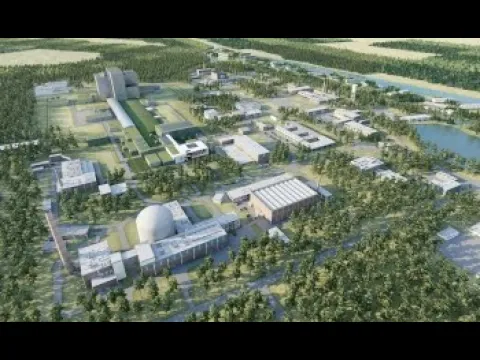

Europe has been working for years on a similar demonstrator at the nuclear center in Mol, Belgium. The MYRRHA project uses a similar design, with a superconducting proton accelerator, lead and bismuth target, and subcritical core cooled with the same alloy.
The final scale, however, will be larger, reaching 100 thermal megawatts. When not operating as a subcritical system, it can also function as a conventional critical reactor. The expectation is that it will be ready around 2035.
At the moment, the ongoing part is the first phase, called MINERVA, which constructs the initial section of the accelerator up to 100 MeV. Construction began in 2024 and the goal is to have this section operational by 2027.
Japan also maintains its own program linked to the J PARC complex, with two experimental facilities focused on reactor physics and materials testing in lead and bismuth. India, South Korea, and Russia continue with active research and design programs, but still without a constructed real power prototype.
What This Advancement Changes for the Chinese Strategy
The project is not just about electricity. It impacts how China wants to position itself in critical technologies for the future, especially in areas where safety, autonomy, and industrial scale matter as much as energy generation.
By trying to shorten the hazard cycle of waste and better utilize nuclear fuel, the country reinforces its presence in a sector that combines science, heavy industry, and strategic influence. It is a move that goes beyond the power plant and amplifies China’s weight in this energy chess game.
If the 2027 timeline is met, Huizhou could become one of the most watched points in the global nuclear race. And this not only affects China’s energy matrix. It also shifts the strategic reading of who might lead the next phase of nuclear energy.





Seja o primeiro a reagir!