





 Portuguese
  English
  Spanish
  3 min of reading
  21 comments


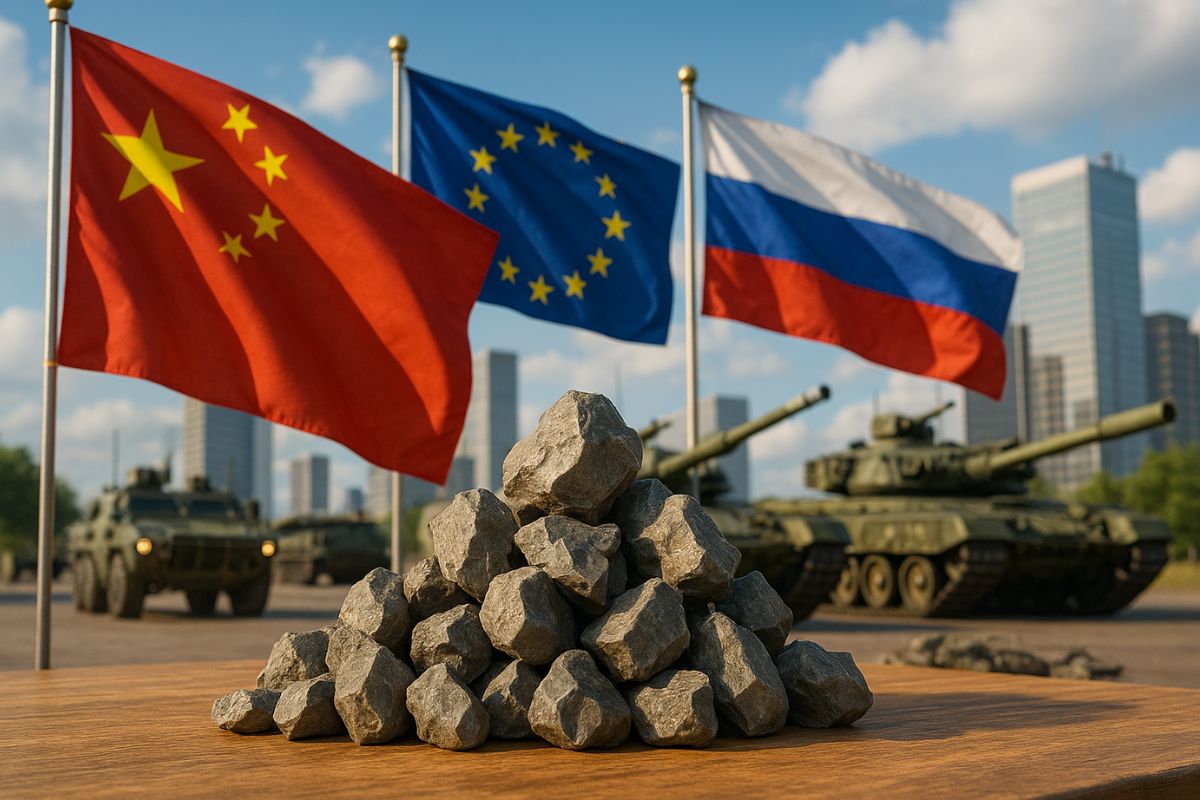


Strategic Decision Reinforces Silent Alliance with Moscow and Threatens Military Supply Chains of the US and Allies
The growing geopolitical tension is directly reflected in the global defense industry. The restriction imposed by China on rare earth exports to Western countries has created a silent but serious crisis in the production of military technologies in the United States and Europe.
According to experts, while tightening demands on NATO countries, China is facilitating Russia’s access to these strategic materials, openly showing its geopolitical preference in the Ukraine conflict and upsetting the global game of critical resource supply.
Chinese Domination over Rare Earths
China is responsible for about 90% of global rare earth production, a group of 17 chemical elements essential for technologies such as radars, missiles, fighter jet engines, thermal sensors, and military drones. Although not geologically rare, these minerals require highly complex extraction and refining processes — an area that Beijing easily dominates.
-
Brazilian city bets on the business environment to generate jobs and attract investments in the energy sector — secretary reveals strategy at Macaé Energy 2026.

-
50 viaducts, 4 tunnels, 28 bridges, and 40 kilometers of bike paths: BR-262 in Espírito Santo will receive 8.6 billion reais for the largest engineering project in the state’s history, inspired by the Immigrant Highway in São Paulo.

-
Brazil produces too much clean energy and doesn’t know what to do with it: over 20% of solar and wind capacity was wasted in 2025 while investors flee and 509 renewable generation projects were abandoned in the last year.

-
Piauí will produce a new fuel that replaces diesel without needing to change anything in the truck’s engine and reduces pollutant gas emissions by half: truck drivers from all over the Northeast are already celebrating the news that will arrive later this decade.


Recently, Beijing imposed stricter rules for exports destined for the West, requiring detailed technical documentation, images of products, and even factory inspections — claiming concerns about the military use of these resources. The result: delays of up to two months in the delivery of parts for drones, engines, and optical systems in the US.
Soaring Prices and Stalled Production
With the Chinese restriction, the price of materials like Samarium has increased up to 60 times, directly impacting military production costs. Companies like the Italian firm Leonardo warn that their Gallium reserves are at the limit, compromising infrared sensors and guided missile heads.
Without these supplies, the technological superiority of Western Armed Forces is at real risk. The impacts are not only financial but operational: radars, satellites, night vision, and even aircraft turbines depend on these metals to maintain performance and durability.
Meanwhile, Everything is Facilitated for Russia
Despite denying direct military support to Russia, the Chinese government easily releases the same minerals to companies linked to the Russian military sector. According to reports, bureaucratic barriers disappear when the destination of the materials is Moscow — even with clear evidence of military use in drones and bombs against Ukraine.
This behavior reinforces China’s role as an indirect strategic partner of Putin, sustaining the Russian war effort while squeezing the military capabilities of the West.
The Dilemma of Alternatives
In light of critical dependence, the US has been seeking alternatives. Investments such as the US$ 400 million allocated to MP Materials, the only relevant rare earth mine in the country, aim to create independence. Japan and Taiwan are also among potential suppliers, but the supply chain still heavily depends on Chinese raw materials.
Manufacturers like Lockheed Martin are already trying to nationalize parts of the production process, but efforts are hampered by long timelines and high costs. The window of strategic vulnerability remains open — and the geopolitical risk is growing.
The Global Balance at Stake
China’s decision to limit rare earths to the West is more than economic: it is a lever of geopolitical power. By controlling the flow of these resources, Beijing pressures the US without firing a single shot, while strengthening Russia in the most sensitive conflict of the current time.
The measure rekindles concerns about industrial autonomy, supply chain security, and strategic dependence on authoritarian regimes. In the midst of the struggle for control over the Indo-Pacific and Eurasia, rare earths become the new invisible battlefield — and a decisive one.
Do you believe that the West should accelerate the search for autonomy in strategic minerals? Can dependence on China compromise global security? Share your opinion in the comments — the debate is urgent.







A reportagem so não mencionou que estas terras raras que a China diz ter, estão território brasileiro, e que foi lula quem deu de mão beijada
A China apenas começou a jogar o mesmo jogo que o ocidente, especialmente os EUA já fazem há muito tempo. Estranho é ver que EUA, UE e a imprensa ocidental achem que deveria ser diferente.
A china está fazendo o que deveria já ter feito, ele já vem sofrendo restrição do ocidente a muito tempo e sanções, por com as tarifas sobre os Chips, mais uma oportunidade de estrangular o ocidente, o trampo colocar tarifa de 100% pois agora ele podem se reunir e dobras as tarifas para os próprios usa, e se unir para não não levar as tecnologias para eles!