





 Portuguese
  English
  Spanish
  5 min of reading
  0 comments


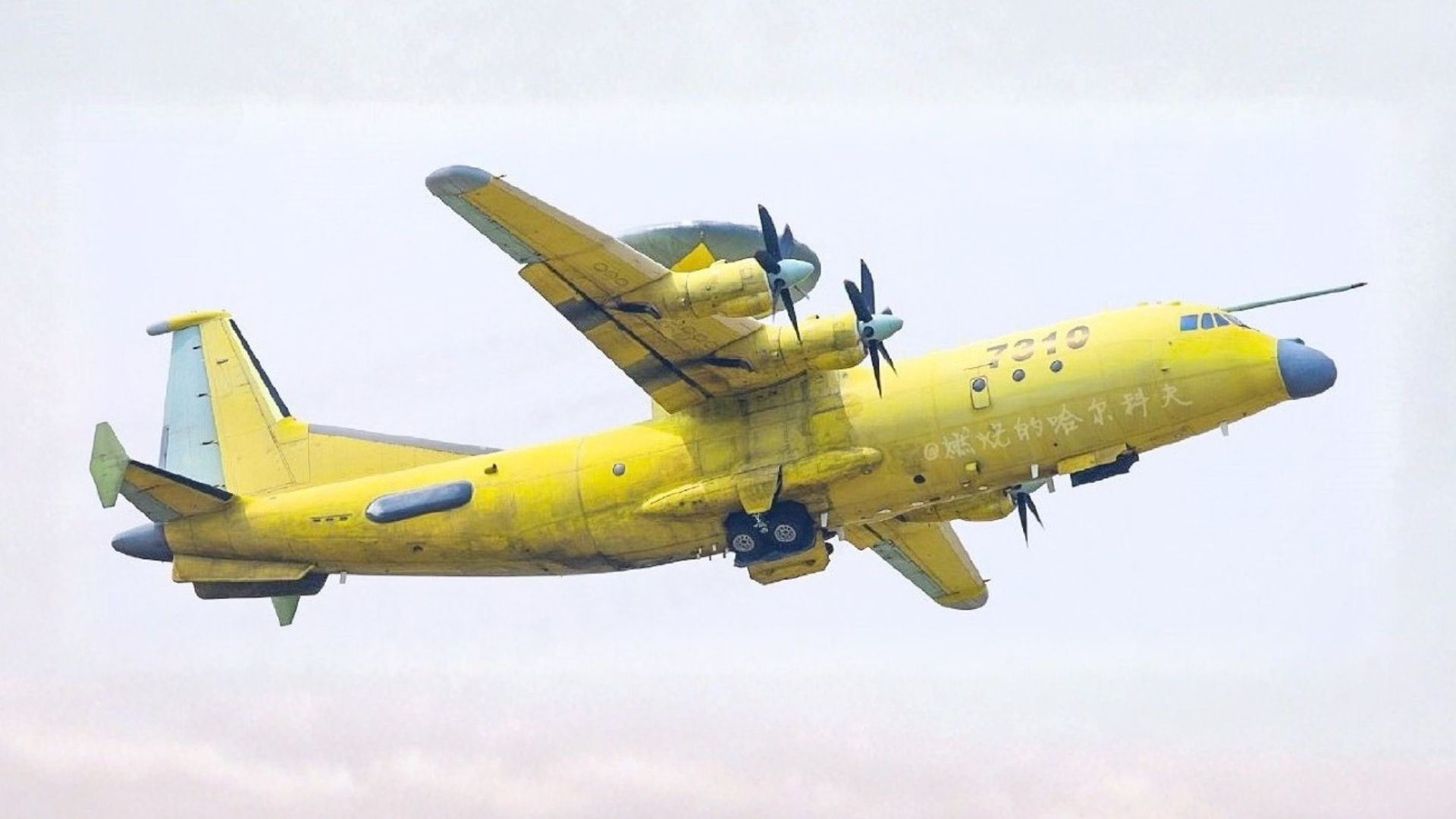
Recent Images Reveal Chinese Airborne Warning Aircraft With Unusual External Changes, Including Redesigned Nose, Additional Structures Below The Fuselage, And Changes To The Upper Radar Set. Record Reported By Specialized Vehicles Highlights Evolution Of AEW&C Platforms And Reinforces Global Interest In Sensors, Communications, And Air Surveillance.
Recent records of a Chinese airborne early warning and control aircraft, identified by specialized vehicles as KJ-700, attracted attention for displaying unusual external changes for this type of platform, including a redesigned nose, additional structures below the fuselage, and visible alterations in the area of the radar mounted on top.
The images, circulated after appearing on social media, were treated as a new milestone in the evolution of Chinese radar aircraft, a category used to enhance air surveillance and integrate information that supports defense decisions and coordination of aircraft over large areas.
Airborne Early Warning And Control: What Does A “Flying Radar” Do
The family of AEW&C aircraft effectively functions as an airborne sensor hub.
-
This small town in Germany created its own currency 24 years ago, today it circulates millions per year, is accepted in over 300 stores, and the German government allowed all of this to happen under one condition.

-
Curitiba is shrinking and is expected to lose 97,000 residents by 2050, while inland cities in Paraná such as Sarandi, Araucária, and Toledo are experiencing accelerated growth that is changing the entire state’s map.

-
Tourists were poisoned on Everest in a million-dollar fraud scheme involving helicopters that diverted over $19 million and shocked international authorities.

-
Hidden beneath the dense forest of the Sierra Nevada, Betoma emerges in a neighbor of Brazil as the greatest archaeological discovery of the century, revealing a colossal ancestral city covering over 18 km², with 8,334 stone structures and the potential to rewrite the history of South American civilizations.


Using an elevated radar, combined with communication and data management systems, this type of aircraft is employed to detect and track air traffic at long distances, as well as relay information to other units, whether in the air, on land, or at sea.
The direct effect is to increase situational awareness and provide a broader view of the airspace than that obtained by ground-based radars subject to terrain, horizon curvature, and coverage limitations.
Redesigned Nose And New Sensors Draw Attention
In the case of the KJ-700, the first element that stands out in the released images is the front section, which differs from the known versions of Chinese aircraft with a rotodome.

Vehicles that analyzed the material pointed out a nose with a distinct shape and indications of additional openings and windows, something consistent with the presence of supplementary sensors beyond the main radar.
This change, in itself, reinforces a trend observed in modern airborne surveillance programs: to gather multiple observation and tracking capabilities on a single platform, rather than relying on a single dominant sensor.
Pods Below The Fuselage And Adjustments That Require Technical Integration
Another evident difference is in the lower part of the aircraft.
The photos display a pod under the chin, with a visible dome, comprising an arrangement that does not appear equivalently in some previous widely photographed versions.
The addition of these structures is significant because it indicates a physical adaptation of the design, which requires changes to the internal arrangement, electrical integration, and aerodynamic adjustments, as well as compatibility tests with the normal operation of the aircraft in different flight regimes.
Enlarged Rotodome And Changes In The Upper Radar Set
The rotating radar set on top also appears with noticeable external changes.
Analysis highlighted a “larger bulge on the top of the radar disk”, along with modifications that make the assembly bulkier than what is observed in platforms that served as reference for comparison.
The presence of a rotodome remains a characteristic trait of several Chinese AEW&C aircraft, and its evolution usually accompanies updates in sensors, processing, and operational modes, even though technical details are not publicly disclosed in photographic records.
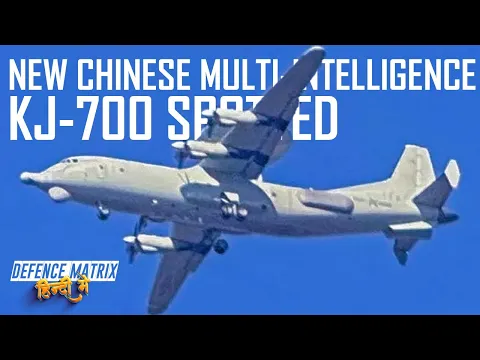

Lateral Protrusions And The Signature Of A Special Mission Platform
In the lateral rear region of the fuselage, the images show protrusions larger than those seen on similar aircraft, with rectangular areas and volumes that stand out on both sides.
Specialized vehicles interpreted this type of change as indicative of additional equipment installed on the structure, as these fairings need to accommodate systems and often require reinforcements and changes in the arrangement of external antennas.
The visual result is an aircraft with less “clean” lines and more marked by protrusions and appendages, a common signature in special mission platforms that carry sensors and communications distributed throughout the body of the aircraft.
What The External Changes Suggest About Modernization
Part of the interest surrounding the KJ-700 comes from the fact that these changes are not mere cosmetic details.
On the contrary, they suggest a modernization package focused on enhancing information collection and distribution, a logic that connects to the classic role of airborne warning aircraft: to monitor, classify, and track targets, support operational coordination, and sustain communications in scenarios where distance and the complexity of the environment require an integrated view.
Even without going into specifics, the simple increase in the number of external structures associated with sensors and antennas indicates a design aimed at expanding functions, which naturally alters maintenance requirements, crew training, and integration with other units.
Base On The Y-9 And The Path Of Special Mission Variants
The platform associated with the KJ-700 is also a central point for understanding the context.
The model has been described by specialized vehicles as based on the Y-9 transport aircraft, a turboprop aircraft used by China as a basis for special mission variants.

This choice follows a pattern seen in other fleets around the world: transport aircraft, by offering internal volume, range, and electrical generation capacity, are often adapted to accommodate radars, consoles, and mission systems.
By using a “workhorse” as a base, the industry can standardize parts, expedite maintenance routines, and facilitate the gradual expansion of the number of units.
Chinese AEW&C Fleet And The Diversification Of Platforms
The Chinese airborne warning fleet already includes different classes of aircraft, ranging from larger platforms to medium models and options designed to operate in specific environments, including a focus on naval operations.
Within this scenario, the KJ-700 is becoming a part of the diversification of solutions, with attention to the integration of sensors, communications, and data processing.
Instead of relying on a single type for multiple missions, the strategy of employing several families in parallel increases flexibility, allows simultaneous coverages, and favors adaptation to operational theaters with differing needs.
Paint, Markings, And The Operational Context Observed In The Images
The images that fueled the discussion about the KJ-700 also display variations in paint and markings, reinforcing the idea that the aircraft is already circulating in configurations typical of military programs, where the transition between schemes can accompany phases of testing, validations, and fleet standardization.
In this type of aircraft, each external alteration usually reflects concrete technical decisions, as installing new volumes, domes, and fairings implies structural work, weight balancing, and adjustments to operational procedures.
Given an aircraft radar with so many visible changes and an apparently expanded set of sensors and antennas, what type of mission do you believe most drives this subtle leap in the evolution of Chinese airborne warning?









-

Uma pessoa reagiu a isso.