





 Portuguese
  English
  Spanish
  4 min of reading
  0 comments


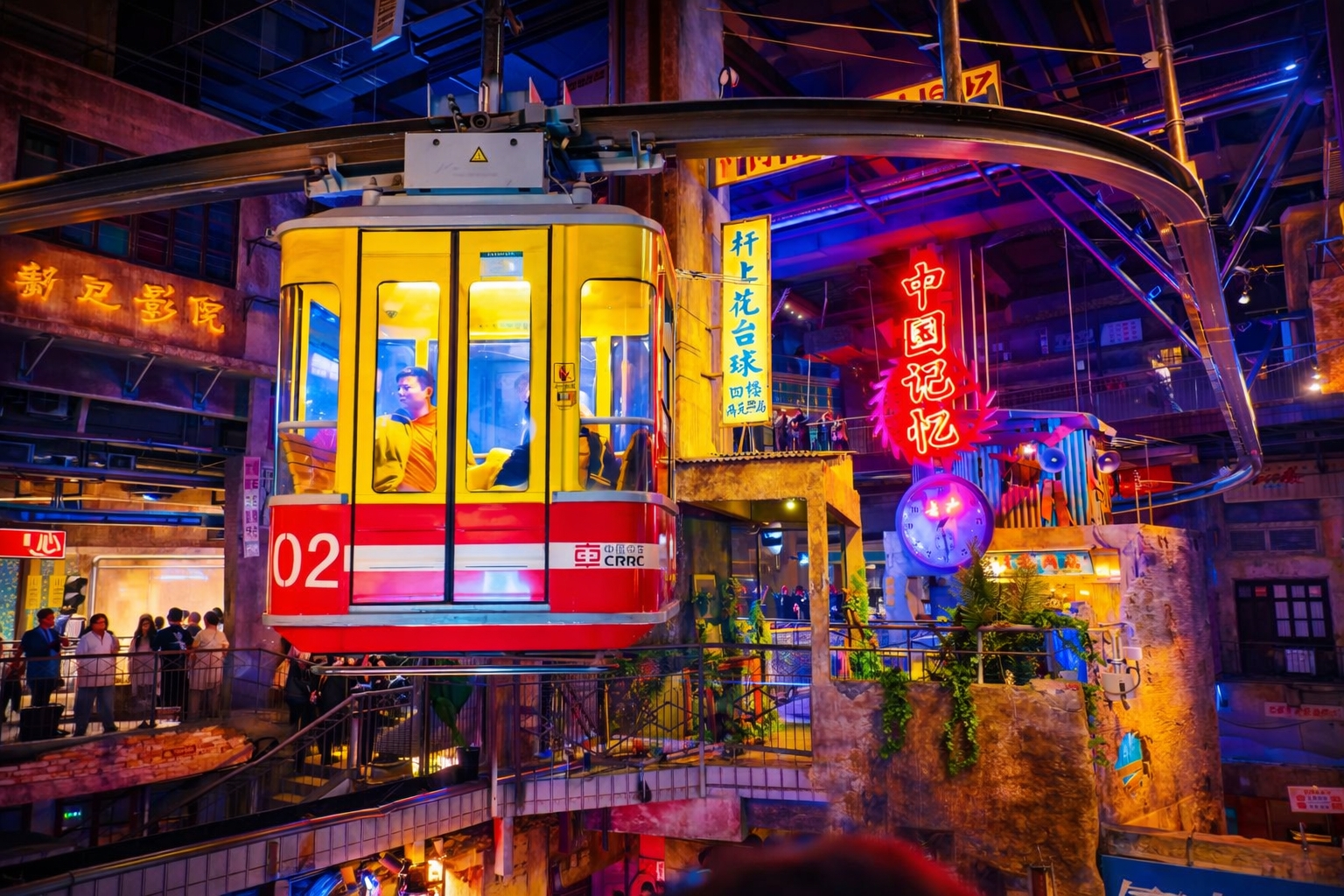
It Is Not a Model or a Small Set: It Is a Full-Scale Movie Set of China Built Inside a Building, with Elevated Transport and Life Happening Inside, Independent of the Weather Outside.
You enter and the first reaction is to look for the sky. But there is no sky. There is ceiling, calculated lighting and a set that seems to have been ripped from a historic center. This is a city in China.
And then comes the detail that captures attention: an elevated train passes over the roofs, as if it were a real neighborhood.
The Label Underground City Misleads, Because What Captures Attention Is Something Else
The complex was designed to replicate the appearance of an ancient city in China, but built in an indoor environment.
-
The Argentine government celebrates the lowest poverty rate in 7 years, but experts warn that the methodology has changed, real wages have fallen, unemployment has risen, and the number of people on the streets of Buenos Aires has increased by 57% since Milei took office.

-
7.8 magnitude earthquake in Indonesia frightens the population, triggers tsunami alert, and hits an island with over 200,000 inhabitants this Thursday.

-
Google will finally let you change that embarrassing Gmail address you created in your teenage years without losing any accounts, logins, or old emails: the feature is already available in the United States.

-
Heading to Brazil in a Bonanza F33 single-engine aircraft: a couple departs from Florida on a visual flight, makes technical stops in the Caribbean to refuel and organize paperwork, and begins the staged crossing until they reach the country.


The package includes temples, courtyards, paved streets, wooden facades, and markets, all designed for visitation, dining, shopping, and entertainment in the same place.
One of the most cited examples is Wenheyou, in Changsha, presented as a blend of gastronomy, commerce, art, and leisure within a dynamic cultural space.
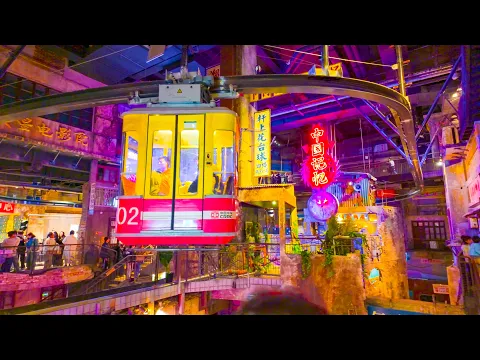

The Elevated Train Is Not Just Decoration; It Provides Scale, Dictates Flow, and Unveils the Level of Design Behind the Spectacle
The elevated monorail appears as an attraction, but also as proof that the place was designed for high traffic.
When a train passes over people, the design must tie in safety, routes, maintenance, and integration with areas full of crowds, shops, and events.
There is no official number published regarding the length of the route, capacity per hour, or total investment in the materials presented, but it is obvious: placing elevated transport inside a themed complex requires an engineering standard that goes beyond decoration.
What Really Sustains the Illusion of an Outdoor City: The Play of Light, Ventilation, and Thermal Comfort That Almost Nobody Notices
Even being indoors, the space tries to seem open, with lighting, a sense of vastness, and ventilation.
This is the backdrop that decides whether the visitor stays or leaves quickly. Without thermal comfort, airflow, and control over kitchen odors, the experience collapses.
And when the goal is to operate year-round, the challenge becomes not just architectural. It turns into a problem of continuous operation, with systems that must withstand crowd peaks without disrupting the ambiance of the place.
The Conflict This Model in China Faces with the Market: Traditional Tourism, Commercial Streets, and Malls Lose Control Over the Itinerary
This type of construction enters into direct competition for time.
It does not only compete with tourist attractions. It competes with malls, food streets, events scattered throughout the city, and any program that depends on nice weather.
The differential is control: the visitor finds food, shopping, photos, and entertainment in succession, with the itinerary practically guided by the set itself.
According to experts, immersive experiences grow when they can become destinations in their own right, not just an attraction within a city.
Why This Matters for Those Following Industry and Infrastructure: The Same Package Can Move to Airports, Stations, and Commercial Hubs
When a complex can simulate a city, it also tests solutions that later appear in other places.
Flow of people, signage, ventilation, acoustics, safety, operation of dining areas, integration with internal transport, and maintenance without interrupting the experience; all of this is a living laboratory.
Estimates indicate that entertainment and consumption projects in controlled environments are gaining traction in large urban centers precisely because they reduce the unpredictability of the weather and increase the average time visitors spend.
The covered city drew attention because it combines staged tradition and heavy engineering in the same package and sends a clear message to the market: those who master immersive environments, controlling climate, light, and flow, start competing for visitors as if they were contending for a strategic resource.
And you, do you think that a city built inside a building is the future of urban tourism, or an expensive exaggeration that only works with initial curiosity? Share your opinion and tell us whether the elevated train is an attraction or ostentation.









-

Uma pessoa reagiu a isso.