





 Portuguese
  English
  Spanish
  6 min of reading
  0 comments


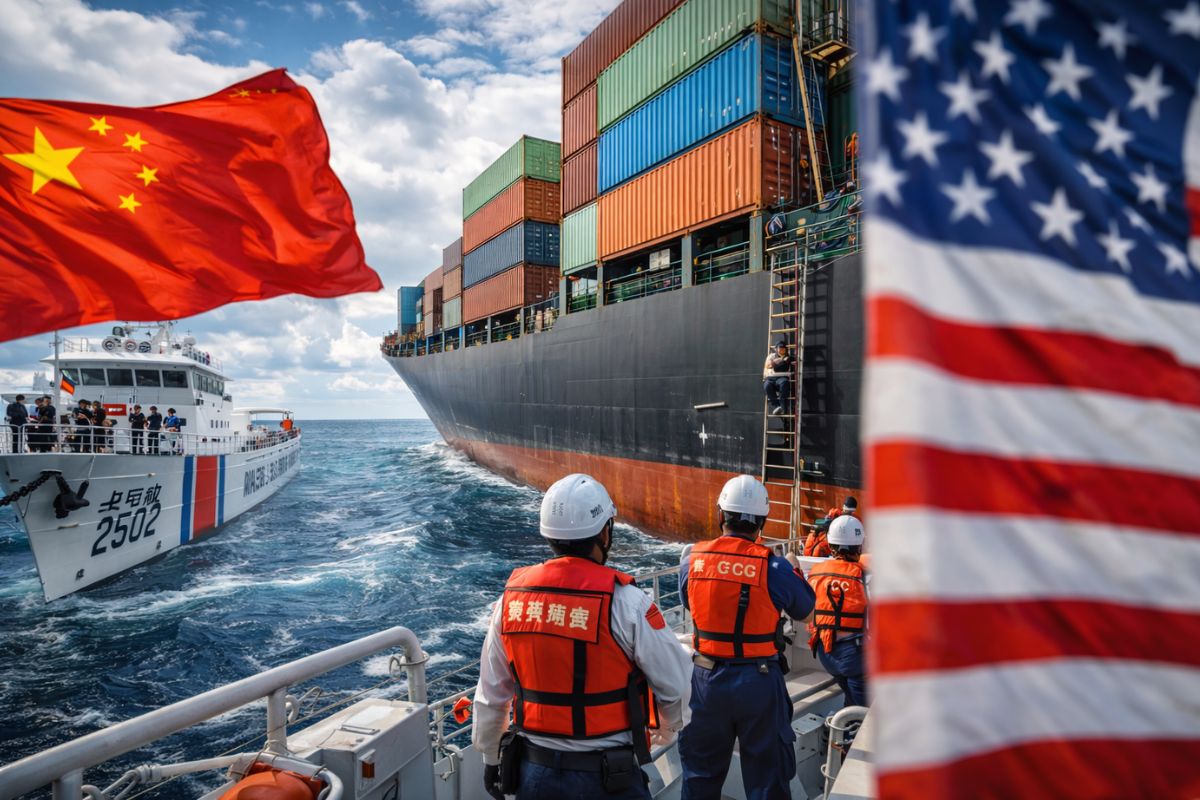
China can impose quarantine in Taiwan without gunfire and put the US in a global dilemma
The quarantine in Taiwan is described by experts as a “gray zone” scenario below open conflict, capable of generating economic and political consequences without starting with an invasion, a direct attack, or a total blockade.
The quarantine in Taiwan could use coast guard, inspections, and documentation requirements as “law enforcement,” creating pressure on trade, raising costs, and putting the United States and other countries in difficult decisions about whether to react or accept.
The crisis that worries military planners

The quarantine in Taiwan appears as the type of crisis that worries military planners when the US is already overstretched on another front. In the analyzed scenario, Washington has deployed a large force to the Middle East, spent billions on missiles and interceptors, and redirected air defenses that were previously aimed at Asia. The central question becomes: what if a second crisis erupts simultaneously in the Taiwan Strait, can the US respond?
-
Millions of Brazilians over 60 years old do not know that they need a second document in addition to their ID to use exclusive parking spaces, and the infraction for not carrying it is considered very serious, with fines and vehicle towing.
-
Paraíba shoots up and has the most expensive square meter in the Northeast, and the increase in labor puts the region at the center of pressure, with Bahia recording the highest monthly increase in Brazil in construction.

-
BNDES and a Chinese bank create a billion-dollar fund of $1 billion to invest in Brazil in energy, infrastructure, mining, agriculture, and AI.
-
INSS confirms the 2026 13th salary calendar, but excludes thousands of elderly from payment; find out now who is left out and how to check by CPF.
The warning is that the quarantine in Taiwan does not need to be permanent or interrupt all traffic. It can be presented as an administrative measure, with pretexts such as combating smuggling, blocking illegal arms shipments, or environmental justifications. The problem is that by complying with Chinese demands, vessels and companies may end up practically recognizing the claim that Taiwan is part of China.
What is quarantine and why is it not the same as blockade
According to Rush Doshi, a former member of the US National Security Council and a researcher affiliated with academic and analytical centers in Washington, it is important to differentiate quarantine from blockade.
A blockade tends to be treated as an act of war, involves military ships, and seeks to interrupt all incoming and outgoing traffic.
On the other hand, the quarantine in Taiwan is described as a regulatory action. Instead of primarily relying on warships, it can resort to coast guard vessels, arguing that it is merely enforcing laws.
How the quarantine in Taiwan could work in practice
The description of the scenario is straightforward: each vessel that wants to proceed can be approached, inspected, or required to present documentation to Chinese authorities. This does not mean that everything would be interrupted, nor that the measure would last forever. It could be for a period and then be resumed.
There are different possible scales. The quarantine in Taiwan could be broad, targeting all ports, or more focused, concentrating on the ports facing the Taiwan Strait, which are closer to the mainland and therefore easier to pressure.
The scenario also includes an alternative with fewer ships: China could require vessels to stop first at a Chinese port or register before proceeding to Taiwanese ports, with the threat of economic sanctions for companies that do not comply.
This reinforces the idea that the quarantine in Taiwan is presented as regulation, but functions as a political act.
Why this hypothesis gained strength since 2022

In the explanation presented, the fear increased after exercises that reportedly began to establish a “new normal” in the Strait. The cited example is Nancy Pelosi’s visit to Taiwan, followed by exercises that expanded military and maritime activity.
Since then, flights crossing the median line, incursions into air defense identification areas, and the constant presence of vessels around Taiwan have reportedly increased.
In addition to the navy and coast guard, the element of “maritime militia” comes into play, described as ostensibly civilian fishing boats but under direction associated with the military apparatus.
The thesis is that China is rehearsing both quarantines and blockades, including exclusion zones and “no-entry” areas, creating uncertainty about the risk of entering live-fire areas.
The strength of the coast guard and the capacity to escalate the operation
In the described scenario, an important point is the size of the Chinese coast guard. The presented estimate indicates more than 100 vessels, many of which would be large, comparable in size to military ships from other navies.
This increases the capacity to implement a quarantine in Taiwan with the appearance of regulation, even with integration into a larger strategy. It is exactly this mix that makes the international response more delicate.
The objective behind the quarantine in Taiwan
The explanation points to two central objectives. The first is to show actual political control, “exercising sovereignty” as if it were a routine administrative measure. The second is to pressure Taiwan economically, as the island relies on imports, especially energy and also food.
A strategic detail is that the quarantine in Taiwan does not need to be continuous. It can be applied in pulses, with pauses and resumptions, as a way to wear down the resistance of Taiwan and the international community over time.
The immediate impact on trade and insurance
In such situations, commercial traffic tends to comply with requirements to avoid risks to crew, ship, and cargo. This means that the quarantine in Taiwan can operate with a high compliance rate, even without open use of force.
The second cited effect is insurance. If there is a risk of escalation or use of force, insurance rates may rise, which pressures Taiwan through a market mechanism: higher costs, more expensive routes, and greater uncertainty for logistics.
At the same time, the scenario suggests that China can calibrate the impact, functioning as a “toll booth” that controls who enters and at what cost, seeking to be “minimally disruptive” when convenient, such as limiting energy for a few days or allowing exports of certain goods.
The US dilemma between reacting or accepting
The discussion points to clear tensions for Washington. If the US does nothing, it may seem like acceptance and create a precedent for China to control what enters and exits Taiwan. If they do something, the risk of escalation increases.
One described path is to escort merchant ships with US navy vessels, to reduce the chance of compliance with Chinese demands. But this option would require many resources and would be difficult, especially if forces are concentrated in another region.
Another possibility raised is an economic and legal response: threatening penalties to companies that comply with Chinese demands and imposing economic retaliation. The problem is that this puts companies in a dilemma: they depend on routes and markets linked to China, but they also depend on finances and insurance controlled by Western countries.
Risks for China and the danger of escalation
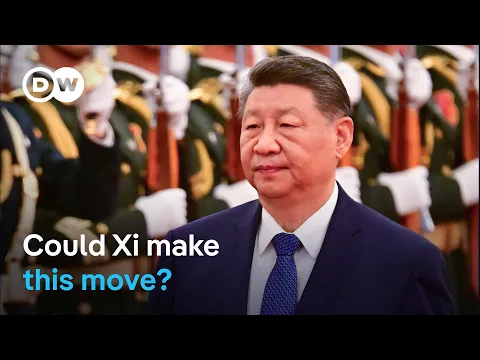

The scenario also describes risks for Beijing. A quarantine in Taiwan could generate reputational costs, provoke backlash, and lead companies to reconsider their economic presence.
There is also the operational risk: if companies ignore requirements, China must decide between enforcing the quarantine with the risk of escalation and accidents, or backing down and making the measure ineffective.
And, even in an escort operation, there is a risk of incident: collisions, accidents between aircraft, or involuntary escalation.
According to DW News, it is emphasized that the line between quarantine and blockade can blur over time, and that a quarantine can be seen as a first step on a ladder of escalation to blockade and then something larger.
What is in the deterrence package mentioned in the analysis
The discussion includes paths to reduce incentives for a quarantine in Taiwan, focusing on preparedness before the crisis. Among them are:
Create a set of economic responses ready to be activated, if a quarantine declaration occurs.
Seek ways to stabilize insurance markets, to reduce the automatic impact on trade.
Increase Taiwan’s resilience, including more energy stocks and other internal measures.
Discuss scenarios before they happen, to avoid improvisation.
Maintain deterrence capacity, without “stealing” resources from one region to another in critical moments.
Combine deterrence with signaling reassurance, avoiding abrupt status changes and reducing incentives for escalation.
Quarantine in Taiwan becomes a gray zone test with real effect
Overall, the hypothesis of quarantine in Taiwan is treated as dangerous because it tries to be presented as harmless regulation, but it can produce concrete effects: delays, costs, political pressure, and a direct test of how far the US and allies are willing to go to avoid normalizing Chinese control.
In your opinion, if a quarantine in Taiwan began with inspections and documentation requirements, would the most likely response be economic, naval, or a combination of both?







Seja o primeiro a reagir!