





 Portuguese
  English
  Spanish
  3 min of reading


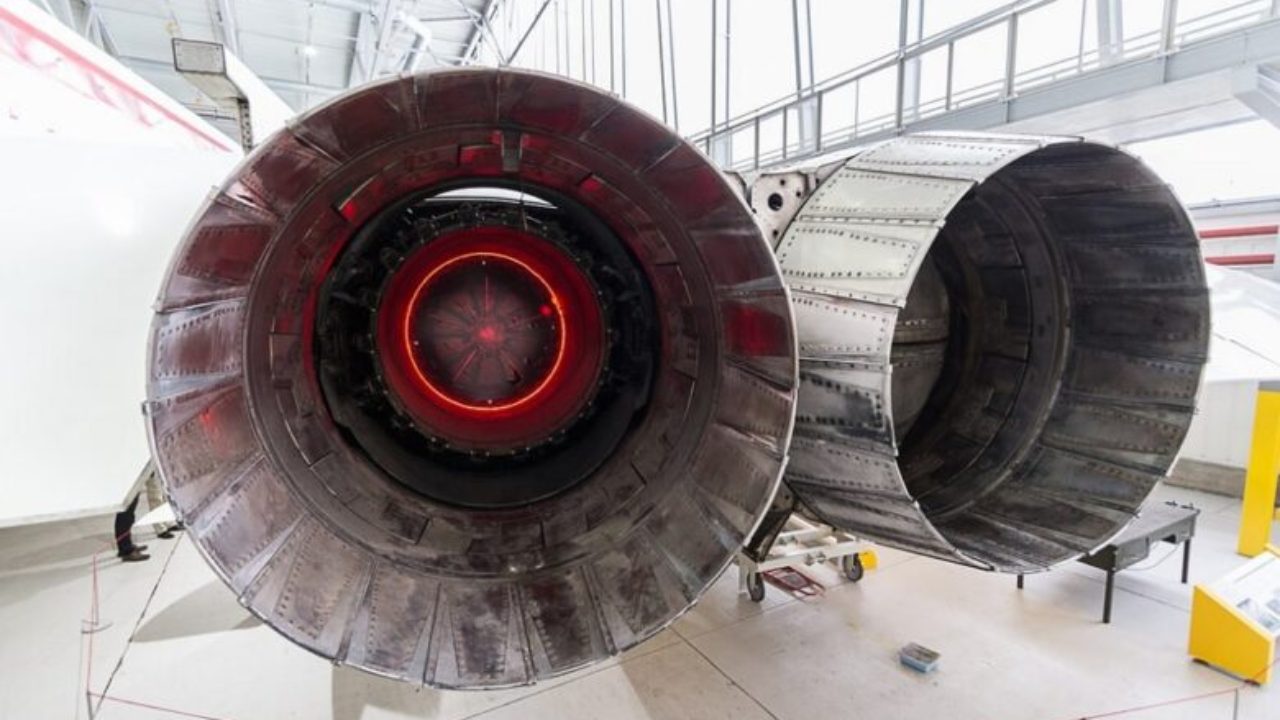
Chinese Engineers Develop Supersonic Engine Capable of Reaching Speeds of Up to Mach 16, Equivalent to 19,000 km/h. With This Speed, It Would Be Possible to Go Anywhere in the World in Just Two Hours.
Despite being explored for many years, supersonic flight has never reached the same level as other propulsion technologies, and the main reason for this is related to the technical difficulties it presents and the physical-mechanical problems it can generate, as is the case with the model known as Concorde. However, a team of engineers from China recently announced the development of a new type of supersonic engine called Sodramjet, which overcomes classical obstacles posed by this type of propulsion.
Supersonic Engine Achieves Mach 16 Speed
Although the initial experimental tests have been completed, there is still much work to be done by researchers before the supersonic engine reaches the market. According to the engineers from China, the new engine can achieve speeds of up to Mach 16, equivalent to 19,000 km/h, and remains stable when tested in a wind tunnel. The results were published in the Chinese Journal of Aeronautics.
The Sodramjet is based on existing technology known as ramjet, which has been developed since Hungarian inventor Albert Fonó used the technology to extend artillery range. While common jet engines use a section of the fan’s blade compressor to compress incoming air before sending it to combustion, ramjets rely on the forward motion of the aircraft to provide a flow of compressed air and rapid motion.
-
Motorola launched the Signature with a gold seal from DxOMark, tying with the iPhone 17 Pro in camera performance, Snapdragon 8 Gen 5 that surpassed 3 million in benchmarks, and a zoom that impresses even at night.

-
Satellites reveal beneath the Sahara a giant river buried for thousands of kilometers: study shows that the largest hot desert on the planet was once traversed by a river system comparable to the largest on Earth.

-
Scientists have captured something never seen in space: newly born stars are creating gigantic rings of light a thousand times larger than the distance between the Earth and the Sun, and this changes everything we knew about stellar birth.

-
Geologists find traces of a continent that disappeared 155 million years ago after separating from Australia and reveal that it did not sink, but broke into fragments scattered across Southeast Asia.

An advancement was made in ramjets to create a model for supersonic combustion (scramjet), which keeps air flowing through the engine at supersonic speeds, unlike a ramjet, which decelerates air before combustion. However, scramjets suffer significant failures, and the supersonic air creates shock waves that can block fuel burning.
Details That Need to Be Improved in the Engine That Claims to Reach Mach 16
Zonglin Jiang and his colleagues from the Chinese Academy of Sciences in Beijing looked into the work that engineer Richard Morrison did in 1980. Morrison believed that the shock wave generated by supersonic air could contain enough energy to continuously reignite the engine and maintain speeds equal to or greater than Mach 16.
Even though his ideas were never implemented commercially due to lack of funding and the choice to pursue other ideas, the Chinese engineers have put the concept into practice in the new supersonic engine, and the results are quite promising. However, there are still some obstacles to overcome before the mechanism is fully functional.
The shock waves that reignite combustion can sustain thrust; however, in doing so, they generate oscillations in the engine that impact its stability. Additionally, speeds like this have been described in wind tunnels using scramjets before, but have not been verified in aircraft. Therefore, the engine will need many more tests before commercial use.
Brazilian Air Force Aims to Reach Mach 10
In addition to the Chinese engineers aiming to reach Mach 16, the Brazilian Air Force (FAB) is studying hypersonic technology. In December 2021, the Alcântara Launch Center (CLA) in Maranhão conducted the launch of the first aircraft using a supersonic engine equipped with a scramjet developed in the country.
The test is part of the Supersonic Propulsion Project 14-X, named in honor of the 14-Bis. The hypersonic engines generated 5,000 hp of power and reached speeds close to Mach 6 during the first flight test, which was conducted 13 years ago by the FAB. The institution’s expectation is for the technology to reach Mach 10 in the future.








Seja o primeiro a reagir!