





 Portuguese
  English
  Spanish
  6 min of reading
  5 comments


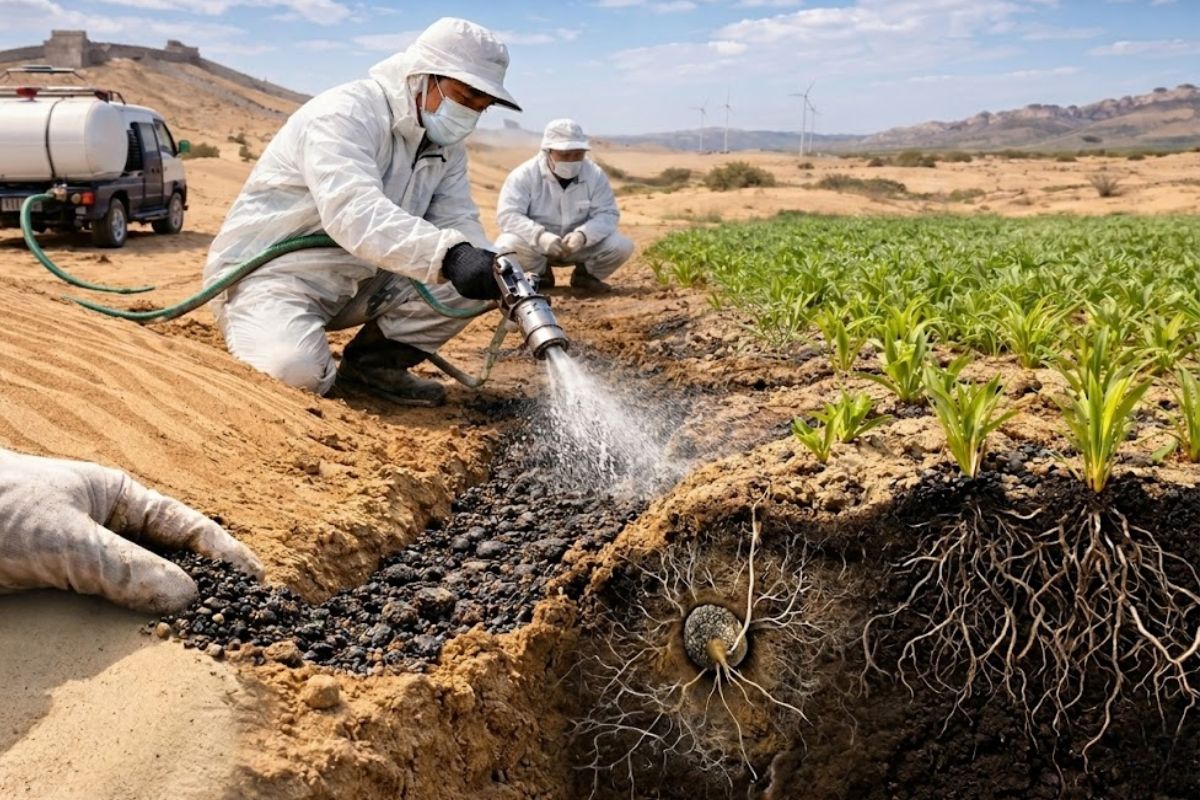


Created by Researchers Linked to the Chinese Academy of Sciences, Living Seeds Use Cyanobacteria to Form Biological Crusts That Stabilize Sand and Pave the Way for Plants. When Injected Beneath the Surface, They Survive Longer, Reduce Decades to 1 or 2 Years, and Enable Large-Scale Restoration Quickly.
Living seeds emerge as a direct response to a problem that grows silently: desertification, especially in arid and semi-arid areas where vegetation cover decreases, soil loses structure, and dunes advance. In northwestern China, researchers linked to the Chinese Academy of Sciences have begun to treat sand not as a “dead end,” but as a biological starting point.
The proposal is simple to understand and difficult to execute: creating a living layer that transforms loose sand into a stable base, reducing a process that can take more than 15 years to something between 1 and 2 years, paving the way for the gradual return of vegetation and the recovery of areas that previously seemed unviable.
Desertification: When the Problem Is Not Just “Lack of Trees”
Desertification does not happen just because there are few plants. It advances when the land loses its ability to retain water, hold fine particles, and sustain microscopic life.
-
They said no to 26 million dollars and would do it all over again: mother and daughter from Kentucky reject a million-dollar offer from a mysterious company that wants to build the largest data center in the state on more than 2,000 acres of rural land.

-
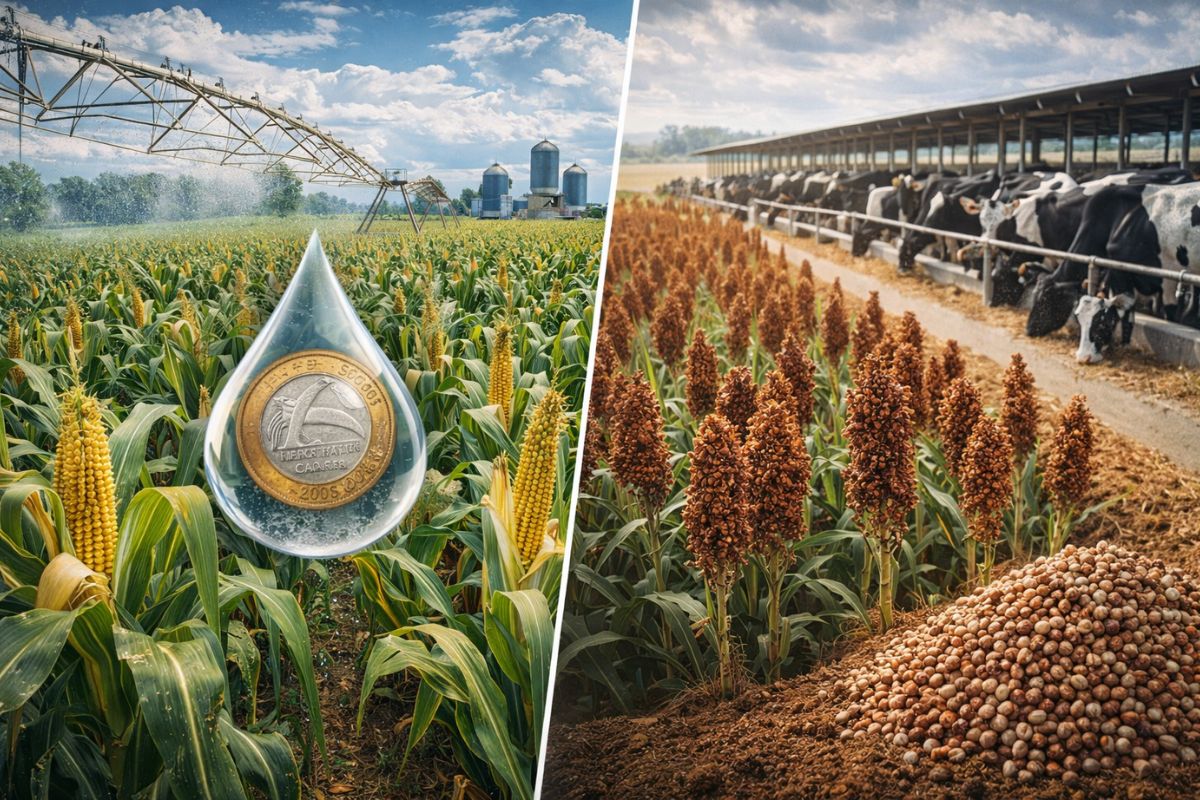
While corn requires rain and is expensive, sorghum produces almost the same volume per hectare at a cost up to 80% lower and uses less water, and it is revolutionizing dairy farming in the Triângulo Mineiro, where producers save hundreds of reais per hectare.
-
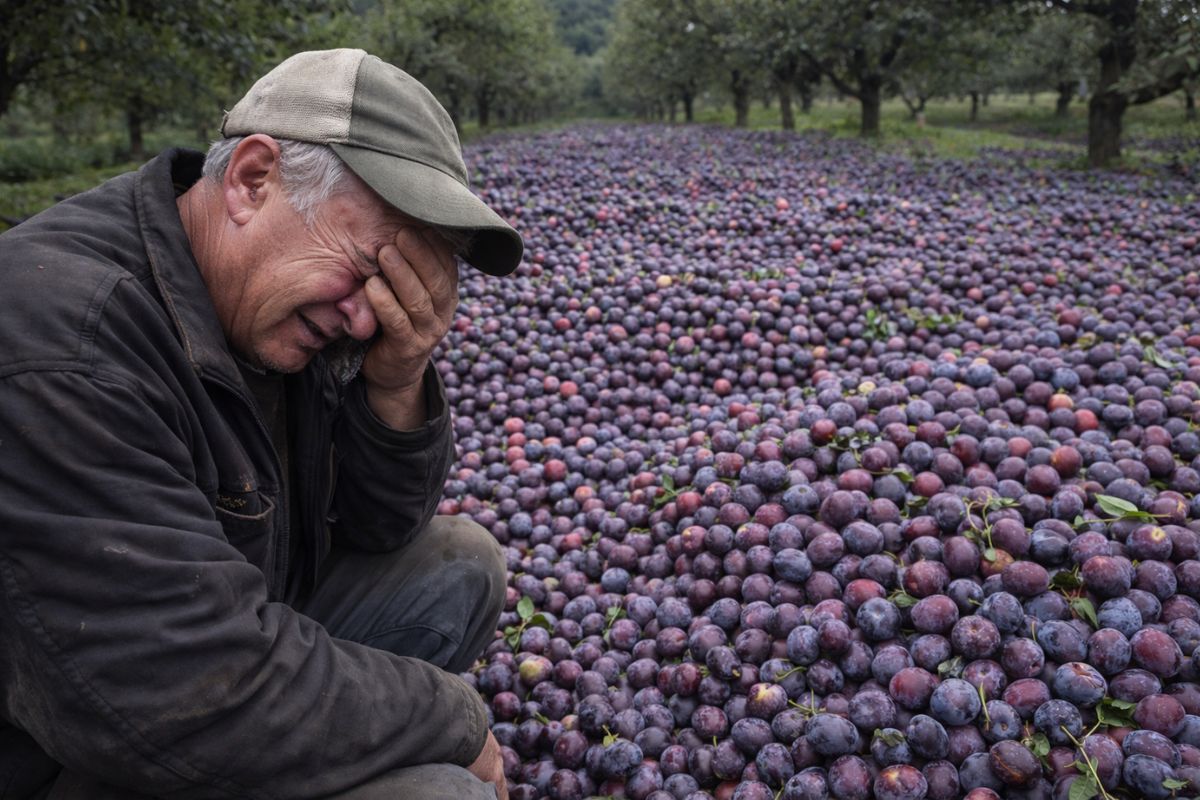
A rural producer from Urubici cries as he shows 50 tons of plums thrown on the ground because no one wanted to buy them, and in desperation, he records a video asking anyone to come to the property to pick the fruits before they rot.
-
Unable to pass through Hormuz, Brazil activated a plan B that uses Turkey as a gateway to the Middle East: the route through Gibraltar and the Mediterranean is longer and more expensive but ensures that chicken, beef, and corn continue to reach Arab markets.


Without this “invisible infrastructure,” sand moves easily, erosion increases, and any attempt at planting becomes a struggle against wind, solar radiation, and dehydration.
That is why living seeds target a point prior to planting. Instead of starting with the seedling, the strategy begins with the foundation of the ecosystem: the construction of a biological soil crust, a layer that stabilizes the surface and creates minimal conditions for other forms of life to establish themselves later.
What Are Living Seeds and Why Do They Not Resemble Common Seeds
Despite the name, living seeds are not traditional plant seeds. They are primarily composed of cyanobacteria, photosynthetic microorganisms capable of surviving in extreme environments.
This detail changes everything, because the idea is not to “germinate a plant” directly, but to initiate a biological process that prepares the ground for plants to exist.
In practice, cyanobacteria act as a structuring organism. They help bind sand particles, form a stable layer on the surface, and create a more organized base, which reduces the typical instability of desert regions.
Instead of trying to “conquer the desert” with brute force, the technology attempts to teach the land to sustain itself.
The “Natural Glue” That Stabilizes Sand and Retains Moisture
In desert environments, loose sand is one of the biggest enemies of ecological restoration. When there is no layer to hold the particles, any wind reorganizes the ground, exposes what was protected, and removes what has just formed. Living seeds come in at this point, because cyanobacteria create a kind of “natural glue” that reduces the mobility of sand.
This biological layer has a role that goes beyond “holding the soil.” By stabilizing the surface, it contributes to a slightly less hostile microenvironment, with greater moisture retention and better physical structure.
The expected result is a transition: first, the sand ceases to be just sand; then, it begins to behave like a minimally fertile support for more complex ecological processes.
Why the First Approach Failed and Diminished Survival in Just a Few Days
Initially, researchers cultivated cyanobacteria in the lab and transplanted this material to desert areas. It was a promising solution in the lab, but fragile in the field. Once they reached the real environment, the microorganisms faced two stressors simultaneously: friction with loose sand particles and intense solar radiation, leading to rapid dehydration.
The effect was harsh: upon contact with loose sand and under strong radiation, the microorganisms died in less than a week.
The particles damaged the delicate biological film of cyanobacteria, while the sun accelerated water loss. The lesson was straightforward: it was not enough to have the right organism; it was necessary to place it in the right place, the right way, for it to survive.
The Technical Turn: Pressure Injection to “Hide” Life in the Most Protected Place
The change came when researchers were inspired by the effect of rain on sand and developed a pressure injection method. Instead of leaving the cyanobacteria exposed on the surface, the system inserts microorganisms between the spaces of sand particles. This creates immediate physical protection, reducing direct exposure to sunlight and helping maintain more favorable moisture conditions.
The reported results show why the method attracted attention: the time to form the biological layer dropped from over 15 years to 1 to 2 years, and the survival rate exceeded 60%, with greater resistance to dehydration. In ecological terms, the difference is enormous because it accelerates the “first step” of recovery, which is usually the slowest and easiest to lose.
From Heavy Equipment to Field Application: When Logistics Becomes a Bottleneck
Even with good results, pressure spraying brought a problem that is not biological but defines what becomes scalable: logistics.
The equipment required electricity and transportation infrastructure, which restricted use in remote areas. It is precisely in these regions, far from centers and with difficult access, that desertification tends to be more severe and persistent.
To circumvent this bottleneck, the team developed a solid formulation. Instead of relying on a complex application system, the cyanobacteria solution began to be mixed with organic matter and fine particles, in specific proportions that ensure stability.
The result is a compact “seed,” easier to transport and apply, expanding where living seeds can be used without demanding the same infrastructure as the previous method.
Where This Strategy Enters: The Great Green Wall of China and the Recovery Goal
The innovation was incorporated into a project known as the “Three North Shelter Forest Program,” also called the Great Green Wall of China.
The logic of the program is to create protective belts around desert areas in the northern part of the country, reducing the advancement of dunes and erosion, and favoring conditions for vegetation to establish and remain over time.
With the use of living seeds, the expectation is to restore between 5,300 and 6,700 hectares of desert land over the next five years.
The number matters not only for its size but for what it signals: an attempt to transform ecological restoration into a faster and more predictable process, combining science, biotechnology, and ecological engineering to tackle a problem that affects food security, water resources, and even climate stability.
Why This Matters Outside of China: Soil as the Starting Point of the Ecosystem
Desertification is not a regional issue. It affects millions of hectares worldwide and pressures arid regions in Africa, the Middle East, and parts of Latin America.
When dunes shift and the surface loses structure, the impact is not just on the landscape: the water cycle becomes disorganized, dust increases, land productivity declines, and recovery becomes more costly and slower.
It is in this context that living seeds gain importance as an idea. By reducing decades to a few years in the stabilization and biological crust construction phase, the technology points to a path where restoration is not just “planting trees,” but rebuilding the foundation that allows any tree to exist. The “revolution,” here, begins at the microscopic level, precisely where almost no one looks, but from which everything else depends.
The promise of living seeds is straightforward: placing microorganisms in the right place, protected from radiation and with more moisture, so they can do the patient work of transforming unstable sand into a stable biological base.
If this initial step becomes quicker and with a survival rate above 60%, the rest of the restoration gains a real chance of happening, with planning and continuity, and not just isolated attempts.
Now I want to hear from you in a very practical way: do you think biological solutions like living seeds should be a priority in combating desertification, including in semi-arid regions of Latin America, or are you concerned about involving microorganisms on a large scale?
What, in your view, would be the greatest advantage and the greatest risk of this approach?








Segun consulte a IA gemini, del tema me respondio: posibilidad de pozos subterraneos por lluvia o presencia de agua de mar. Basada en esta respuesta comento: entonces es factible el experimento, por la posibilidad de humedad bajo la arena. Claro dando tiempo de que esa mezcla de elementos se presente. Incluso la composta adecadamente tratada, puede surgir semillas que alimenten el suelo arenoso y otros tipos de suelos. Respetando el conocimiento de especialista en el tema. Comenta, opina: #YasminNimsayNoPoetaSoñadora
Creo que es interesante a partir de las cianobacterias inyectadas en la arena del desierto y que vayan creando una capa orgánica en el suelo y evite y se revierta la dedesertificacion plantando otros cultivos y árboles dependiendo de los recursos hidricos disponibles.
Se están haciendo estudios para implantar cianobacterias a la superficie árida marciano ompuesto por regolito para crear un suelo cultivable bajo invernaderos presurizado que se usarán en las primeras colonias en Marte.
Cuando me paguespor contesgar estas preguntas, con gusto te daré mi opinión