





 Portuguese
  English
  Spanish
  8 min of reading
  0 comments


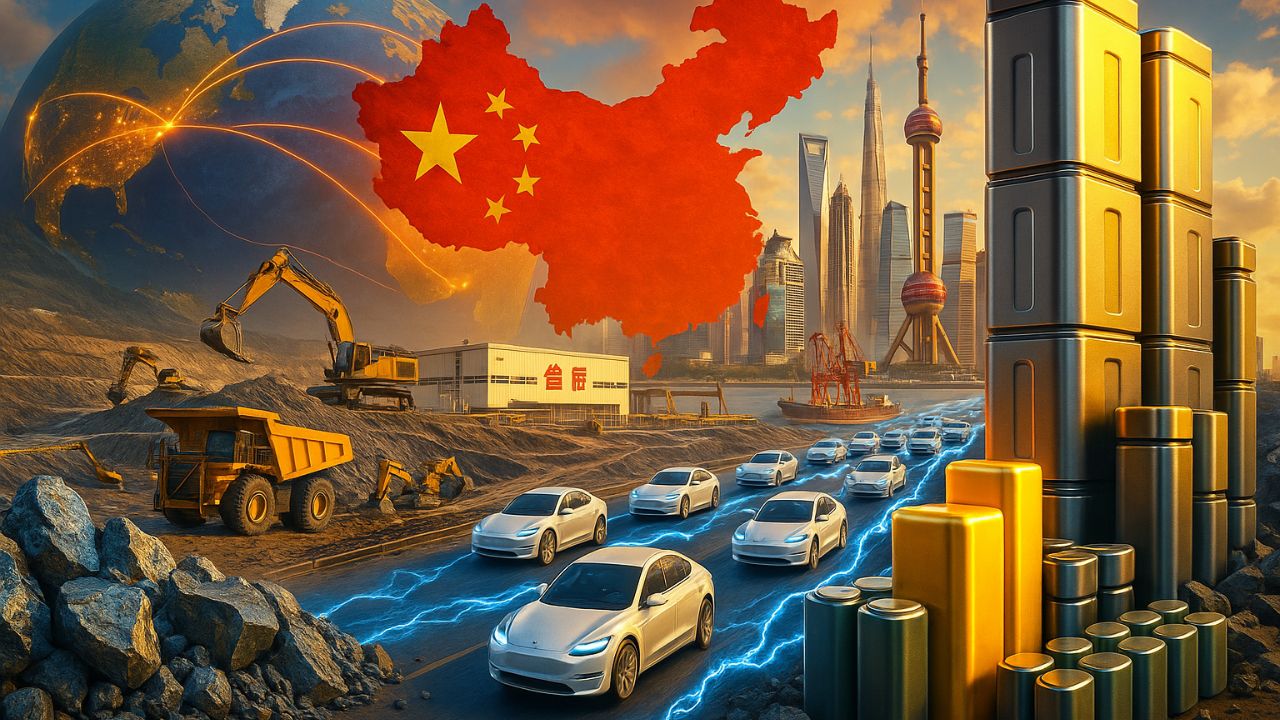
China Dominates Lithium, Cobalt, and Batteries and Redefines the Energy War in a World Pressured by Oil, Electric Cars, and Critical Technology.
The reserves of manganese, nickel, lithium, and cobalt in remote regions, from the Pacific to the lithium triangle, are no longer a geological curiosity. They are at the center of a new energy war, in which China dominates lithium, cobalt, and batteries and secures a strategic position in supply chains that could be worth trillions of dollars.
Instead of armies marching behind oil wells, what we see now are companies, state banks, and discreet agreements ensuring access to metals that make our cell phones work, our cars run, and our servers operate.
Throughout history, those who controlled salt, gold, sugar, coal, or oil defined the course of entire empires. Salt made Rome grow, gold elevated Spain, oil transformed the Middle East, and gas saved Russia in critical moments.
-
Spain surprises the world by erecting 62 artificial dunes, mixing sand with natural remains of posidonia, and causing the structure to lose only 1.4% of its volume in 1 year.

-
With 16 Bulava missiles, improvements in acoustic stealth, and a design focused on silent patrols, Russia’s nuclear submarine was born to ensure Moscow’s invisible retaliation and has become one of the pillars of its maritime strength.

-
‘Populous’ city in Rio among the worst in Brazil in national ranking and exposes silent development crisis.

-
Couple buys house in the South Zone of São Paulo, opens a hidden door in the garage, and finds a secret wine cellar with dozens of old wines forgotten since the 1970s.

Today, the competition takes on a new face, but the logic remains the same. The question is no longer just who has oil wells and pipelines, but rather who controls lithium, cobalt, and nickel mines, battery factories, and the technical knowledge to convert these resources into the main weapon of the current energy war.
From the Salt Route to the 21st Century Energy War
In ancient Rome, controlling salt was as strategic as controlling a pipeline today. The Via Salaria linked extraction routes to the interior, ensured food security, generated taxes, and financed military campaigns. Not by chance, the words soldier and salary originate from the same root: payment in salt.
This logic repeats itself at other moments in history. The gold of the Americas enriched and later sank empires. Sugar and tobacco reshaped the political and economic map of the American continent.
Coal replaced wood and drove the British industrial revolution. Later, oil propelled the United States and turned the Middle East into a synonym for wealth and perpetual conflict.
Today, the energy war involves another type of resource: critical metals that power batteries, electric grids, turbines, and the entire infrastructure of the energy transition. Those who understood this first got ahead. And China clearly understood.
From the Depths of the Sea to Gadgets: The New “Oils”
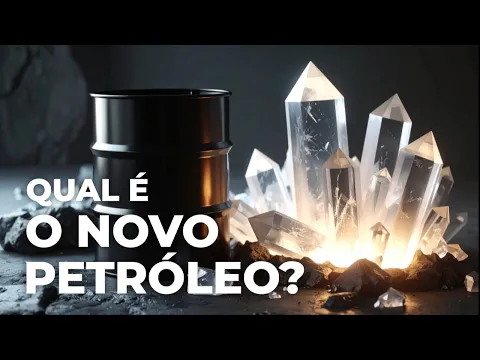

At the bottom of the Pacific, in deep areas over 4,000 meters, are scattered seemingly unremarkable pebbles that concentrate manganese, nickel, and cobalt in gigantic quantities.
In some places, there is more metal there than in all the reserves on solid ground combined. It is no coincidence that these underwater deposits are already being treated as the “new oil” in potential.
At the same time, on land, these same elements appear in products you use every day without even thinking: cell phones, laptops, motors, electric grids, metal structures.
The difference is that now the demand for these materials has exploded due to lithium-ion batteries, which require lithium, cobalt, nickel, manganese, and graphite to form the cathode and anode.
A cell phone contains a few grams of lithium, a laptop a few dozen grams, but an electric car can reach dozens of kilos and an electric bus can require hundreds of kilos of this metal.
The more the world races to electrify cars, buses, and entire fleets, the more this energy war over critical metals intensifies.
Lithium: The Light Metal That Weighs on China’s Strategy
Lithium was once just a detail in ceramics and glass. Today it is the heart of the world’s most widely used battery. Because it is light and extremely reactive, lithium allows for smaller, lighter batteries with high energy density, exactly what smartphones, scooters, and electric cars need.
The largest producers are in Argentina, Chile, Australia, and China. Almost half of the lithium comes from Australia, but about 90% goes directly to China because Chinese companies own decisive stakes in Australian mines and projects in the so-called lithium triangle of South America, which involves Argentina, Chile, and Bolivia.
Even where local governments have tighter control over the resource, the main contracts again point to China and Russia.
This movement is not a coincidence. China knows that lithium batteries are one of the keys to reducing dependency on imported oil.
Instead of accepting eternal vulnerability to flows that pass through the Persian Gulf, the Strait of Malacca, and the South China Sea, the country has heavily invested in mining, processing, and transforming lithium into a pillar of its energy security.
Cobalt, Nickel, Manganese, and Graphite: Pieces of the Board
Lithium has gained the spotlight, but it does not act alone. The battery’s cathode requires manganese, nickel, and cobalt, while the anode depends on graphite. Each of these elements has become integral to the energy war.
Cobalt is a good example. It was once a blue pigment for ceramics, and today it is essential for enhancing charging cycles, allowing operation at lower temperatures, and preventing explosions in batteries.
Most of the world’s cobalt comes from the Democratic Republic of Congo, often under extreme conditions. And, once again, the main investors and buyers are Chinese companies.
Nickel and manganese follow the same logic. China is the big buyer of manganese ore and destination for a good part of the nickel extracted worldwide, occupying a central position in the entire supply chain. To top it off, the graphite used in anodes is also under strong Chinese influence.
In the end, what emerges is a picture in which a single country quietly builds a near monopoly over the building blocks of modern batteries.
Electric Cars, Rails, and Solar Panels: The Long-Term Play
The history of oil in China helps to understand the size of the strategy. In the 1960s, the country discovered large fields and even exported to Japan, securing some autonomy.
However, starting in the 1990s, rapid economic growth caused demand to soar, and domestic reserves were no longer sufficient. China began importing more and more oil and became one of the world’s largest buyers.
This created an obvious weak point. In a scenario of crisis or conflict, especially involving Taiwan, a naval power like the United States could block vital routes.
Instead of betting on a direct confrontation, China preferred to redesign its development model to reduce this vulnerability, opening a new front in the energy war.
The plan combines several long-term moves:
- replace part of the combustion fleet with electric cars, bicycles, and electric scooters
- connect cities with high-capacity electric trains
- heavily invest in solar and wind energy without immediately abandoning coal and nuclear energy
In practice, this has made China the largest producer of electric cars and batteries in the world, with companies like BYD selling millions of vehicles at much lower prices than European and American rivals.
At the same time, the country has come to produce about 80% of the world’s solar panels and to dominate critical stages such as wafers and cell technologies, often supported by cheap loans, subsidies, and easy access to land.
This set of decisions is not merely industrial. It is a slow-motion energy war strategy, in which China exchanges dependence on external oil for dominance over technologies that the rest of the world needs to “decarbonize.”
Europe, the United States, and the Backlash of the Energy War

While China built its entire battery and solar panel supply chain, Europe and the United States advanced in a more fragmented manner and often underestimated the impact of this future dependency.
In the European Union, renewable energy guidelines bet that wind turbines and solar panels would be the elegant solution to high oil and gas prices.
The idea seemed great, but in practice European manufacturers were overwhelmed by Chinese competitors, supported by aggressive credit policies and scale. Today, many wind energy companies are facing billion-dollar losses, while industrial electricity consumption has dropped with skyrocketing prices.
In the automotive sector, traditional giants are also feeling the impact. Brands that have become accustomed to dominating the Chinese market now need to cut prices to compete with much cheaper local electric vehicles.
At the same time, they see Chinese electric cars flooding the European market at values that are hard to match, to the point where governments are discussing protective tariffs to try to curb the advance.
In other words, the energy war is not just about wells in the Middle East. It is about who controls the mines, the factories, the technology, the logistics, and even the environmental standards that define what enters the global markets.
Congo, The Deep Sea, and the Next Round of the Dispute
The Democratic Republic of the Congo is almost a cruel summary of this logic. Previously, the resource was enslaved labor. Then, it was rubber. Next came diamonds, uranium, and now cobalt.
In all phases, the great powers profited, and the country remained poor. Today, the difference is that the main buyers have shifted from European powers to Chinese companies.
Meanwhile, virgin areas like Clarin Clipton, at the bottom of the Pacific, remain as a strategic reserve. No one exploits on a large scale because it is expensive, complex, and demand can still be met by mines on solid ground.
But several countries are already positioning themselves through the international authority of the seabed, seeking exploration licenses for the day when the economic equation changes.
This board shows that the energy war did not end with oil. It is shifting to new resources, new routes, and new forms of power.
Those who have technology and capital are rushing to secure access; those who have resources underground, at the bottom of the sea, or in remote regions are trying to negotiate the best possible deal, not always successfully.
The energy war of the 21st century may not resemble the oil well wars of the past, but it is already underway. The difference is that today it goes through both oil tankers in the Persian Gulf and mining contracts in the lithium triangle, cobalt auctions in Congo, and debates about who can vacuum the seabed in search of polymetallic nodules. Old oil remains essential, but now shares the stage with a new generation of strategic resources.
And you, looking at this scenario of competition for critical metals, batteries, and technology, do you think the energy war already has a winner, or is there still time to change the game?






-

-

2 pessoas reagiram a isso.