





 Portuguese
  English
  Spanish
  4 min of reading
  0 comments


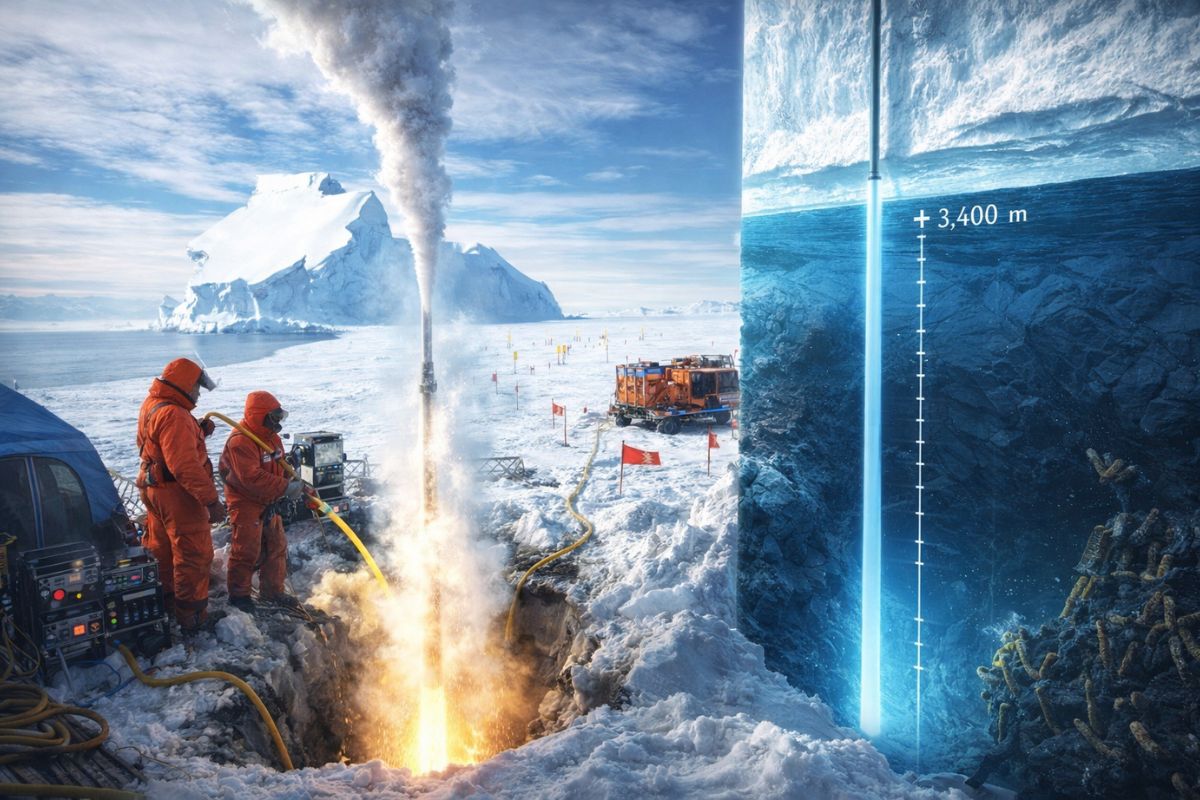
Drilling in Antarctica reached 3,413 meters depth in Subglacial Lake Qilin surpassing the previous record of 2,540 meters and the hot water technique allows access to more than 90% of the ice sheet of the continent with less contamination and greater speed than traditional mechanical methods
China has completed the first hot water drilling test in ice in Antarctica and reached a depth of 3,413 meters, surpassing the previous international record of 2,540 meters by nearly a thousand meters. The result, announced by the Ministry of Natural Resources this Tuesday (7), was achieved in the area of Subglacial Lake Qilin, in East Antarctica, during the 42nd Chinese Antarctic expedition. With this test, the country demonstrated technical capability to drill more than 90% of the ice sheet of Antarctica and the entire ice sheet of the Arctic.
What is buried under more than 3 kilometers of ice in Antarctica is of interest to science in multiple ways. Deep and isolated areas like the Subglacial Lake Qilin are fundamental for studies on environmental changes over millions of years, future climate projections, and the limits of life in extreme environments organisms that survive under conditions of pressure, darkness, and temperatures where, in theory, nothing should exist. The drilling opened a contamination-free pathway to access this subglacial world.
How China drilled 3,413 meters of ice in Antarctica with hot water
The hot water drilling technique works differently from traditional mechanical methods. Instead of a drill that cuts through the ice, the system uses a jet of heated water that progressively melts the layer, creating a clean and large-diameter hole.
-
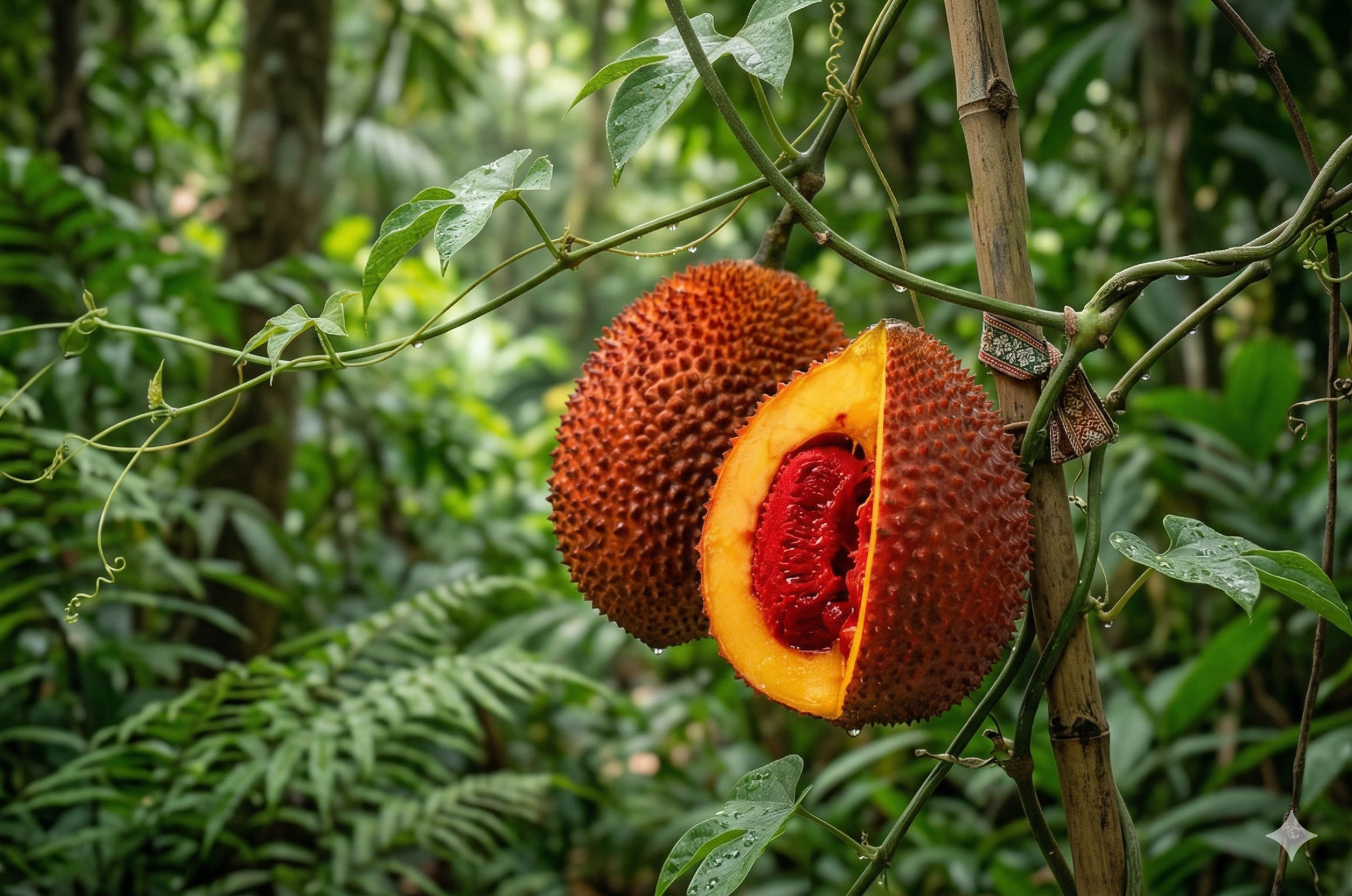
Asian fruit with intense red color concentrates up to 70 times more lycopene than tomatoes and contains beta-carotene at extremely rare levels in the plant world, according to scientific studies; meet gac.
-
Companies want to use satellites with mirrors to illuminate the Earth at night, and scientists around the world warn that eliminating darkness could destroy entire ecosystems and affect the health of billions of people.

-
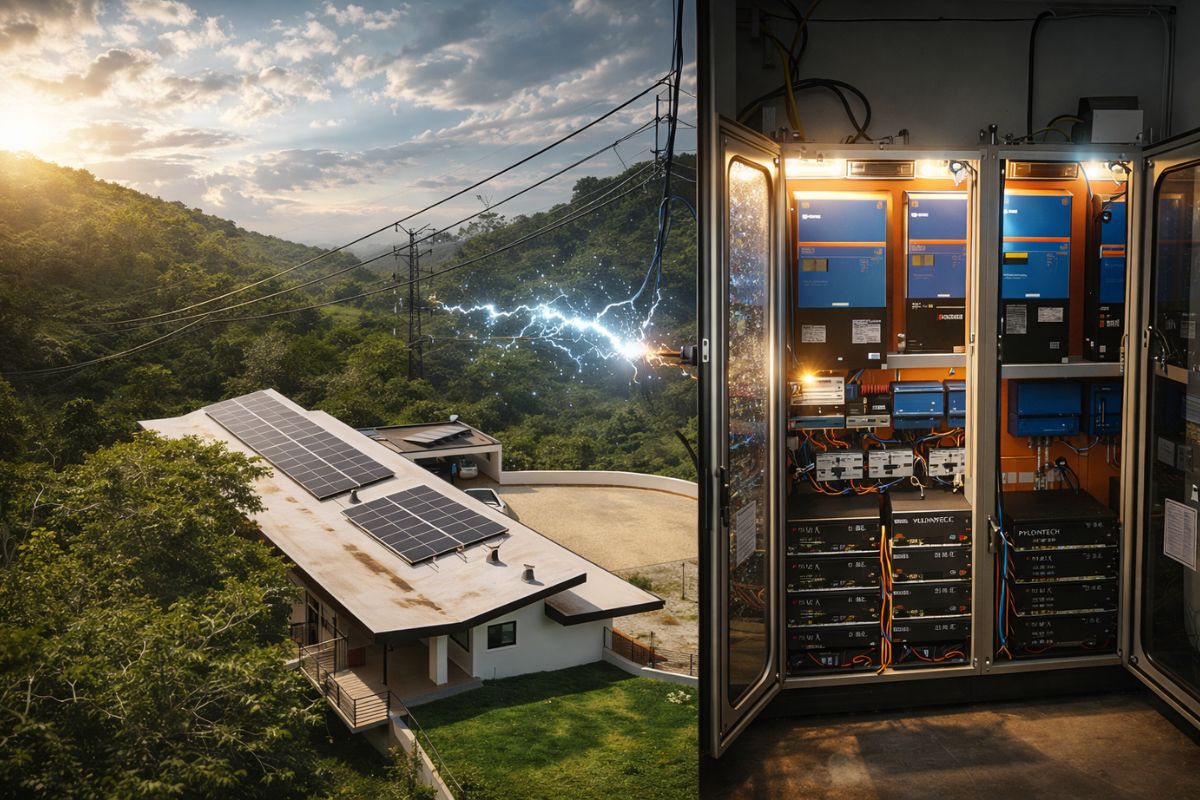
Blackout in the interior of SP? Off-grid hybrid solar system takes over in 16–20 ms without blinking: Victron integrates Fronius on-grid, 30 kWh Pylontech, and 15 kVA three-phase, limits injection, and helps avoid the B wire.
-
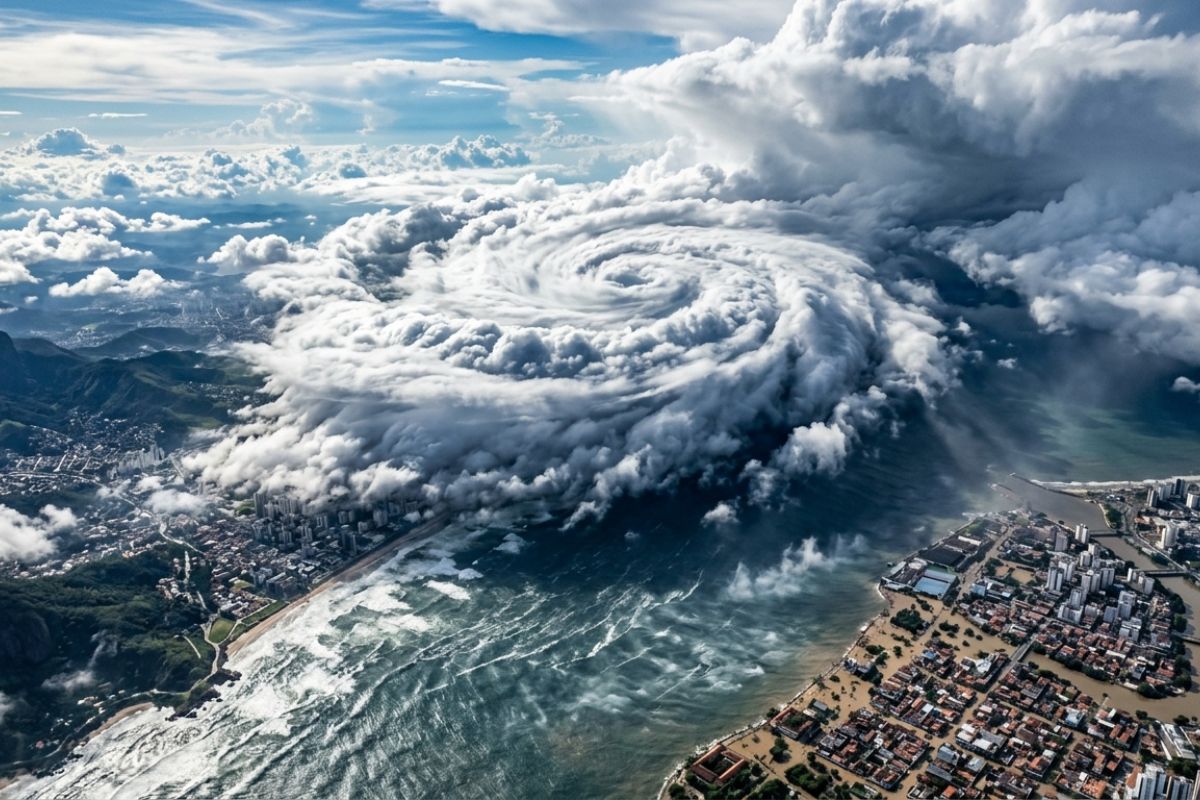
Satellite images show heavy clouds and a cold front advancing: a cyclone brings storms from RS to SP, winds of up to 100 km/h, and an alert from Inmet, today with a risk of hail; Recife remains flooded.
The advantage for operations in Antarctica is threefold: drilling is faster, causes less damage to the ice structure, and significantly reduces the risk of contamination something crucial when the goal is to access isolated environments that have been untouched for millions of years.
During the operation in Antarctica, Chinese researchers faced technical challenges specific to the extreme conditions.
Temperatures well below zero threaten the operation of equipment, control of external contaminants must be absolute to avoid invalidating future samples, and handling hoses and winches at 3,413 meters depth requires millimeter precision.
The team integrated adapted equipment and solved each obstacle, establishing what they describe as a new operational standard for deep hot water drilling in polar regions.
What exists below 3 kilometers of ice in Antarctica and why it matters
Subglacial Lake Qilin has been sealed under the ice sheet of Antarctica for periods that can reach millions of years. This isolation has created a unique environment without sunlight, under immense pressure and with temperatures close to freezing that acts as a biological and geological time capsule.
The water and sediments of this lake in Antarctica may contain information about Earth’s climate in periods long before human records, as well as forms of life that evolved under conditions that challenge what we know about the limits of biology.
Contamination-free drilling is what makes these discoveries possible. If microorganisms are found in Subglacial Lake Qilin in Antarctica, they need to be confirmed as native to that environment and not as contamination brought by the drilling operation itself.
The hot water technique used by China produces a cleaner hole than mechanical methods, which increases the reliability of any biological sample collected in the next stages of research.
What the record in Antarctica means for China’s scientific capacity
The result of 3,413 meters is not just a number; it is the demonstration that China now has the technology to access virtually any point beneath the ice of the planet’s two poles.
With the ability to drill more than 90% of the ice sheet of Antarctica and 100% of the Arctic ice sheet, China positions itself as a polar exploration power at a time when geopolitical and scientific interest in polar regions is on the rise.
The drilling also consolidates the use of practices aimed at reducing environmental impact in scientific operations in Antarctica.
International research centers are already using hot water drilling to reach critical interfaces such as subglacial lakes, ice shelf bases, and bedrock beneath the ice caps and the Chinese test validated the method at depths never before achieved.
The next steps include collecting water and sediments from Subglacial Lake Qilin and direct observations of the subglacial environment of Antarctica.
What comes next after the drilling record in Antarctica
The contamination-free pathway opened by the Chinese team allows future missions to lower collection and observation instruments into the subglacial lake without needing to redo the drilling.
This means that the technical and logistical investment of this operation in Antarctica will continue to yield scientific results for years, as new teams access the hole to collect samples of water, sediments, and possibly forms of life.
For the international scientific community, the record raises both excitement and questions. If China can drill 3,413 meters in Antarctica with a clean and efficient technique, the next logical step is to access even larger and deeper subglacial lakes, each of which may hold surprises about the planet’s climatic history and about organisms that survive where it seemed impossible.
Antarctica remains the largest natural laboratory on Earth, and China has just gained the key to its deepest compartments.
What do you think about this record drilling in Antarctica? Can the search for life in extreme conditions change our understanding of biology? Let us know in the comments.





Seja o primeiro a reagir!