





 Portuguese
  English
  Spanish
  4 min of reading
  0 comments


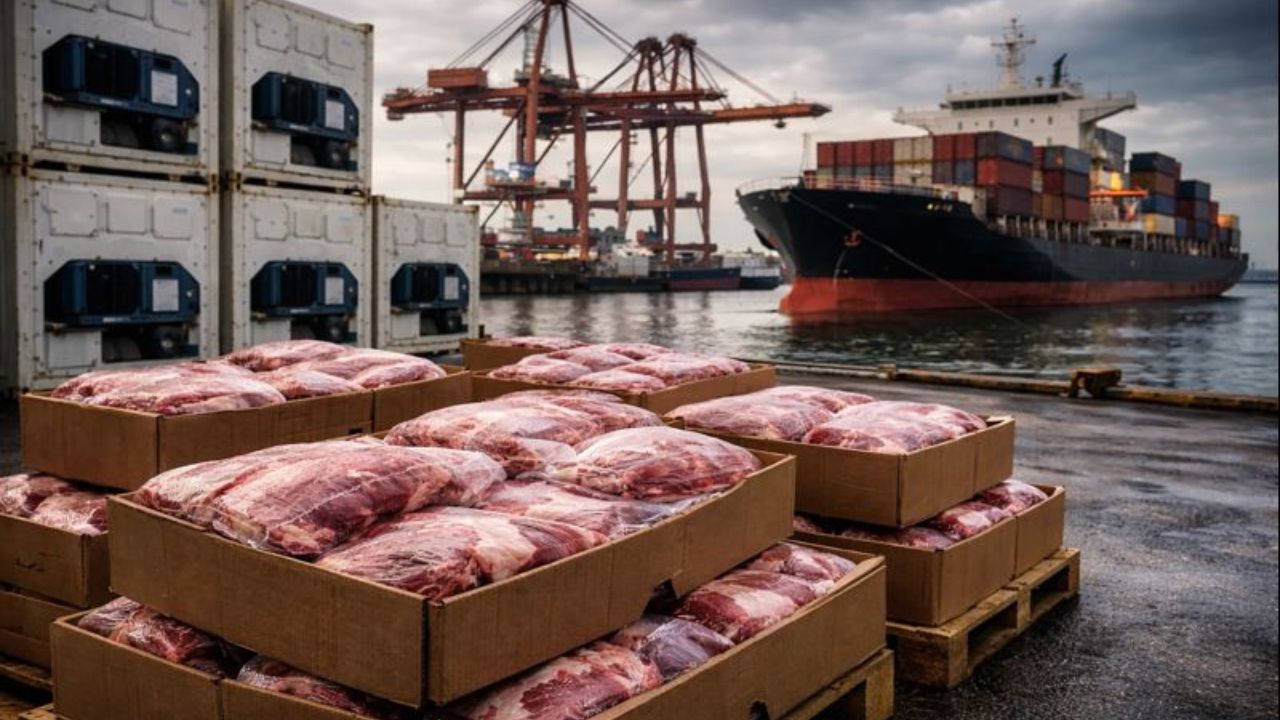
China and Mexico Create Quotas for Beef Import. Understand How the Measure Affects Brazilian Beef and Prices in Brazil.
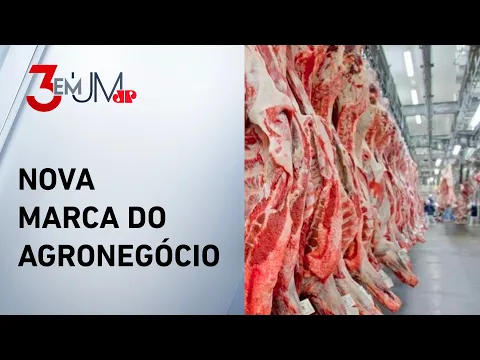
China and Mexico decided to create quotas for beef import, a measure that directly affects Brazil, the world’s largest exporter of the product.
The changes were announced in 2026, affecting two of the main destinations for Brazilian beef and raising doubts about domestic prices, exports, and supply to consumers.
The decision comes amid pressures on domestic markets, trade investigations, and adjustments in the global protein trade.
-
While Russia dominates the global wheat market, Brazil emerges as an unexpected competitor in the Cerrado, offering grain available in July and August when stocks in the Northern Hemisphere are at their lowest point of the year.

-
China returned almost 20 Brazilian ships with soybeans, but now everything could change: the country that buys 80% of the grain is considering relaxing regulations after impurities held up shipments of thousands of tons and caused million-dollar losses.
-
The drought of the cerrado was considered an enemy of wheat, but Brazilian scientists turned the lack of rain into a competitive advantage by creating a grain with quality that is already attracting the attention of international mills around the world.
-
THE OWNER of Brazil: a farmer who came from laundries, created an ’empire’ and today runs a company valued at R$ 42 billion after tripling its value in less than a year and receiving a billion-dollar investment from the USA.


Despite the potential impact, economists say the measure should not cause a significant drop in beef prices in Brazil this year, mainly due to structural factors in livestock and domestic demand.
How the New Import Quotas Work
China, the main buyer of Brazilian beef, has determined that Brazil can export up to 1.1 million tons in 2026 paying the current tariff of 12%.
Any volume above this limit will be taxed at 55%. In 2025, the Chinese bought about 1.6 million tons, making the quota more restrictive than recent historical volumes.
Meanwhile, Mexico established a quota of 70,000 tons of imported beef without tax. Anything exceeding this limit will be taxed at 20%. Until now, there was no tariff. Last year, the country imported 113,000 tons of Brazilian beef.
Will Beef Prices Drop in Brazil?
Even with potential export restrictions, the trend is for high prices to remain in the domestic market.
Beef inflation was running a 5% increase over 12 months, according to the IPCA, and analysts do not foresee significant relief in 2026.
Among the main factors are the expectation of lower cattle slaughter, typical of the current livestock cycle, as well as events that sustain demand, such as elections and the World Cup.
Moreover, even with quotas, China will continue to rely on imports, as it cannot meet consumption solely with local production.
China is More Concerning than Mexico
Among the two decisions, the Chinese quota is seen as the most sensitive.
“The quota was quite harsh, about 600,000 tons less than we exported last year,” analyzes Cesar Castro Alves, manager of the Agribusiness Consultancy at Itaú BBA.
On the other hand, the measure will be valid for three years and provides for gradual increases in the quotas, as noted by Thiago Bernardino de Carvalho, a researcher at Cepea, linked to Esalq/USP.
“China might be shooting itself in the foot, because our beef is the cheapest,” says Carvalho.
The Chinese investigation aimed to assess whether excessive imports were harming local producers. However, the growth of beef production is slow, which could create scarcity and inflation in the Chinese market itself.
Situation in Mexico and Regional Impact
In the case of Mexico, dependence on imports is lower, but the country faces sanitary issues. The spread of New World Screw Worm, a serious disease transmitted by flies, has reduced the local herd.
“[The disease] has been concerning even for the U.S., as Mexico is a major seller of live cattle,” explains Castro.
This scenario may lead the country to diversify suppliers, which opens up space for rearrangements in Brazilian beef trade.
Where Could Brazilian Beef Go?
Even with barriers, Brazil ended 2025 with a record in exports: 3.5 million tons, an increase of 20.9%, generating US$ 18 billion in revenue. China accounted for 48% of the total volume.

Without additional restrictions, the United States emerges as a strategic destination, as it faces the lowest cattle herd since the 1960s and high retail prices.
Other South American countries, such as Argentina and Uruguay, have also increased purchases.
There is an expectation for the opening of the Japanese market, although cautiously. For specialists, the most solid strategy is to diversify clients and reduce dependence on China.
Lower Production Sustains High Prices
In addition to import quotas, Brazil is experiencing a moment of high in the livestock cycle, when producers retain females for breeding, reducing slaughter and beef supply.
According to Castro, even if exports slow down in the second half, the lower availability of cattle should keep prices firm.
“We continue to work with prices, on average, a bit higher.”
Carvalho agrees and highlights that almost 80% of the beef produced in Brazil remains in the domestic market, where demand will continue to be strong.










-

-

2 pessoas reagiram a isso.