





 Portuguese
  English
  Spanish
  6 min of reading
  1 comment


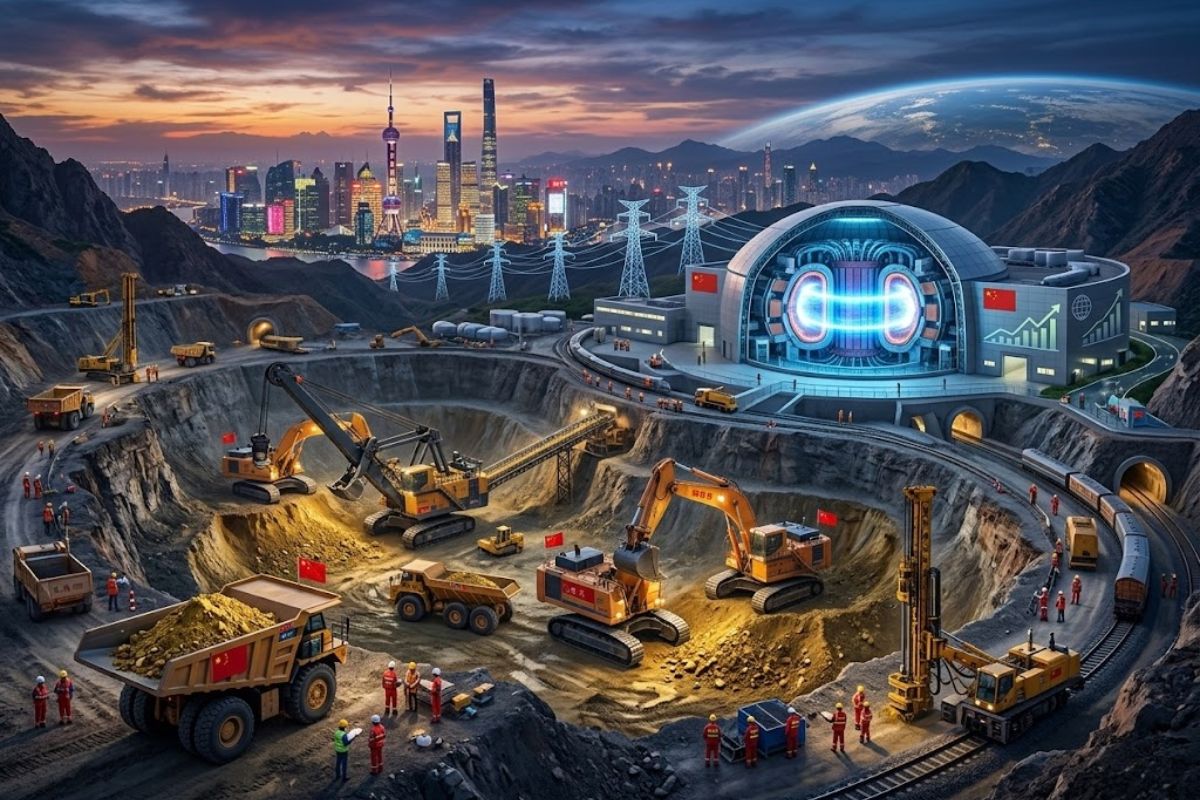


The Colossal Thorium Mine Located in China Emerges Amid an Energy Strategy That Combines Nuclear Fusion, Control of Mineral Resources, and Massive Technological Investment. The Discovery Reinforces Ambitions for Energy Independence and Rekindles Debates on How This Gigantic Reserve May Influence Industry, Geopolitics, and the Global Race for New Energy Sources.
The discovery of a colossal thorium mine in China has once again placed the country at the center of global discussions about energy, nuclear technology, and economic autonomy. The mineral, considered strategic for advanced energy generation systems, could supply the country for up to 60,000 years, according to estimates mentioned in recent analyses.
At the same time, the Chinese government maintains one of the largest investment programs on the planet in nuclear fusion, a technology that seeks to reproduce on Earth the same process that powers stars like the Sun. The combination of massive mineral reserves and accelerated scientific research creates a scenario that could profoundly alter the global energy balance.
The Discovery of the Largest Thorium Mine on the Planet

The colossal thorium mine found in Chinese territory has gained international attention not only for the size of the reserve but also for the strategic role of the element in advanced nuclear energy generation.
-
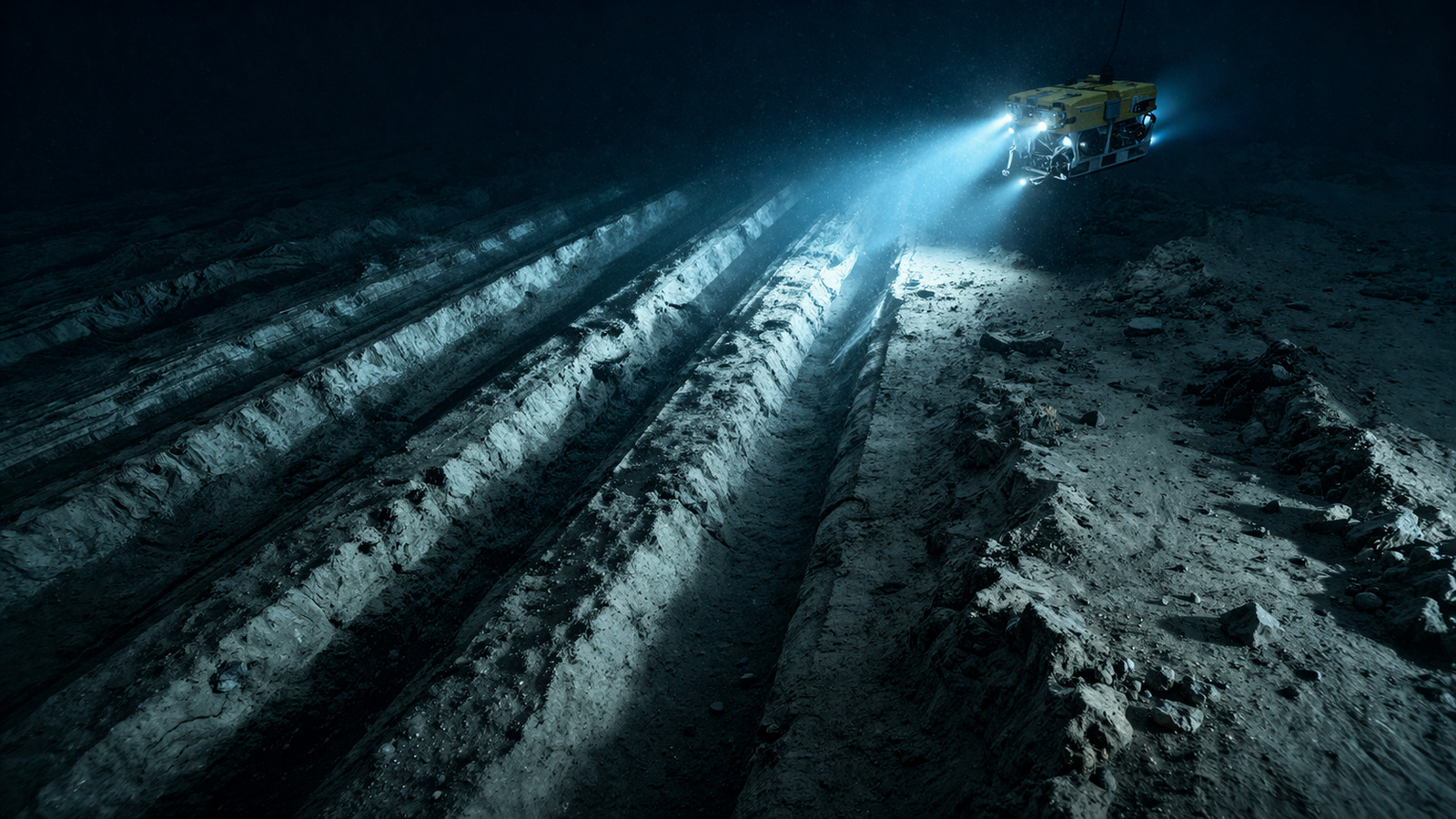
Scientists have found in the dark depths of the North Sea giant marks from 18,000 years ago left by colossal icebergs, and the discovery could help predict the future of Antarctica.
-
In Mexico, a 3,000-year-old Maya site with the dimensions of an entire city may have been built as a colossal map of the cosmos, created to represent the order of the universe and reveal how this people organized space, time, and rituals.

-
Japan wants to build a solar ring of 10,900 kilometers on the Moon to continuously send energy to Earth.

-
Weighing almost 1 ton, with temperatures of up to 3,000°C, the ability to launch 10,000 fragments within a radius of 1 km, capable of penetrating concrete and melting steel, Turkey’s terrifying bomb emerges as one of the most destructive non-nuclear weapons ever presented.


Thorium is a naturally occurring radioactive metal that can be used in next-generation nuclear reactors. Unlike the traditional nuclear fuel used in many current reactors, it can power systems that operate with higher energy efficiency and lesser production of radioactive waste.
This transforms the mineral into a highly strategic resource for countries seeking energy independence.
According to analyses mentioned in discussions about global energy, the discovered reserve could ensure energy supply for approximately 60,000 years if explored on a large scale.
This number illustrates the enormous potential of the discovery and explains why the news quickly became relevant for experts in geopolitics and technology.
In addition to the scientific impact, the dimension of the reserve reinforces a reality already known in the energy sector. Those who control large energy sources tend to exert economic and technological influence over the rest of the world.
Why Thorium Became So Important in the Energy Race
The interest in thorium is directly linked to the limitations of traditional nuclear systems. Most nuclear plants today utilize the process of nuclear fission, in which atoms are split to release energy.

This method generates large amounts of electricity but also presents significant challenges. Historical accidents like Chernobyl and Fukushima have demonstrated that failures in reactors can cause severe environmental and social impacts. Additionally, the process produces radioactive waste that needs to be stored for long periods.
Thorium emerges as an alternative in studies of advanced reactors. In some experimental projects, it can be used in systems that produce less waste and operate with greater stability. This explains why a colossal thorium mine arouses such strategic interest.
Another relevant factor is the relative abundance of the mineral compared to other nuclear fuels. In theory, large reserves could sustain energy programs for thousands of years, reducing dependence on fossil fuels and external imports.
The Chinese Energy Strategy Behind the Discovery


The colossal thorium mine does not appear in isolation within Chinese energy policy. In recent years, the country has become the world’s largest investor in various areas of energy research, including advanced nuclear reactors and nuclear fusion.
The strategy follows a clear logic. China has large reserves of rare earths, essential for modern technologies, but has historically relied on imports of oil and natural gas. Seeking internal energy sources has become a strategic priority.
In this context, the exploration of thorium fits as a complementary piece of a broader plan. The country also invests heavily in solar, wind, and hydroelectric energy but maintains robust nuclear research programs.
Experts often point out that the combination of abundant natural resources and continuous scientific investment could guarantee China a privileged position in the global energy landscape in the coming decades.
Nuclear Fusion and the Promise of Nearly Infinite Energy
Parallel to the discovery of the colossal thorium mine, China is intensifying investments in a field considered by many researchers as the true “technological leap” of energy: nuclear fusion.
While fission splits atoms to generate energy, fusion does the opposite. The process involves melding atomic nuclei, releasing enormous amounts of energy. This is precisely the phenomenon that occurs within stars.
The technical challenge is enormous. For fusion to happen, it is necessary to create an extremely hot and stable plasma, a state of matter in which atoms are fully ionized. Maintaining this controlled plasma requires complex magnetic fields and temperatures higher than those found in the Sun’s core.
Despite the difficulties, several countries are competing to master this technology. Among them, China frequently appears as one of the largest investors in experimental tokamak reactors, structures designed to confine plasma and allow controlled reactions.
Should nuclear fusion become viable at an industrial scale, it could produce energy practically without emissions and with enormous energy efficiency.
Possible Economic and Geopolitical Impacts
The discovery of the colossal thorium mine also fuels debates about potential geopolitical consequences. Energy resources have always played a central role in the organization of the world economy.
For decades, oil and natural gas have been the pillars of the global energy matrix. Countries with large reserves of these resources have exerted significant influence over international markets.
If advanced nuclear technologies based on thorium or fusion become economically viable, the energy map of the planet could undergo profound transformations.
China, by concentrating investments in strategic mining, nuclear technology, and energy engineering, is trying to position itself in advance in this scenario. Controlling both the mineral resource and the technology needed to utilize it could generate relevant industrial and economic advantages.
What This Discovery Reveals About the Future of Energy
The existence of a colossal thorium mine reinforces a trend observed in recent years: the global competition for more efficient energy technologies is just beginning.
While renewable energies such as solar and wind rapidly expand their presence, many experts believe that the future of the global energy matrix will comprise a combination of sources. Among them, advanced nuclear energy and fusion could play a central role.
The big question now is not just who possesses natural resources, but who can turn these resources into functional technology.
This race involves science, engineering, investment, and long-term industrial strategy.
The discovery of the colossal thorium mine in China comes at a time when the world seeks new solutions to produce energy on a large scale. Combined with investments in nuclear fusion and scientific infrastructure, the mineral reserve reinforces the country’s ambition to expand its energy and technological autonomy.
If these technologies truly consolidate in the coming decades, the impact could extend far beyond the energy sector, influencing economy, industry, and global geopolitical balance.
In light of this scenario, an inevitable question arises.
If a country dominates practically inexhaustible energy resources and the technology to harness them, how could this transform the balance of power in the world over the coming decades?







Enquanto EUA se foca em guerras inúteis e desperdício de dinheiro, a China silenciosamente vai investindo no futuro e deixando os americanos cada vez mais para traz