





 English
  Francês
  Alemão
  Italiano
  Japonês
  Norueguês
  Portuguese
  Spanish
  6 min of reading
  0 comments


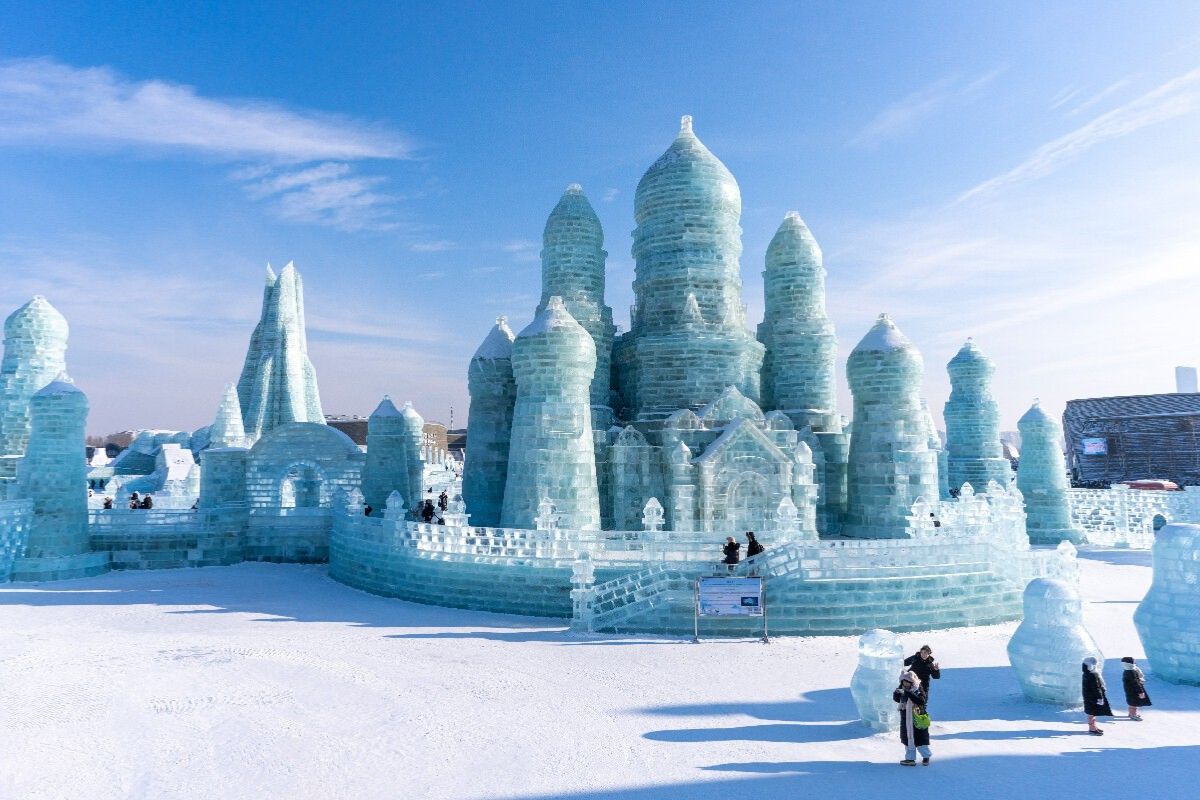
China rebuilds a city of ice from scratch in Harbin every winter, using the cold of up to -25 °C as raw material and creating the largest frozen mega-structure on the planet in a spectacle that mixes architecture, tourism, and technique on a gigantic scale.
China once again draws the world’s attention by transforming the harsh winter of Harbin into an engineering and art operation that impresses with its size and complexity. Every year, between the end of December and February, the city hosts the largest ice and snow festival on the planet, featuring monumental sculptures, life-sized ice buildings, bridges, towers, and illuminated structures that form a true temporary frozen city.
What makes this phenomenon even more impressive is the fact that everything needs to be rebuilt from scratch each season. When spring arrives, the structure melts and disappears. China then starts the whole process over in the following winter, repeating a gigantic operation that relies on extreme weather, intense logistics, and precise technical execution.
China transforms severe cold into monumental work
Harbin has become a symbol of China’s ability to use extreme natural conditions as a basis for creating monumental structures.
-
Seen from space, a colossal ‘Y’ cuts through the largest desert in China, blending a jade-filled river, red and white mountains, and revealing the absurd scale of the transformation of the Taklamakan surrounded by a green wall with billions of trees.

-
The Pacific Ocean reveals what the cliffs of Big Sur have hidden for millennia: Pfeiffer Beach, in California, features swirling purple sand formed by garnet crystals and displays a stone arch that is illuminated by the sun in winter for just a few days each year.

-
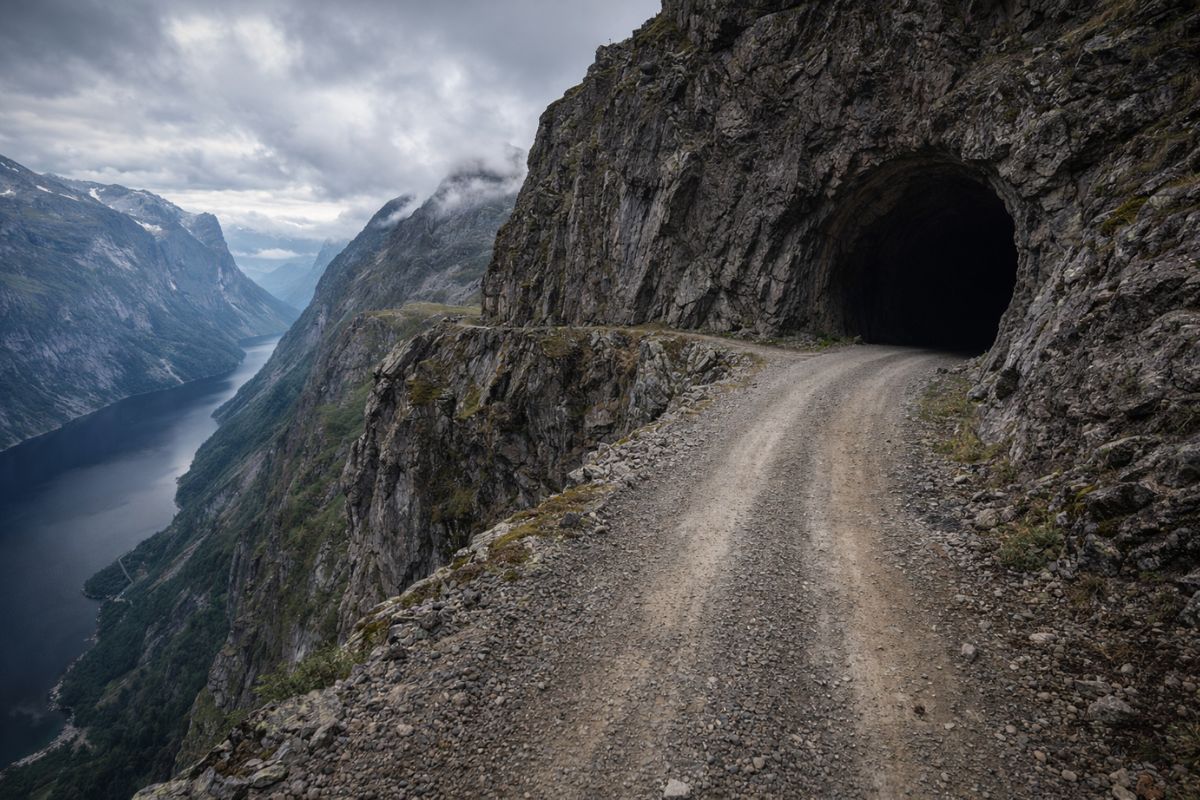
Aursjøvegen in Norway is a 100-kilometer gravel road that crosses chasms and dark tunnels carved into the rock at an altitude of 947 meters in the fjords and is only open for four months a year.
-
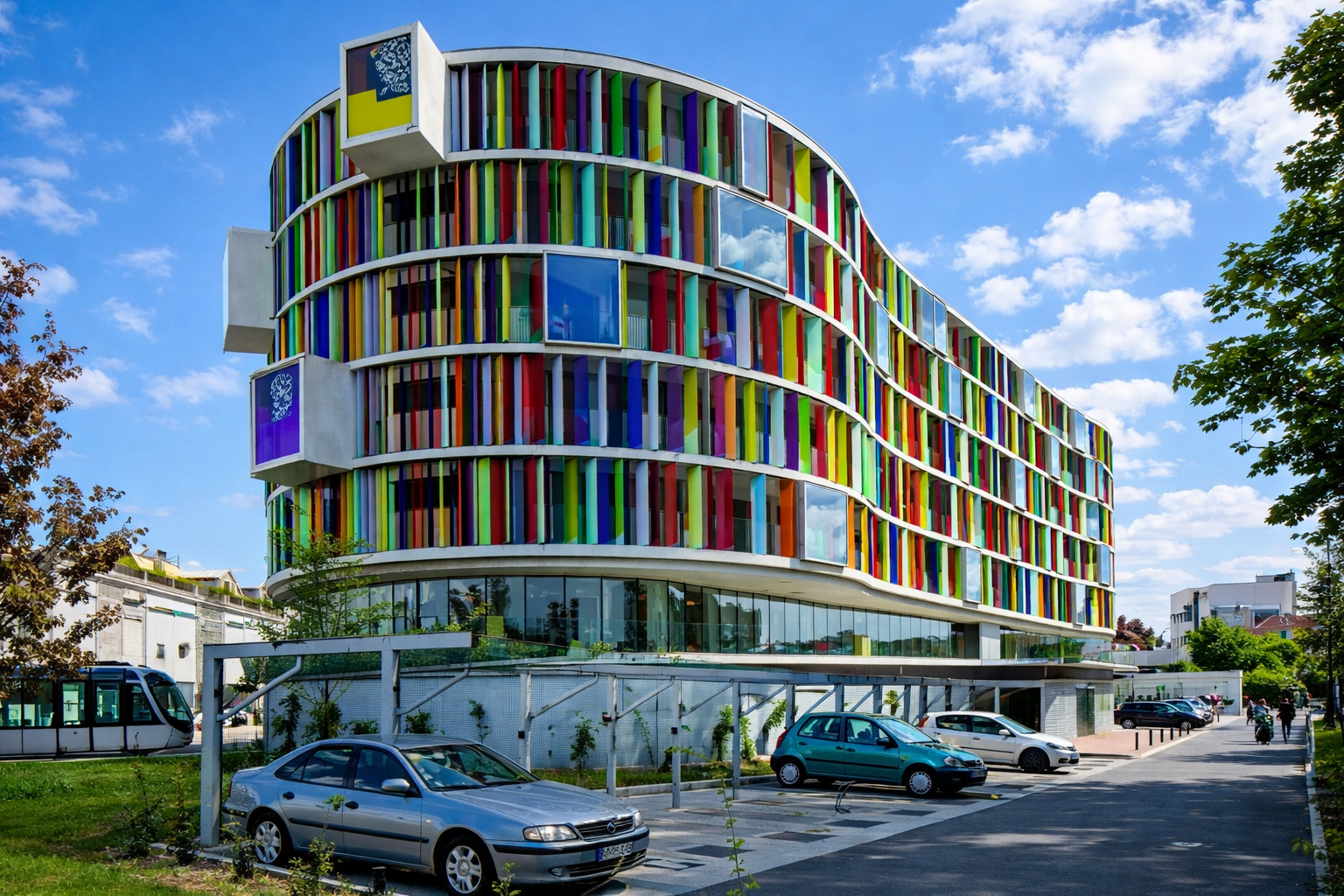
With about 4,000 m², the building constructed in a traditional neighborhood in France looks like a rainbow, has a colorful facade, mixes vibrant glass, and creates one of the most unusual visuals in Bordeaux.

The intense cold of the region, with temperatures reaching -25 °C, is not just a climatic detail. It is precisely what makes it possible to raise the ice city and sustain the festival for weeks.
This scenario means that the frozen mega-structure exists within a very particular logic. While the cold allows for construction, it also imposes severe limits on time, execution, and preservation. China relies on winter to erect this spectacle and also knows that it has a deadline to disappear.
Harbin hosts the largest ice and snow festival in the world
The Harbin International Ice and Snow Sculpture Festival has established itself as one of the most impressive events on the winter calendar. The main attraction is the so-called Ice and Snow World, a park that functions as a temporary city made of giant blocks of ice.
In addition to it, the festival features Sun Island, dedicated to monumental snow sculptures. The difference between the areas helps explain the scale of the event.
While one highlights gigantic sculptures, the other showcases life-sized ice buildings, as well as passages, towers, and illuminated structures that completely redefine the nighttime landscape.
Mega-structure reached 1.2 million square meters
In 2025, the main park of the festival reached 1.2 million square meters, a figure that helps to gauge the scale of this operation. It is not a small set of sculptures scattered in a park.
It is a vast area organized to accommodate millions of visitors and sustain an experience that combines ephemeral architecture, entertainment, and mass tourism.
This size helps to understand why China treats Harbin as much more than a seasonal attraction. The festival has transformed into a global event, capable of generating billions, bringing together artists from various countries, and attracting audiences from different parts of the world.
Ice from the Songhua River becomes a building block
Behind the visual impact, there is a decisive technical process. The construction of the city begins at the Songhua River, which completely freezes over during the winter. It is from there that the ice blocks used to erect the festival come.
The cut slabs from the river are between 60 and 90 centimeters thick. After being removed, they are transported and stacked as if they were bricks.
From there, sculptors and workers come into action with saws, chisels, and pickaxes to shape each structure.
China transforms raw ice into building material and gives it structural, aesthetic, and scenic functions at the same time.
Work does not stop and requires an intense pace

The assembly of the ice city requires continuous work before the festival opens. The process happens day and night, as the ideal construction window directly depends on the intense cold and the event’s schedule.
This dynamic helps to show that the work is not improvised. On the contrary. It requires extreme planning, accelerated execution pace, and coordination between collection, transport, stacking, sculpting, and finishing.
Everything needs to function within a tight schedule so that the frozen city is ready while winter still ensures its stability.
Lighting transforms ice into living architecture
If during the day the structures already impress with their size, at night Harbin takes on another dimension. Lighting is an essential part of the project. Colored lights are installed inside and around the buildings, making the blocks change color and seem to come alive as the environment darkens.
This resource enhances the scenic effect of the city and reinforces the architectural character of the festival. In practice, China does not just create ice sculptures. It builds entire spaces designed to be seen, traversed, and experienced as temporary architecture.
Sophisticated techniques elevate the visual effect
In addition to the traditional cutting of blocks taken from the river, Harbin also uses more refined solutions to improve the visual finish of the structures. One of them is the use of deionized water, applied to create more transparent blocks, with an appearance close to that of glass.
This detail shows that the grandeur of the festival does not depend solely on volume and scale. There is also a clear concern for finishing, shine, transparency, and aesthetic impact. China combines artisanal methods and refined techniques to transform ice into an urban spectacle.
Festival mixes engineering, tourism, and art on a global scale
The festival began in 1963 as a local tradition but has grown to much larger proportions over time. Today, it brings together art, tourism, winter sports, and entertainment in one space.
In addition to the ice and snow constructions, the event also offers lantern exhibitions, activities such as skiing, and unusual activities like bathing in the frozen river.
This diversity helps explain why Harbin has become an international reference. China has managed to transform extreme weather into a tourist attraction, cultural identity, and showcase of seasonal engineering, something that few places in the world would be able to replicate on the same scale.
A city that is born and disappears every year
Perhaps the most fascinating aspect of all is precisely this cycle. The ice city is not permanent. It is born, shines for a few weeks, and then disappears with the arrival of spring. In the following winter, everything needs to start over.
This annual repetition makes the project even more impressive. China does not raise a frozen mega-structure just once. It repeats this feat every year, transforming a temporary event into a continuous demonstration of planning, technique, and execution capability.
Harbin shows how ice can become temporary infrastructure
In the end, the Harbin festival reveals something rare: the possibility of transforming a fragile and fleeting material into an entire city, albeit temporary. Ice ceases to be just a natural element and begins to function as a building block, urban scenery, and support for a visual experience on a monumental scale.
That is what makes Harbin so unique. China takes an extreme environment, uses the cold as an ally, and converts a severe climatic condition into one of the most impressive seasonal works on the planet.
In your opinion, does this ice city in China impress more with the beauty of the spectacle or with the size of the challenge of rebuilding it from scratch every year?








Seja o primeiro a reagir!