





 Portuguese
  English
  Spanish
  5 min of reading
  1 comment


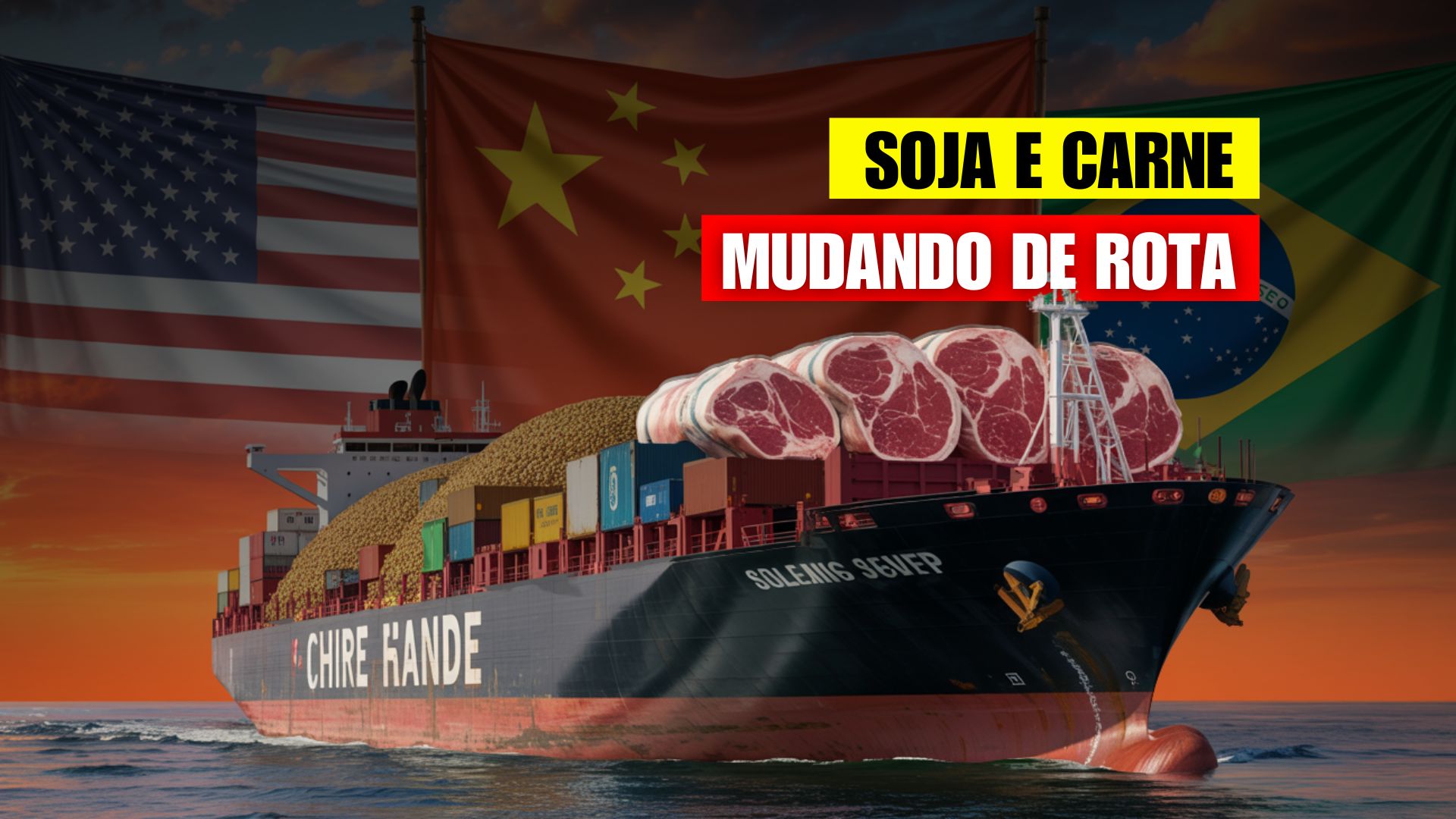


China Redirects Its Agricultural Imports to Argentina and Australia After Fiscal and Tariff Measures Affecting the U.S. Market and Altering the Balance of Global Agribusiness.
Chinese importers bought millions of tons of soybeans from Argentina in September, shortly after Buenos Aires temporarily suspended export taxes on grains and derivatives.
At the same time, Australian beef gained ground in the Chinese market, while U.S. sales fell sharply amid expired licenses for slaughter plants and the escalating tariff dispute between Washington and Beijing.
The move raised an alarm in the U.S. government and reconfigured the agribusiness landscape in the short term.
-
China, Brazil, and India together control the largest rare earth reserves on the planet and are now at the center of a geopolitical dispute that could determine who will dominate technology and the global economy in the coming decades.

-
While thousands continue to lack water and sewage on the coast of Piauí, the government inaugurates a R$ 5.5 million international portal in Barra Grande and bets on global visibility.

-
Lula’s government opens 13,000 positions for teachers in Brazil and creates more than 24,000 federal jobs, with an impact of R$ 5.3 billion by 2026.

-
A Chinese electric vehicle technology giant wants to invest up to R$ 200 million in a city in Santa Catarina, and the mayor returned from China with a signed document that guarantees the immediate opening of a CNPJ and the start of operations in Brazil.


Argentinian Soybean Gains Strength with Tax Exemption
The decision by Javier Milei’s government to temporarily suspend the retenciones on soybeans, corn, wheat, and derivatives made Argentine shipments more competitive.
Chinese negotiators closed at least 20 shipments, amounting to 1.3 million tons, with shipments expected for November and early 2026.
According to market reports, the volumes this month reached the highest level in seven years, occupying a space that, in previous years, would have been supplied by U.S. suppliers.
Although China traditionally concentrates a good portion of its fourth-quarter purchases on the U.S. harvest, the combination of bilateral tariffs, high domestic prices in the U.S., and the fiscal window opened by Argentina pushed the Chinese towards South America.
According to international reports, this round of purchases covered more than half of the short-term needs of Chinese crushers, reducing the urgency to seek U.S. grain at the turn of the harvest.
Trump Administration Reacts to the Closer Ties Between China and Argentina
The Chinese shift caused discomfort within the Donald Trump administration.
During the UN General Assembly in New York, a photographer captured Treasury Secretary Scott Bessent reading a message on his cellphone attributed to “BR”, a common interpretation for Agriculture Secretary Brooke Rollins.
The message expressed concern about the side effects of Argentina’s tax relief on U.S. farmers and the sales route to China.
In public, cabinet members tried to contain the fallout.
Bessent stated that U.S. support for Buenos Aires is through credit swap lines, not direct disbursements, and that the goal is to provide financial stability to the Argentine economy.
Meanwhile, U.S. agricultural associations reported a loss of space in China and called for predictability in trade negotiations.
Australian Beef Replaces American Product
In the beef protein market, the trend has also shifted.
After Beijing resumed authorizations and lifted sanctions on several Australian slaughterhouses in recent years, shipments from Australia to China accelerated.
The U.S. experienced a double shock: in addition to the re-escalation of the tariff dispute, hundreds of registrations of U.S. plants and refrigerated depots expired, affecting export capacity.
Recent numbers illustrate the change in flow.
U.S. sales to China plummeted to approximately US$ 8 million in July and US$ 10 million in August, well below the values exceeding US$ 100 million observed in the same months of the previous year.
Conversely, Australia rapidly expanded its market share, supported by a more abundant supply and a product that meets Chinese niches of grain-fed.
Large American processors are also facing tight cattle supplies and record domestic prices, which reduces competitiveness abroad.
Brazil Maintains Leadership in Soybean Exports
Despite the title suggesting a retreat, Brazil remains the main supplier of soybeans to China in 2025, with record shipments throughout the first half and robust volumes in August.
What happened, in this September snapshot, was a tactical substitution: faced with the tax gap opened by Buenos Aires, Chinese buyers took the opportunity to bring forward part of their purchases in Argentina.
In the case of beef, the repositioning favored Australia, not Brazil.
Still, there are points of concern for Brazilian producers.
In January, China temporarily suspended shipments from some trading companies and cooperatives due to phytosanitary requirements, although the global impact was limited and later mitigated.
Additionally, global tariff volatility and the intensification of the trade dispute between Washington and Beijing could abruptly redistribute demand among suppliers, including shifting business from South America as prices and rules change.
Immediate Effects on Global Agricultural Trade
For soybeans, Chinese demand for Argentine grain is expected to concentrate in the window during which the tax suspension is in effect or until the ceiling set by the government is reached.
This factor, along with exchange rates and the advance of the U.S. harvest, is likely to weigh on premiums and future curves in the coming weeks.
On the other hand, Chinese crushers report positive margins with South American soybeans, reinforcing the appetite for additional loads if the fiscal window is extended.
In beef, the U.S. faces a more challenging reversal process.
Even if some registrations are renewed and there is temporary tariff relief in specific sectors, the break in continuity in supply often penalizes those who lose shelf space.
Australia, with a growing supply and health status recognized by China, tends to consolidate contracts in the last quarter, while Brazilian slaughterhouses continue to compete for niches in Asia with specific restrictions.
Trade Policy Shapes the New Agribusiness Map
The backdrop is eminently political.
High reciprocal tariffs, investigations, and regulatory requirements have reconfigured routes for commodities since the beginning of the year.
In response, China has diversified sources, increased purchases in Brazil, and activated Argentina when there was a tax cut.
On the U.S. side, producers are pushing for relief and predictability, but they are encountering a tariff strategy that the government considers part of a broader economic security agenda.
In the short term, the result is a competitive triangle — Brazil, Argentina, and Australia — serving the largest global buyer of soybeans and one of the largest of beef, while the United States deals with its own restrictions and the cost of selling to a customer that responds forcefully to each new tariff or rule.
Given this new configuration, which Southern Cone country will gain more space if the Argentine fiscal window is extended and Australia maintains its momentum in the Chinese market?







Parece uma temeridade apostar tudo no mercado chinês quando a China pode simplesmente ignorar o Brasil.