





 Portuguese
  English
  Spanish
  4 min of reading
  2 comments


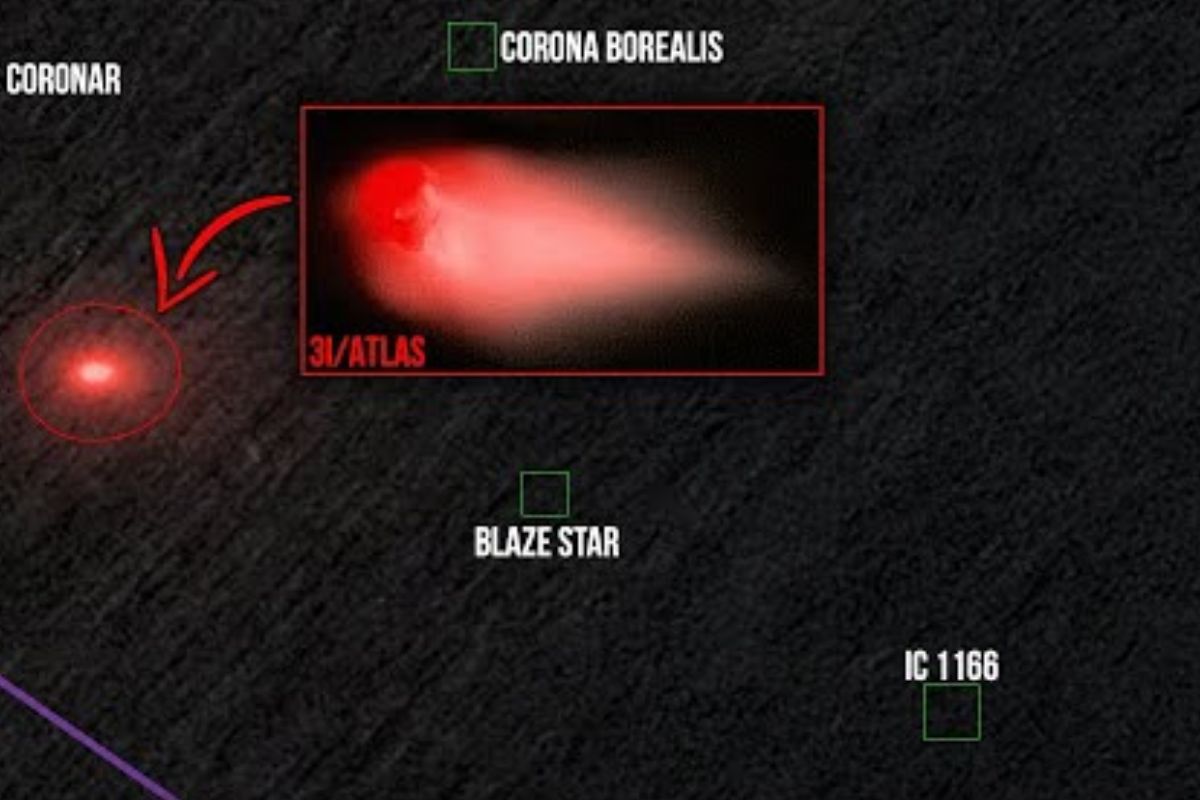


Tianwen-1 Captures and Integrates Records from ExoMars TGO and Mars Express, Revealing Comet 3I/ATLAS with Non-Gravitational Acceleration Signals and Unprecedented Details from Mars
The comet 3I/ATLAS was recorded in early October by the high-resolution camera of Tianwen-1, which has been orbiting Mars since 2021. At the moment of capture, the object was about 30 million kilometers from the spacecraft, a distance deemed favorable for extracting details of the coma and movement orientation from a series of frames.
The images were processed by the team on the ground and organized in 30-second intervals, generating an animation of the interstellar visitor’s motion. The material adds to records made during the same period by the European missions ExoMars TGO and Mars Express, offering complementary angles and a more robust portrait of the comet’s activity.
How China Planned the Capture
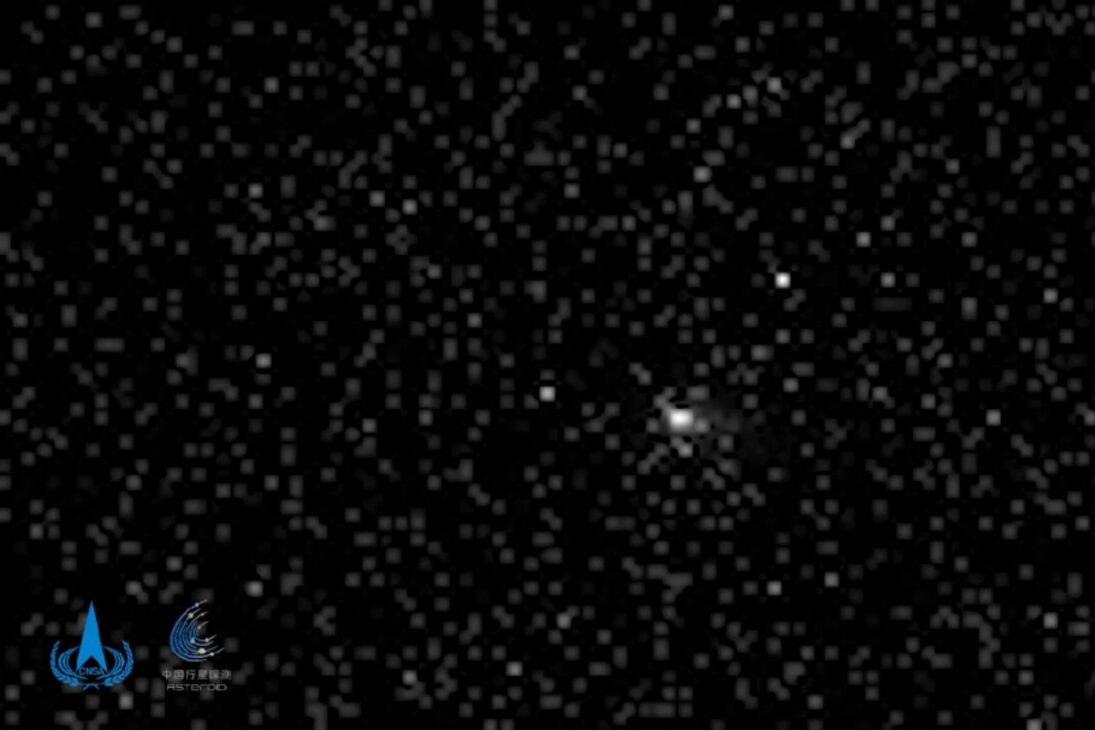
The approach was anticipated since September, when trajectory calculations indicated that 3I/ATLAS would pass relatively close to Mars on October 3, 2025.
-
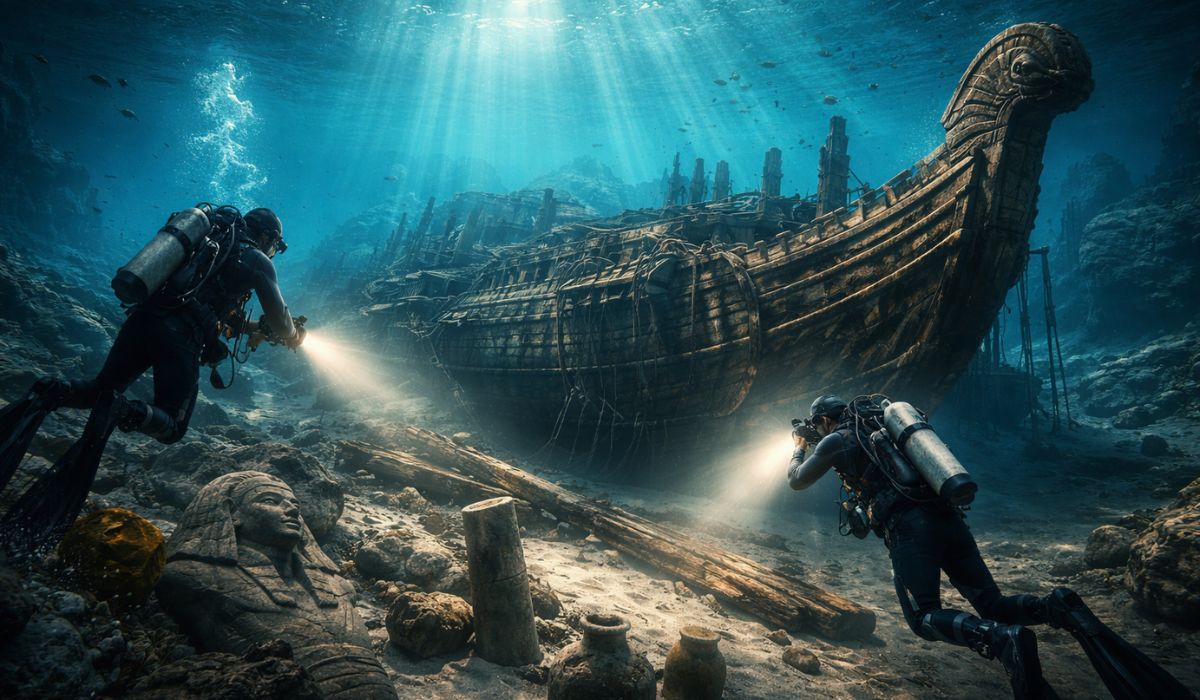
Archaeologists find a colossal 2,000-year-old vessel at the bottom of the sea near Alexandria linked to the elite of Egypt and reveal a pleasure barge from the last dynasty of the pharaohs that the sea has hidden for centuries.
-
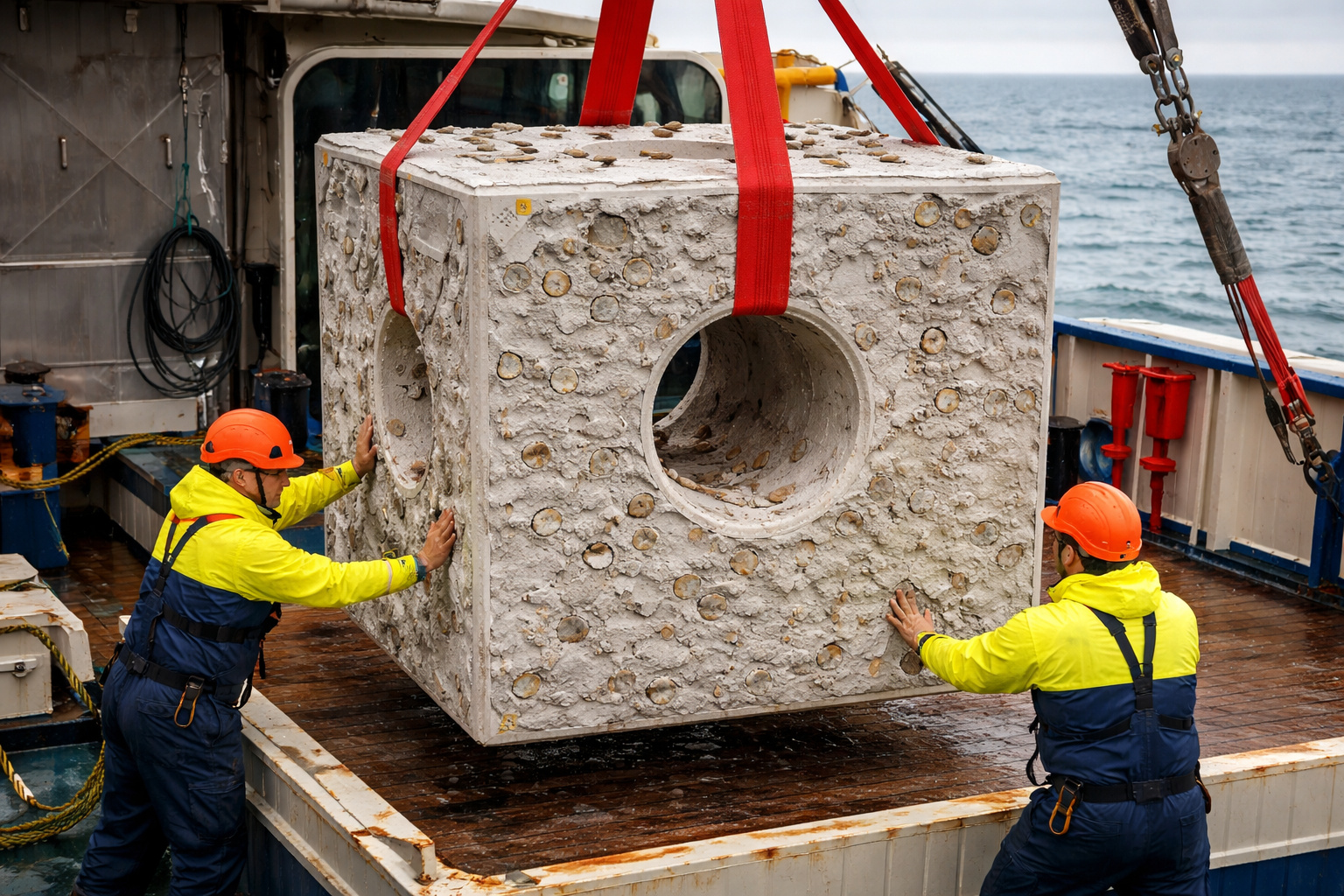
United Kingdom clears 40 tons of shells and concrete into the sea in an innovative project that promises to restore a marine ecosystem lost for over 200 years and improve water quality.
-
With emergency diversion to abandoned mining craters, engineers save villages from a devastating flood that was advancing through the desert and threatening to destroy entire communities in a matter of hours.

-
It seems simple, but it enriches: from R$ 500 to R$ 6,000 per piece and up to 10 days of handcrafted production, how is the couple from Praia Grande making a high income with hyper-realistic miniatures and turning a hobby into a money-making machine?


With this, the team adjusted the pointing and exposure time of Tianwen-1’s instruments, prioritizing stability windows to minimize blurring and maximize useful signal.
The planning included synchronization between subsystems and telemetry tests to ensure secure transfer of image packets to the control center.
The goal was to capture the best moment of the approach, balancing resolution, contrast, and operational safety of the orbiter.
What the Images Show
The first processed products reveal a well-defined cometary structure, highlighting the coma and the movement signature relative to the star field.
The time series allows comparing integrated brightness between frames, a useful indicator for emission studies and particle dynamics.
From the stacking and fine recording of the frames, analysts produced a scientific animation that helps visualize the displacement vector of 3I/ATLAS.
This type of data, obtained from Mars, offers a different observation geometry than that available for ground-based telescopes, enhancing estimates of activity and orientation.
Complement of the European Probes
The ExoMars TGO and Mars Express platforms from the European Space Agency obtained records over the same weekend, adding distinct lines of sight.
The combination of photometric series increases the chance to detect subtle brightness variations and refine the assessment of coma morphology over short time intervals.
With multiple observation points near Mars, scientists can reduce geometric ambiguities and test hypotheses about sublimation rates and jet directionality.
Together, the data packages form a comparative basis for studies that will continue in the coming months.
What is 3I/ATLAS and Why It Matters
3I/ATLAS is the third interstellar object identified crossing the Solar System.
Discovered on July 1, 2025, it bears indications of origin from regions near the center of the Milky Way and may be between 3 and 11 billion years old, possibly older than the Sun.
For the community, this makes it a sampling window of materials formed in other stellar environments.
Recent observations indicate color changes and acceleration unexplained solely by gravity, phenomena that can be associated with non-gravitational effects typical of active comets.
The set of measurements with STEREO, SOHO, and GOES-19 reinforces the need for extensive time series to distinguish intrinsic variability from instrumental effects.
Implications for Chinese Missions
The success of Tianwen-1’s targeting expands the scientific scope of the mission and serves as a rehearsal for Tianwen-2, launched in May, whose plan includes sample collection from a near-Earth asteroid and studies of a main-belt comet.
Capturing a faint and moving target from Mars strengthens the portfolio of navigation and observation techniques of the program.
For engineering, the exercise validates thermal control and platform stability routines during longer exposures, critical requirements for scientific imaging of low surface brightness objects.
For science, consistent series like those obtained now calibrate models that will be applied in future sampling operations.
Next Steps in Analysis
With the data already in processing, the priority is to quantify relative brightness, explore gradients in the coma, and search for photometric indications of jets or asymmetries.
The 30-second animation serves as a starting point for studies that may include advanced stacking, deconvolution, and position measurements over time.
These results will be compared to European records for cross-check of photometry and astrometry.
The expectation is that, with the complementary geometries, more robust estimates of activity, axis orientation, and contribution of non-gravitational forces to the motion of comet 3I/ATLAS will emerge.
The scenes obtained by Tianwen-1 and the European probes provide an unprecedented view from Mars of comet 3I/ATLAS, creating a valuable archive for reading cometary activity and for planning new missions.
The combination of proximity, temporal sequence, and multiple angles enhances the quality of the evidence available.
What detail do you want to see explored in the next material about comet 3I/ATLAS: the analysis of non-gravitational acceleration or the comparison of Mars versus Earth in the performance of observations?







Die Gefahr, dass es sich um ein als Komet getarntes Objekt handelt, ist gegeben. Weitere Objekte kommen aus anderen Richtungen ebenfalls ins System. Ich haette schon lange aus Vorsichtsgründen Atomsprengkoepfe hochgeschossen und zerlegte Interkontis, die ich iim Orbit haette zusammenbauen lassen. Falls das Ding eine KI beinhaltet und Befehle erhält, auf die Erde zu stuerzen. Sierhe Dinosaurier. Wenn eintritt, ist die Menschheit Geschichte. Die Krallenmacher können nur den Planeten zerstoeren und sind unfaehig, nahenden Gefahren waffentechnisch zu begegnen, da das Ding zu schnell ist, wäre nur ein Angriff frontal in Flugrichtung des Objektes ueberhaupt machbar.
K Ralho, a China publicou a reportagem com fotos e videos mas so agora os chefões das midias ocidentais liberaram. Estamos bem informados, né?