





 Portuguese
  English
  Spanish
  7 min of reading
  0 comments


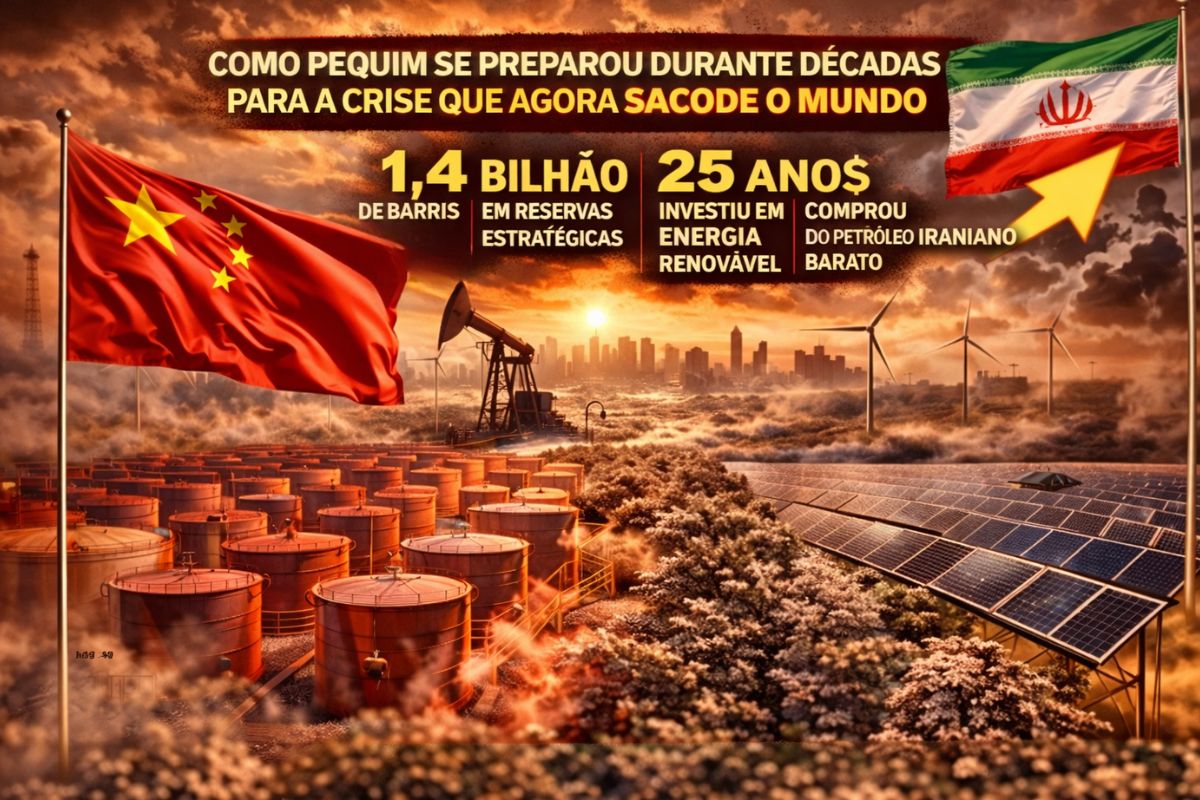
China has been preparing for decades for the scenario that is now paralyzing economies: it has accumulated strategic reserves of up to 1.4 billion barrels of oil, invested 25 years in renewable energy, bought more than 80% of Iranian exports at a discount, and reduced its dependence on the Strait of Hormuz, while neighboring countries are already rationing fuel.
While the Philippines impose weeks of four-day work to save fuel and Indonesia tries to avoid depleting reserves that last only a few weeks, China faces the same global oil crisis from a position that no other major importer has managed to build. The effective closure of the Strait of Hormuz, through which about 20% of the world’s oil, or 20 million barrels per day, passes, has hit Asian countries that depend on Gulf routes hard. But Beijing is starting from a base that took decades to build: colossal strategic reserves, rapidly expanding renewable energy, and already secured alternative suppliers.
The crisis began when the United States and Israel launched attacks against Iran at the end of February, and Tehran responded by threatening to attack ships crossing the strait. Oil prices soared to nearly $120 a barrel. China, as the largest oil importer in the world, feels the pressure, but the difference between Beijing and its neighbors is that the Chinese have been preparing for exactly this type of disruption for at least 25 years. What was strategic planning has now turned into a concrete advantage.
What the closure of the Strait of Hormuz means for the world
The Strait of Hormuz is the busiest maritime route on the planet for oil transportation. According to the U.S. Energy Information Administration (EIA), approximately 20 million barrels pass through there daily. When Iran threatened to respond to American and Israeli attacks by blocking this passage, the effect was immediate: oil and gas exports from the Middle East were interrupted.
-
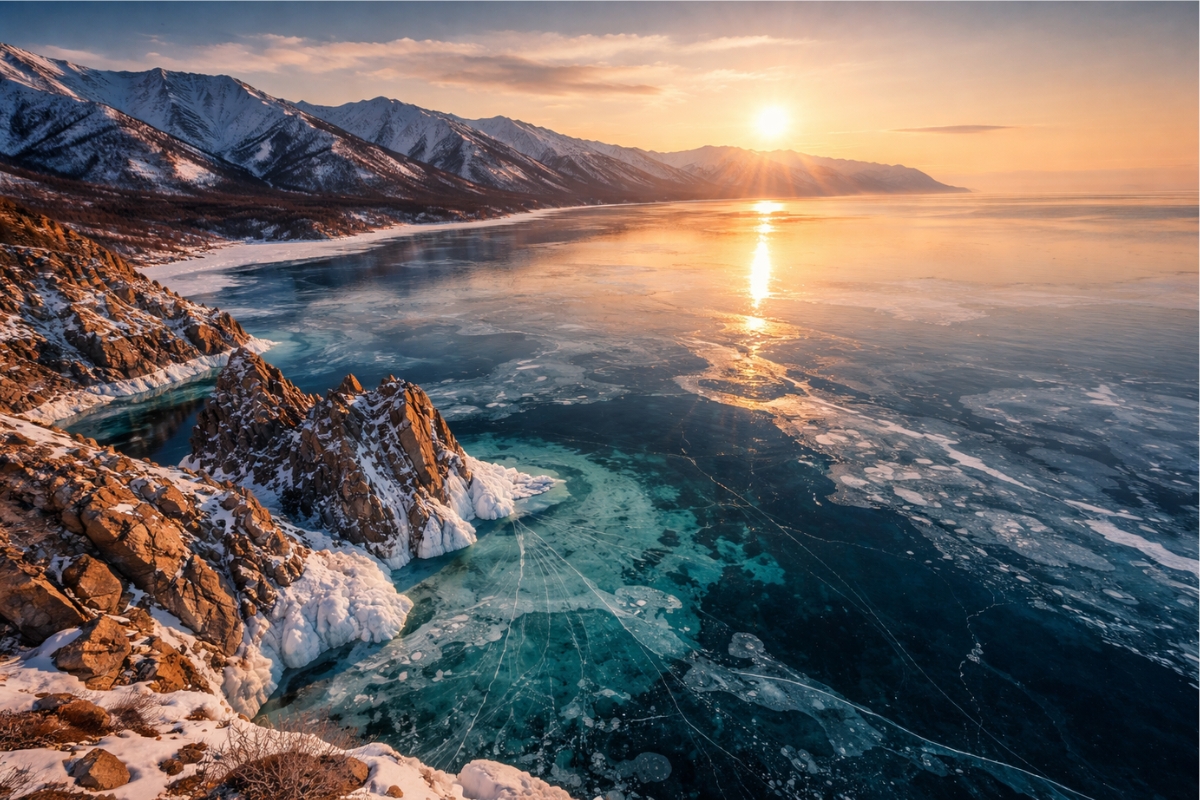
A single lake holds 20% of the planet’s non-frozen freshwater and is also the deepest and oldest on Earth.
-
How 5,000 Indian dabbawalas manage to deliver around 200,000 lunchboxes a day in Mumbai for over 130 years using bicycles, crowded trains, and a manual system that continues to operate with impressive accuracy.

-
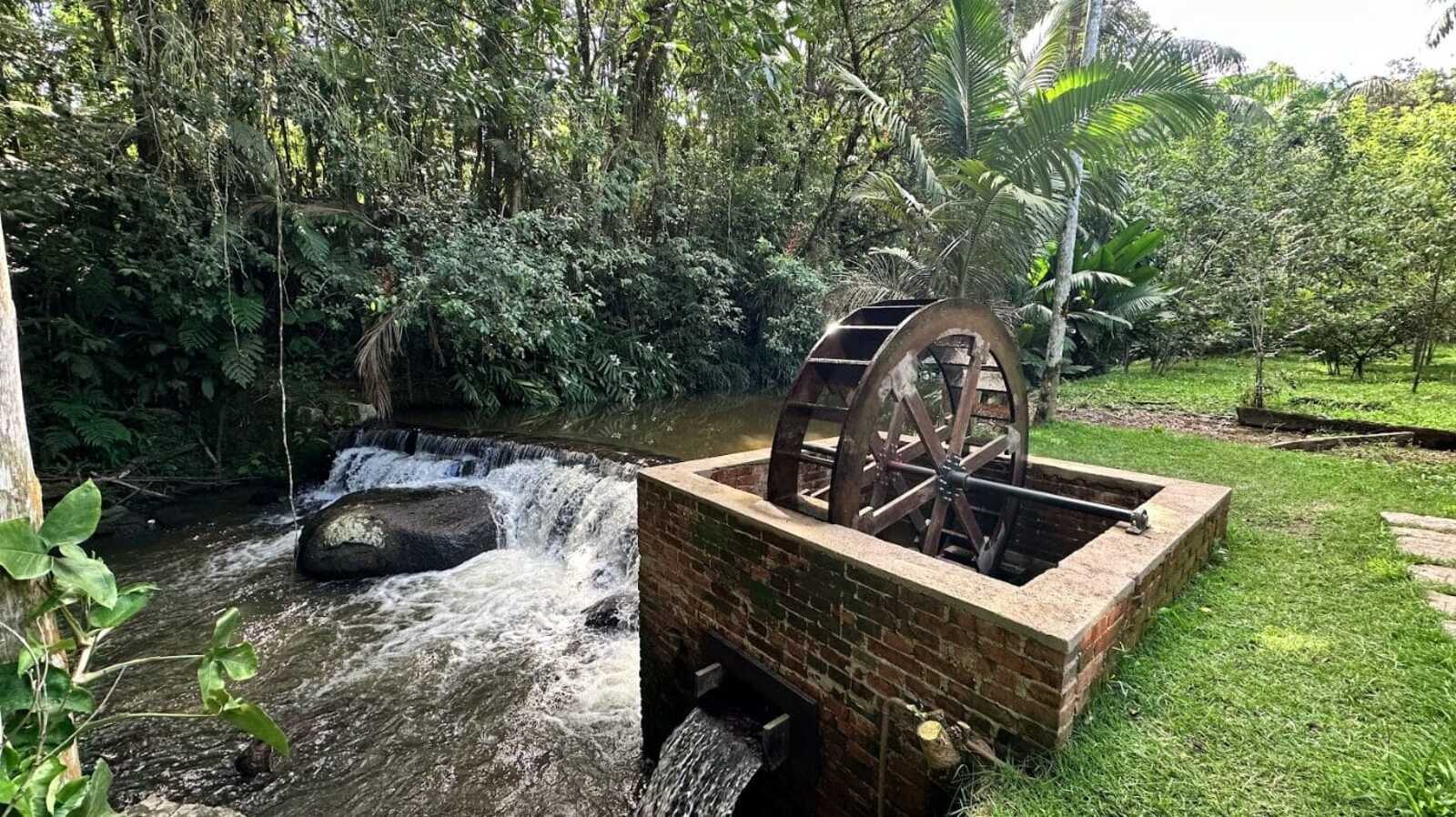
While restoring a historic mansion from 1910, a brick structure with an old turbine that generated energy from the Rio do Testo emerged, along with a hidden door and a rare floor concealed under layers of wax.
-
Italian researchers have detected what appears to be a second Sphinx buried under the sands of Egypt, and satellite scans reveal a gigantic underground megastructure hidden beneath the Giza Plateau for over 3,000 years.


The scarcity forced countries across Asia to seek alternative suppliers outside the Gulf. Some began to resort to their own strategic reserves. The Philippines reduced the workweek to four days. Indonesia is desperately seeking ways to stretch stocks that cover only a few weeks. The Strait of Hormuz has always been the most vulnerable point in the global energy chain, and now that vulnerability has materialized.
For China, the impact is real but not catastrophic. The country consumes between 15 and 16 million barrels per day, according to market analysts consulted by the BBC. Saudi Arabia and Iran each represent more than 10% of Chinese imports, and most of that oil arrives via the South China Sea, crossing exactly the routes that are now compromised.
The strategic oil reserves that China has accumulated for decades
The most visible preparation by China for a crisis of this type is its strategic oil reserves. Beijing took advantage of years of low prices and abundant supply to stockpile impressive volumes. According to Ole Hansen, head of commodity strategy at Saxo Bank, estimates indicate that China has accumulated reserves of about 900 million barrels — equivalent to nearly three months of imports.
Figures from Columbia University, cited by Chinese state media, raise this total to as much as 1.4 billion barrels. The exact volume is not known because Beijing treats its strategic reserves as sensitive information, but the consensus among analysts is that the country has built a “substantial cushion” for moments of supply disruption.
The accumulation strategy has intensified in recent months. Only between January and February of this year, China purchased 16% more oil than in the same period the previous year, according to the country’s customs administration. A significant portion of these purchases came from Iran: various reports indicate that Beijing absorbs more than 80% of Iranian oil exports, taking advantage of the discounts caused by U.S. sanctions on Tehran.
Shipping tracking data collected since the beginning of the war indicates that some of this Iranian oil continues to reach China. According to the trade analysis group Kpler, more than 46 million barrels of Iranian oil are stored on tankers along the South China Sea — enough volume to cover several days of consumption.
Why Russia has become a key player in China’s energy security
While the Strait of Hormuz is blocked and Gulf routes are compromised, China relies on a supplier that does not depend on any of these passages: Russia.
Russian oil accounts for about 20% of Chinese imports and arrives via land pipelines that cross the border between the two countries, completely immune to the conflict in the Middle East.
Moscow has become Beijing’s largest individual oil supplier, even under sanctions imposed by the United States and Europe.
The relationship is mutually convenient: Russia needs buyers who ignore Western sanctions, and China needs energy sources that do not pass through the Strait of Hormuz. The result is a partnership that strengthens precisely in times of global crisis.
Northern China mainly depends on oil extracted from domestic fields and Russian imports via pipeline. Meanwhile, the southern part of the country, where the large factories and transportation hubs are concentrated, relies more on oil that arrives by sea, and it is this half that feels the direct impact of the blockade in the Gulf. But the diversification of sources ensures that the country does not become paralyzed like its neighbors.
The 25-year bet on renewable energy that now protects China
China’s preparation for energy crises is not limited to stockpiling oil. For 25 years, Beijing has been heavily investing in wind, solar, nuclear, and hydroelectric renewable energy. The result is that more than half of the installed electricity generation capacity in China now comes from clean sources, according to recent estimates.
The National Bureau of Statistics of Beijing indicates that these sources generated more than one-third of China’s electricity in 2025, and the proportion has continued to grow since then.
Oil accounted for only about 20% of the country’s total energy consumption in 2024, according to the International Energy Agency (IEA) — a significantly lower number than in Europe or the United States. And demand for oil in China is unlikely to grow again, according to the agency itself.
Energy economics researcher Roger Fouquet highlights that China’s transition to renewable energy is not motivated solely by environmental concerns. “In a way, China has been fortunate to have started its investments in renewable energy 25 years ago,” he explains.
“And now, it is reaping the benefits.” This foresight has created a partial shield against price shocks in the oil market — something that few countries have managed to replicate.
Electric vehicles as a shield against the oil crisis
At least one-third of new cars sold in China are electric. This figure alone indicates how much the country has reduced its dependence on oil in the transportation sector.
According to Roc Shi from the University of Technology Sydney, “an electric vehicle owner in Beijing simply does not feel the impact at the fuel pump when tensions rise in the Middle East.”
For those driving electric cars in China, mobility costs are no longer tied to international oil markets. This creates an economic layer of protection that did not exist a decade ago and is a direct result of government incentives for fleet electrification.
But the protection is not total. Charging costs can rise during an energy crisis if fossil fuel prices increase, as part of China’s electricity still comes from thermal sources.
Last week, gasoline prices rose by 695 yuan per ton (about $100) and diesel prices by 670 yuan (about $97), according to China Daily. More expensive oil also raises the costs for the country’s petrochemical industry, which produces plastics, fertilizers, and other essential inputs.
China is protected, but not immune
The combination of strategic oil reserves, large-scale renewable energy, Russian supply via pipeline, and electrification of transport puts China in a much more comfortable position than any other major Asian importer.
But “more comfortable” does not mean invulnerable. Coal is still the main source of electricity generation in the country, oil fuels much of the industry and heavy transport, and international prices affect the entire production chain.
China, as the world’s largest energy importer, will pay more per barrel as long as the war in Iran lasts.
“It will have no choice but to bear this additional cost,” says Roc Shi. There are reports that Beijing has already ordered refineries to temporarily suspend fuel exports to contain domestic prices — a measure that confirms that, despite the preparation, the pressure is real.
What distinguishes China is not the absence of impact, but the depth of preparation. Decades of strategic planning, diversification of suppliers, accumulation of strategic reserves, and investment in renewable energy have built a resilience that is now being tested and, so far, is working better than any other country in the same situation.
With information from the portal of G1.
In your opinion, should China’s strategy of preparing for decades for an energy crisis be copied by other countries? Is Brazil, with its renewable matrix, in a similar or very different position? Leave your analysis in the comments; this debate on energy and geopolitics needs your perspective.








Seja o primeiro a reagir!