





 Portuguese
  English
  Spanish
  5 min of reading
  0 comments


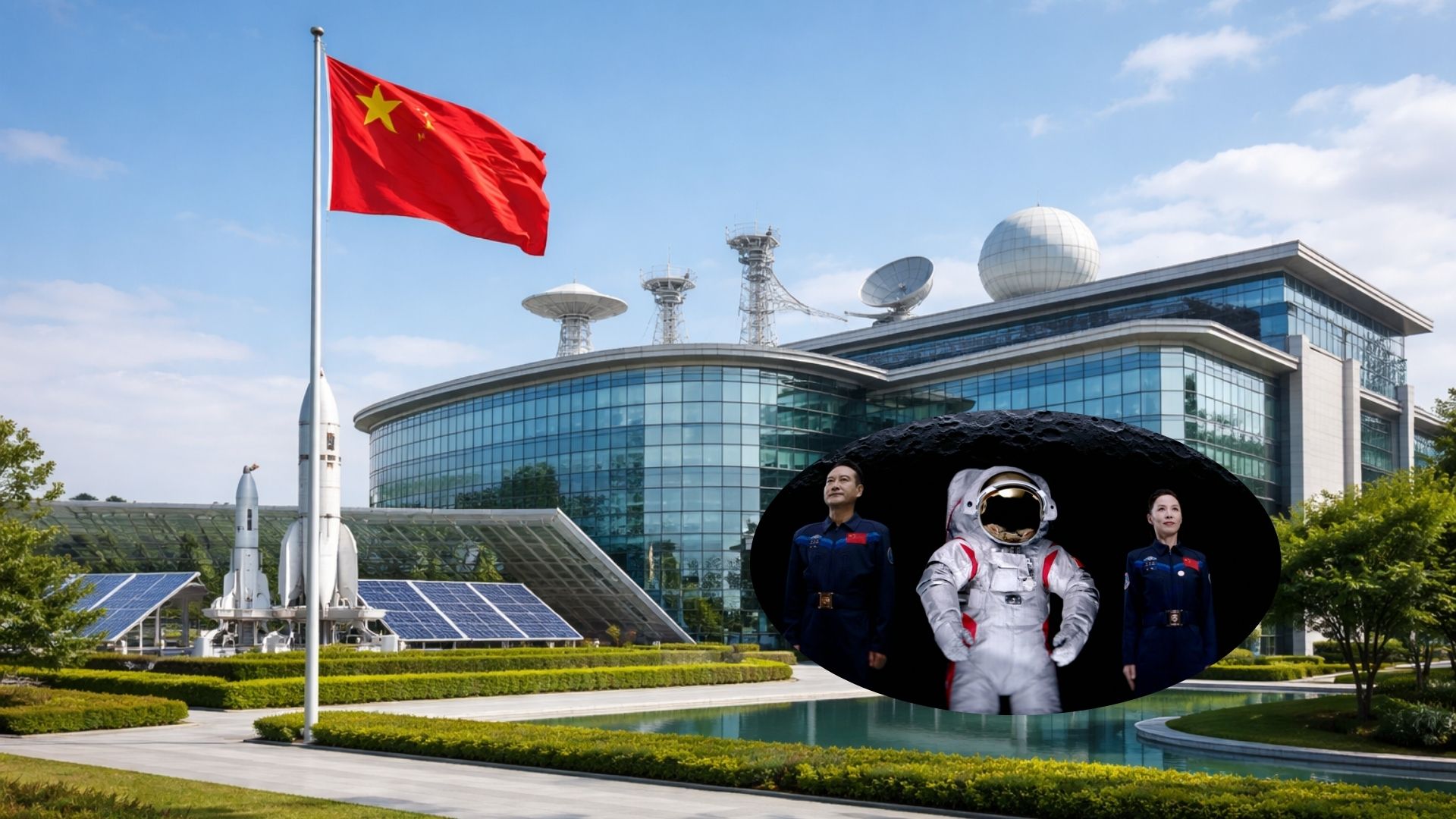
Chinese academic initiative reorganizes space training with a focus on long-term scientific integration and new disciplines oriented to deep space, signaling a structural change in the preparation of professionals and strategic advancement beyond established orbital, lunar, and Martian missions.
China has formalized the creation of the Interstellar Navigation School at the University of the Chinese Academy of Sciences in Beijing, with the aim of training professionals in areas such as propulsion, communication, navigation in deep space, and space science.
The new unit is linked to a broader strategy for preparing personnel for missions that extend beyond Earth’s orbit, the Moon, and Mars, according to statements from the university, the Chinese Academy of Sciences, and the state agency Xinhua.
Training for deep space gains its own structure
The announcement draws attention less for revealing a spacecraft or a specific mission and more for transforming deep space exploration into a permanent axis of university training.
-
Scientists discover in Fiji that a piece of land surrounded by mangroves is actually a giant mound of shells discarded by ancient inhabitants over 1,200 years ago.

-
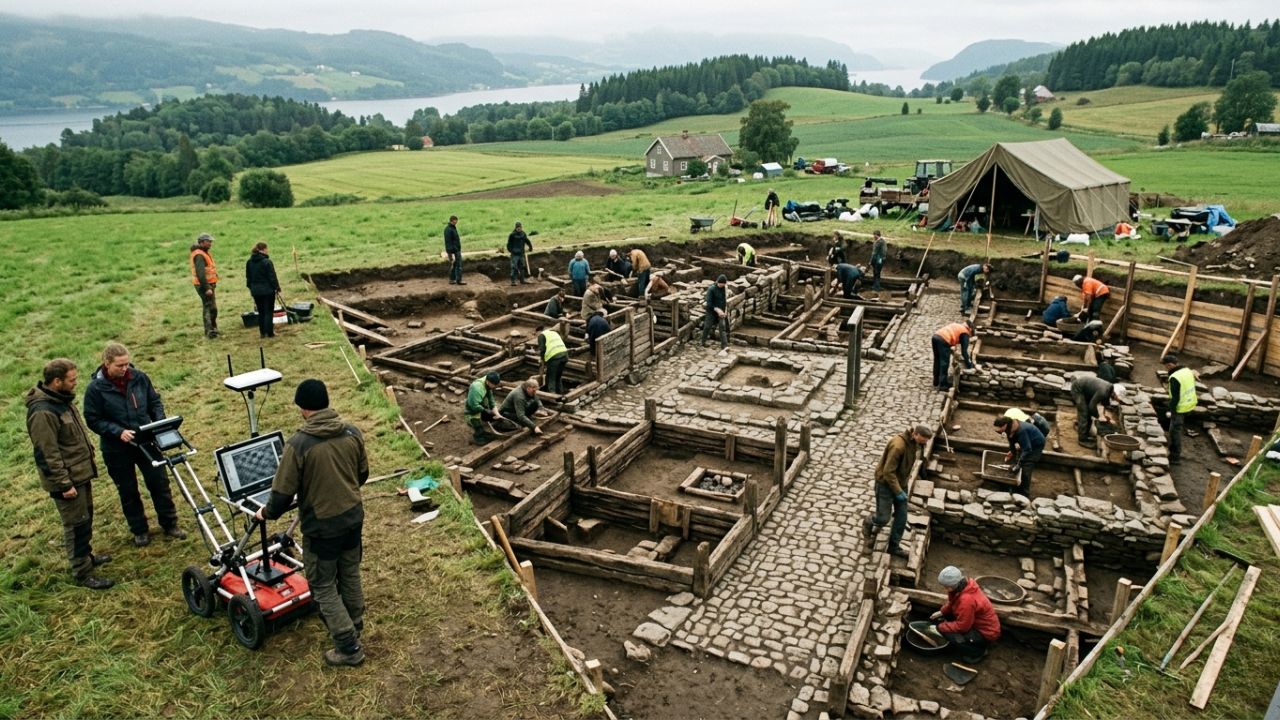
No one was able to prove for over 500 years that this medieval city existed, until ground-penetrating radar mapped streets, houses, and entire structures beneath the soil of Norway, and the excavation confirmed a complete preserved city where there was once only legend.
-
In the United States, a valley 86 meters below sea level has reached 56.7°C and remains the place with the highest air temperature ever recorded on Earth, a direct result of a terrain that traps heat between high mountains in the midst of the desert.

-
Goodbye clothes with odors from use: Samsung’s device uses high-temperature steam, eliminating up to 99.9% of bacteria, removing dust mites, and neutralizing odors directly in the wardrobe without the need for washing.


Instead of a one-off course, the structure was presented as an academic center dedicated to integrating teaching, research, and technological development around a long-term horizon, which the institution considers strategic for the next phase of the Chinese space program.
Curriculum includes 14 areas and new strategic disciplines
The curricular foundation released by the university helps to gauge the ambition of the project.
The school has been organized to operate with 14 areas or first-level disciplinary categories and, based on a previous foundation of 97 disciplines, will offer 22 new core subjects, including principles of propulsion and interstellar dynamics, perception and use of the space environment, planetary dynamics and habitability, and sociology and interstellar governance.
The composition of the curriculum reveals that the proposal goes beyond conventional reinforcement in aerospace engineering.
By incorporating content focused on the habitability of planets, climate and space environment, navigation systems over long distances, and even social and governance implications of human presence beyond Earth, the university signals its intention to train specialists capable of addressing technical, scientific, and institutional problems that arise when exploration extends beyond the immediate vicinity of the planet.
Network with more than 100 institutes strengthens project
For this reason, the school was designed as a cooperative arrangement among different branches of the Chinese Academy of Sciences.
Official materials indicate that the initiative is led by the Institute of Thermophysical Engineering and built in partnership with units such as the Center for Space Applications and Technology, the National Space Science Center, and the Institute of Innovation in Microsatellites, among other research organizations, in an effort to bring together competencies that are typically separated in traditional departments.

In practice, the design reinforces a view that deep space exploration depends on a broader chain than just rockets and vehicles.
The very presentation of the school associates the project with themes such as materials, physics, chemistry, biology, artificial intelligence, life support systems, and mission planning, arguing that overcoming bottlenecks in this area will require teams with interdisciplinary training and direct contact with real research demands.
Leadership and national strategy for the space sector
The chosen leadership also reinforces the strategic nature of the new unit.
The command has been entrusted to academic Zhu Junqiang, who heads the strategic high-tech area of the Chinese Academy of Sciences and, according to official announcements, stated that the goal is to transform the school into a hub for basic aerospace research, high-level talent training, and international academic exchange.
The institution has also linked the initiative to the need to integrate education, science, technology, and talent to address the shortage of specialized professionals.
Inauguration connects historical legacy to spatial future
The inauguration ceremony took place at the Memorial of the “Two Bombs, One Satellite” project, a space rich in symbolism for Chinese technological history.
The decision to create the school, however, was made in November 2025, indicating that the public officialization was preceded by institutional planning and the definition of an academic model aimed at training personnel for the next cycle of the country’s space exploration.
This movement has been presented by Chinese authorities as a continuation of a historical lineage.
Official sources recall that, more than six decades ago, scientists like Qian Xuesen and Zhao Jiuzhang advocated for the holding of meetings on interstellar navigation, a process that led to the creation of a committee focused on the topic and helped consolidate the scientific foundation of the Chinese space program.
Recent advances reinforce new phase of the Chinese program
The context in which the unit emerges helps to explain the impact of the announcement.
In recent years, China has consolidated its space station in a basic configuration of three modules, achieved the first soft landing on the far side of the Moon with the Chang’e-4 mission, and sent the Tianwen-1 mission to Mars, whose rover Zhurong reached the Martian surface in 2021.
These milestones are frequently cited by authorities and state media to support the idea that the country has entered a phase of transition between low Earth orbit and more distant objectives.
Long-term training aims at deep space competition
By launching a specific school for “interstellar navigation,” the university shifts the focus of space news from immediate hardware to the human infrastructure that supports long-term programs.
What is at stake is not only the training of engineers for already known missions but the creation of a training ecosystem that combines basic science, experimentation, application, and strategic vision, with teaching and practice platforms supported by the existing structure of the Huairou Science City and six additional characteristic platforms planned by the institution.
There is also a political and industrial component to this choice.
The documentation released by the Chinese Academy of Sciences describes the next 10 to 20 years as a decisive window for advances in the field of interstellar navigation and for repositioning China in technological competitions associated with deep space, which includes fundamental research, propulsion technologies, perception of the space environment, system autonomy, and long-duration solutions.
In this scenario, the school functions as an early training piece for a scientific race that is likely to be decided long before the launch of missions.
The novelty, therefore, lies not only in the futuristic name of the institution but in the decision to give university form to a field that blends planetary science, engineering, energy, navigation, life in extreme environments, and governance.
By institutionalizing this effort, China begins to treat preparation for deep space not as a marginal extension of the aerospace sector but as its own axis of teaching and research, with a dedicated curriculum, defined leadership, and direct connection to long-range national goals.



Seja o primeiro a reagir!