





 Portuguese
  English
  Spanish
  4 min of reading
  1 comment


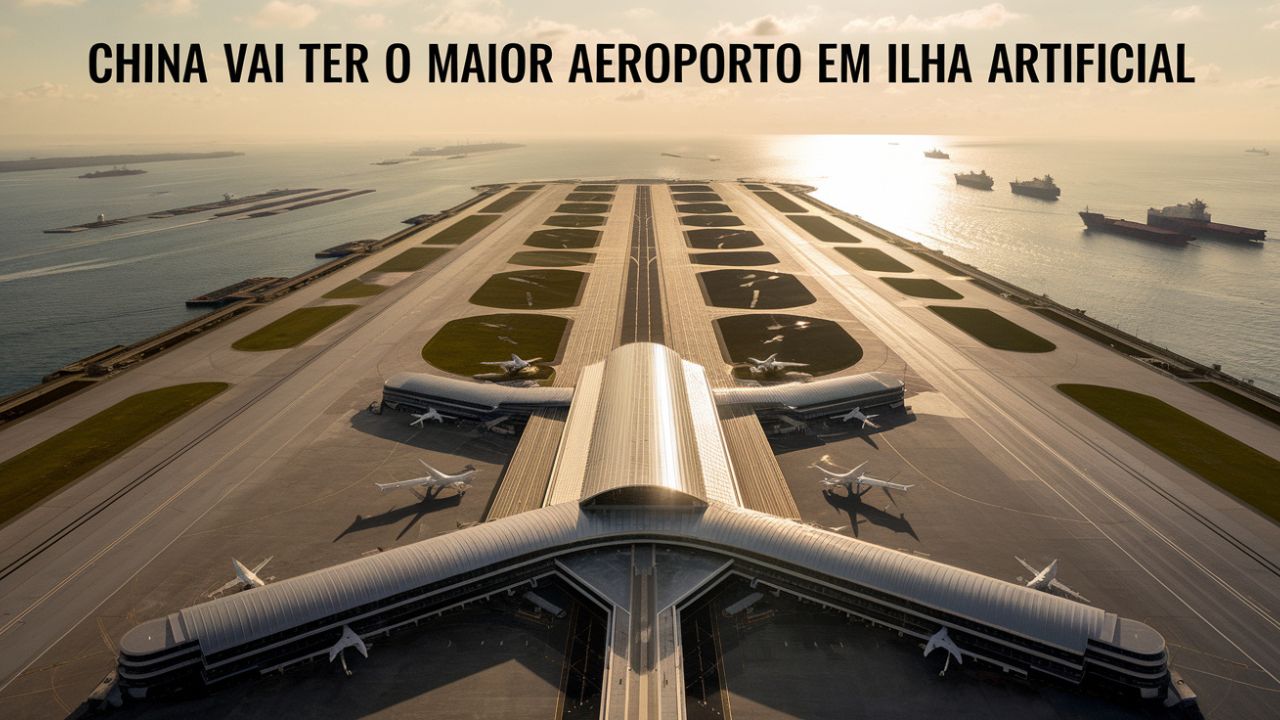


The Construction Project Will Feature 4 Runways, a 900,000 Square Meter Terminal, and Will Handle 1 Million Tons of Cargo Annually, Positioning Dalian as the Largest Air Hub in Northeast Asia by 2035.
China, famous for its ambitious projects, has just announced a bold plan: the construction of the world’s largest airport on an artificial island, with an impressive budget of €4 billion. This project promises to not only transform global air transport but also set new standards of innovation and connectivity.
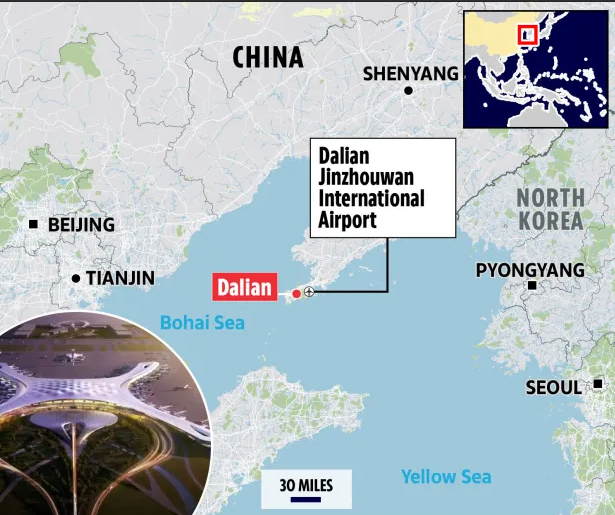
Located in the coastal city of Dalian in the northeast of the country, Jinzhouwan International Airport will be a monumental work, designed to accommodate up to 80 million passengers per year. But what makes this project so special? Let’s explore every detail.
Features and Dimensions of Jinzhouwan International Airport
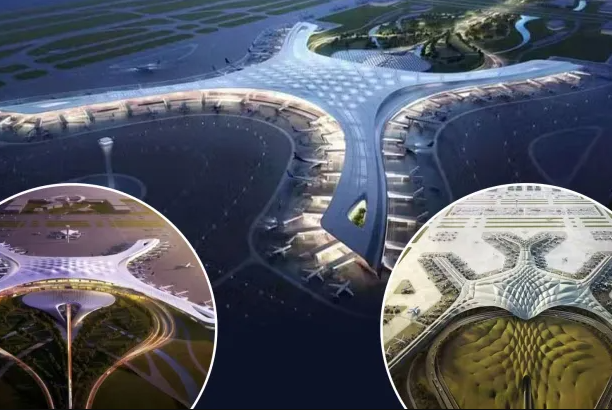
With a terminal of 900,000 square meters, equivalent to 9.69 million square feet, Jinzhouwan International Airport will be a giant of infrastructure. To meet the growing demand, the project will feature four independent runways, ensuring efficiency and safety even in adverse weather conditions.
-
New CCR concrete paving technology promises roads up to 3x more durable, less maintenance, and cost reduction in Brazil.
-
Made from recycled plastic, plastic wood is gaining space in the construction industry because it does not rot, resists moisture, and reduces maintenance costs over the years.

-
Florianópolis will receive a million-dollar BRT that will begin construction in 2026 with nearly 400 million in funding from the federal government and the Inter-American Development Bank, and the map already shows the routes for the exclusive bus corridors.
-
Without a blueprint, without an engineer, and using scrap from the dump, a father spends 15 years building an 18-room castle for his daughter, featuring tram tracks, 13 fireplaces, and over 700 m², which may now be demolished.


The airport is strategically planned to be expandable. Initially, it will accommodate 43 million passengers per year, but this capacity is expected to double in a short time. It’s like building an entire city focused on aviation!
The Strategic Role of Dalian in Regional Aviation
Dalian, with its privileged location, is already a prominent city in the economy of Northeast Asia. Its proximity to Japan and South Korea strengthens commercial and tourism relations, and the new airport will be the engine that will further boost this connectivity.
The city is known for its oil refining, transportation, and logistics industries, but it is now preparing to be one of the largest air transport hubs in the region. It’s like adding wings to an already established economic giant.
Innovative and Sustainable Solutions in Construction
One of the major challenges of the project is the mountainous terrain that surrounded the old Dalian Airport. Therefore, the choice of an artificial island was a bold but effective solution. Land reclamation and deep soil treatment allowed for the construction of a stable base for the gigantic infrastructure.
In addition to solving geographical problems, the project also invests in sustainable technologies, minimizing environmental impacts and optimizing resource use. This demonstrates how innovation and sustainability can go hand in hand.
Economic and Social Impacts of the Megaproject
The new airport will not just be an engineering marvel; it will also bring significant impacts to the economy and society. Job creation during construction and operation will be one of the great legacies. The expansion of tourism and the creation of new trade routes are likely to further boost Dalian’s economy.
Think of it like a game of dominoes: each piece moved influences several others. The airport will be a catalyst for new businesses, attracting investments and connecting people from all over the world.
The Future of Aviation in China and Its Ambitious Plans
This megaproject is just one piece in the puzzle of Chinese aviation. With a goal of building 450 civil airports by 2035, China is making substantial investments to meet the growing demand for air travel. According to the International Air Transport Association (IATA), the country will handle over 2 billion passengers annually by 2035.
The new airports will not only relieve congestion at existing hubs but also democratize access to air transport in more remote regions. It’s like China is drawing an entirely new map for aviation.
Jinzhouwan International Airport is a symbol of China’s power in shaping the future. It represents a milestone in the history of construction, connectivity, and economic development, not only for Dalian but for the world.









Por isso a propaganda enganosa do Sul-Global desqualificando o modo de vida e infraestrutura dos países membros dos BRICS+ tentando a todos custo incutir nos **** que a China é um país de costumes e vida ultrapassadas.